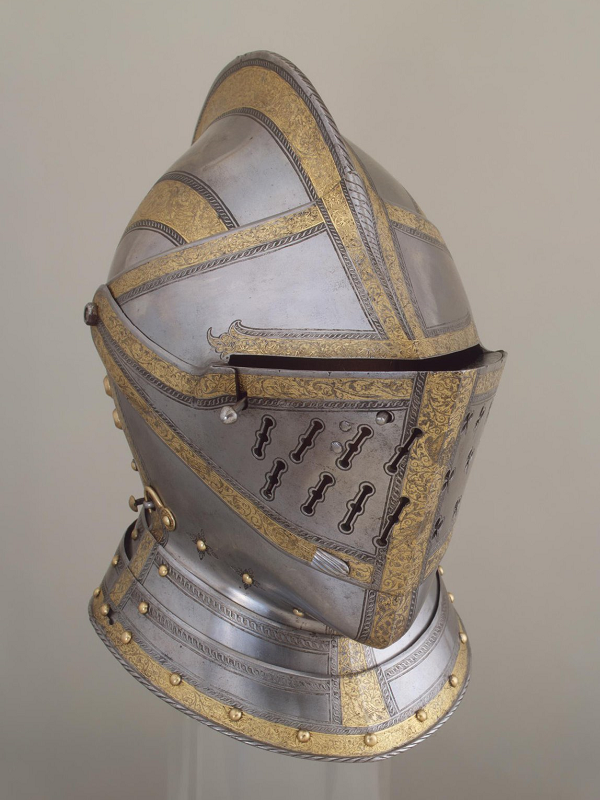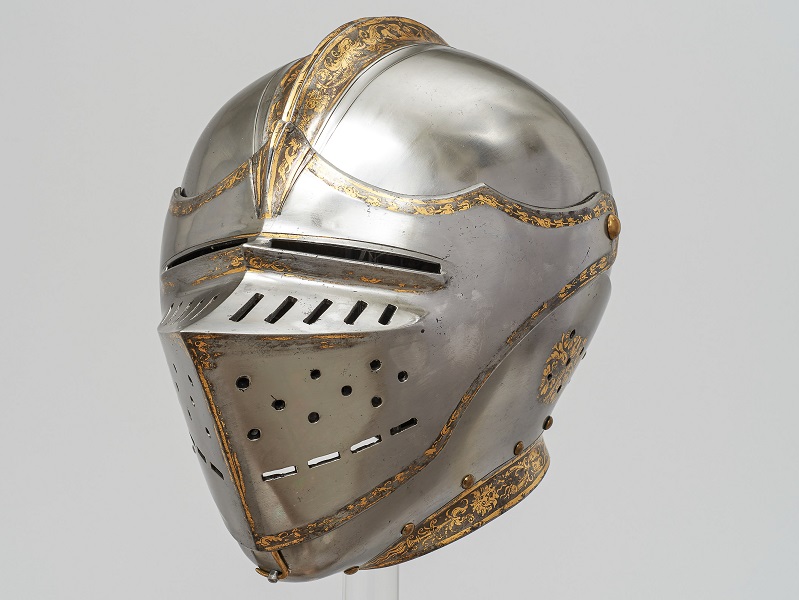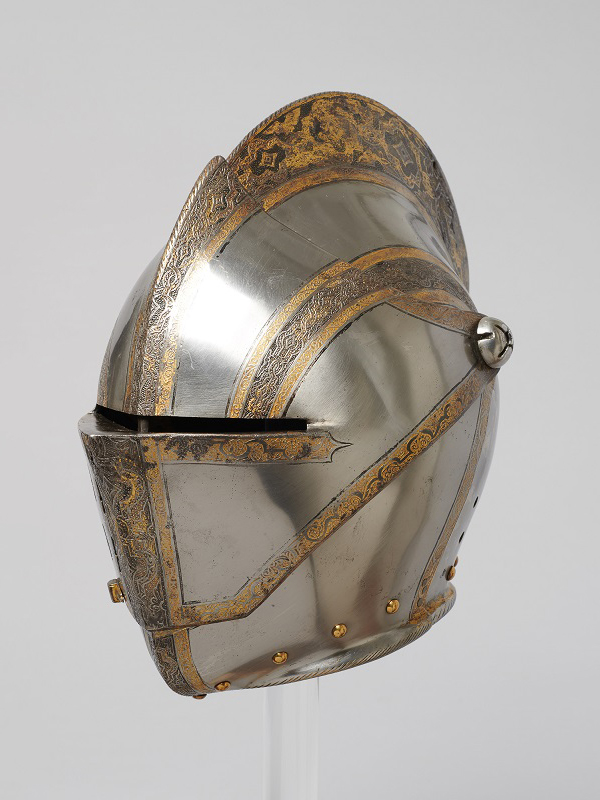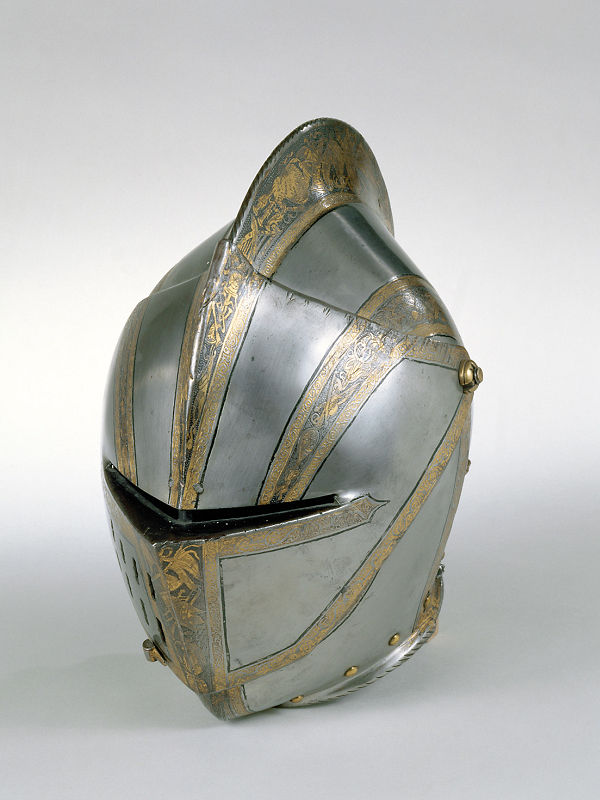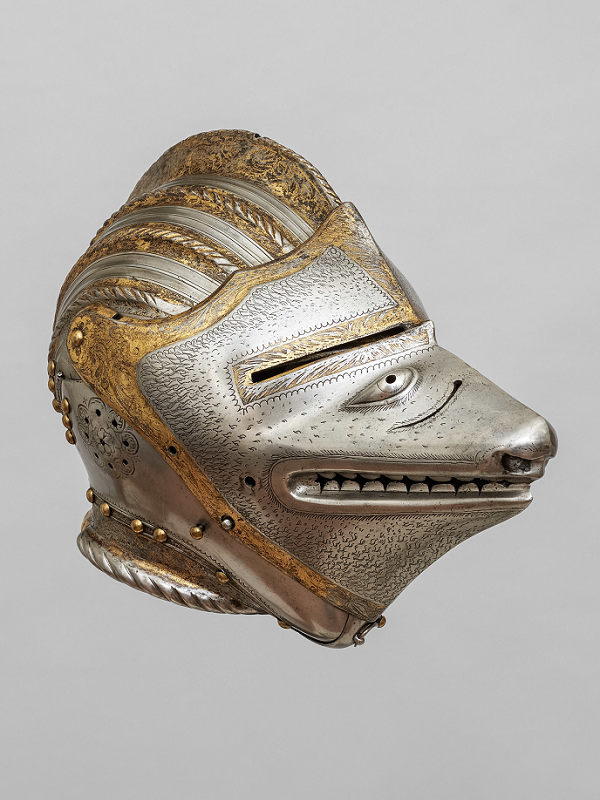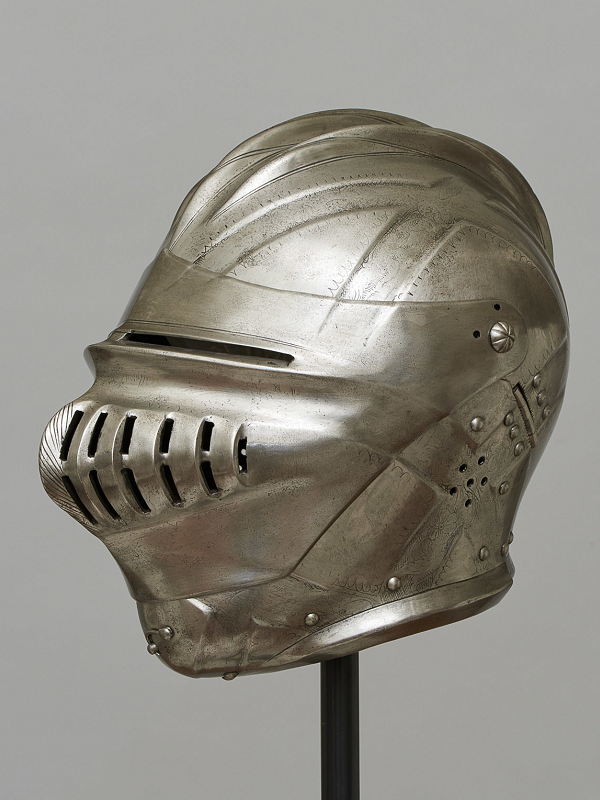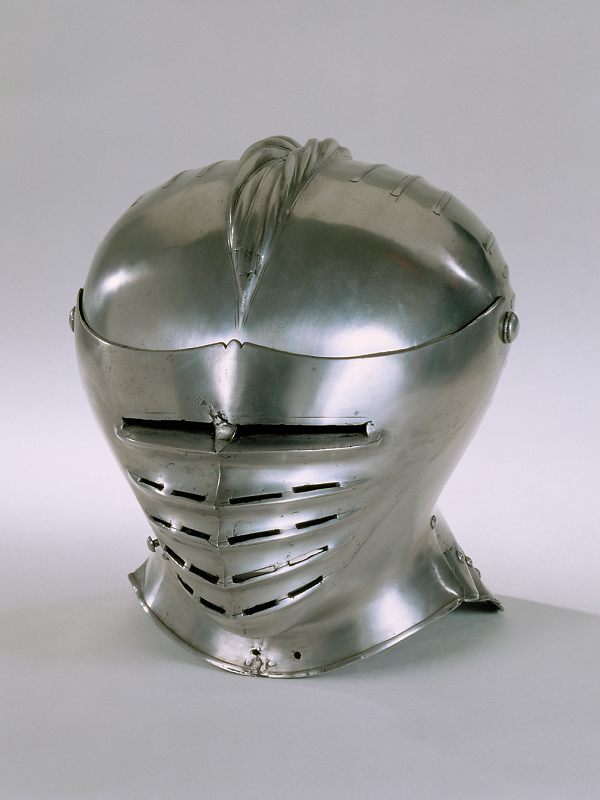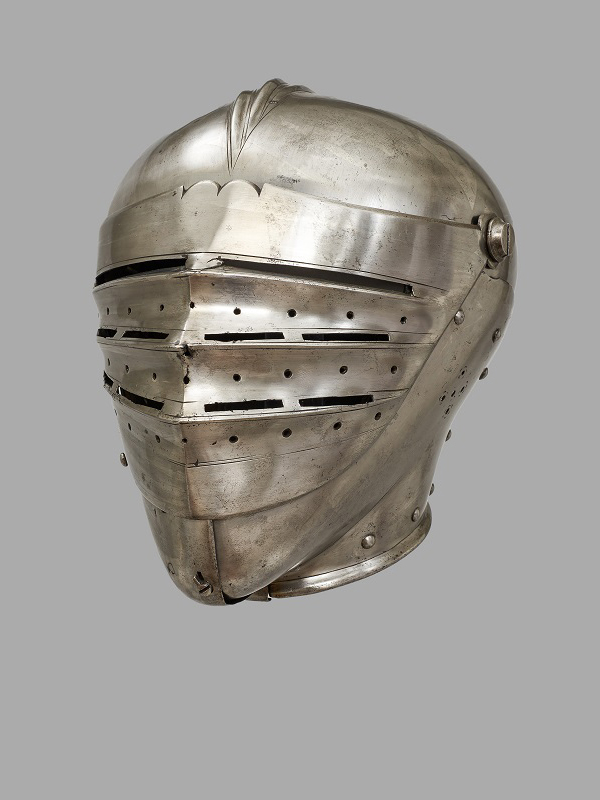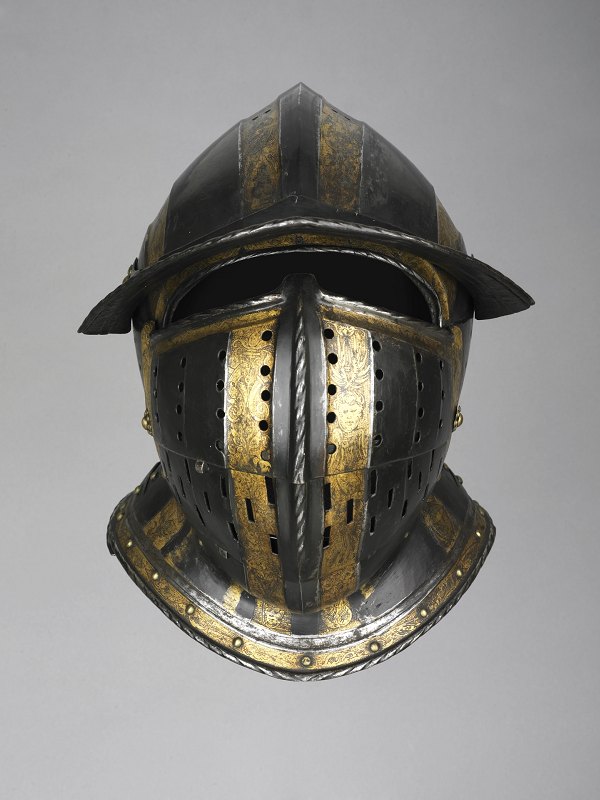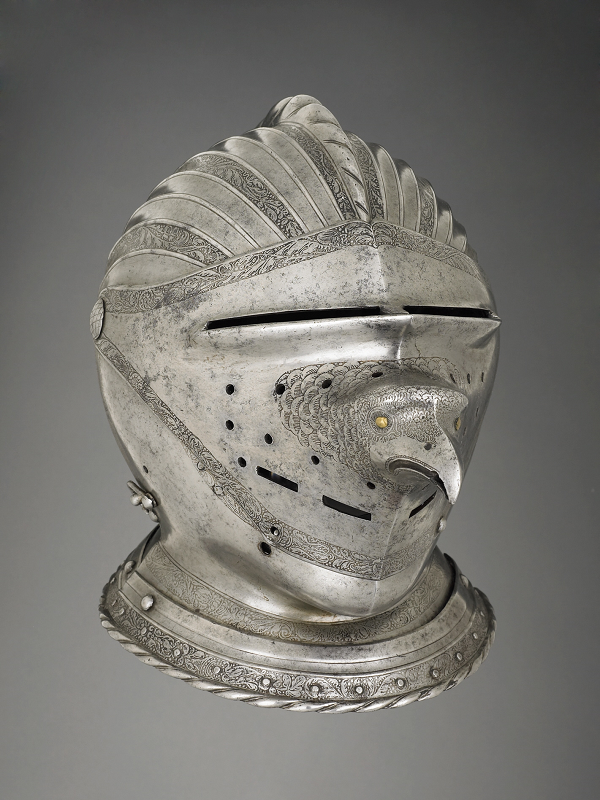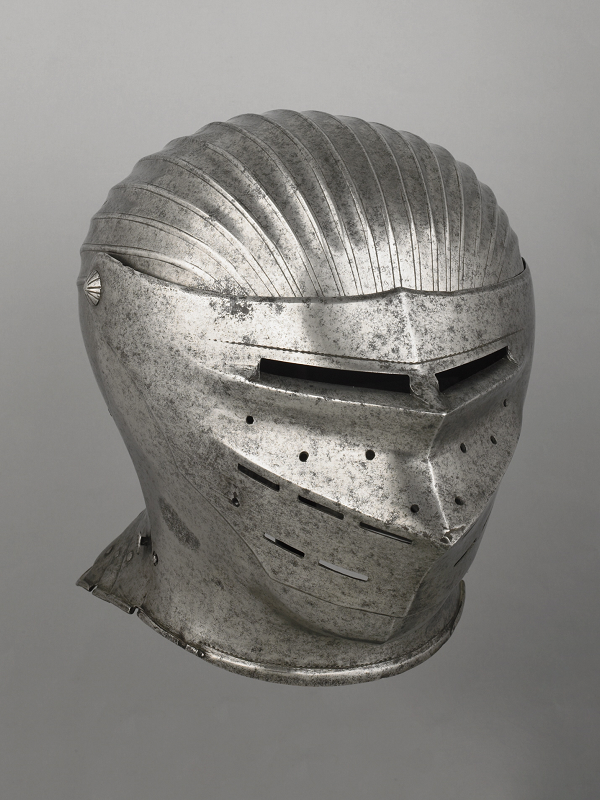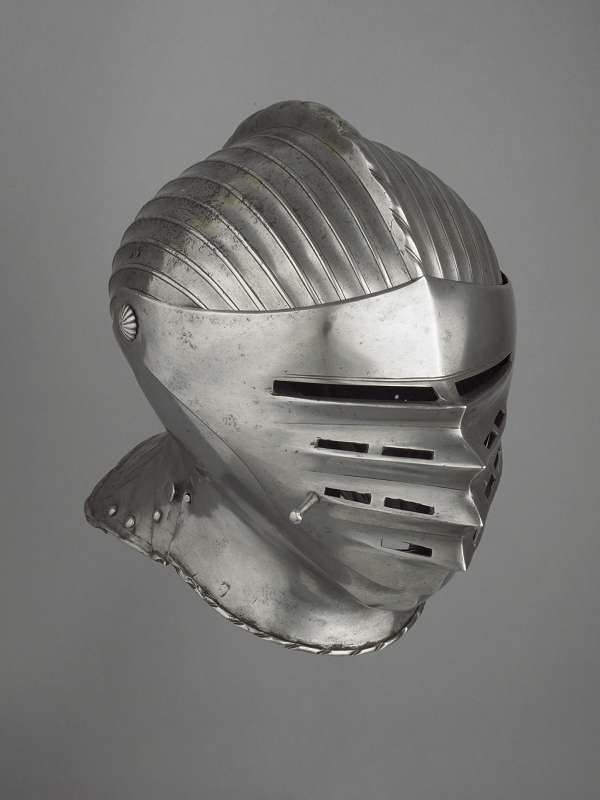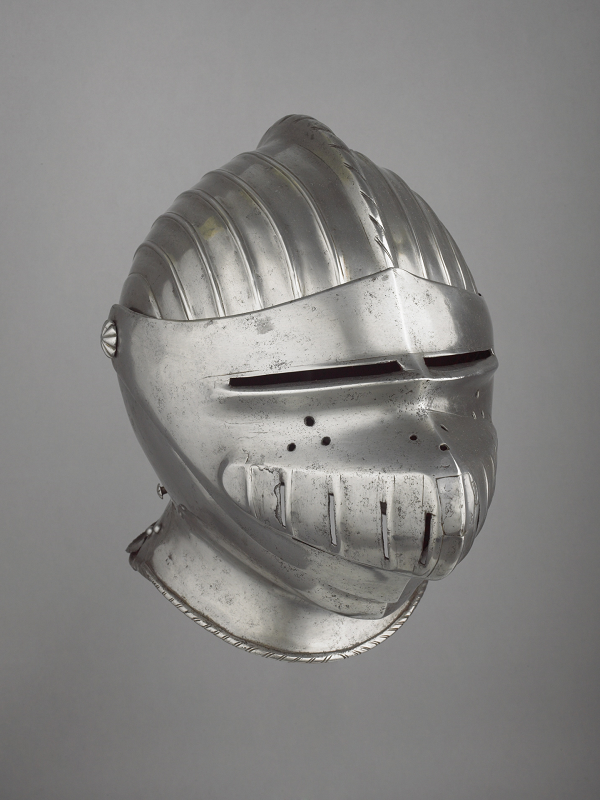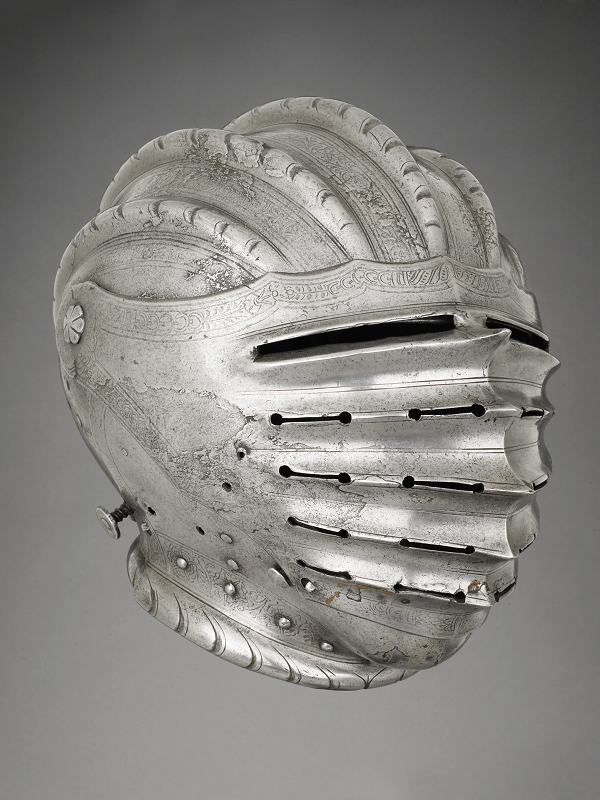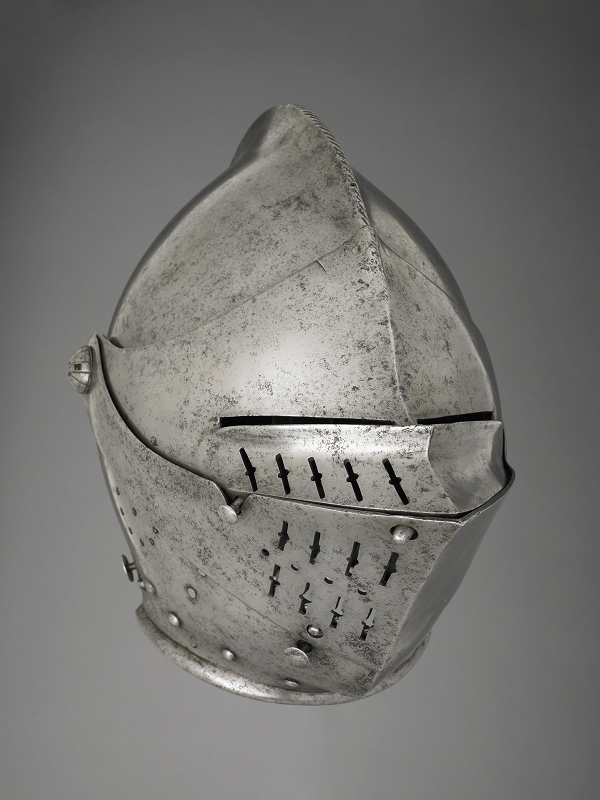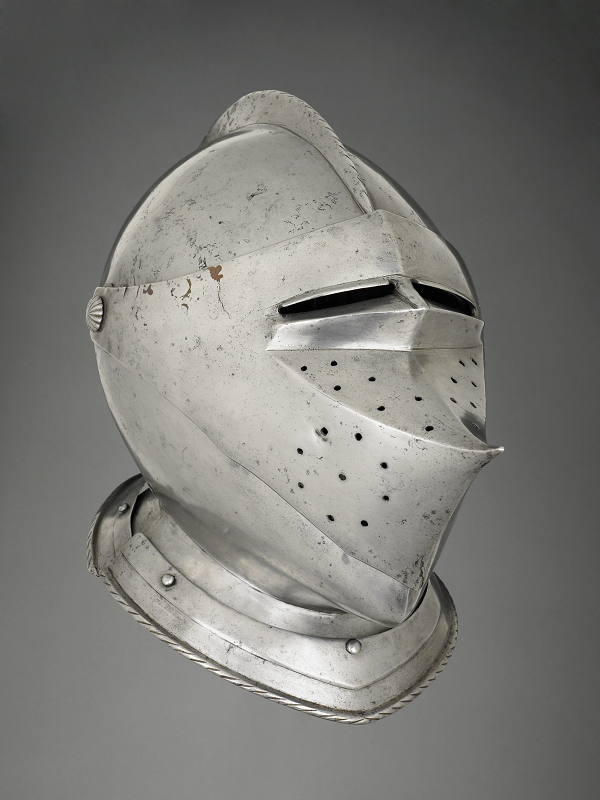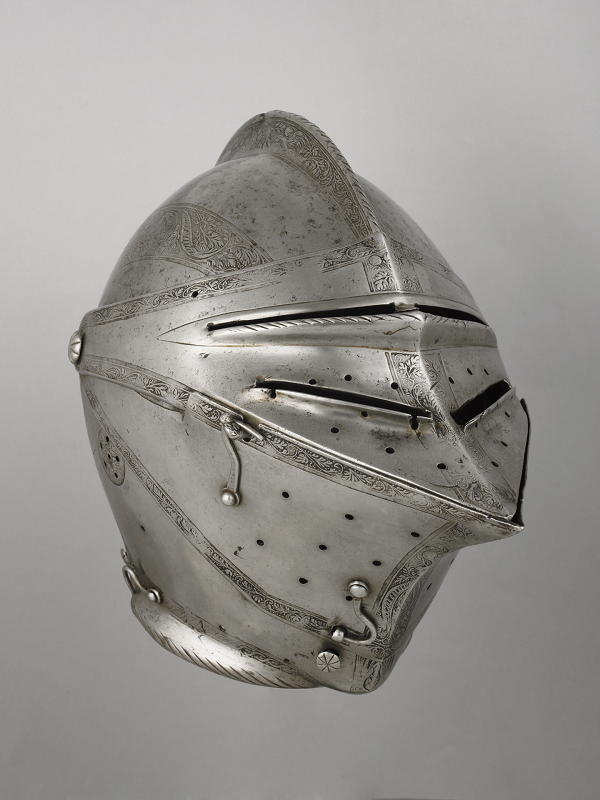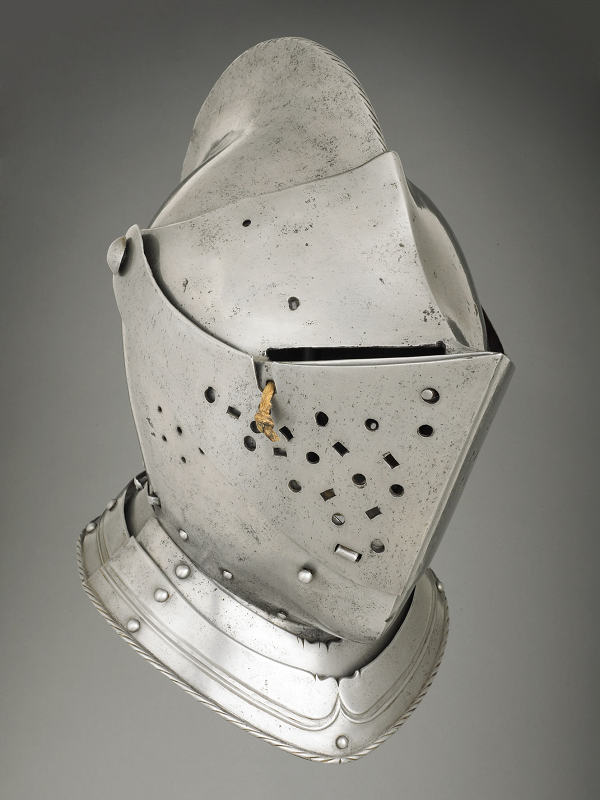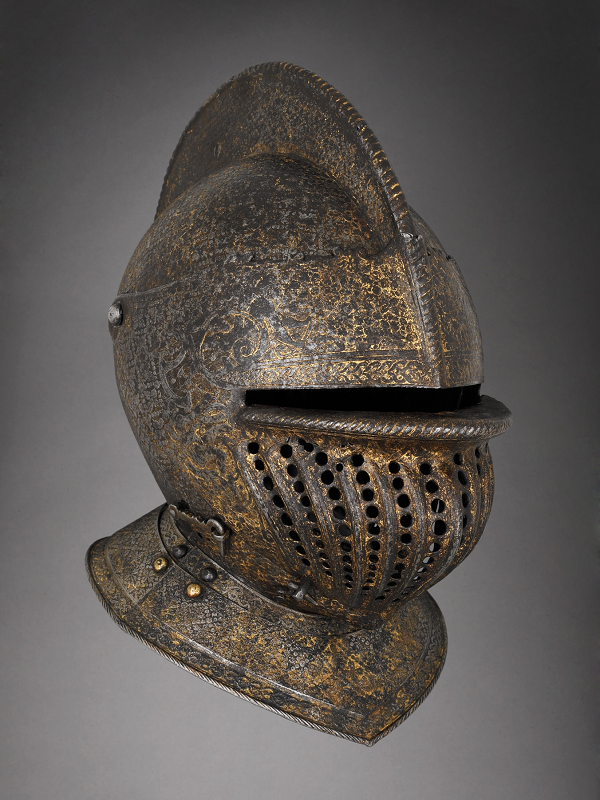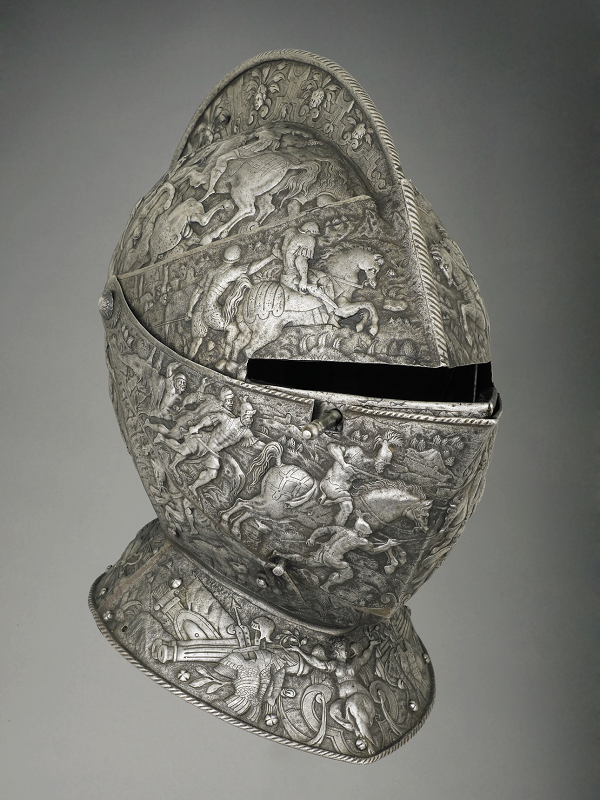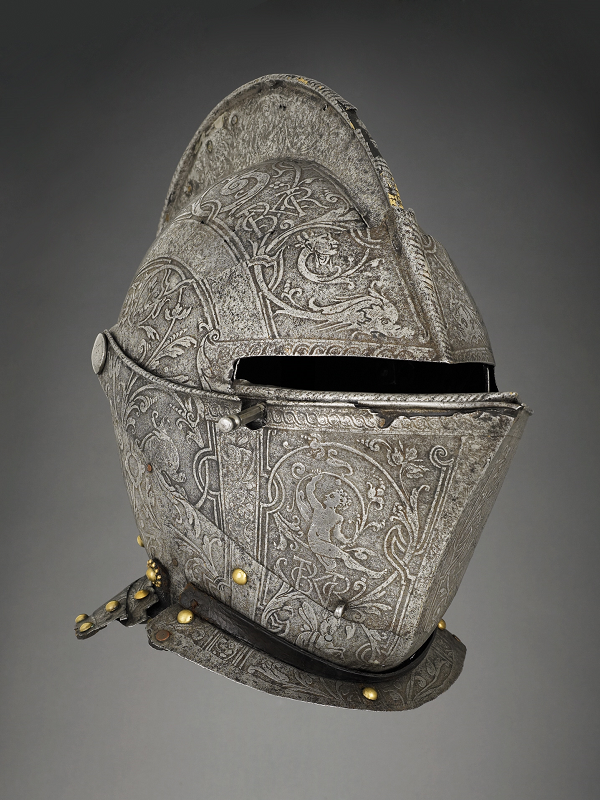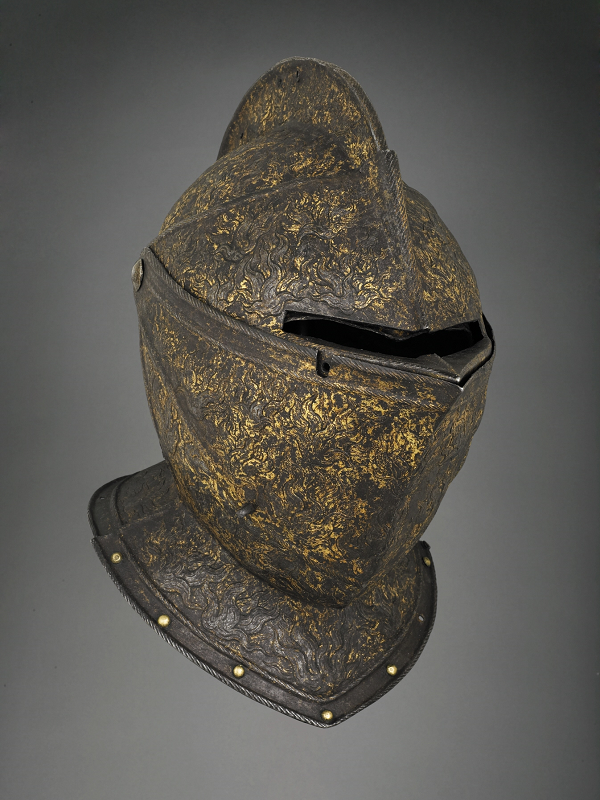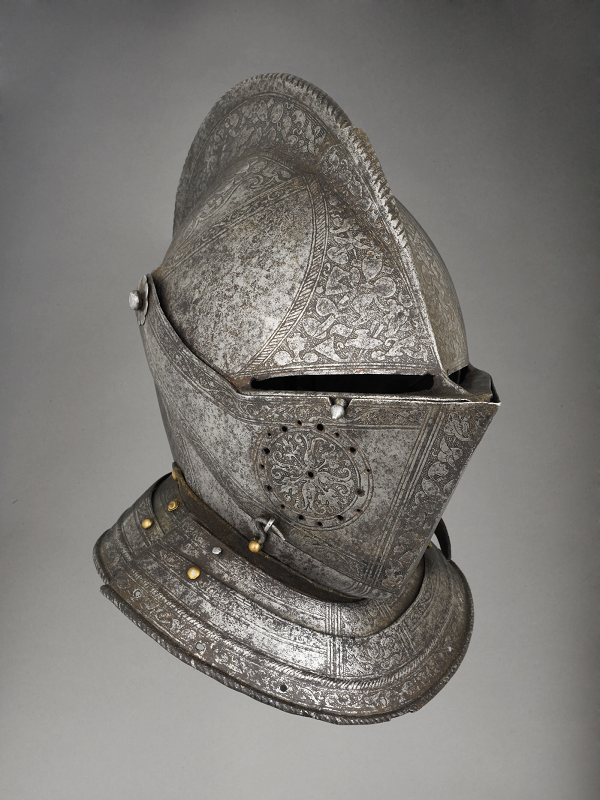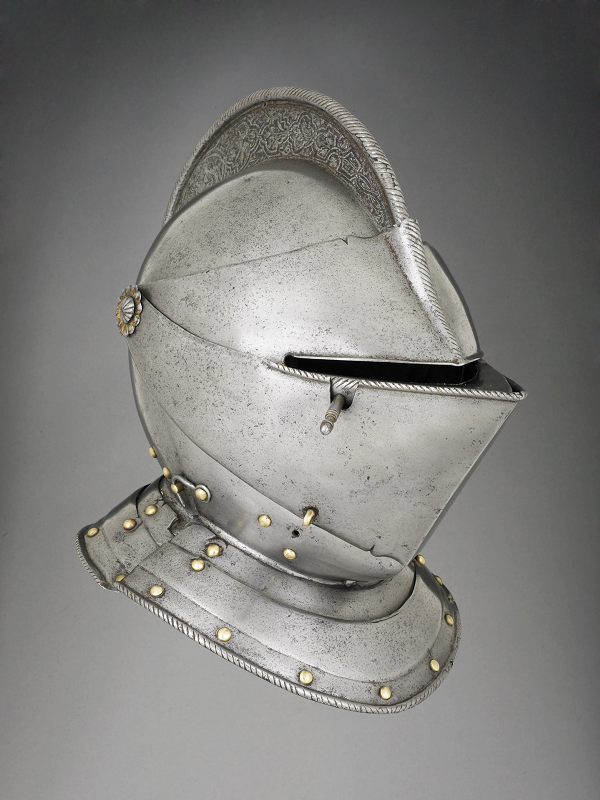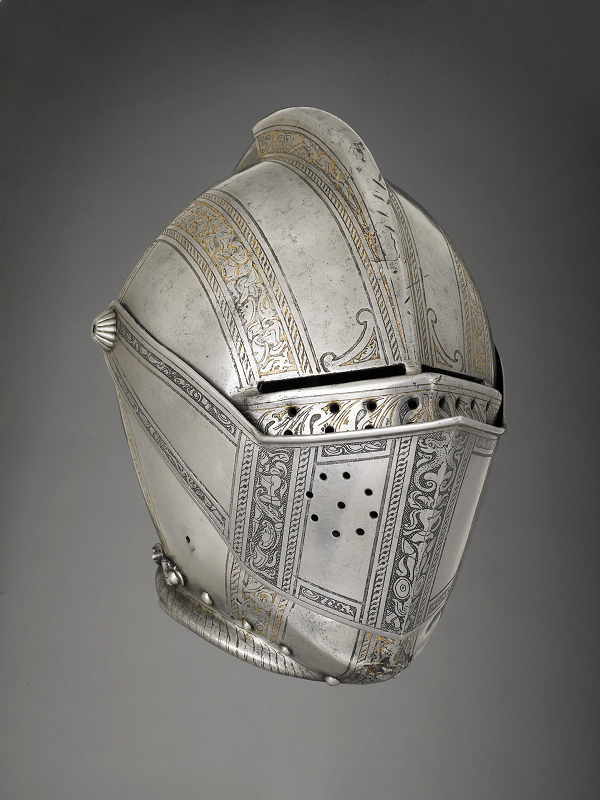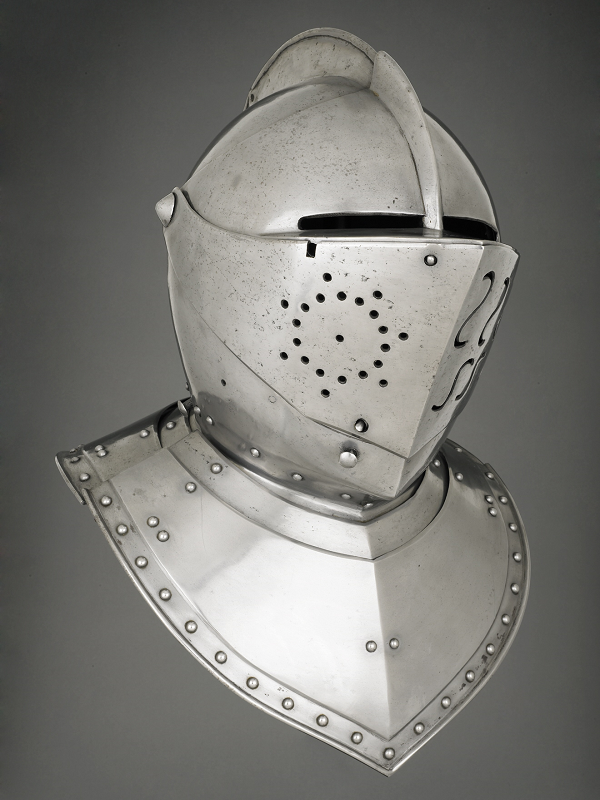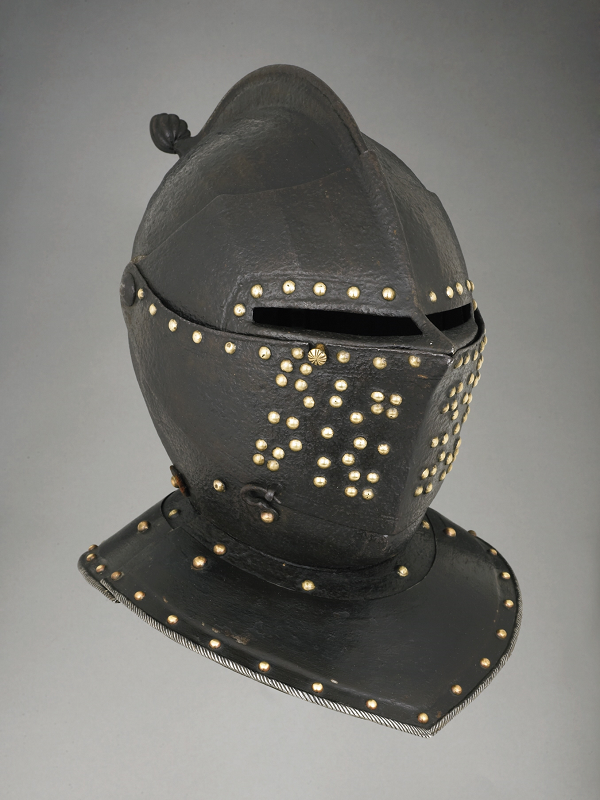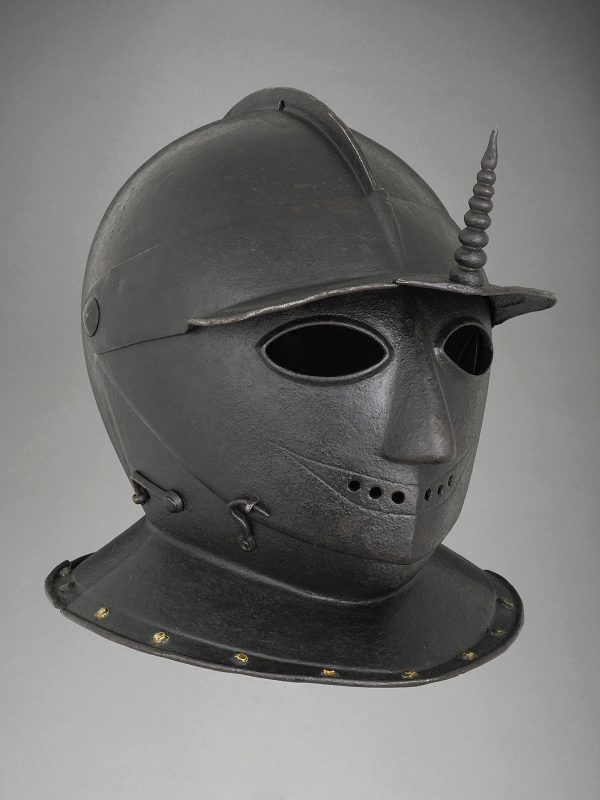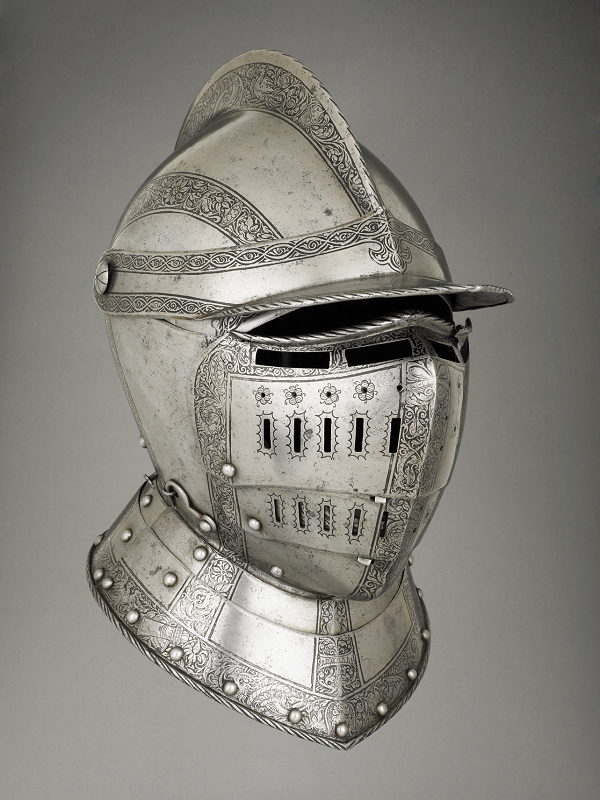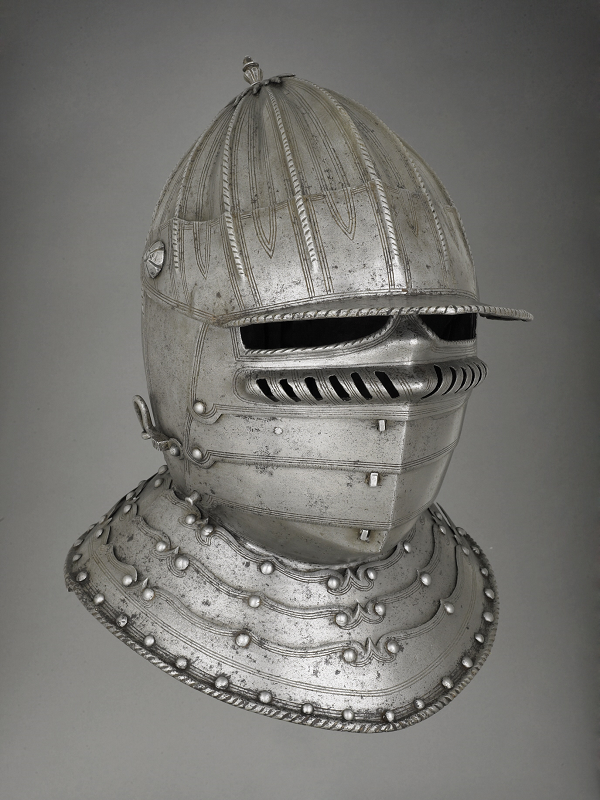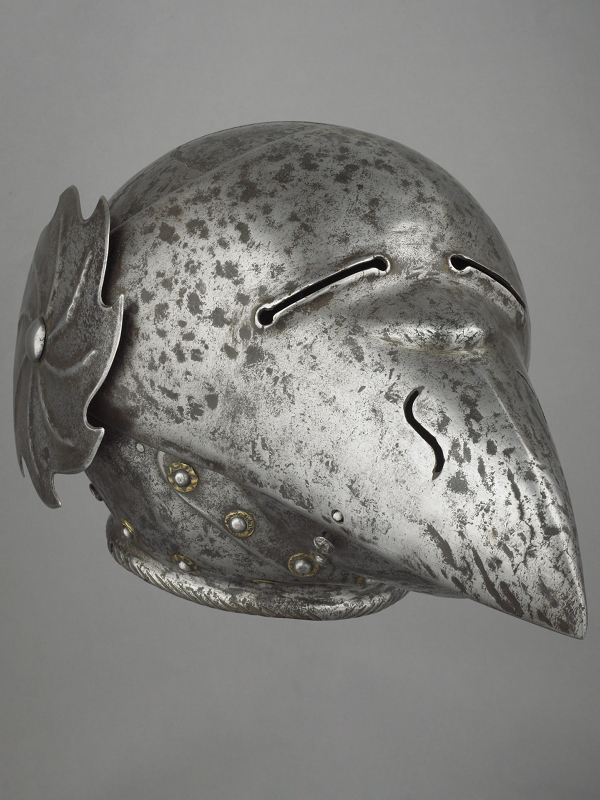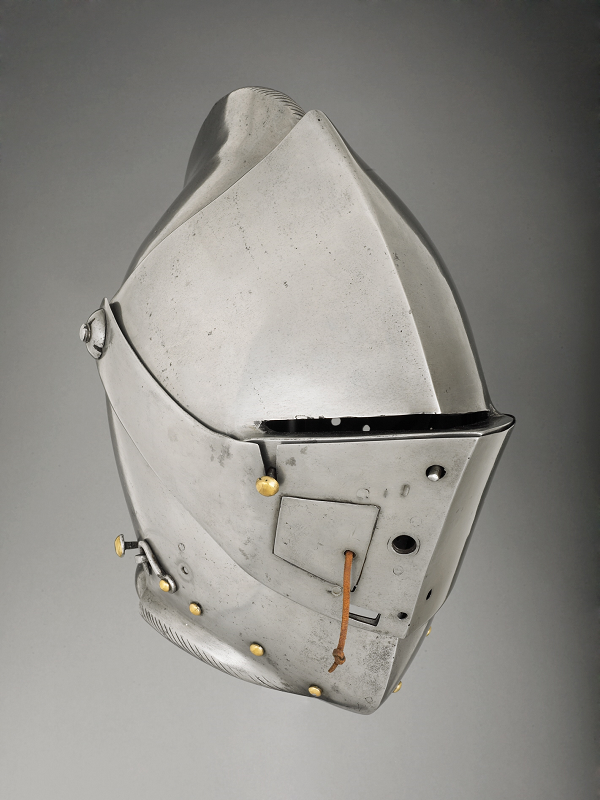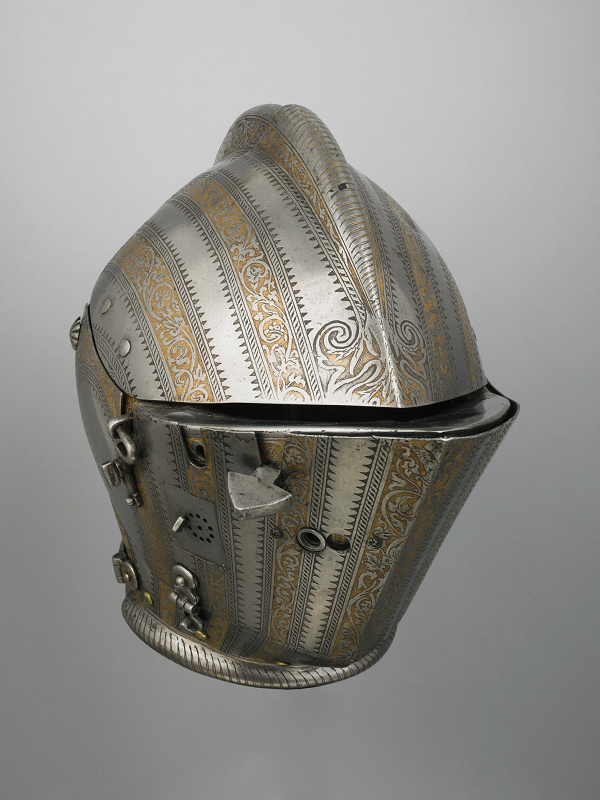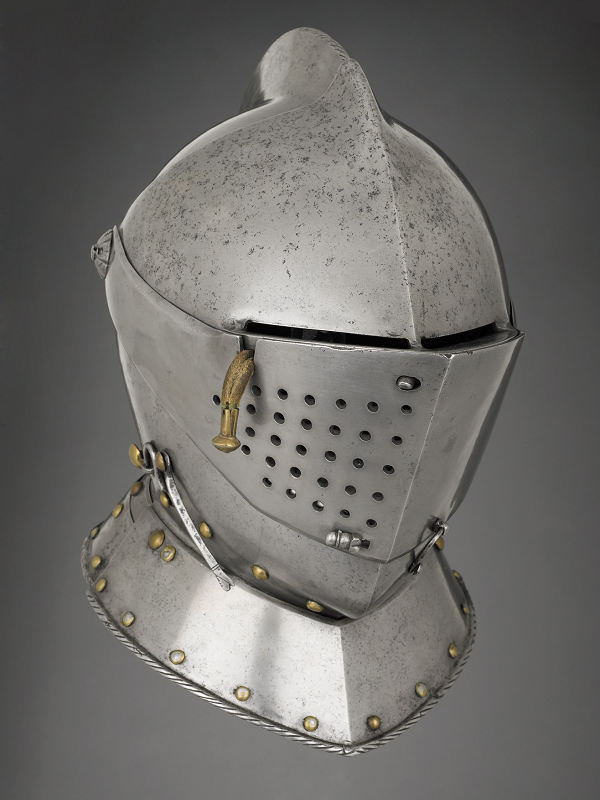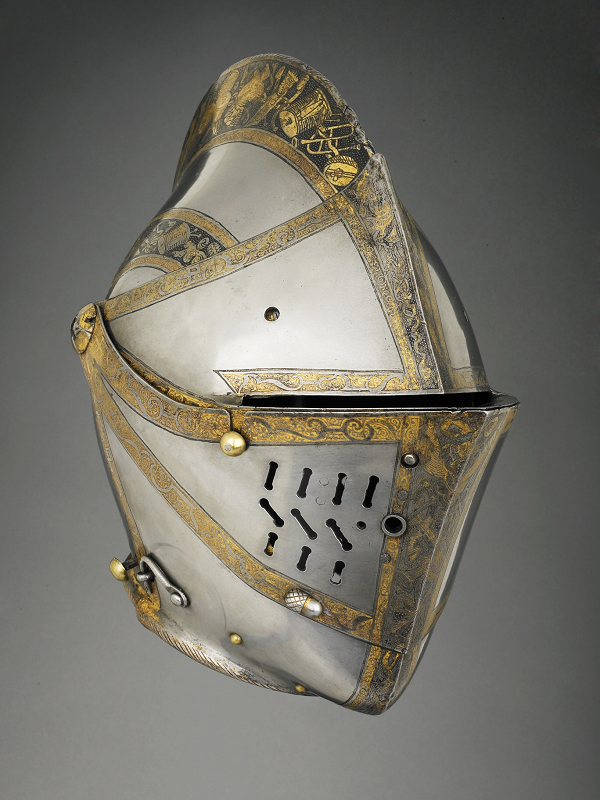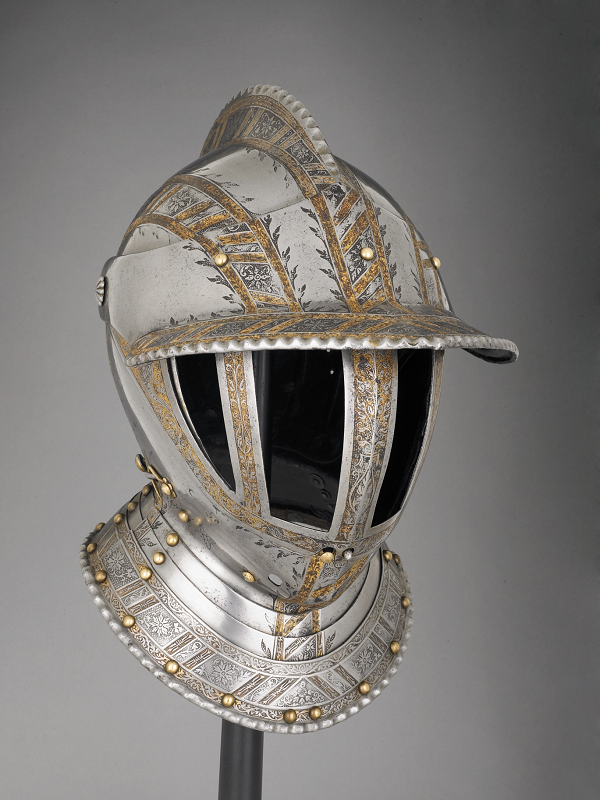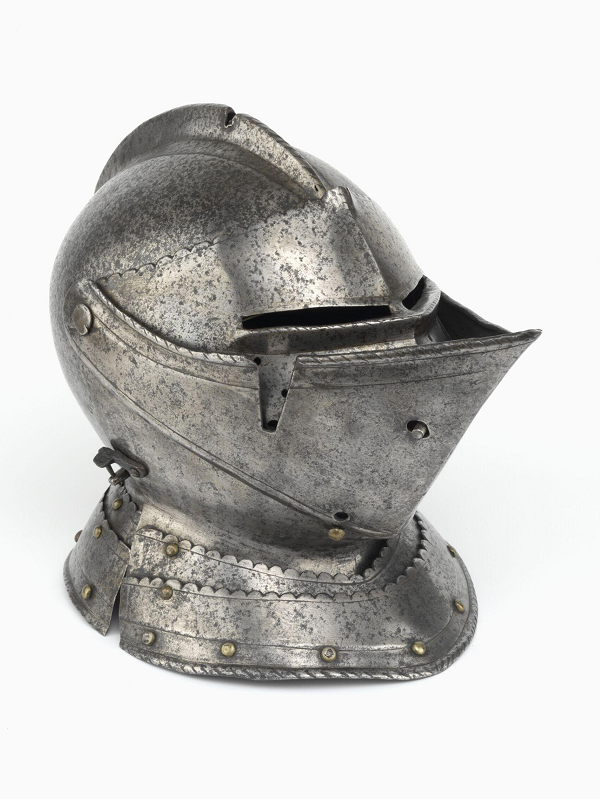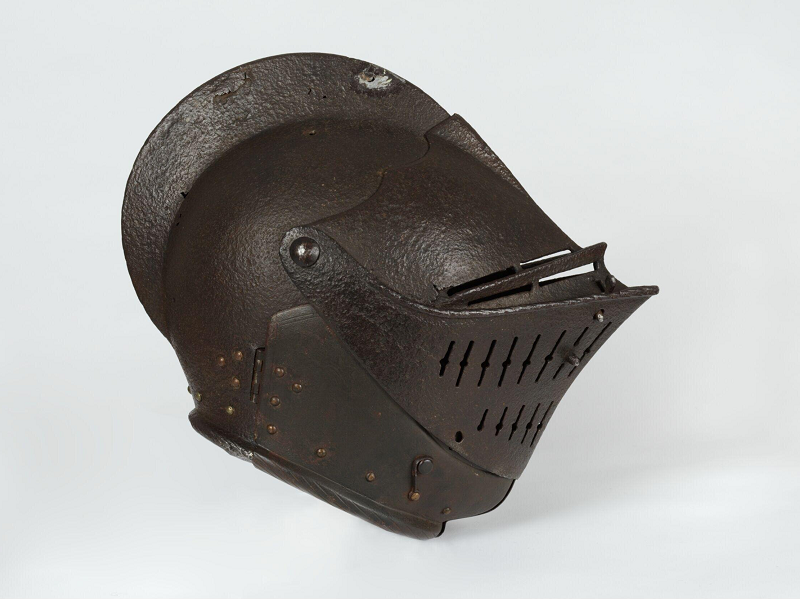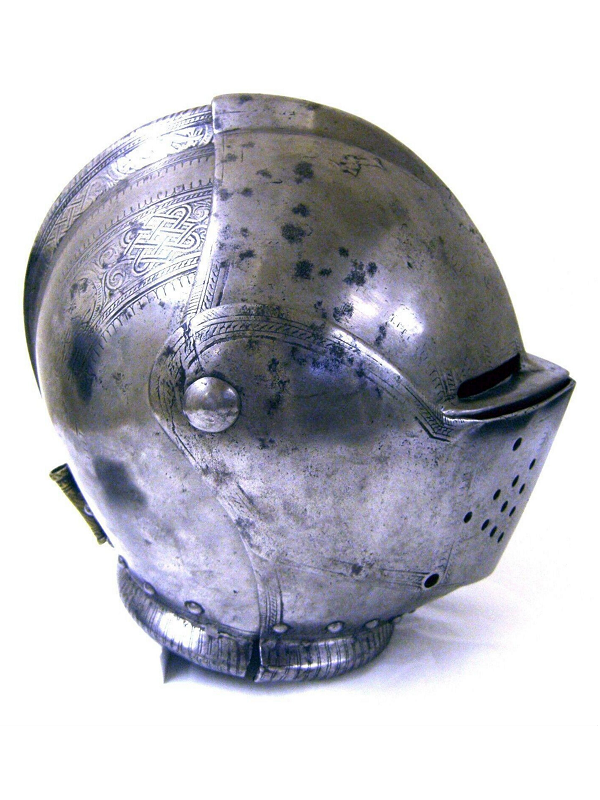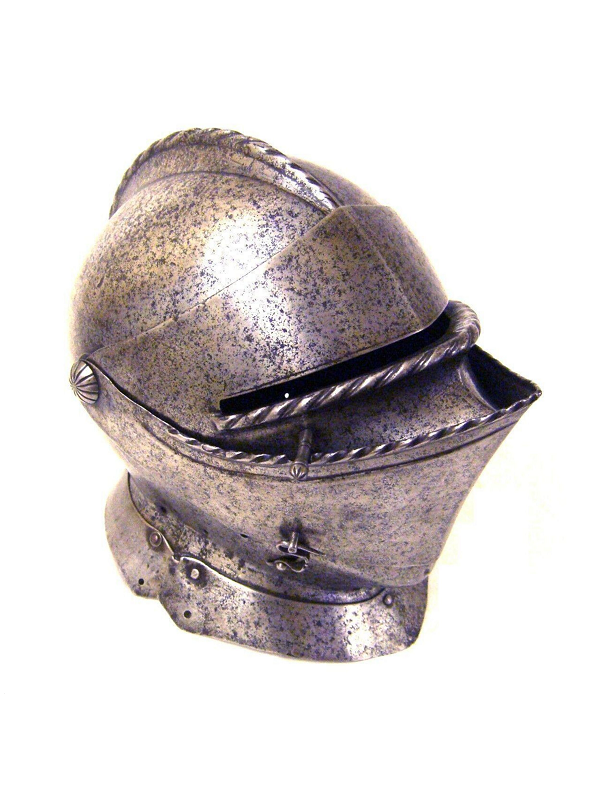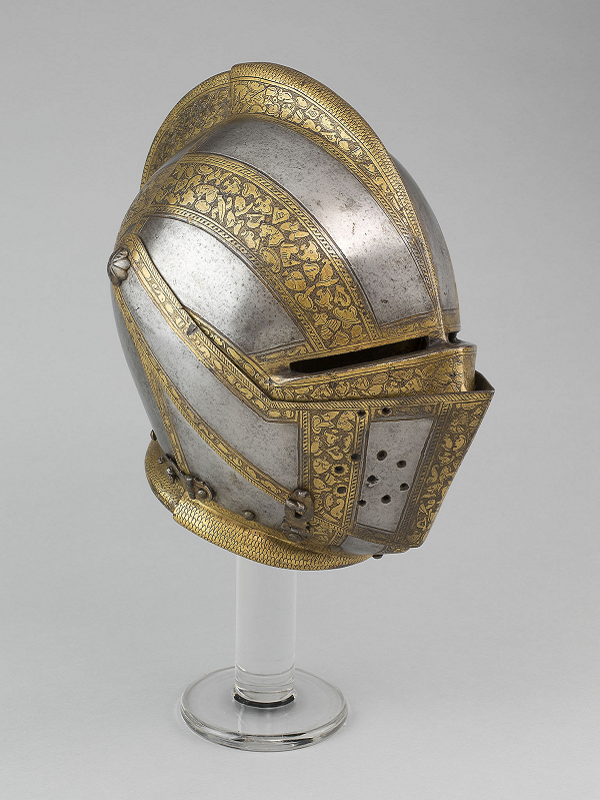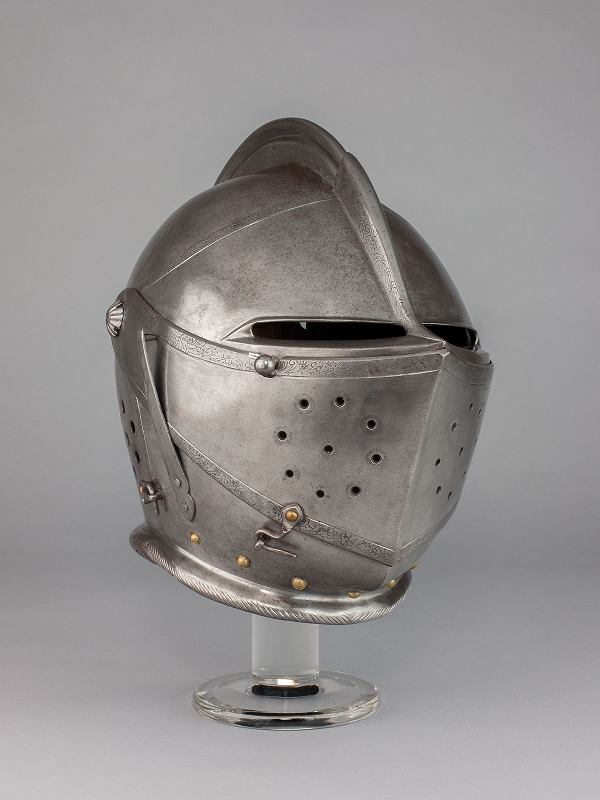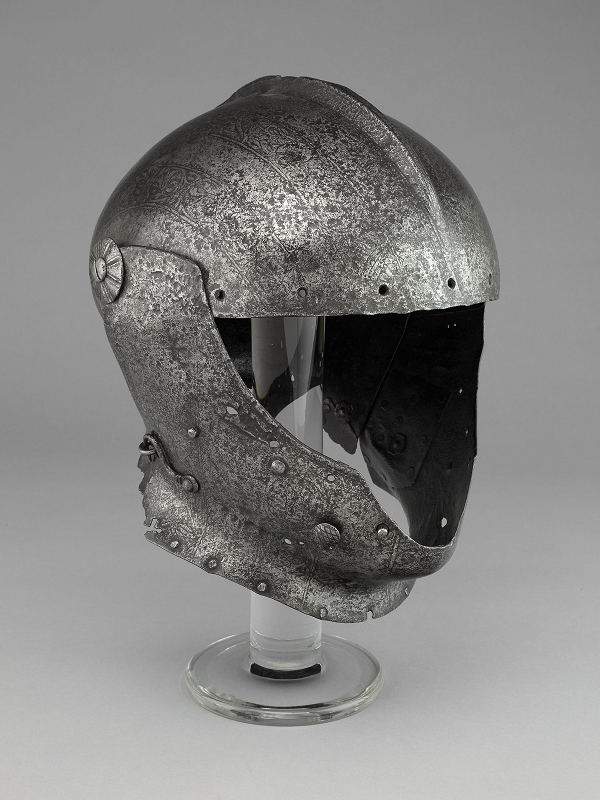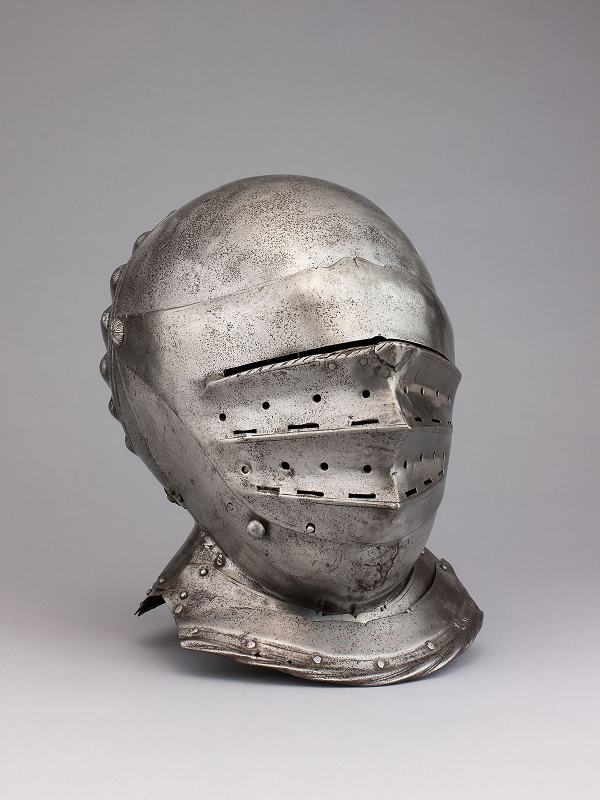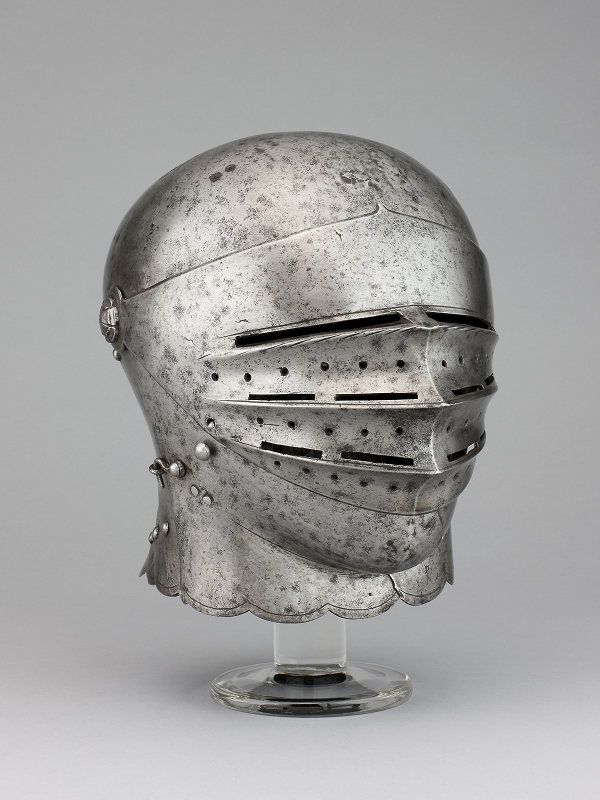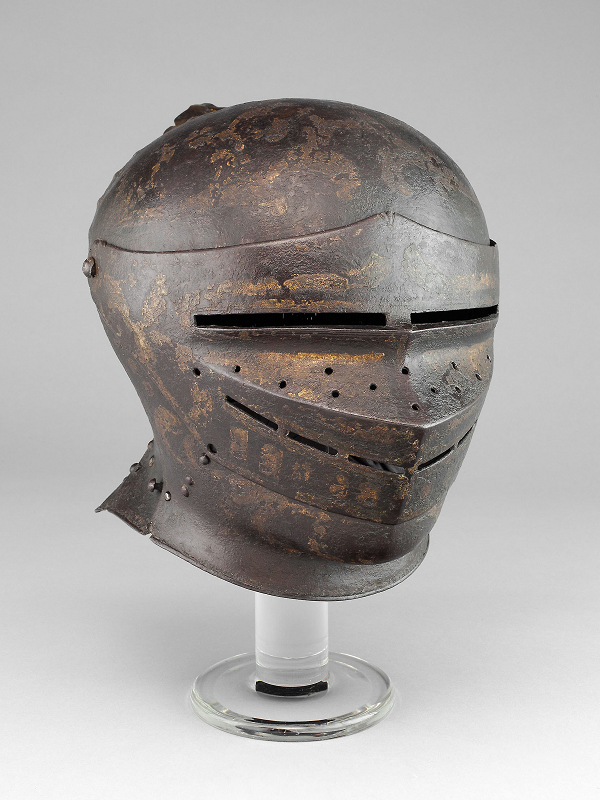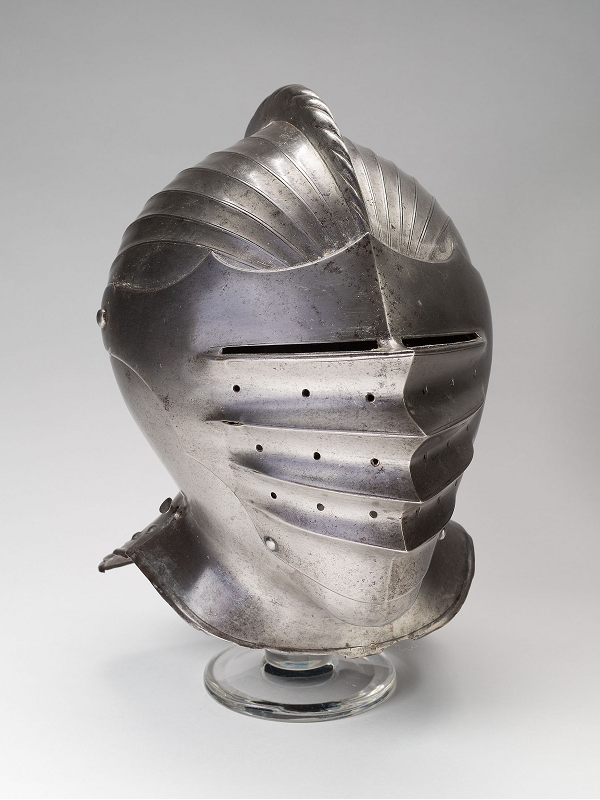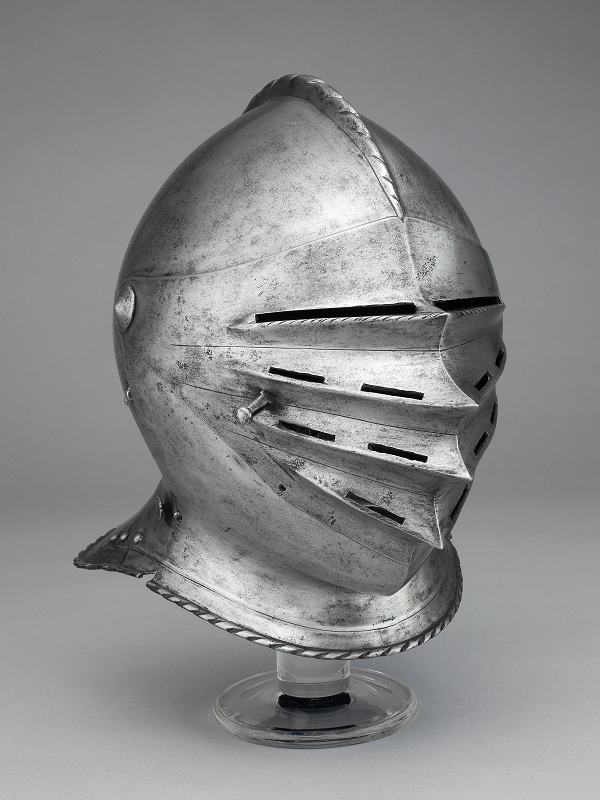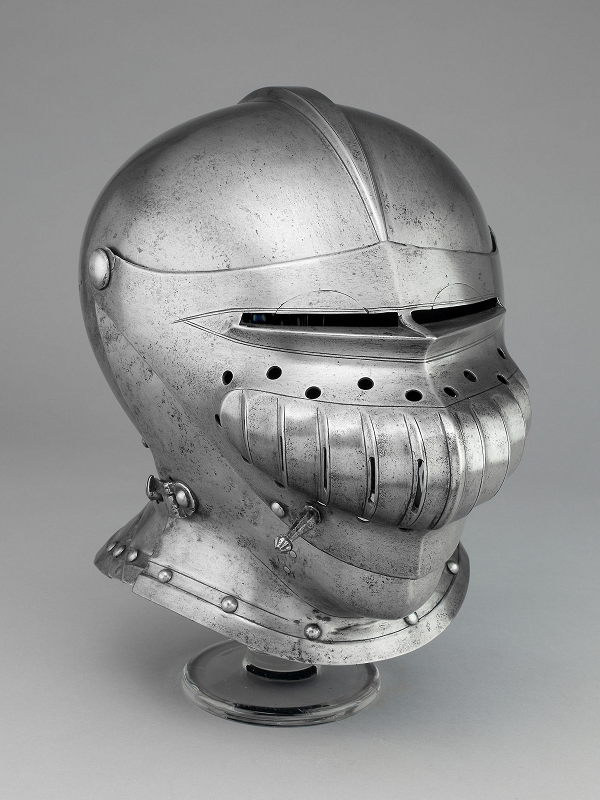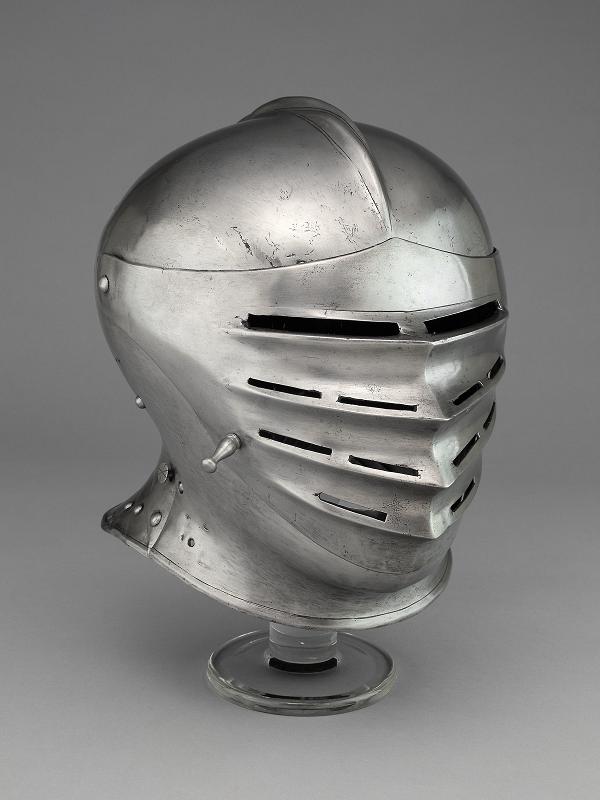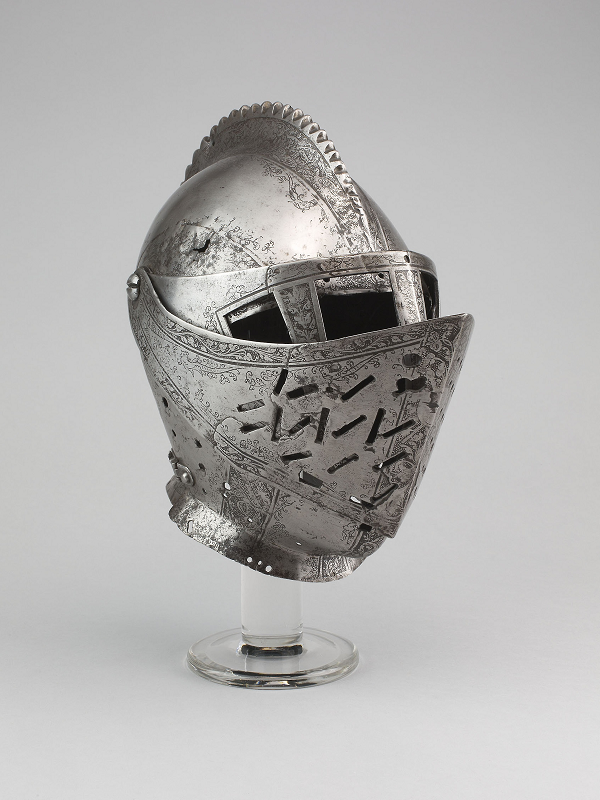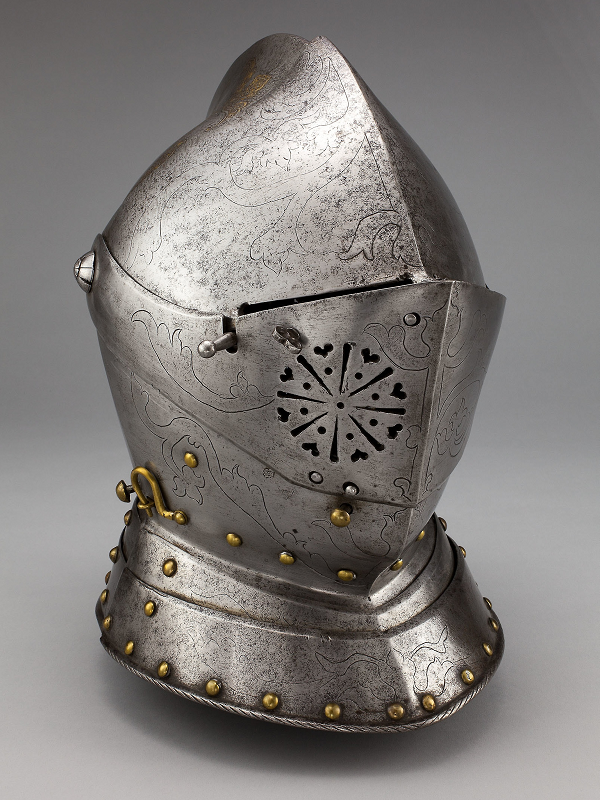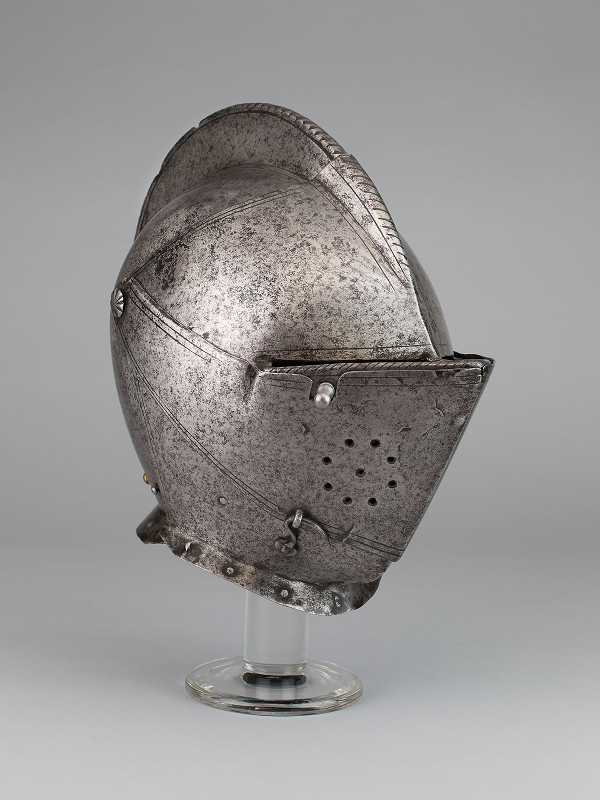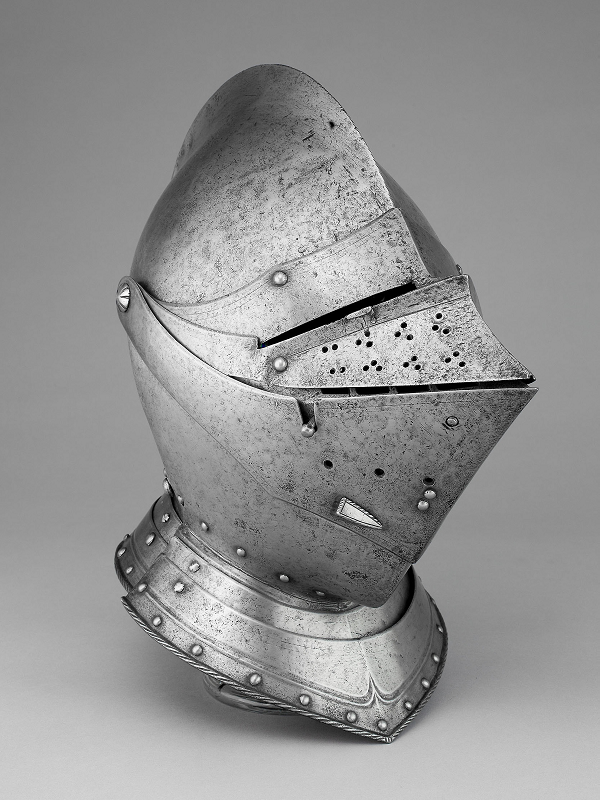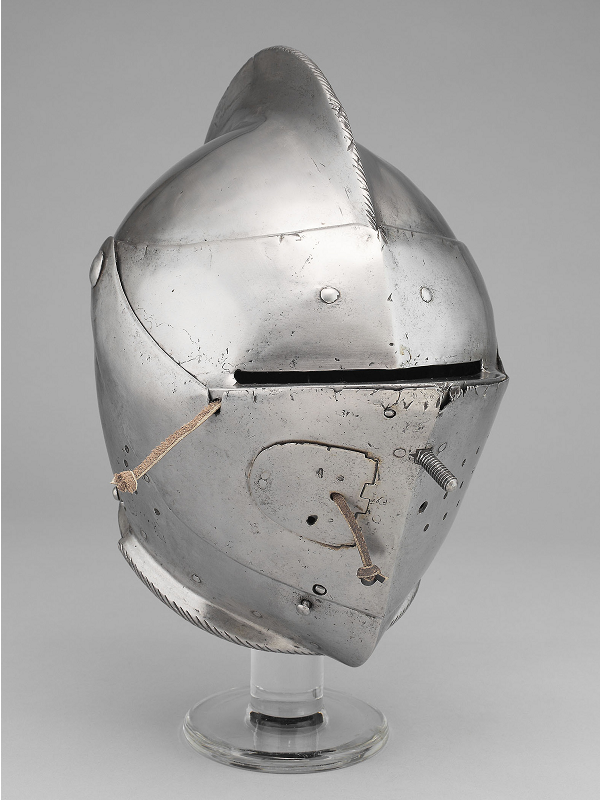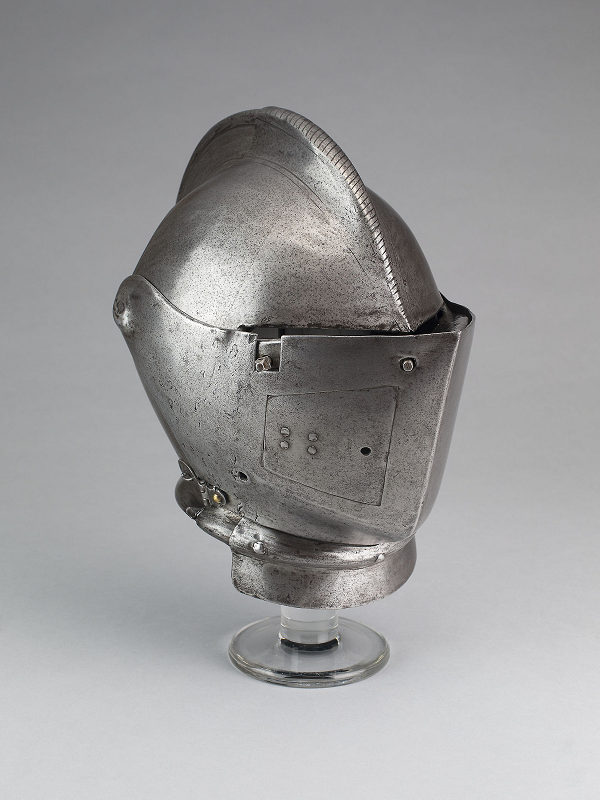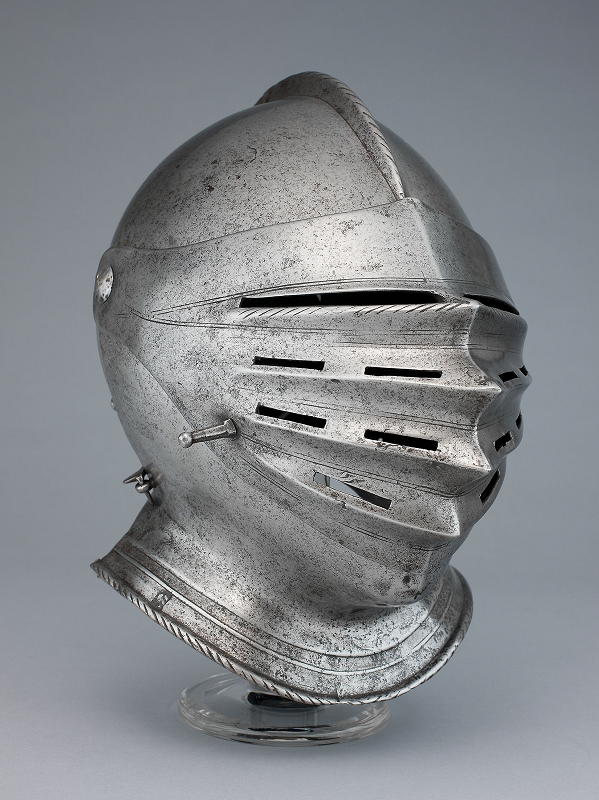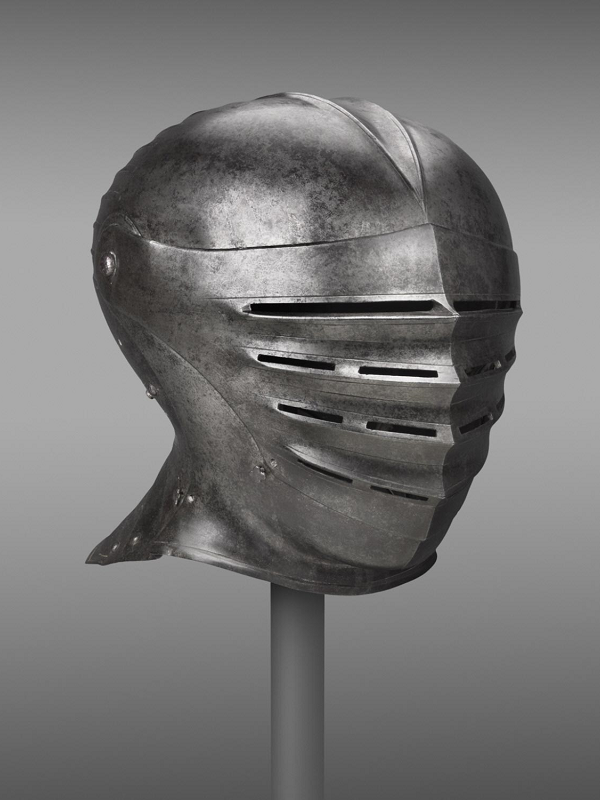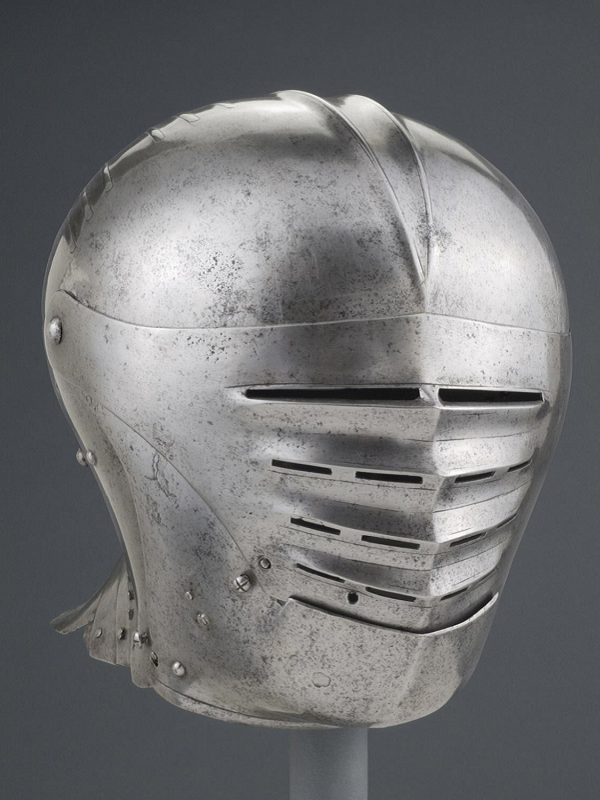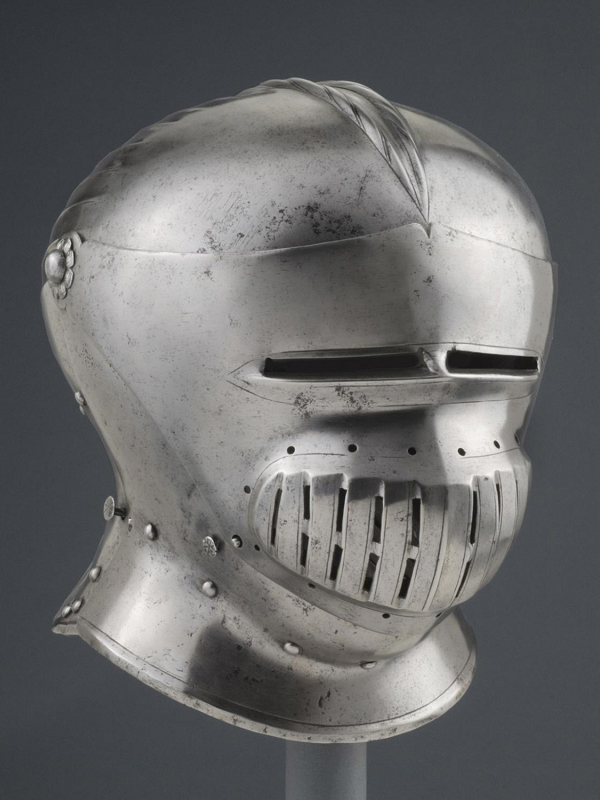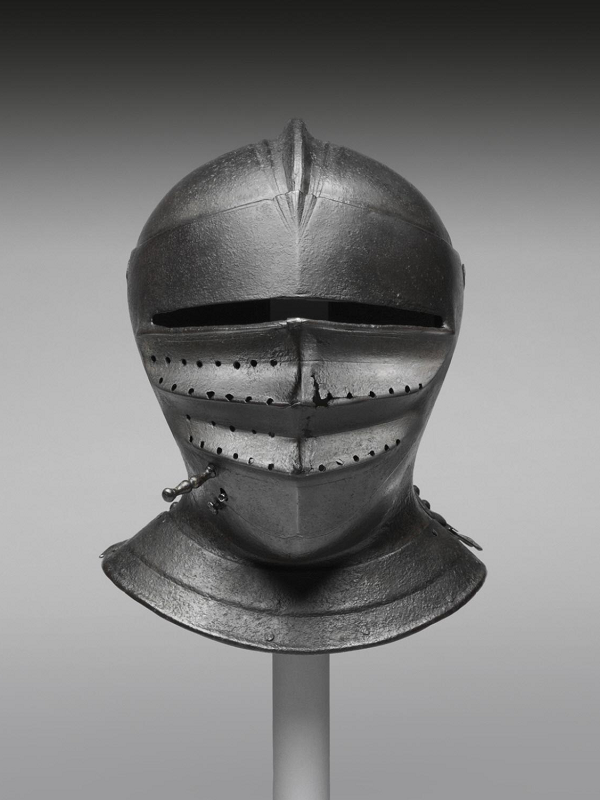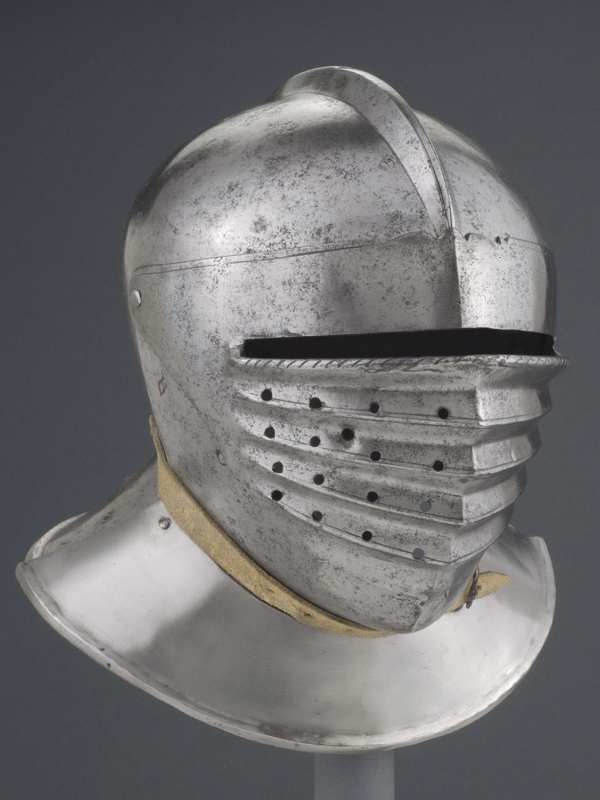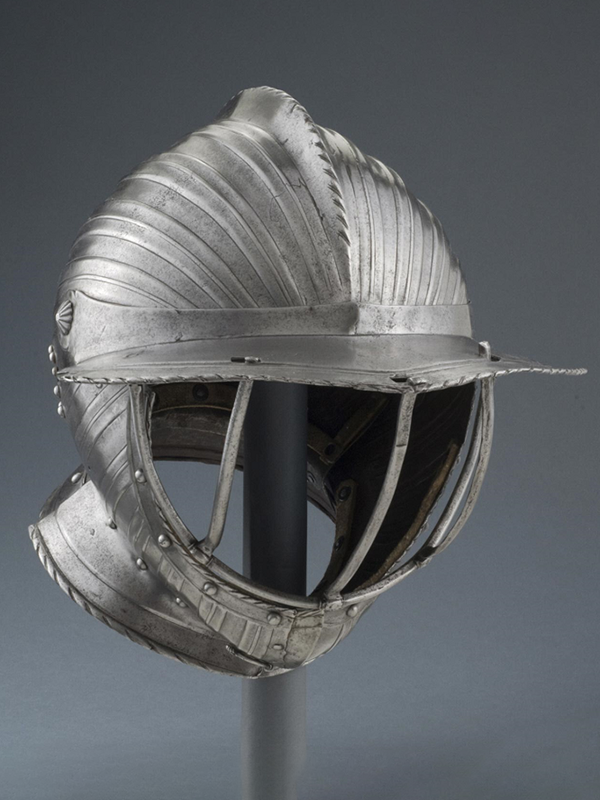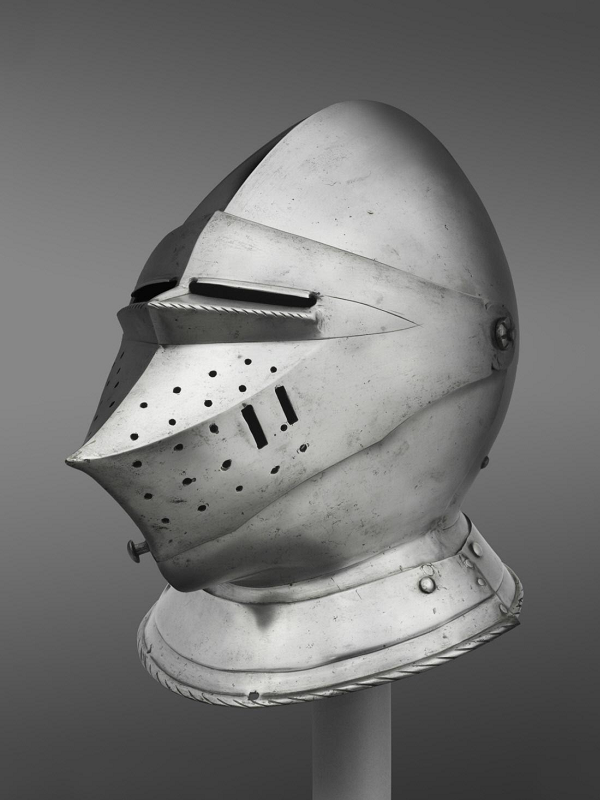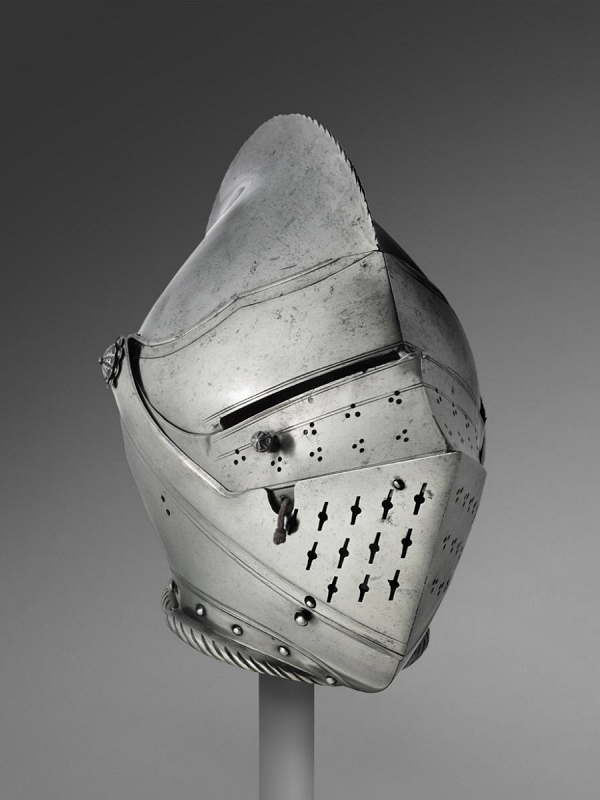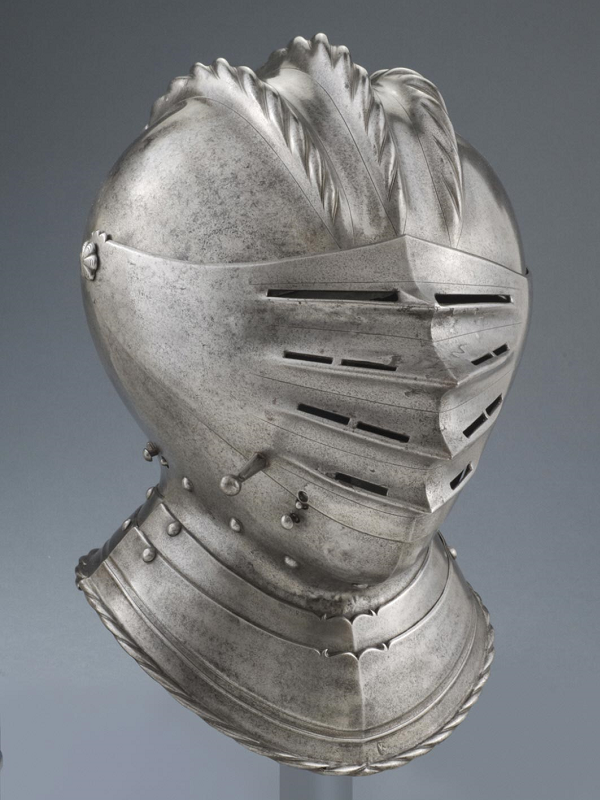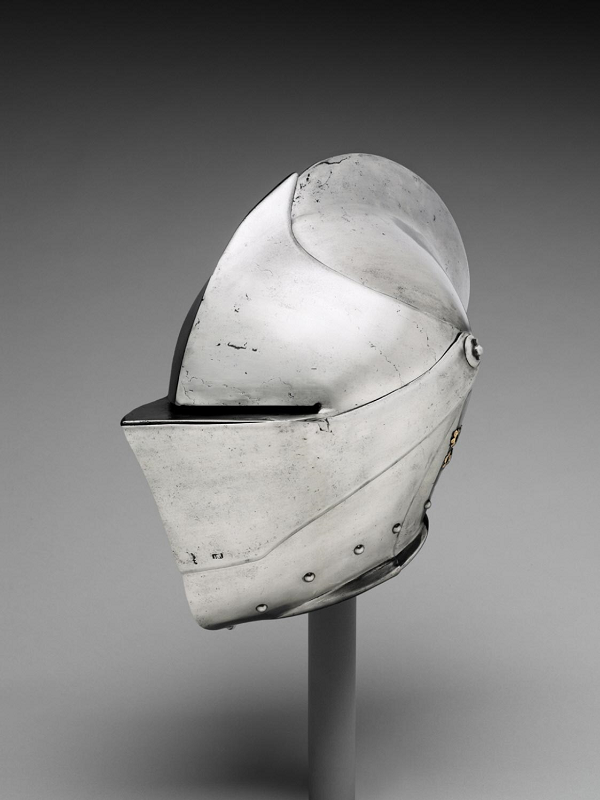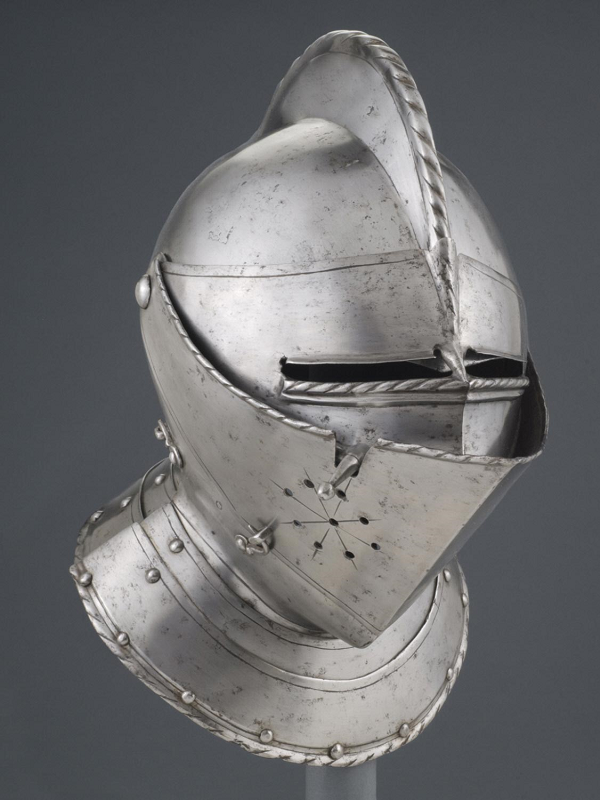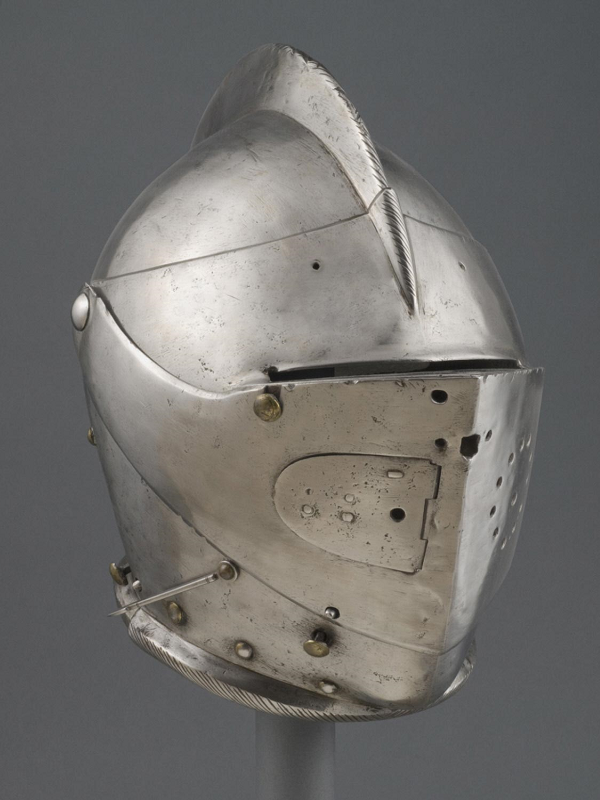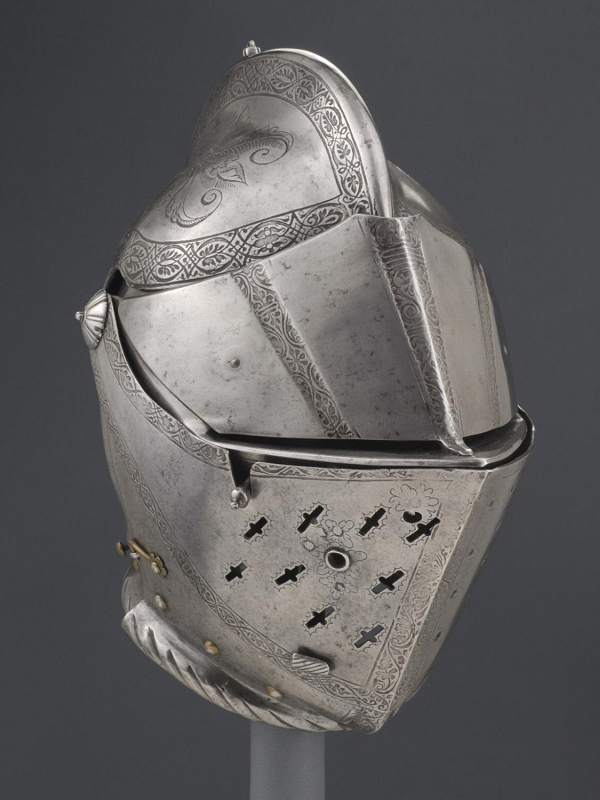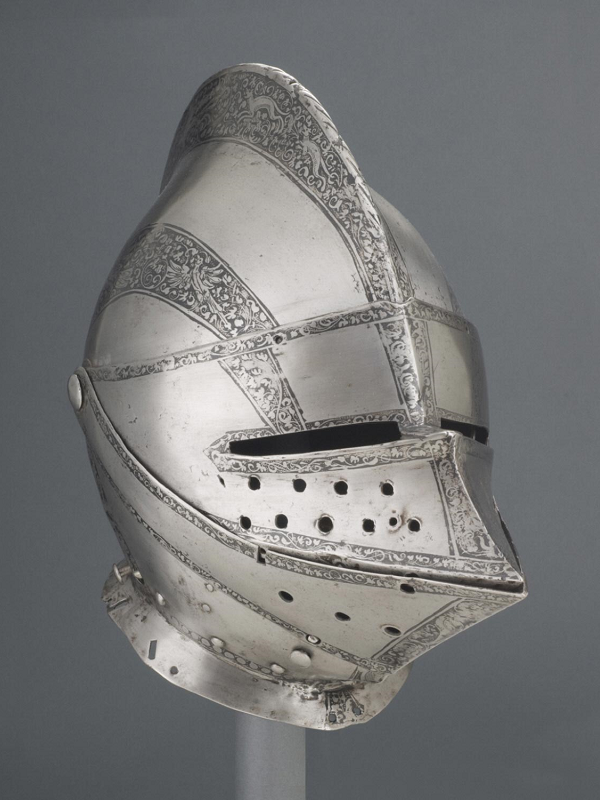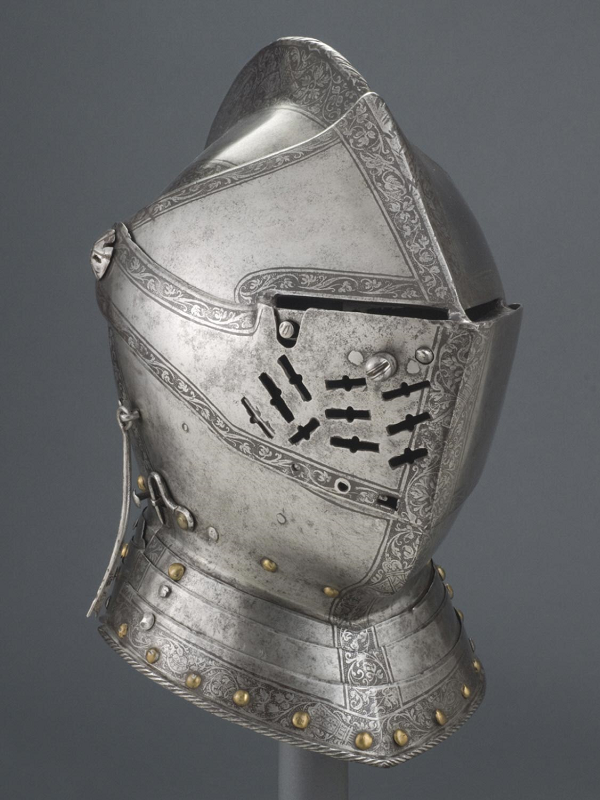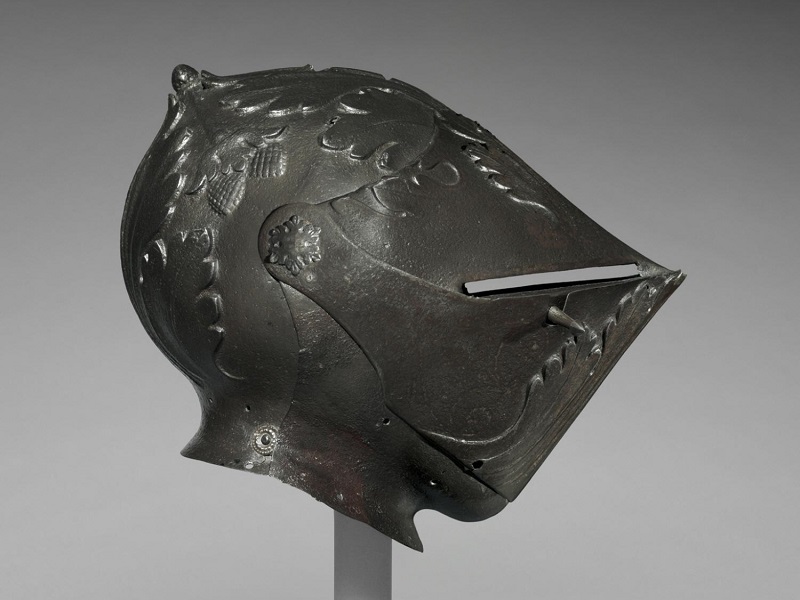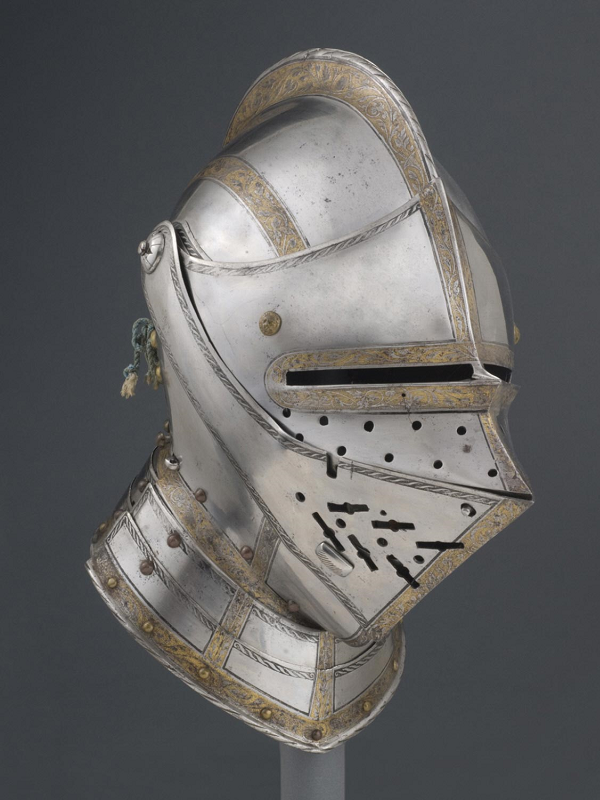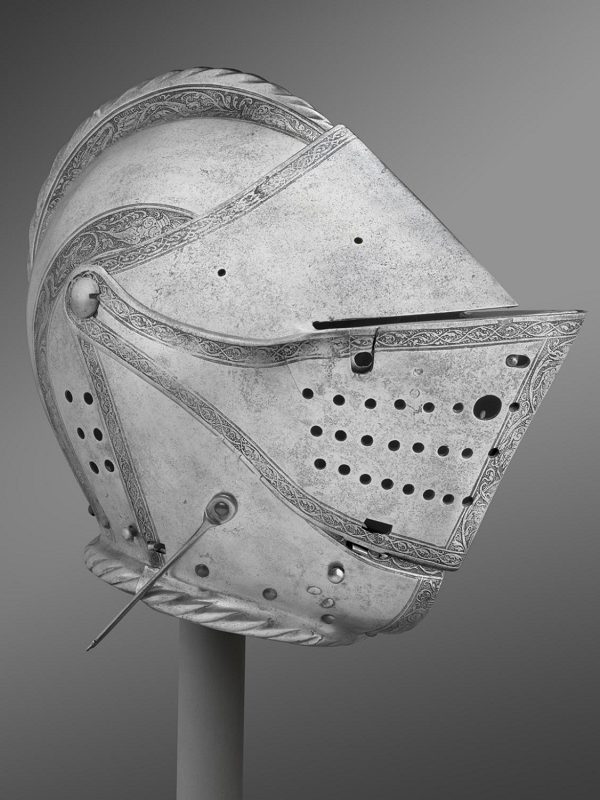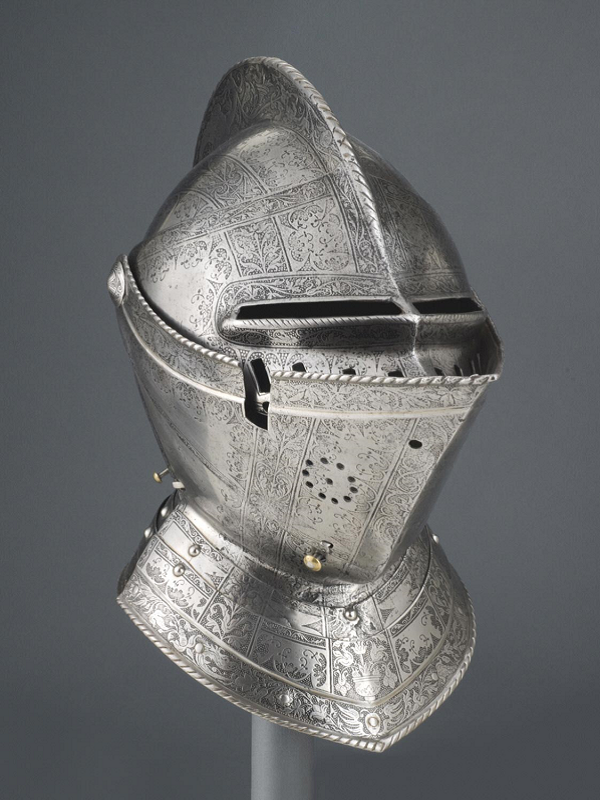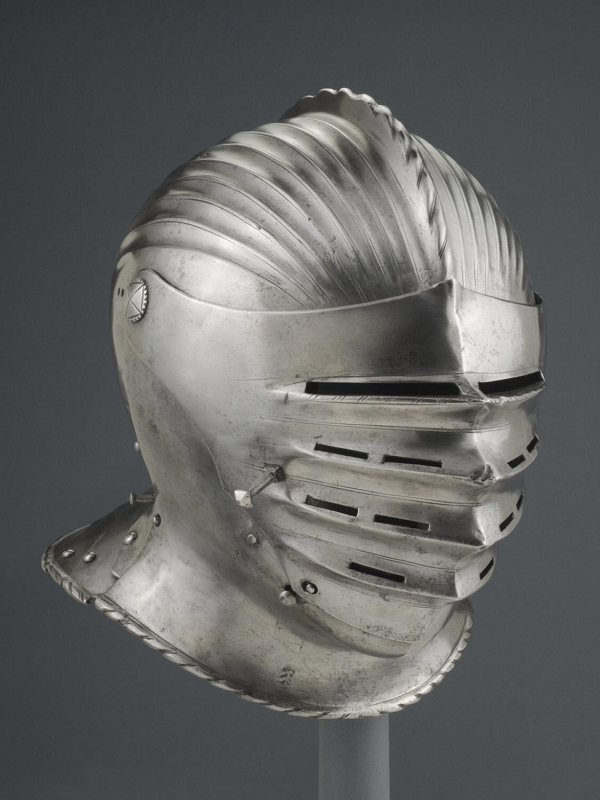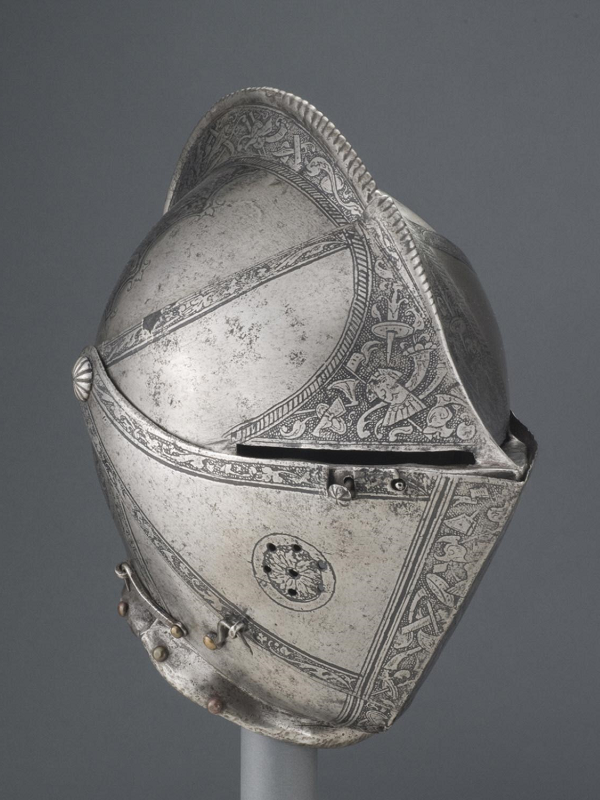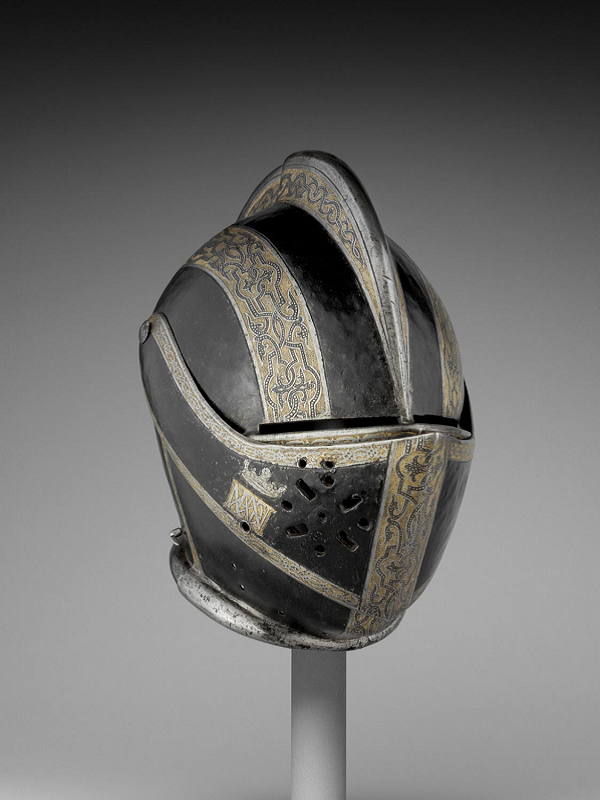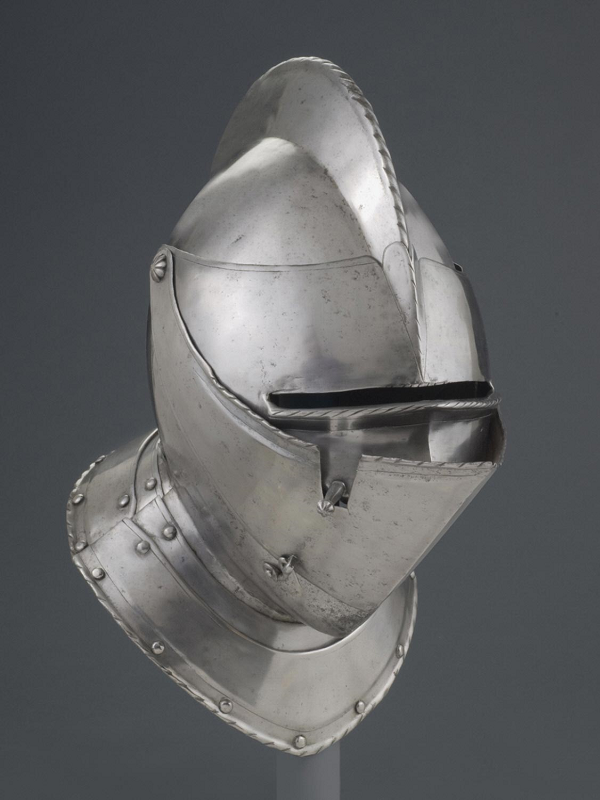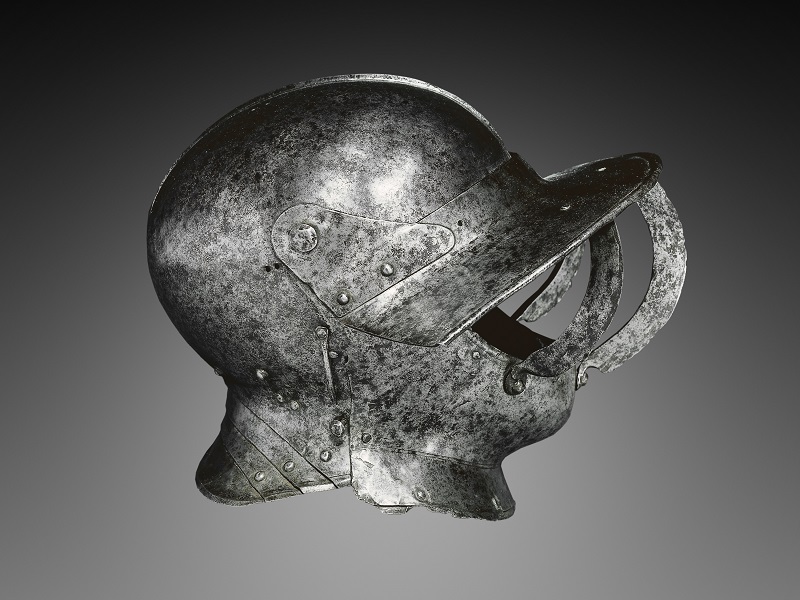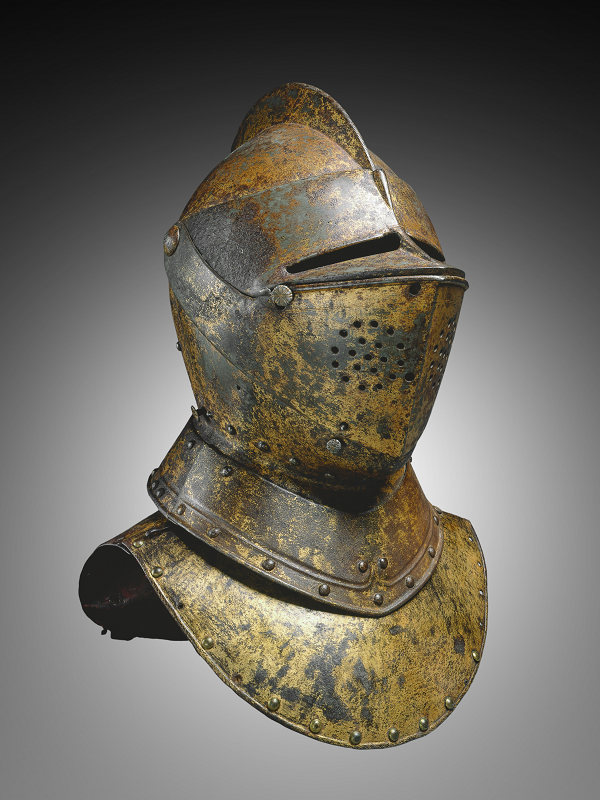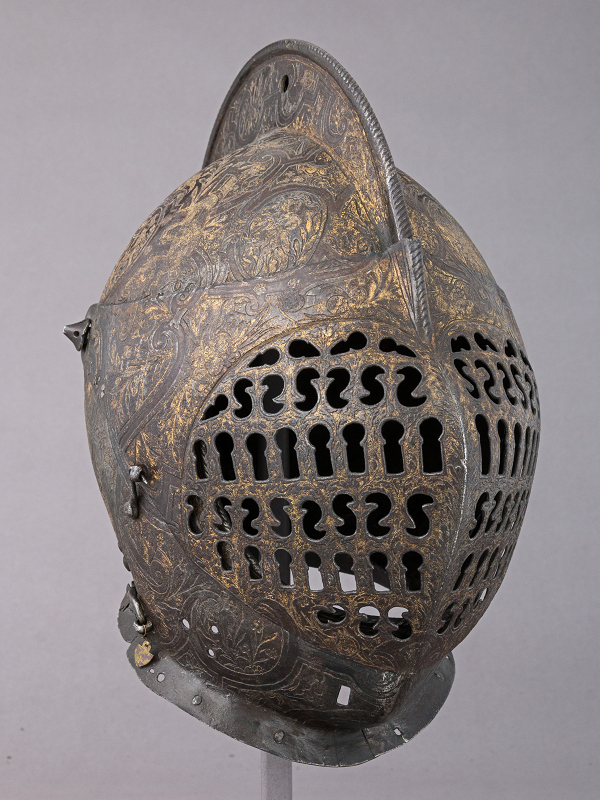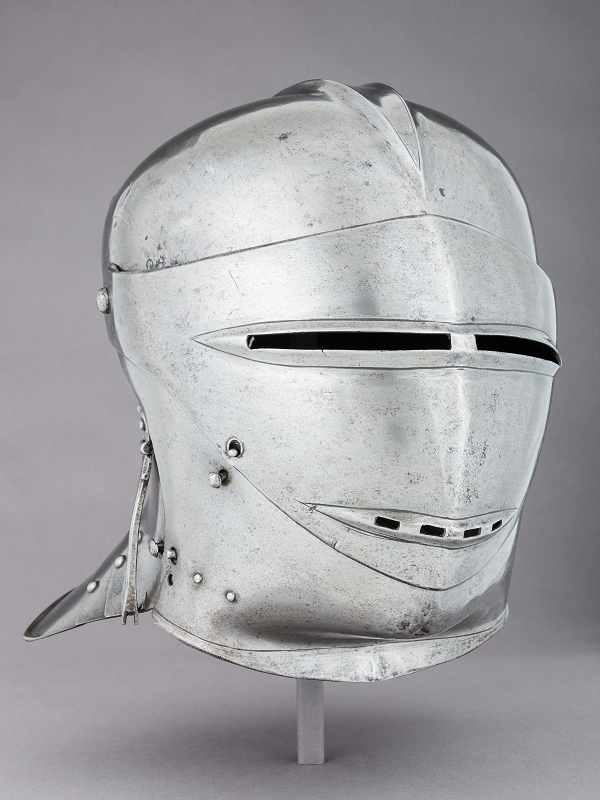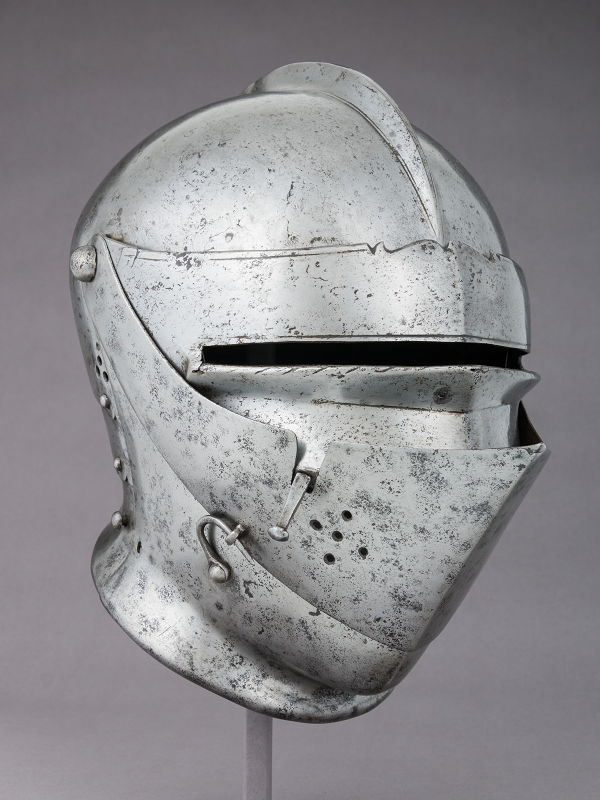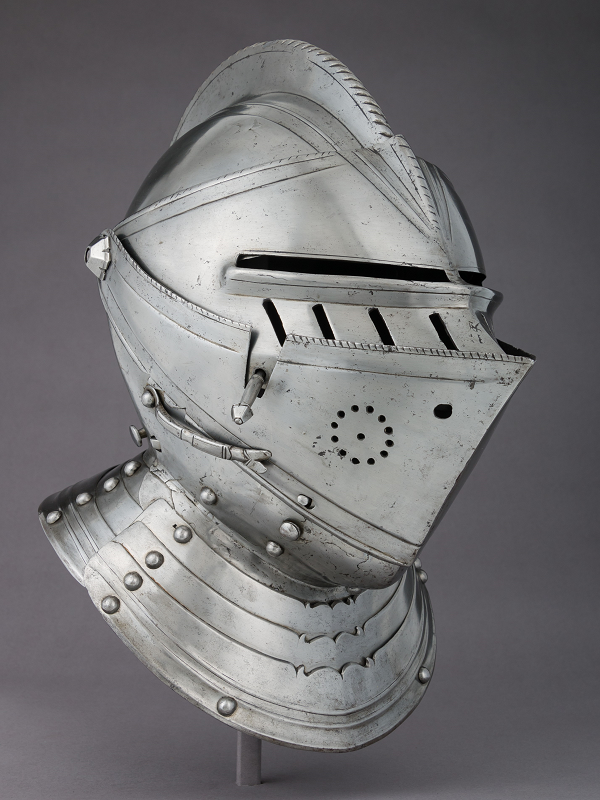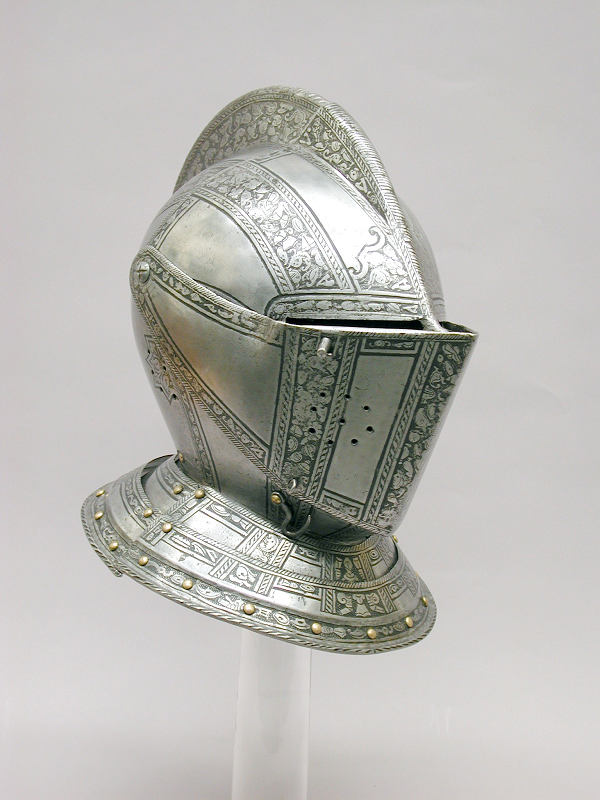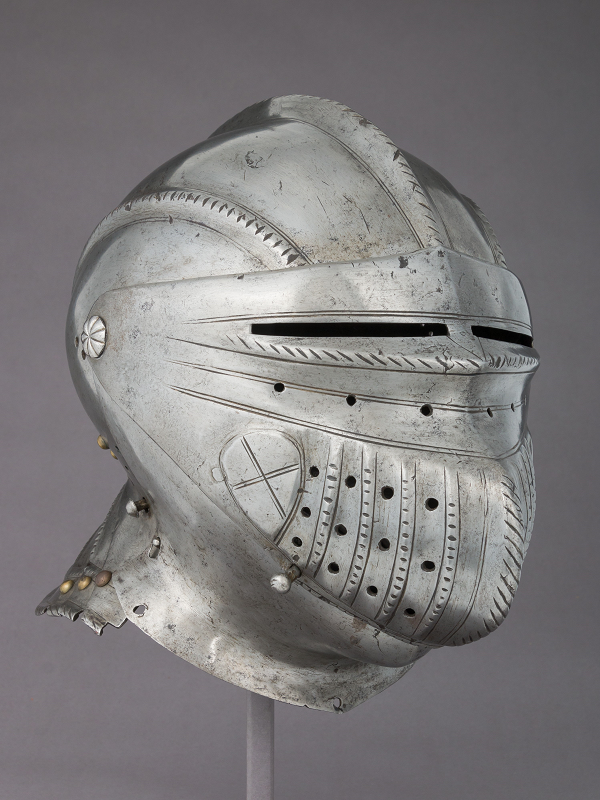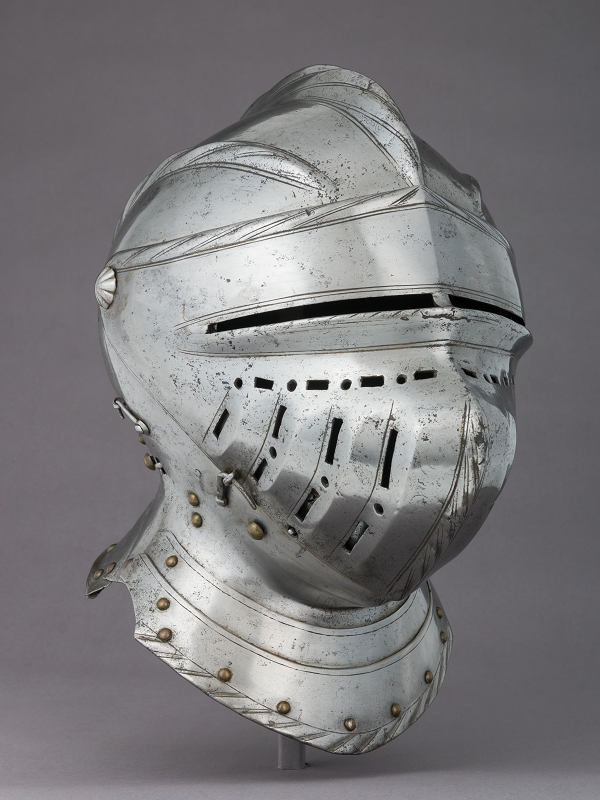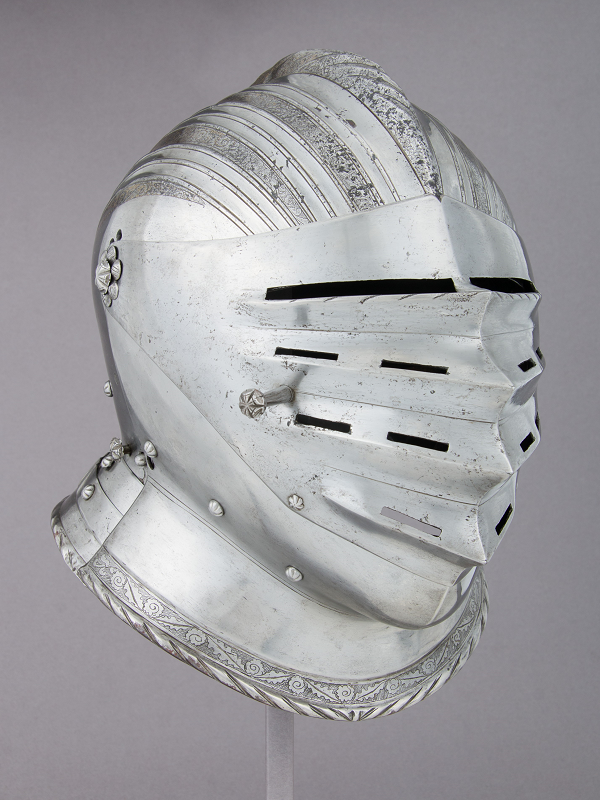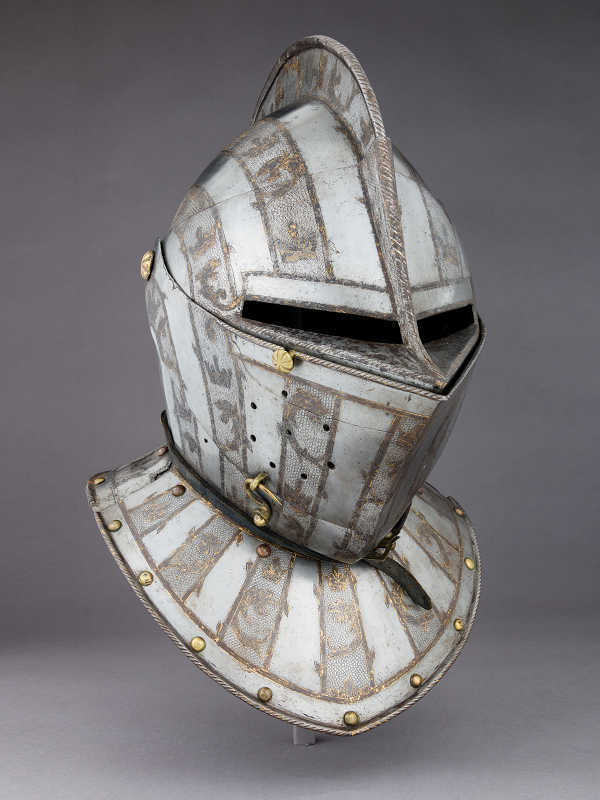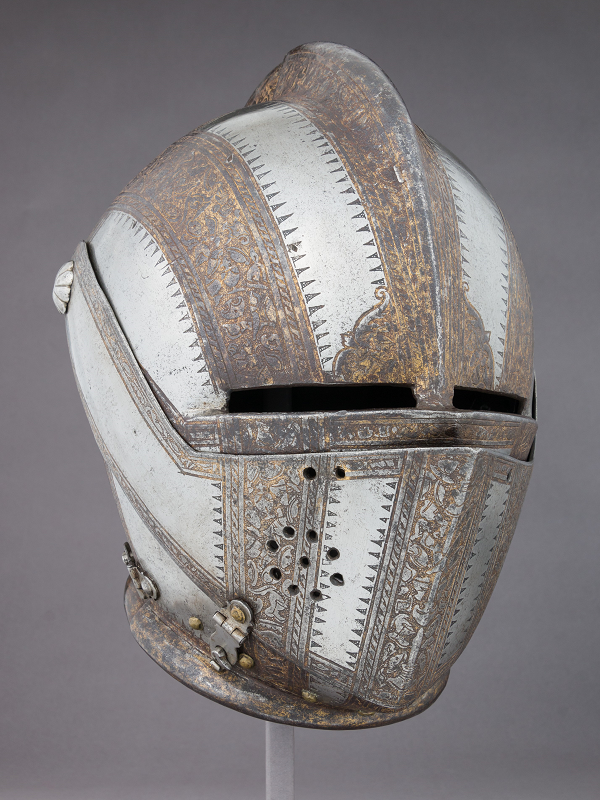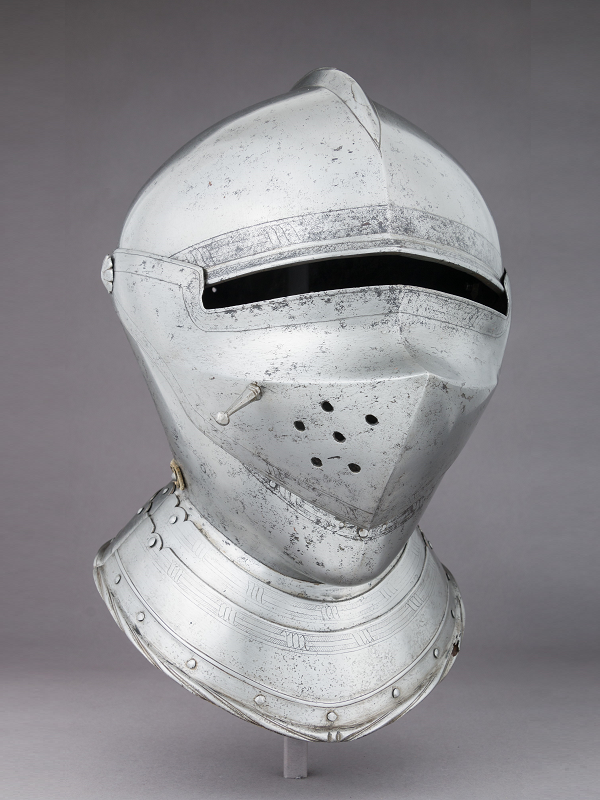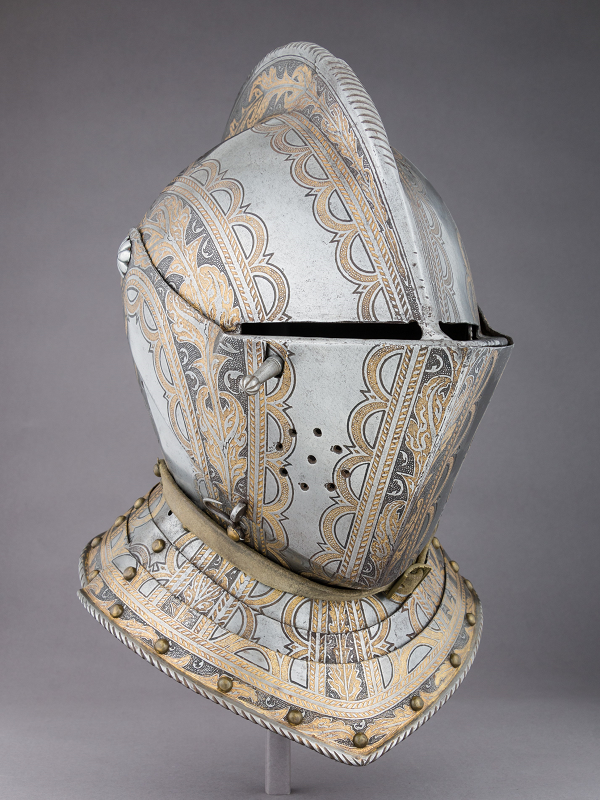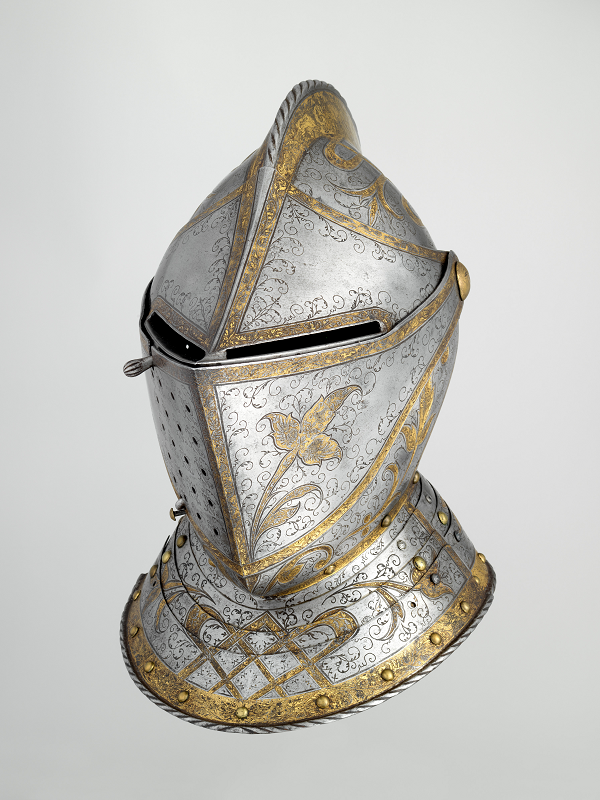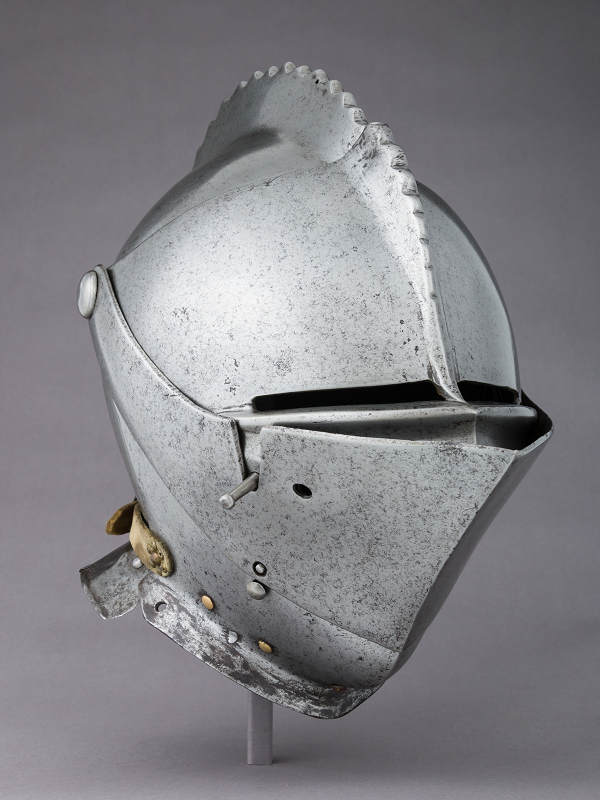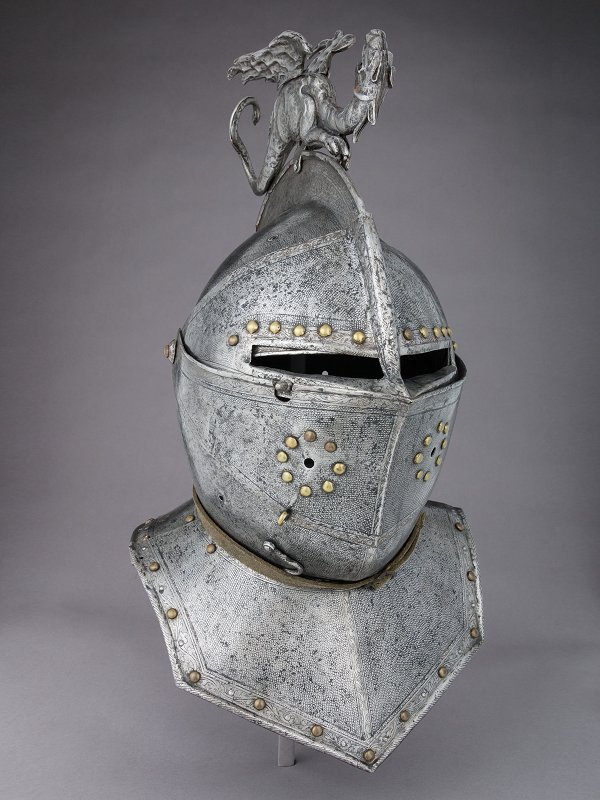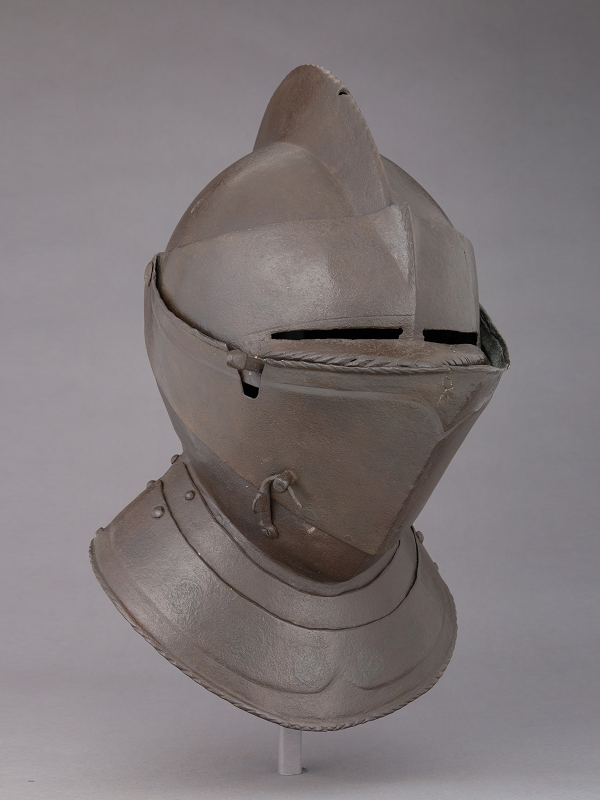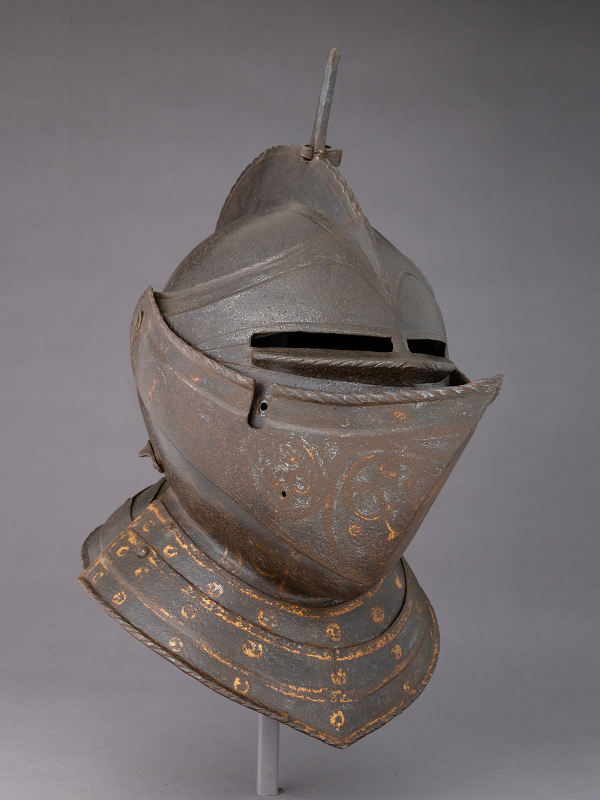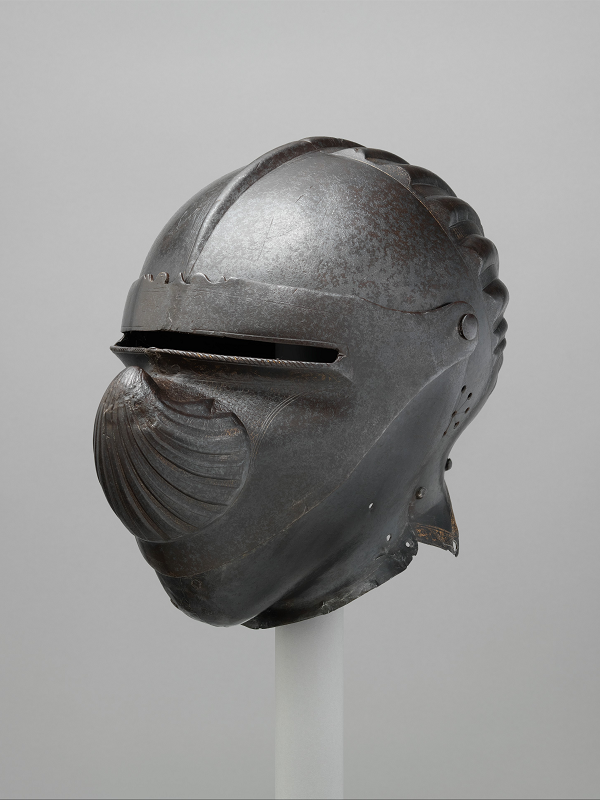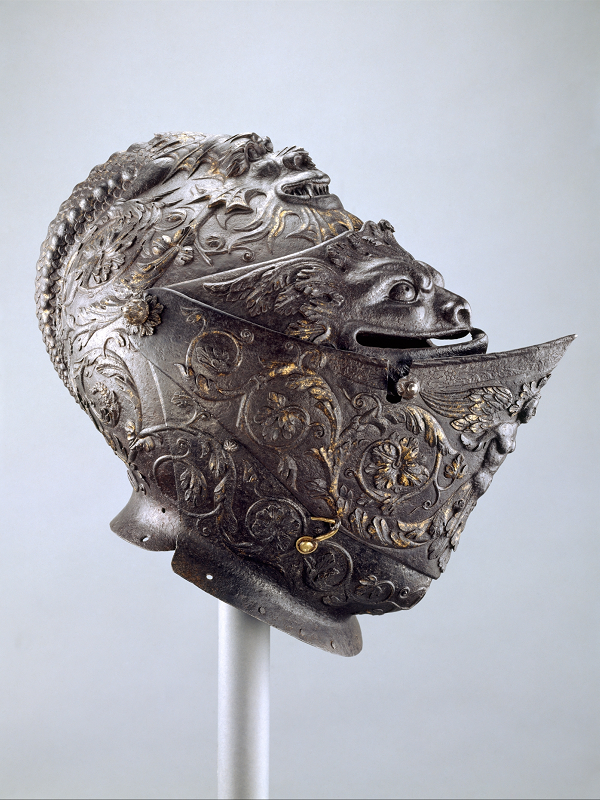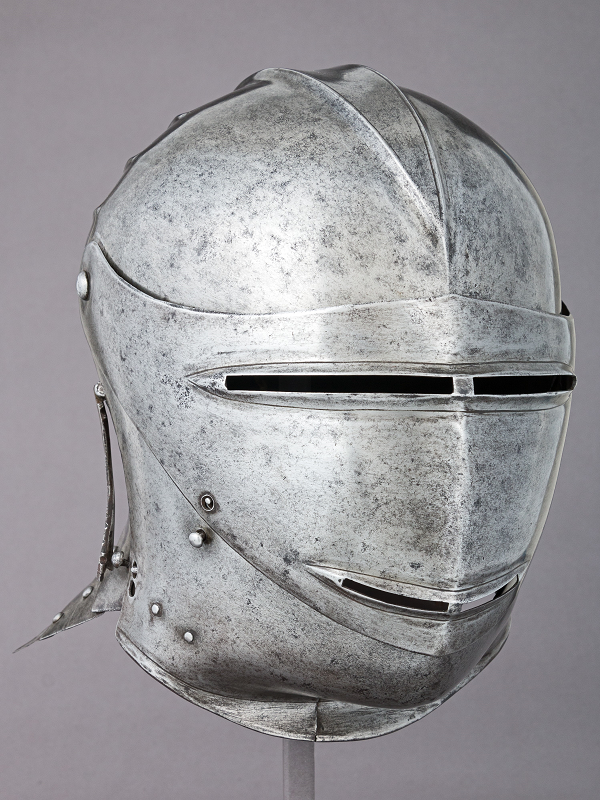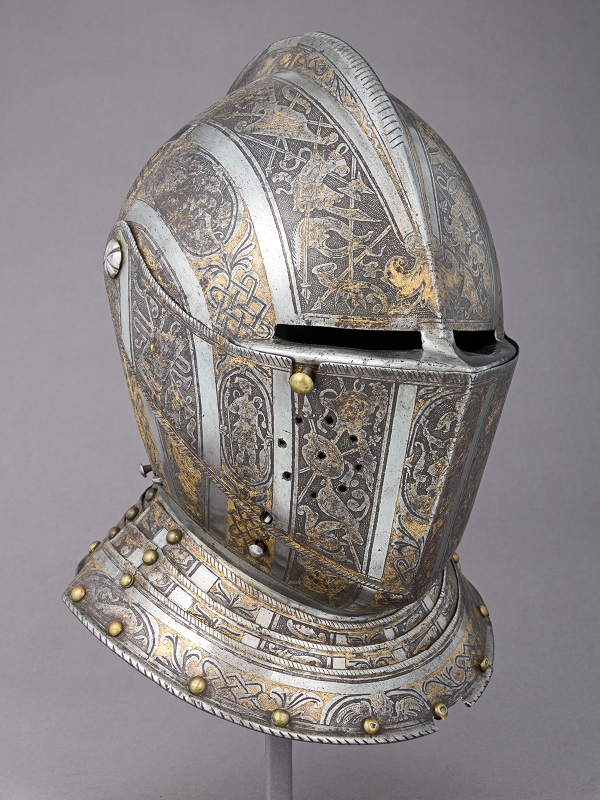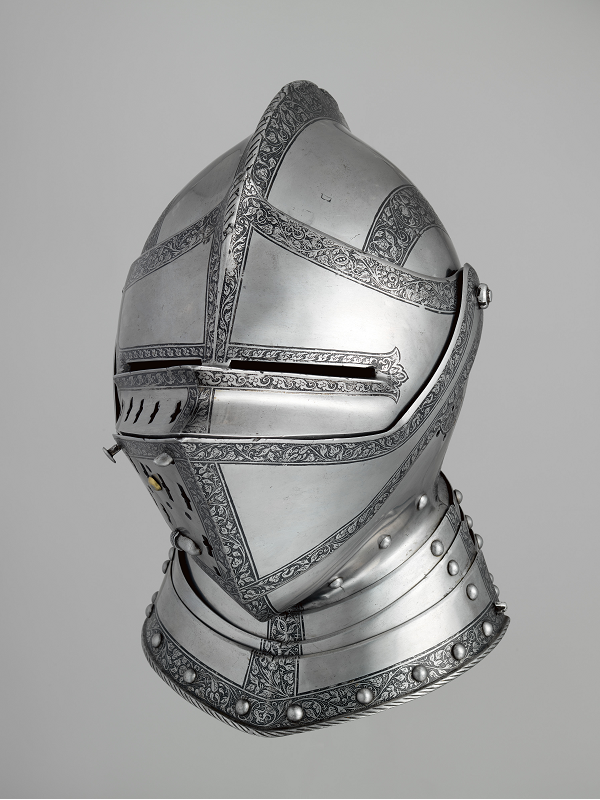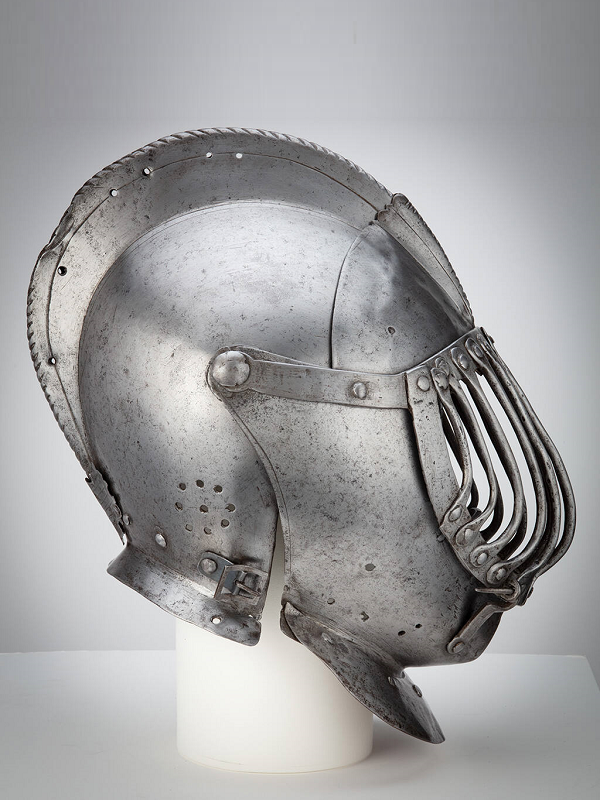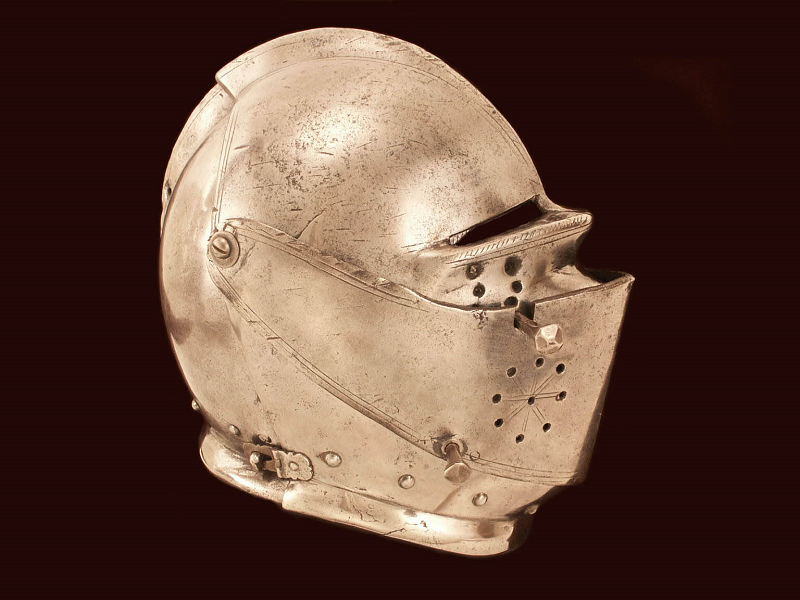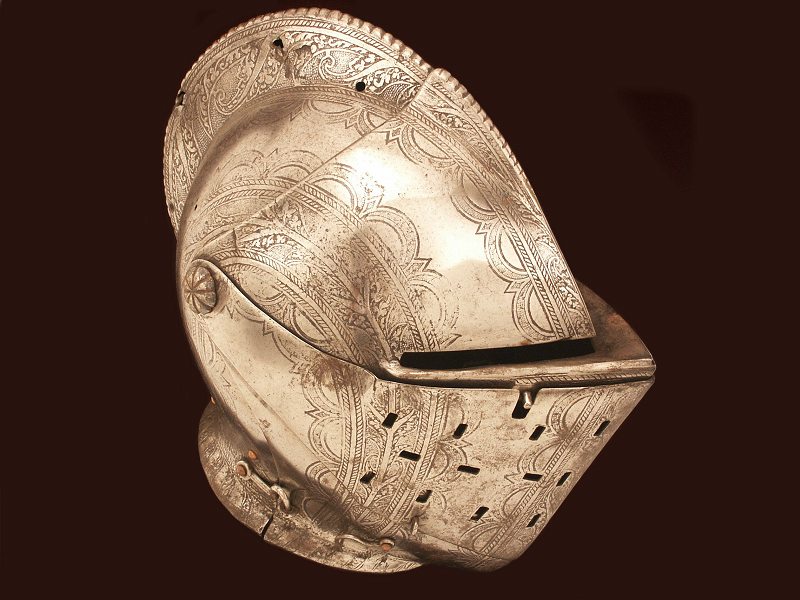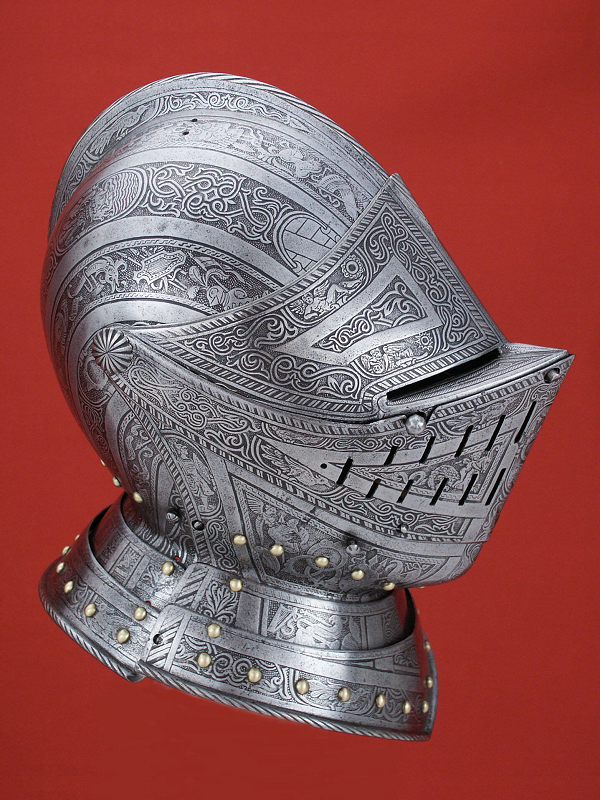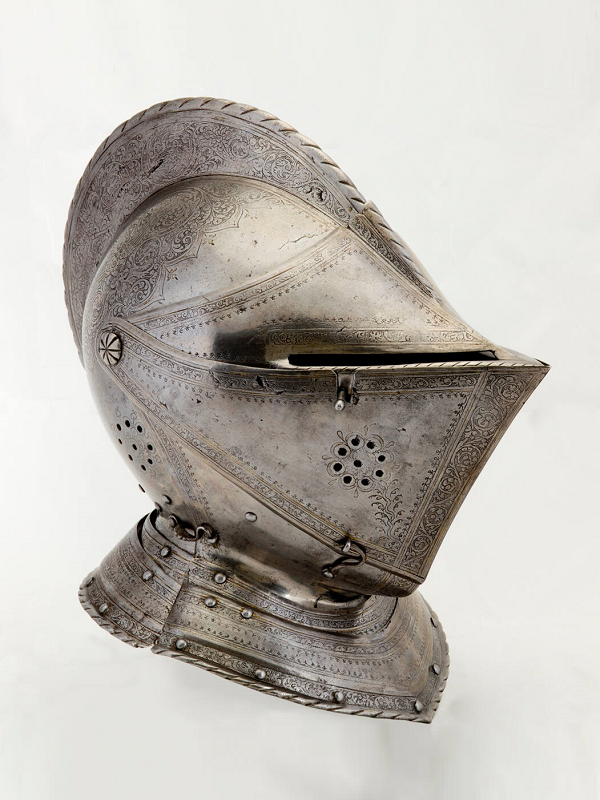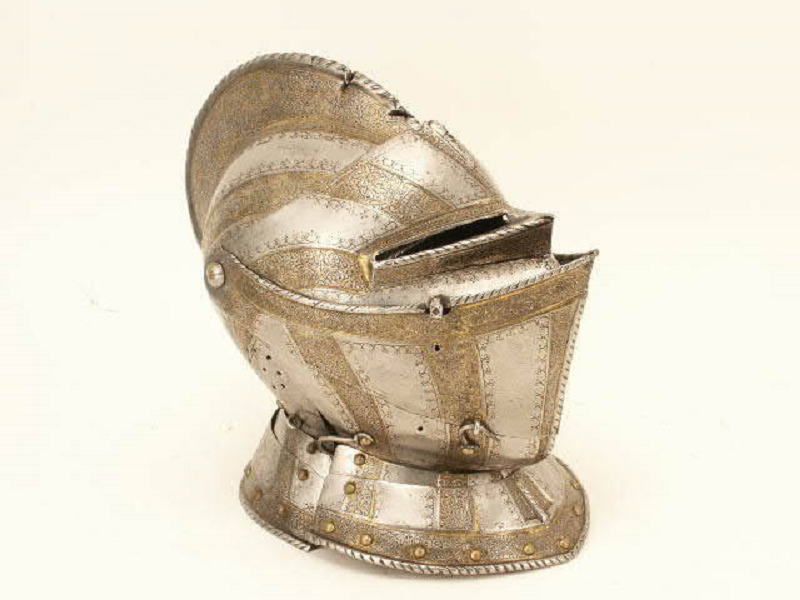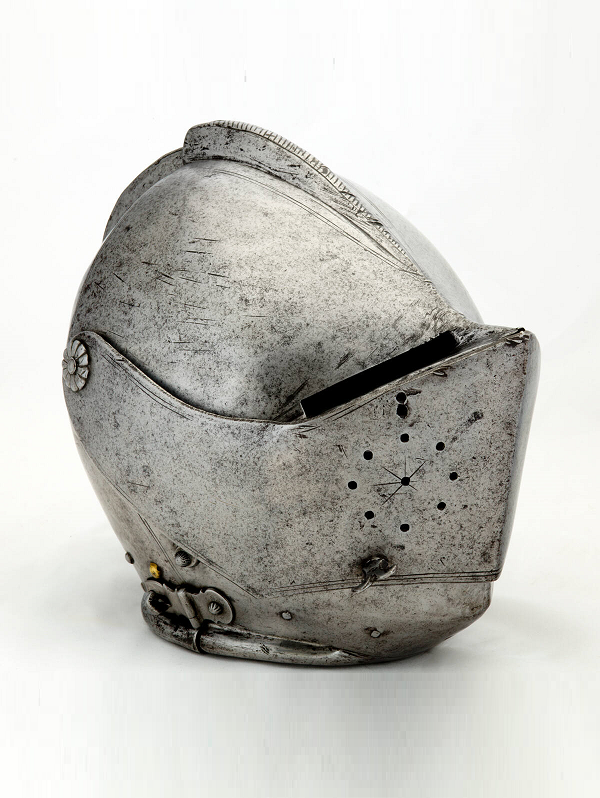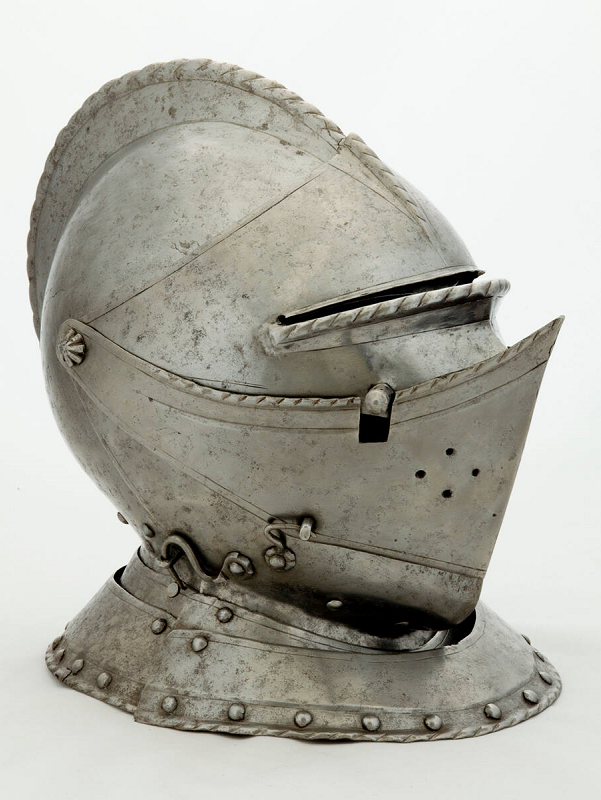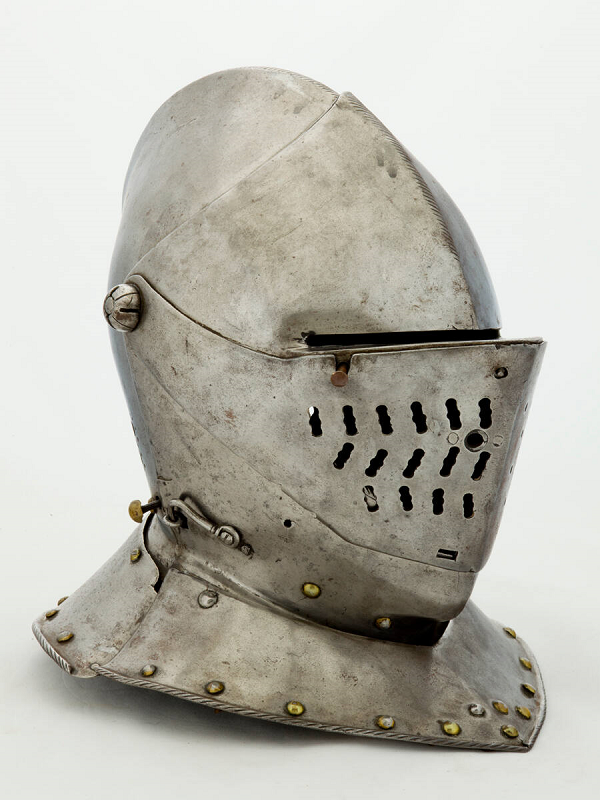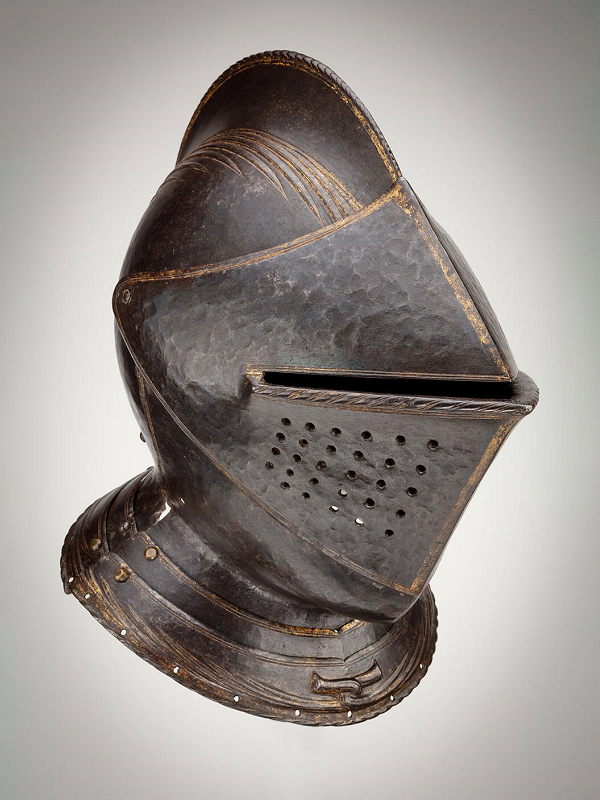


The Closed helmet is the pinnacle of European knightly helmet design in the late 15th and 16th centuries. It is a completely enclosed, one-piece protective structure on the warrior's head that provided maximum protection from slashing, thrusting, and even firearms, while maintaining reasonable mobility.
Unlike earlier sallets or bascinets, the closed helmet completely insulated the knight's head, turning him into a virtually invulnerable "fighting machine" during the heyday of plate armor.
Origin and Development.
The closed helmet appeared around 1480–1490 as a logical continuation of the evolution of helmets. It evolved from the armet, an Italian helmet with movable cheek plates that closed at the front. By the end of the 15th century, armorers (especially in Italy, Germany, and the Netherlands) combined the best elements:
a rounded or slightly conical crown (armet),
a movable visor,
a rigid backplate, and a gorget.
By the beginning of the 16th century, the classic close helmet had emerged—a completely enclosed design, with all parts connected by hinges and clamps. It became the standard helmet for heavy cavalry and tournaments during the reigns of Maximilian I and Henry VIII.
The evolution from the sallet to the closed helmet reflected changing tactics: knights increasingly encountered dense formations of pikemen, crossbowmen, and early musketeers. Protection was needed not only from bladed weapons but also from arrows and bullets.
Closed Helmet Design.
A closed helmet consisted of several carefully fitted parts:
The skull — the main domed or slightly pointed part, often reinforced with a ridge.
The visor — a movable front plate with a narrow horizontal eye slit and rows of ventilation holes. The visor hinged upward.
Cheek pieces — opened to the sides, allowing the helmet to be donned.
The gorget (or neck guard) — a rigid neck protector, often integrated or connected to the gorget of the armor.
Securing mechanisms — spring latches, screws, and pivot pins—prevented the helmet from opening accidentally during combat.
The metal thickness varied from 2 to 5 mm in the most vulnerable areas. A classic closed helmet weighed 3.5–5.5 kg. The surface was polished to a mirror finish and decorated with etching, gilding, or fluting (in the style of "Maximilian" armor).
Particularly well-known are Italian (more rounded and graceful) and German closed helmets (with a pronounced crest and reinforcements). Special reinforced versions with additional visor plates were made for tournaments.
Use in combat and tournaments.
The closed helmet was ideal for heavy cavalry—"knights in armor." In close formation or during a spear charge, it provided almost complete head protection. The knight could lower the visor before the attack and raise it afterward to breathe and orient himself.
At tournaments (especially the German "rennen" or the French "jost"), the closed helmet was often equipped with additional protective plates. It was precisely such helmets that were worn in the famous duels between Emperor Maximilian I and the English King Henry VIII. There were also disadvantages: limited visibility and ventilation, high internal temperatures during prolonged combat, and difficulty in quickly removing them. Therefore, infantry and light cavalry preferred more open sallets or burgonet helmets.
By the mid-16th century, the closed helmet reached its peak of perfection, but by the end of the century, it began to give way to lighter, more open helmets—the burgonet and cabasset—as the role of heavy knightly cavalry declined.
Why did the closed helmet become a symbol of the knight?
It embodied the ideal of the late medieval warrior: maximum protection while maintaining a human form. When the visor was lowered, the knight became a faceless, steel figure—the embodiment of power and intimidation. When raised, he became human again.
Today, the closed helmet is one of the most recognizable artifacts of the Middle Ages and the Renaissance. Authentic examples are held in the Metropolitan Museum of Art, the Vienna Armouries Museum, the Royal Armouries in London, and other collections. Many of them are true works of art, featuring exquisite engraving and gold leaf.
A closed helmet is more than just a piece of metal. It is an engineering masterpiece that enabled knights of the 15th and 16th centuries to fight in an era when weapons were becoming increasingly deadly. It symbolizes the transition from the romantic Middle Ages to the pragmatic Renaissance: an era when a man in armor could still decide the outcome of battles, but could already smell the gunpowder smoke of a new war.