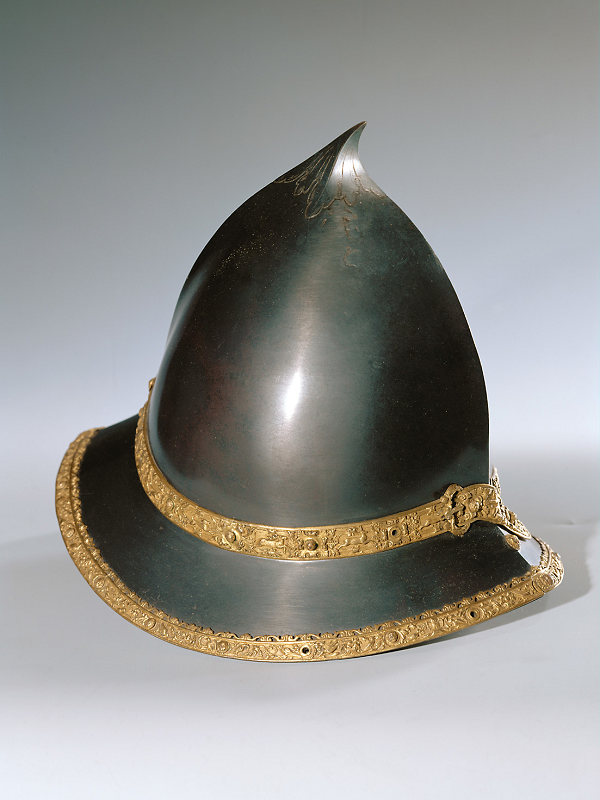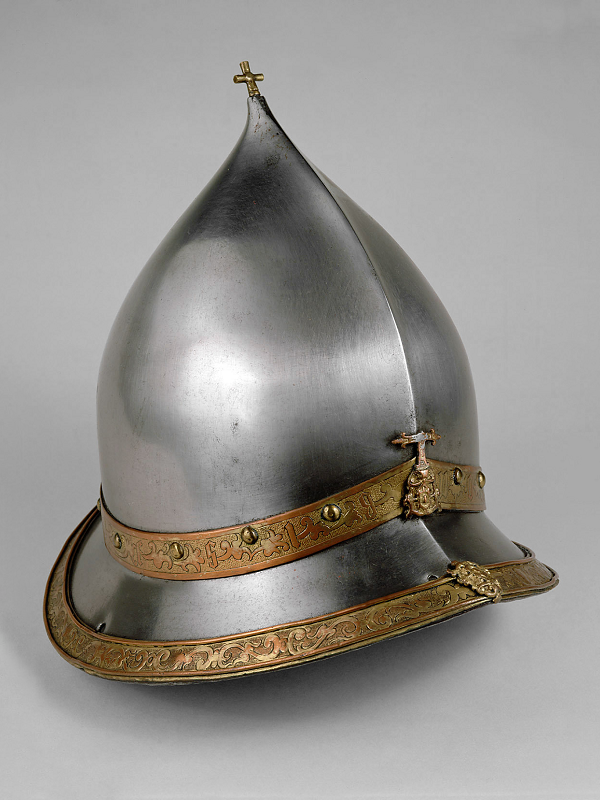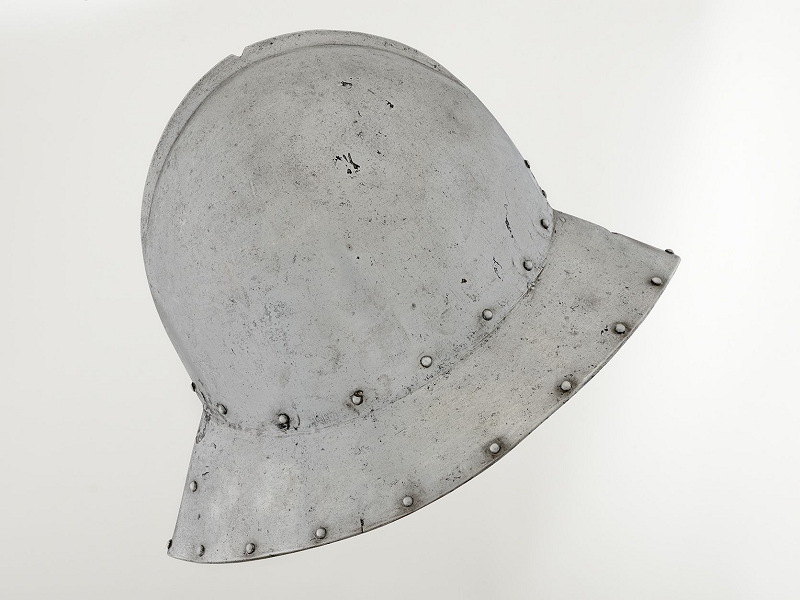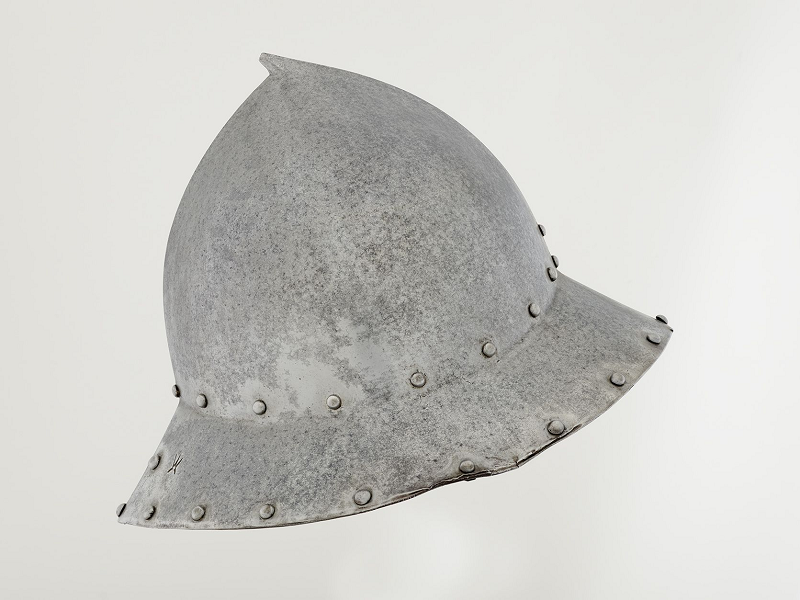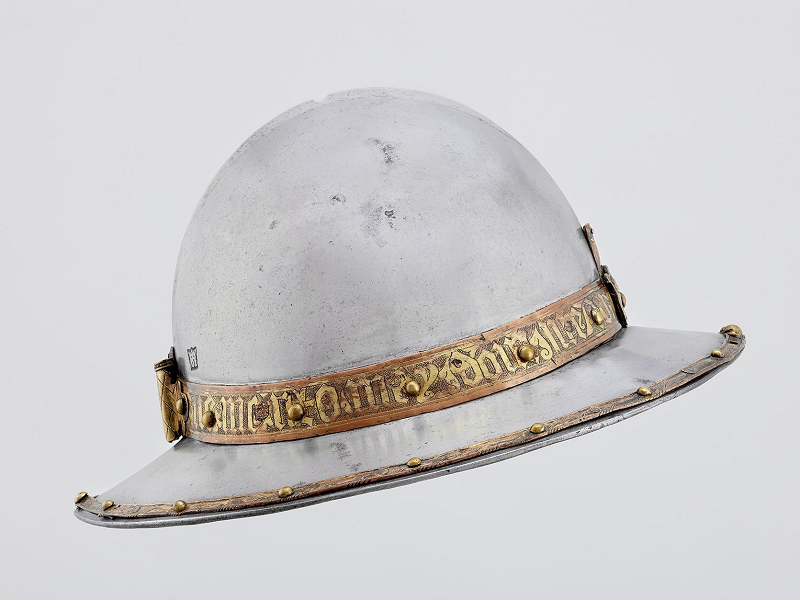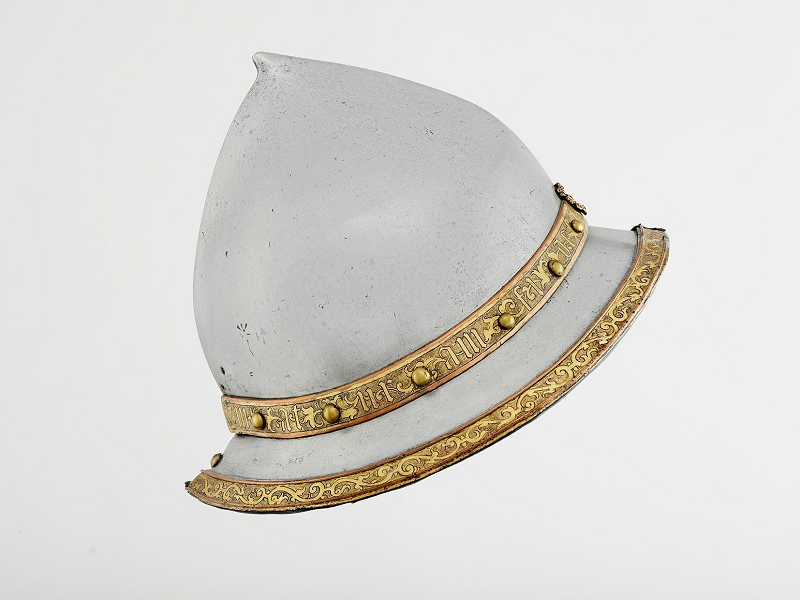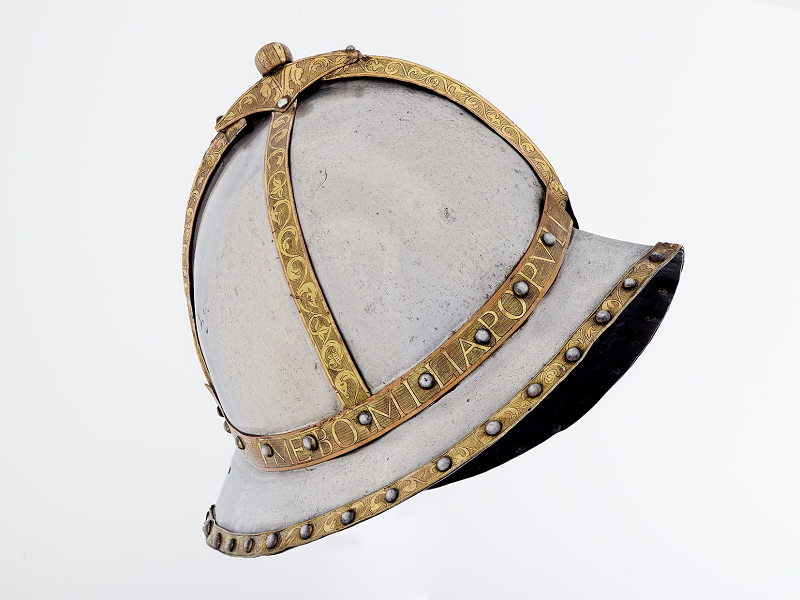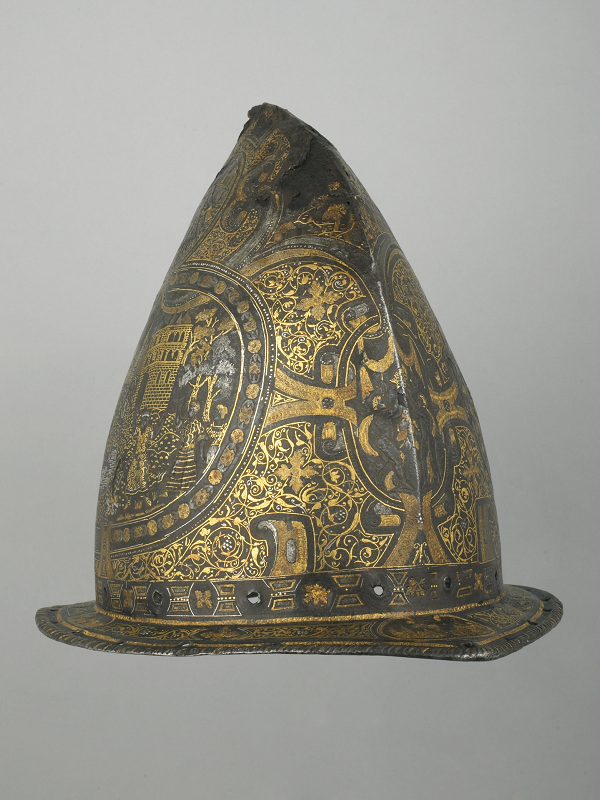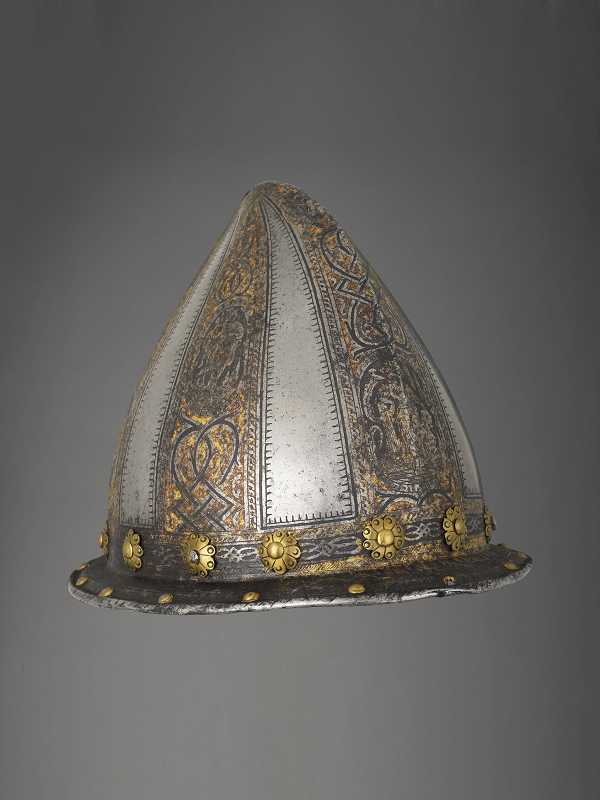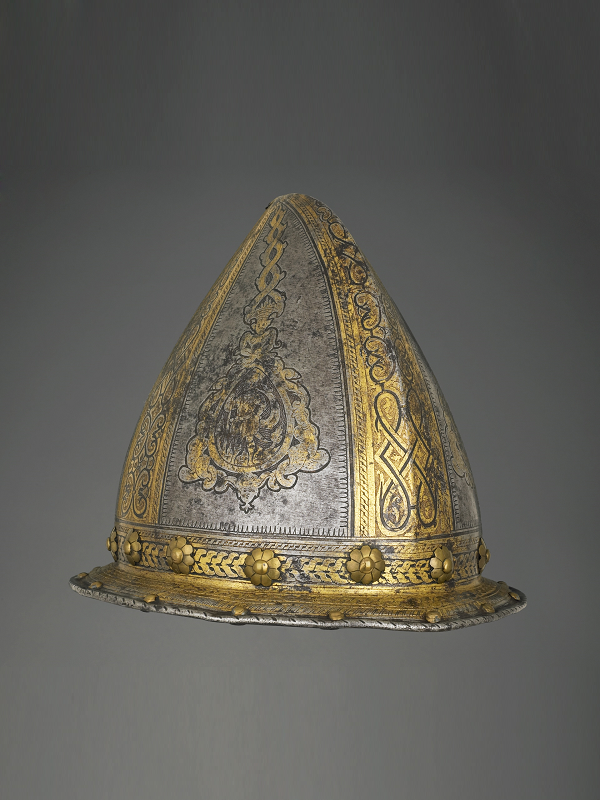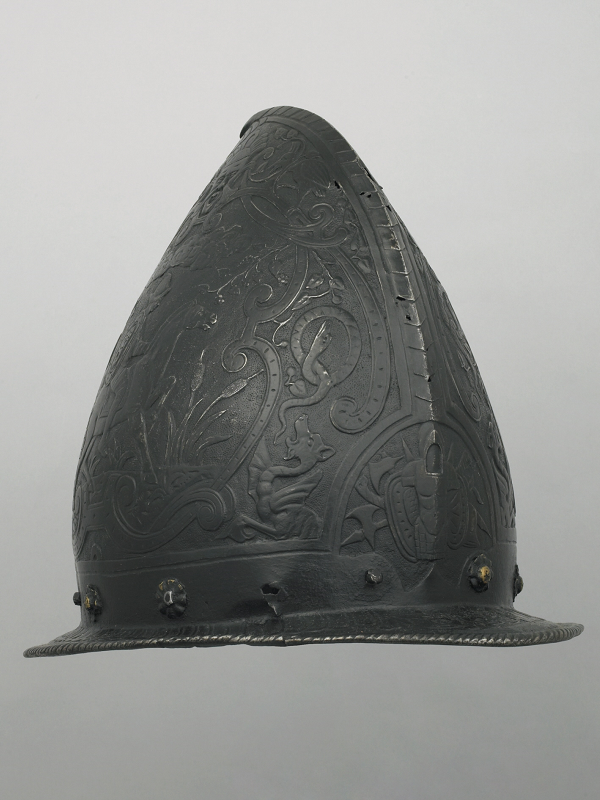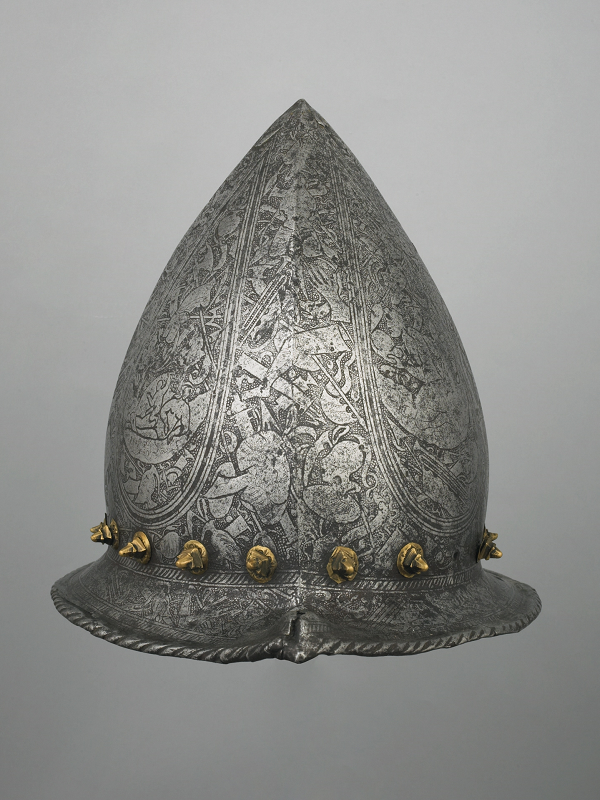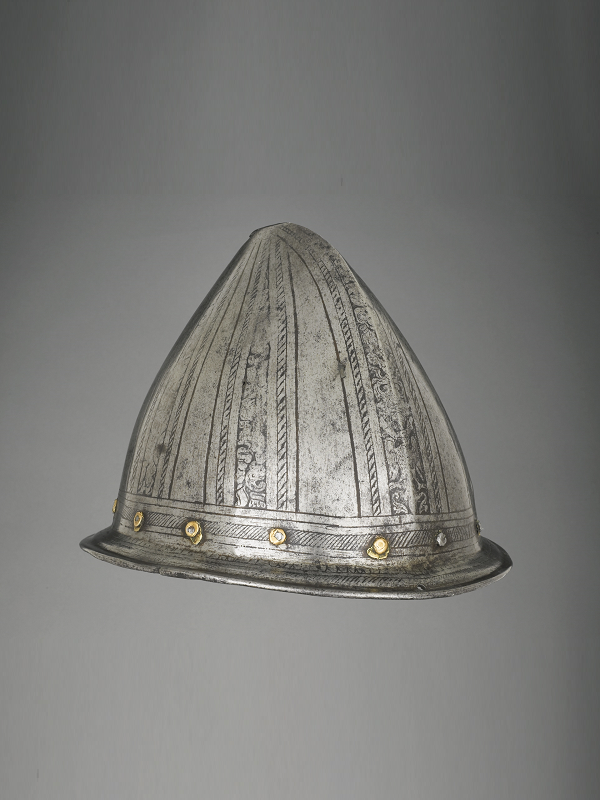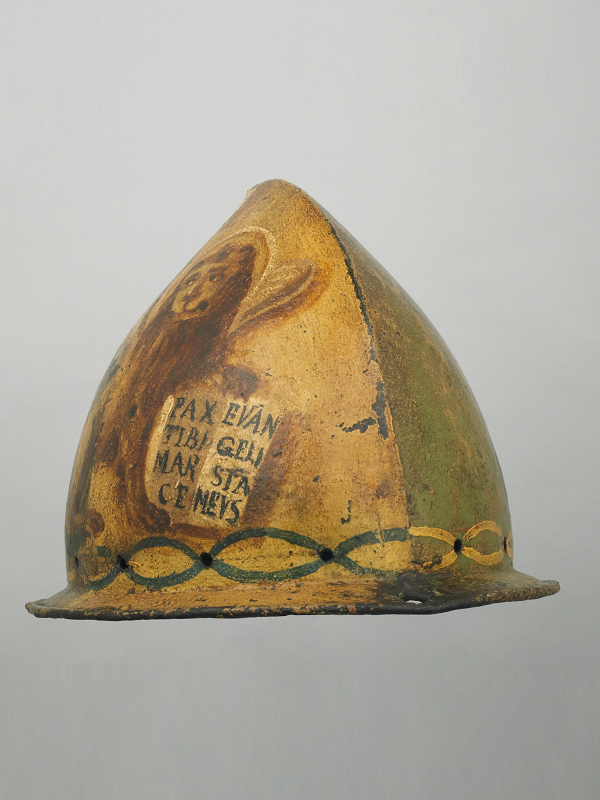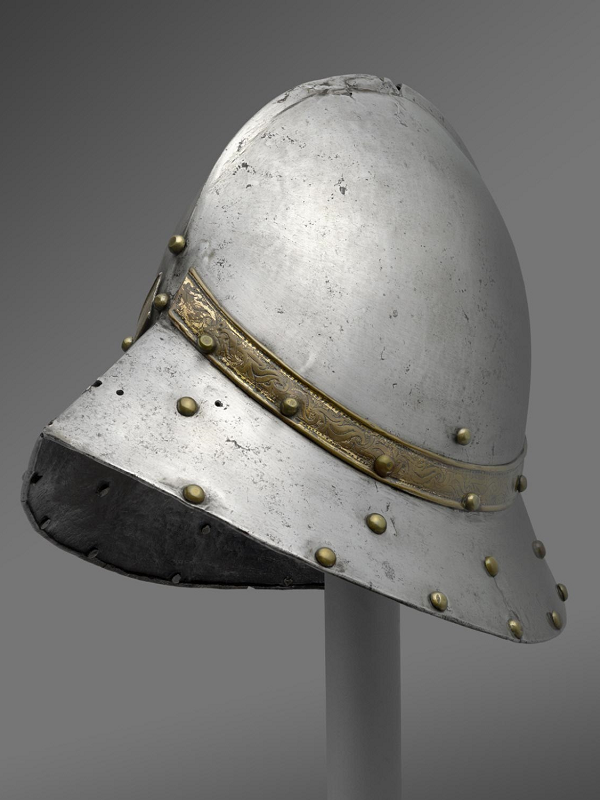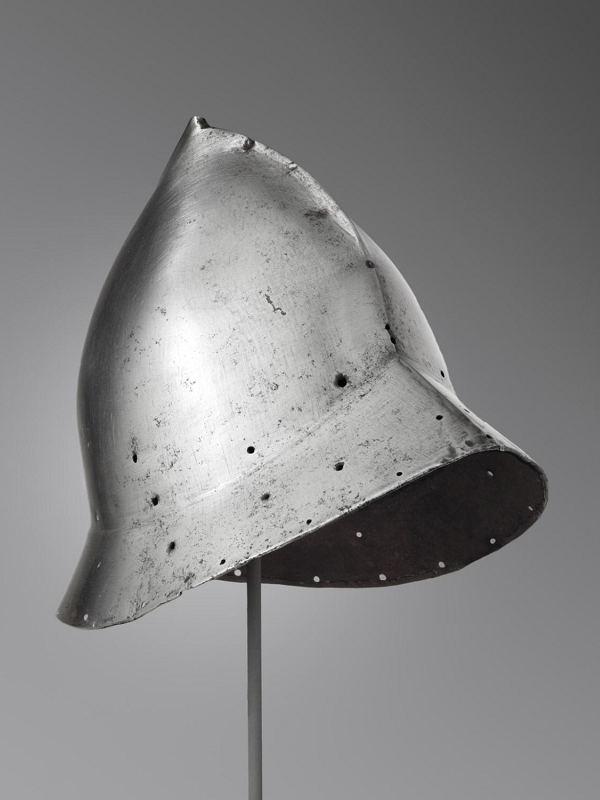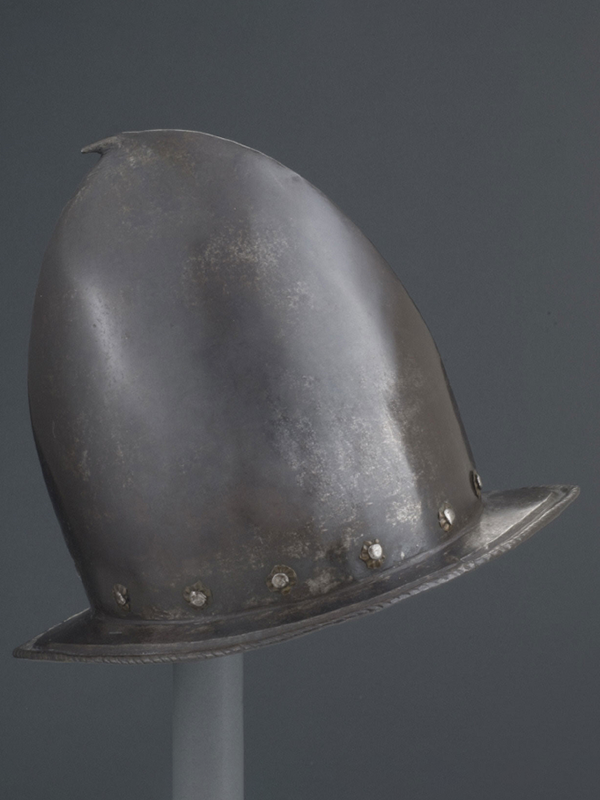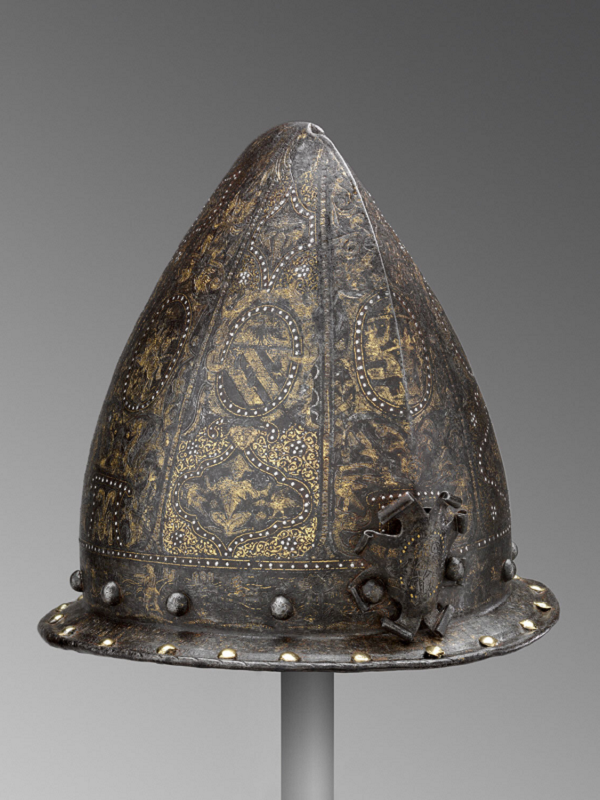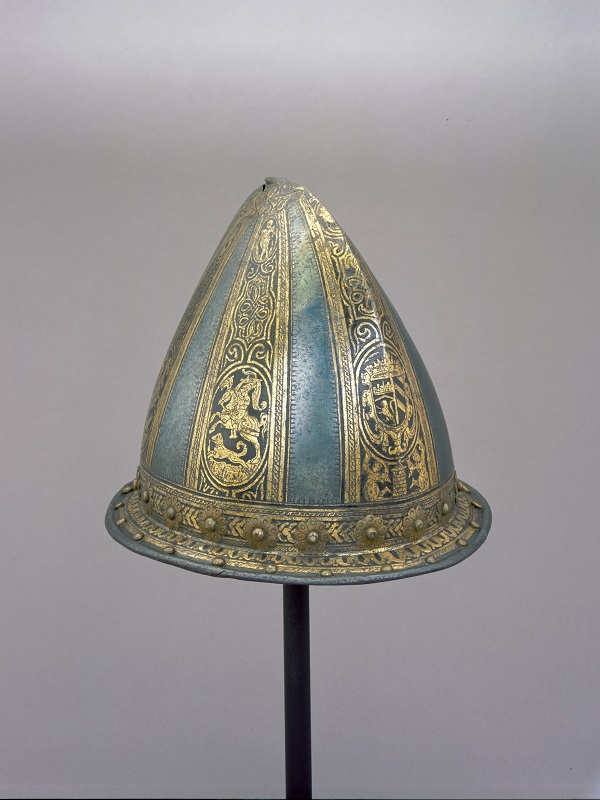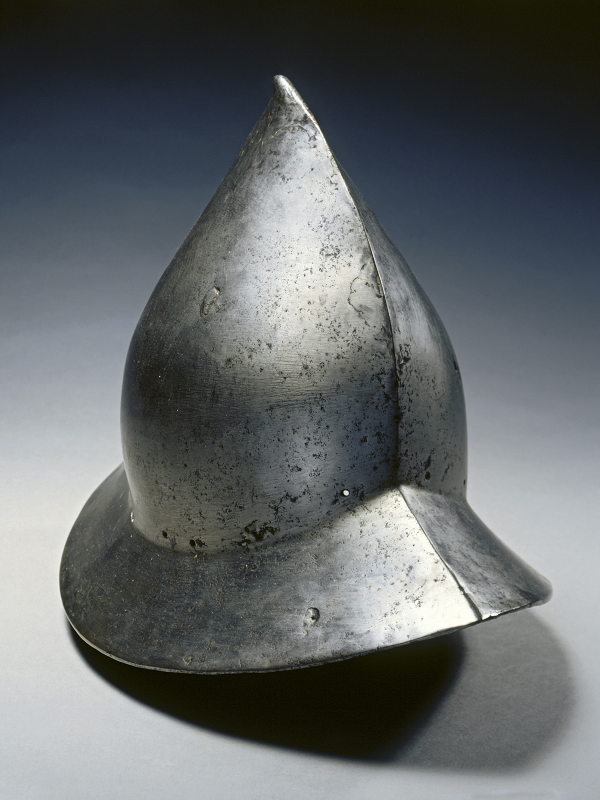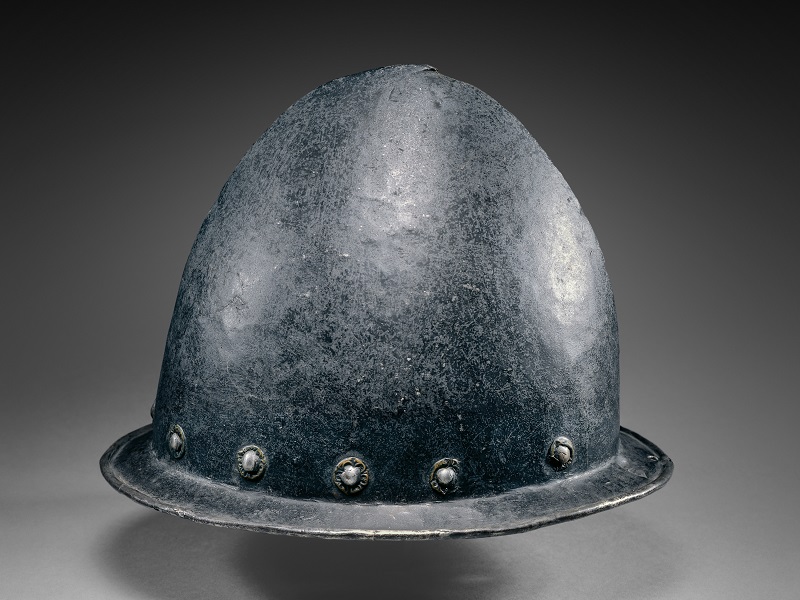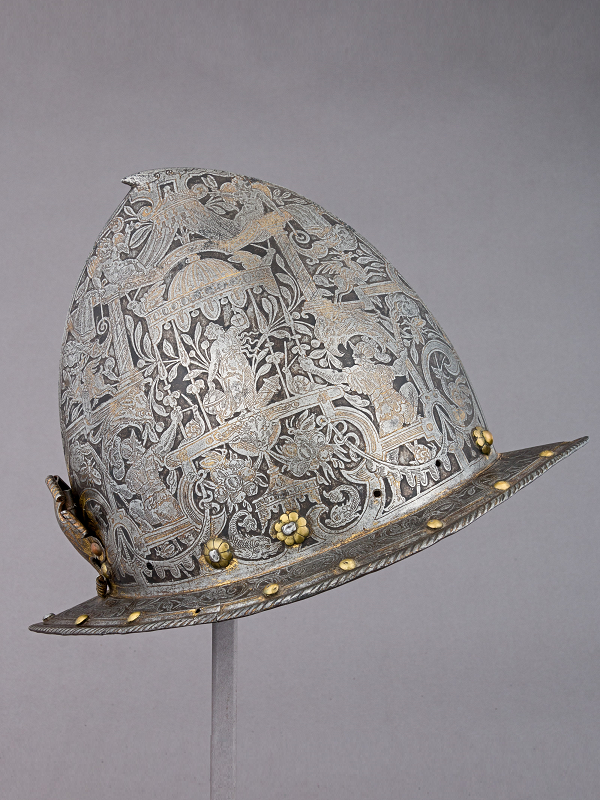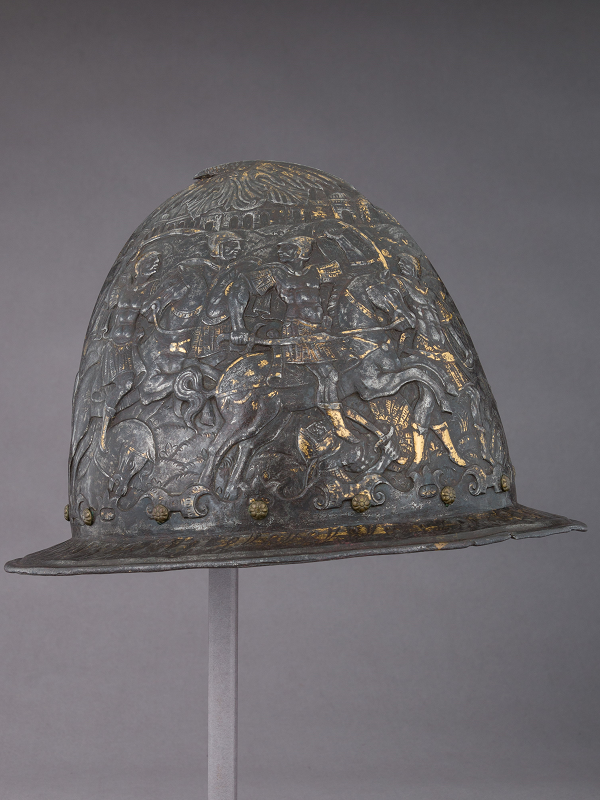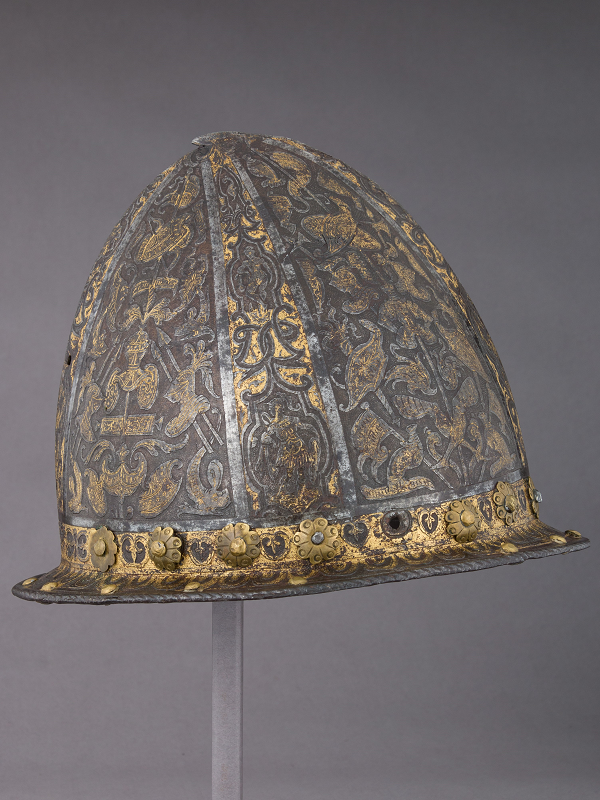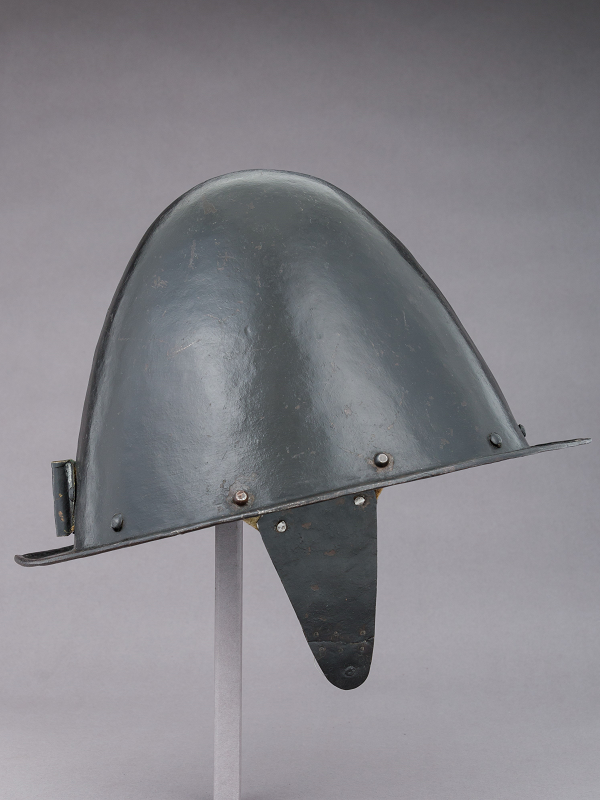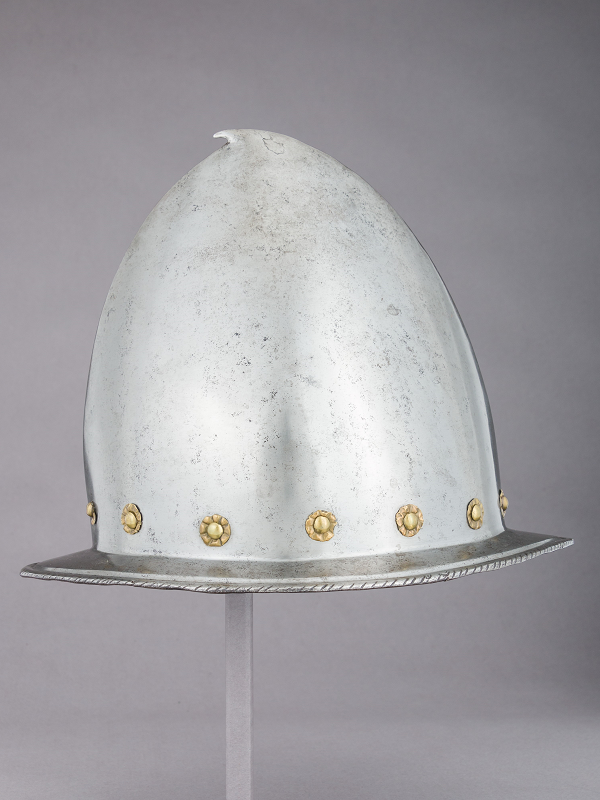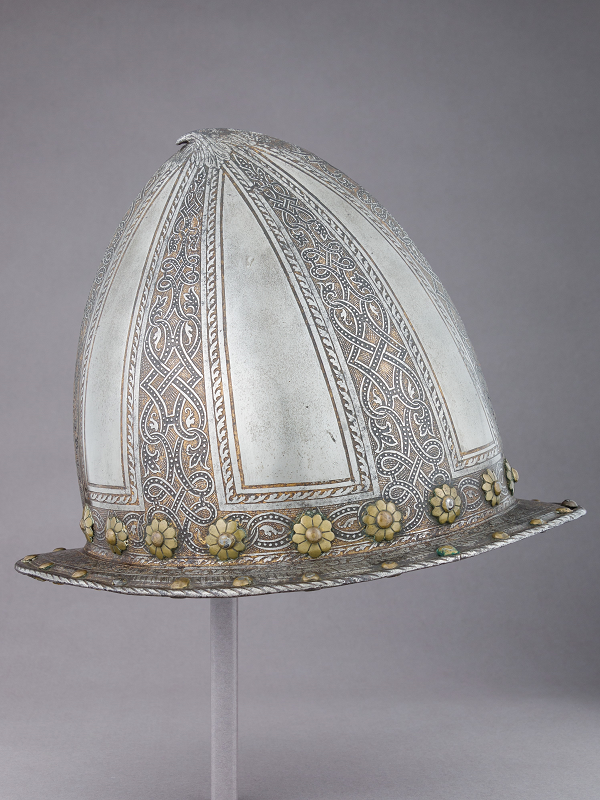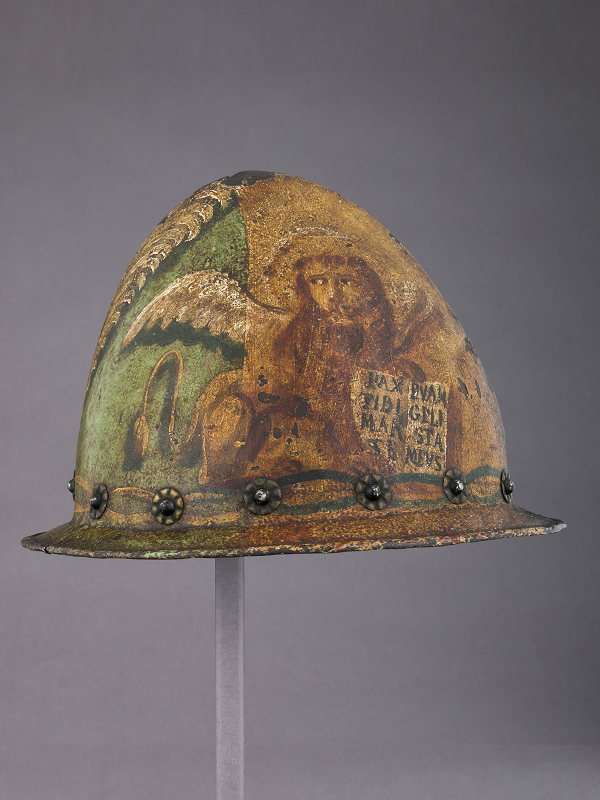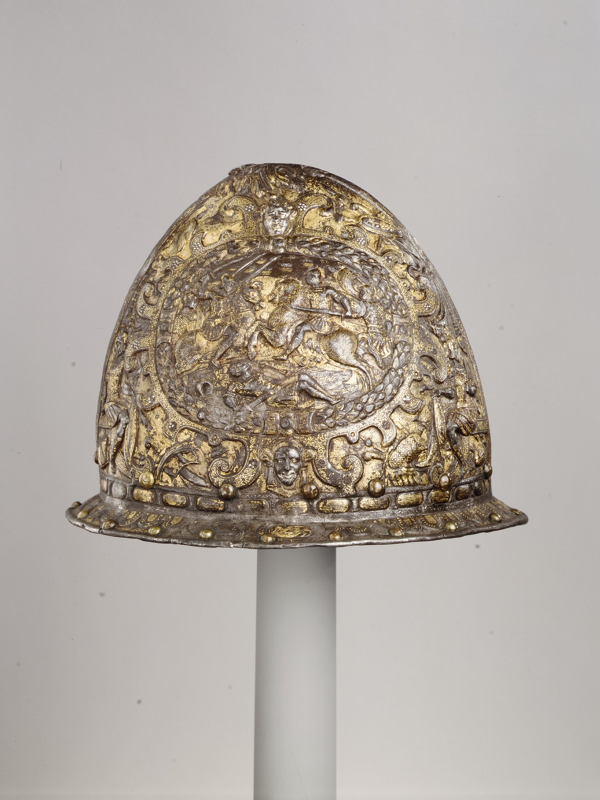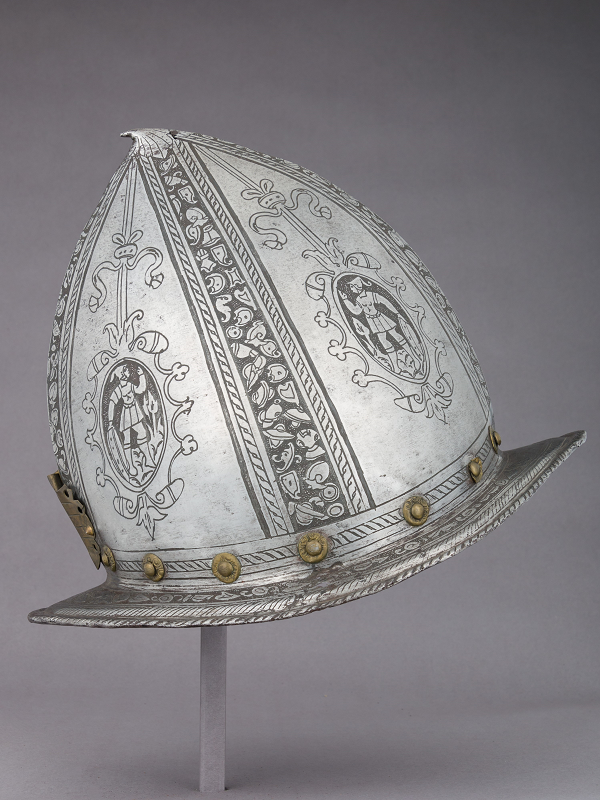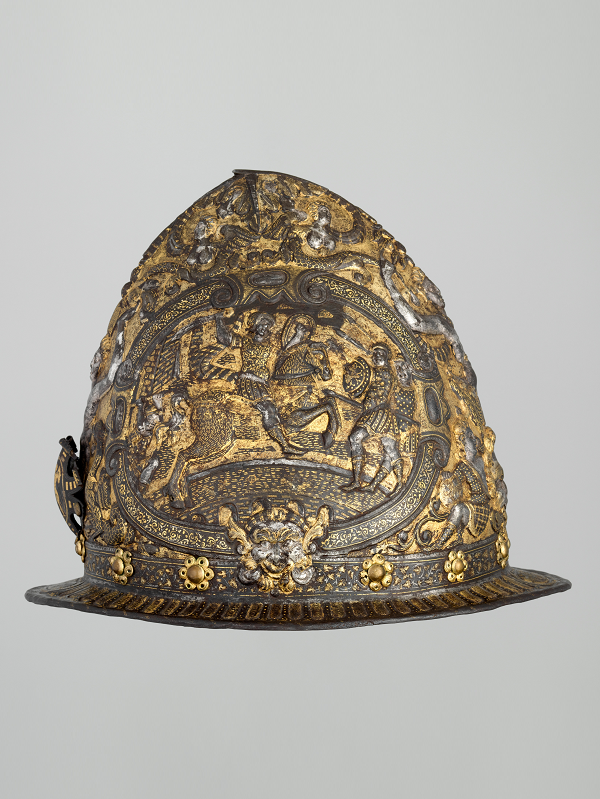
The cabasset helmet (fr: Cabasset, de: Birnhelm, it: Cabassetto, es: Cabeza de cabra or Capacete) is a lightweight, practical, and incredibly common helmet of the Renaissance (16th - early 17th centuries). It became one of the most popular knightly (and not so knightly) helmets, worn by everyone from ordinary infantrymen to officers and conquistadors.
Unlike the massive, high-crested morion or the closed burgonet, the cabasset was distinguished by its simple, streamlined shape, excellent ventilation, and minimal weight. It was the helmet of the soldier of the Modern Age—an era when the sound of gunpowder was becoming increasingly loud on the battlefield.
Origin and Name.
The name "cabasset" derives from the French word cabasse (pumpkin) or the Spanish cabeza de cabra (goat's head), referring to the distinctive pear-shaped or slightly conical crown, reminiscent of a fruit or animal. The helmet appeared in Italy and Spain around 1520–1540 as a further simplification of the sallet and bourguignon.
The cabasset quickly spread throughout Europe thanks to the Spanish army—the most powerful military machine of the time. It was worn by tercios, landsknechts, French and English troops, and by conquistadors in the Americas. Its ease of production made it affordable even for ordinary soldiers.
Cabasset Construction.
The cabasset is one of the most minimalist helmets of its time:
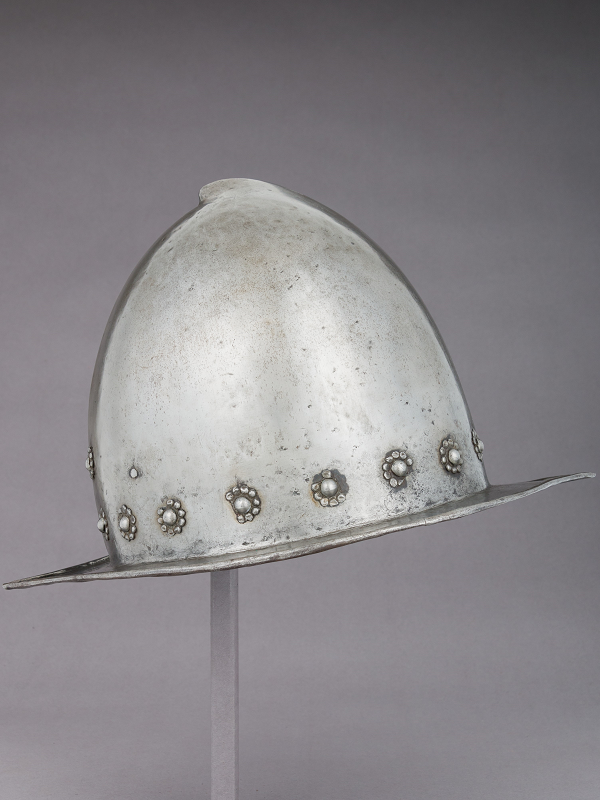
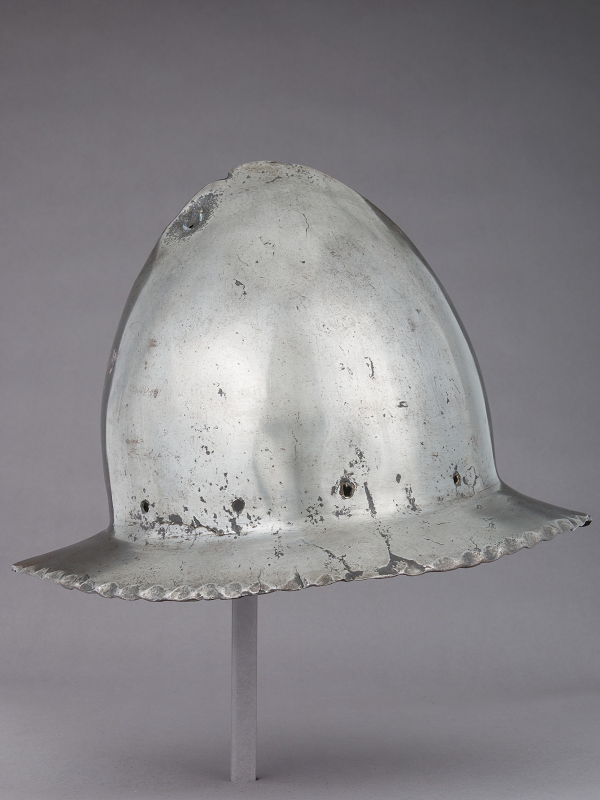
The pear-shaped or ovoid crown is high, tapering smoothly toward the top, without a pronounced ridge (unlike the morion).
The small, narrow brim (brim) was slightly curved downwards or horizontal, protecting the neck and shoulders from rain and light blows.
The open face was without a visor or puff. The field of view was virtually unrestricted.
Ventilation openings were often along the edge of the crown or in the form of decorative rosettes.
Fastenings were simple straps or openings for a liner.
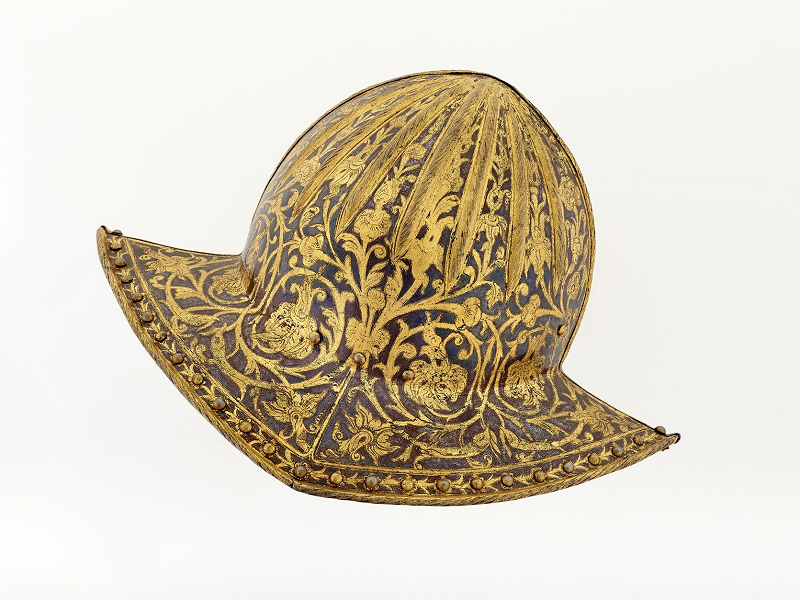
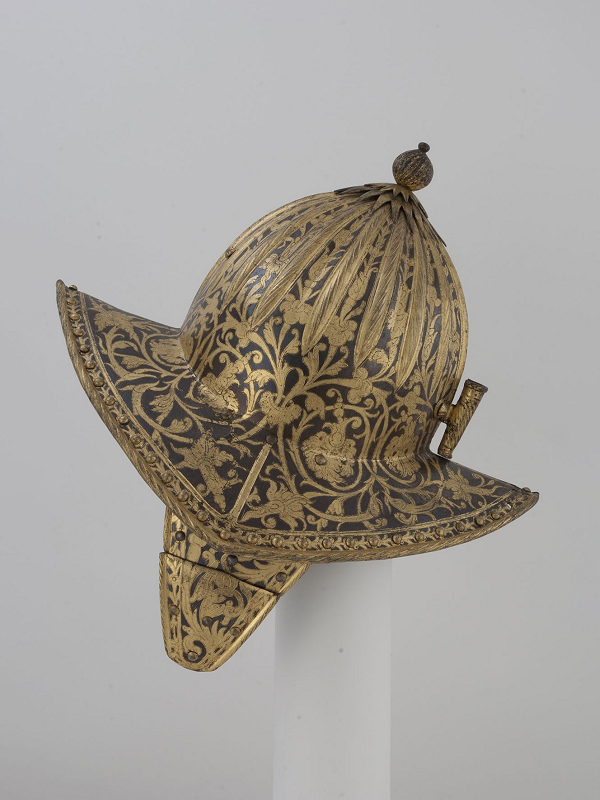
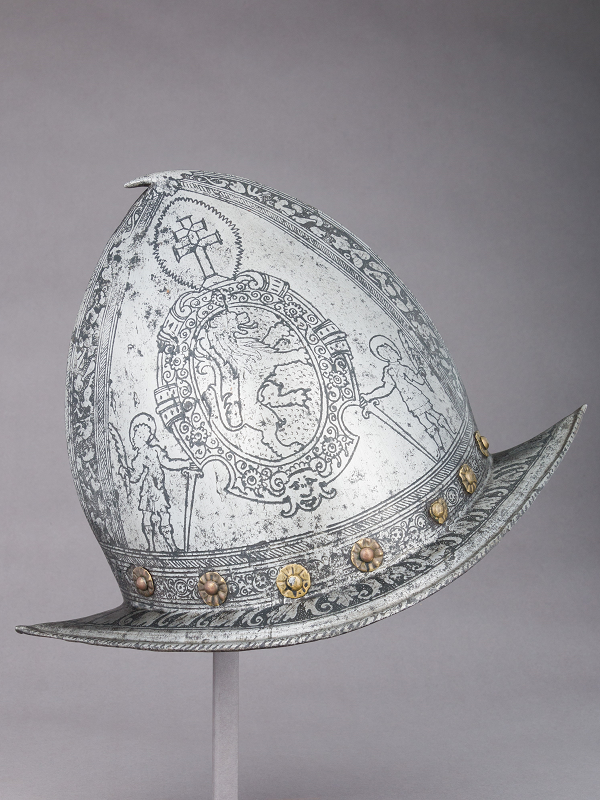
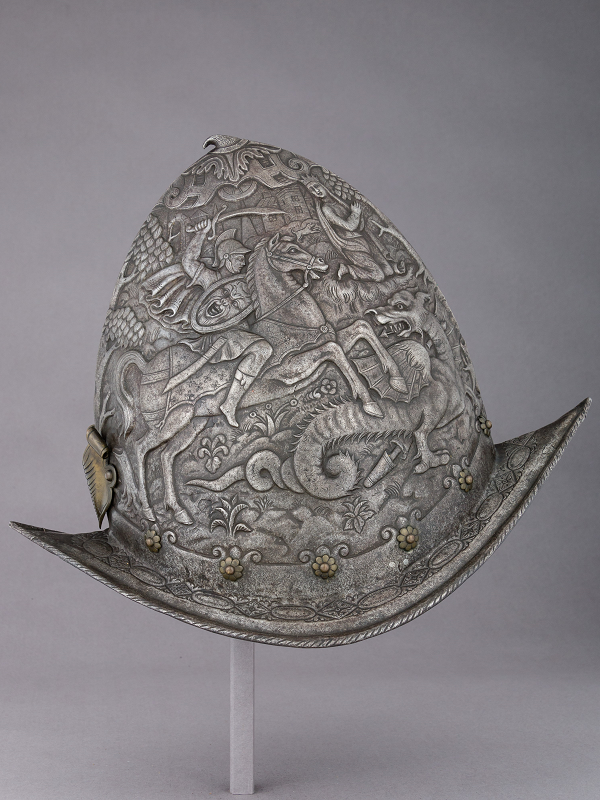
The metal thickness was typically 1.5–3 mm. Weighing only 1.2–2.5 kg, the cabasset was one of the lightest full-size helmets of the era. The surface was often polished, blued (the "black" cabasset), or decorated with simple etching and gold rosettes. Some ceremonial versions were covered with engravings or even religious images.
Compared to the morion, the cabasset was simpler, lighter, and cheaper, but inferior in terms of visual appeal and protection from overhead blows.
Use in combat and on campaign.
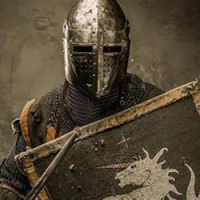
The cabasset was ideal for infantry and light cavalry of the 16th and 17th centuries. It was worn by:
Spanish musketeers and pikemen in tercios.
Conquistadors during the conquest of America (Cortes, Pizarro, and their followers).
German and Swedish mercenaries.
French and English soldiers in the Wars of Religion.
The helmet's lightness allowed it to be worn for hours during long marches through jungles, mountains, or European fields. The open face provided an excellent view for aiming an arquebus or musket and giving commands. The narrow brim protected the neck from the sun and accidental blows.
In combat, the cabasset was effective against sabers, pikes, and shrapnel, but, like any armor of the time, it was vulnerable to a direct musket shot. For this reason, it was often combined with a simple cuirass or chainmail elements.
Why did the cabasset become so popular?
Practical—lightweight, comfortable, with excellent ventilation and visibility.
Inexpensive to manufacture—it could be mass-produced for entire armies.
Versatility—suitable for infantry, cavalry, and officers.
Reliability in the new conditions of war—when gunpowder, not just the sword, became the main enemy.
By the early 17th century, the cabasset began to give way to even simpler helmets and hats with metal inserts, but continued to be used in colonial wars for a long time.
Today, original cabassets are coveted museum exhibits (the Metropolitan Museum of Art, the Army Museum in Madrid, and the Vienna Armoury Museum). Among reenactors, it is prized for its comfort and authentic "conquistador" look.
The cabasset is not the most beautiful or the most protective helmet of the Middle Ages, but it is perhaps the most honest. It symbolizes an era when war ceased to be the preserve of steel-clad knights and became the work of professional soldiers. Simple, light, and reliable—like the infantry of the modern era itself, which, with arquebus and cabassette on its head, changed the face of Europe and discovered a new continent. It lacks Gothic romance, but rather the austere beauty of practical military craft.