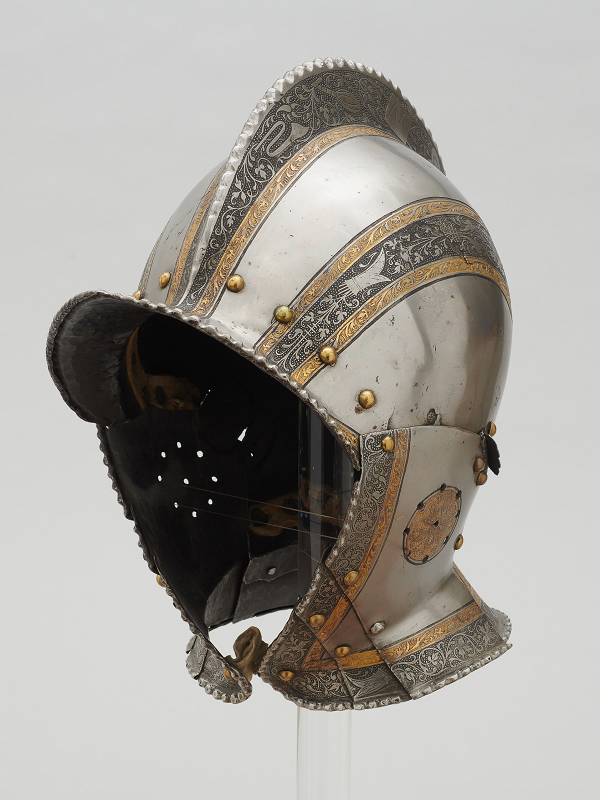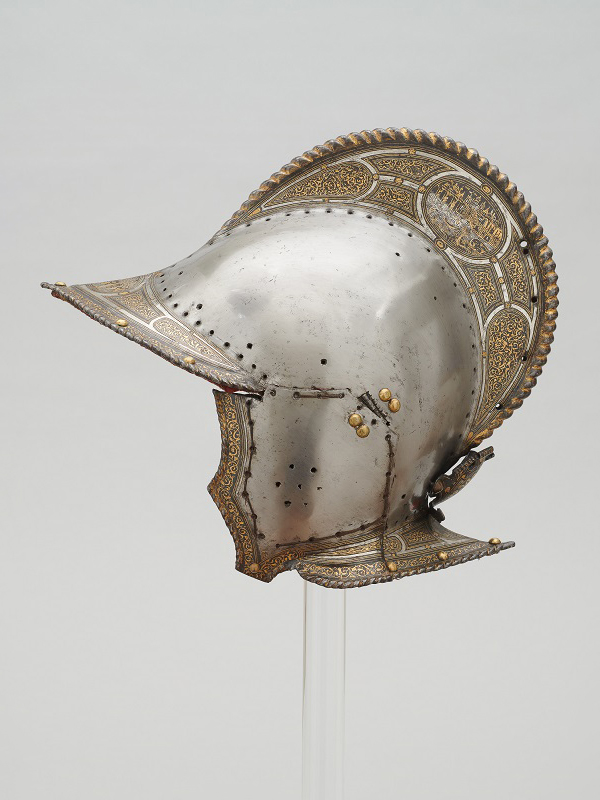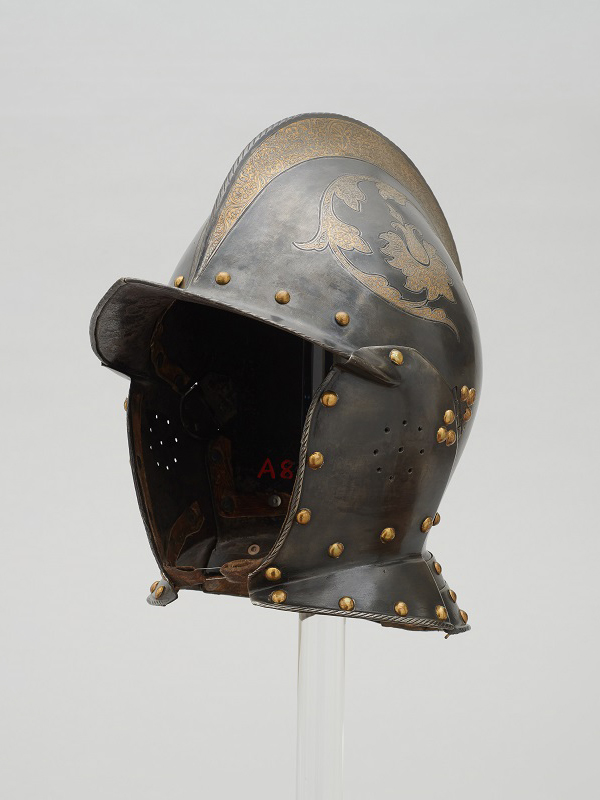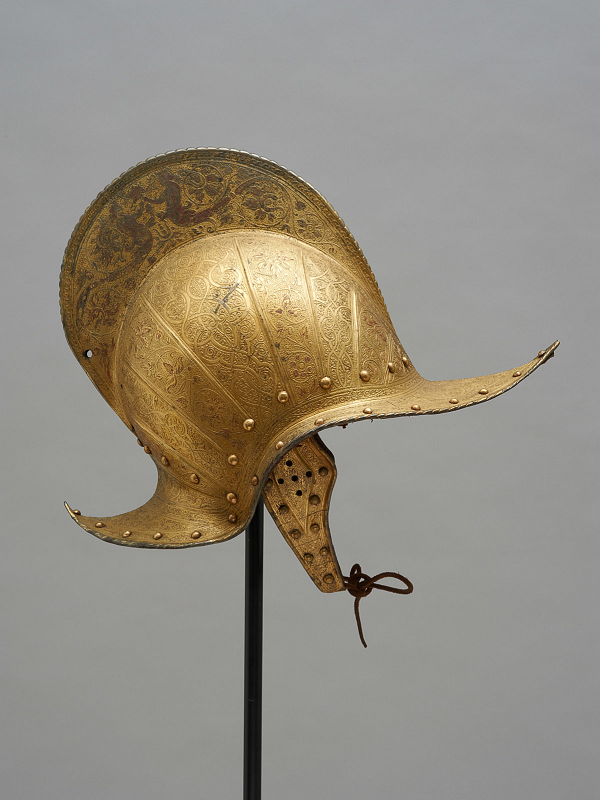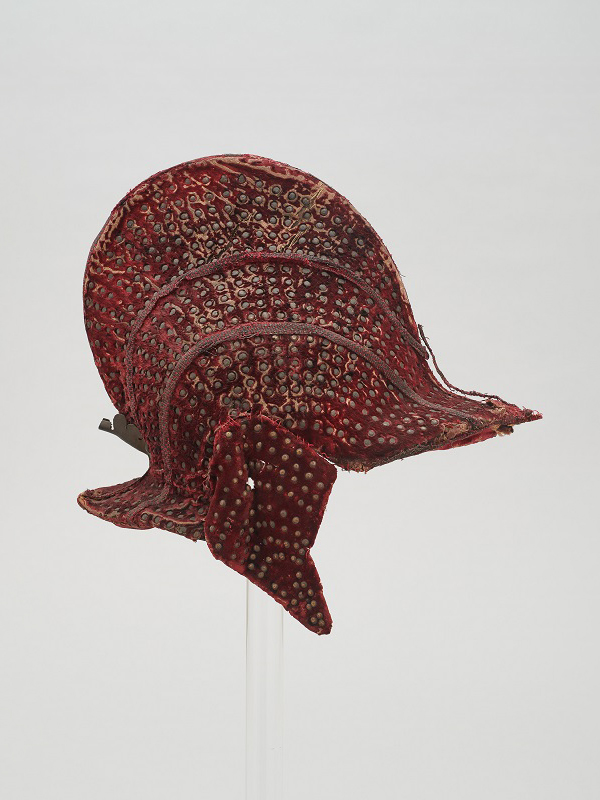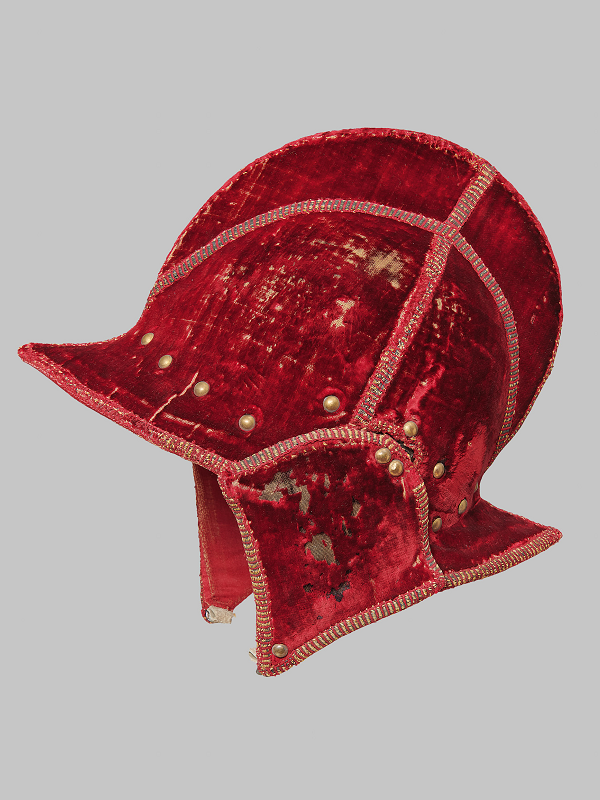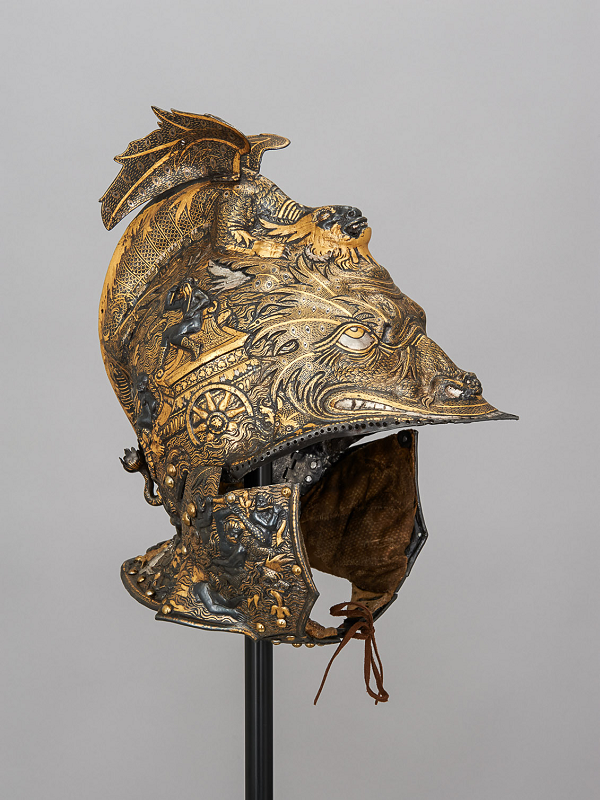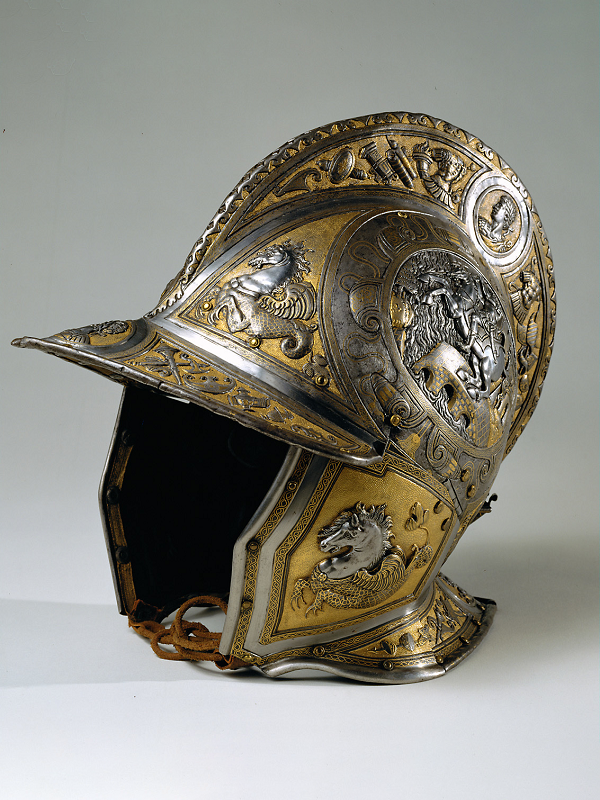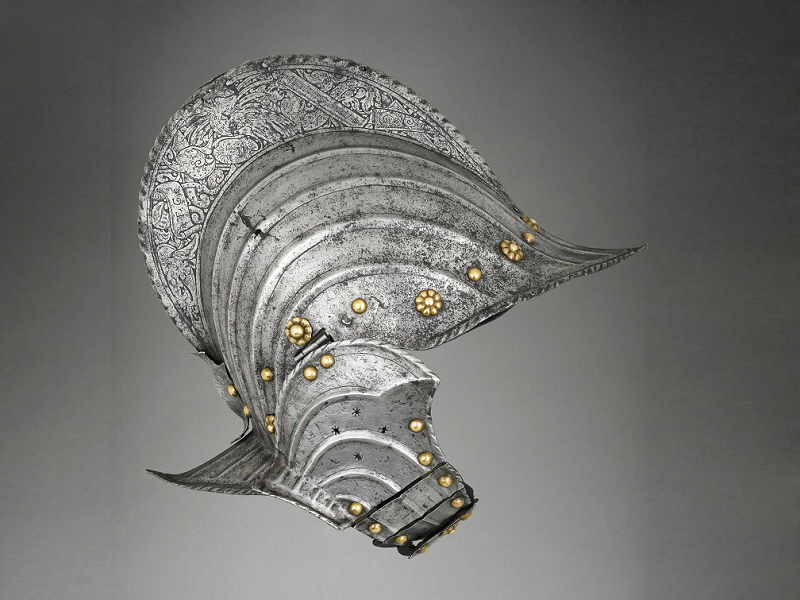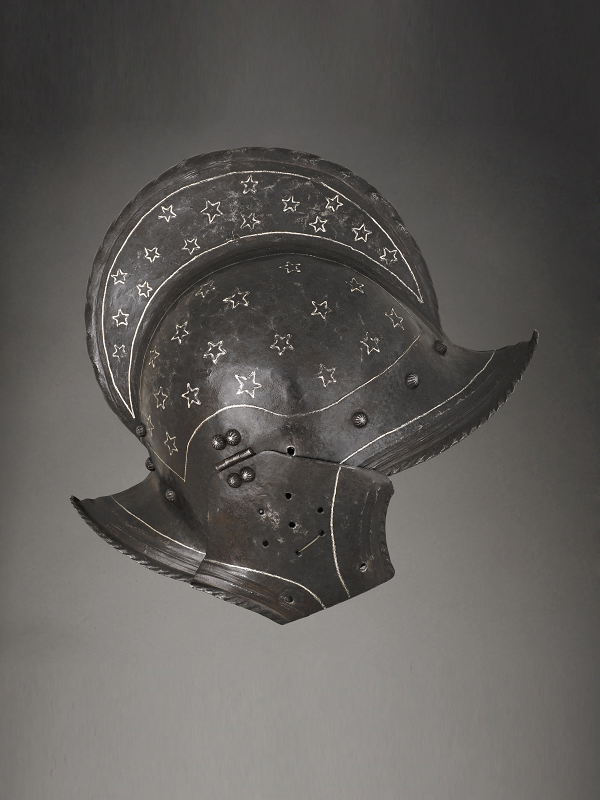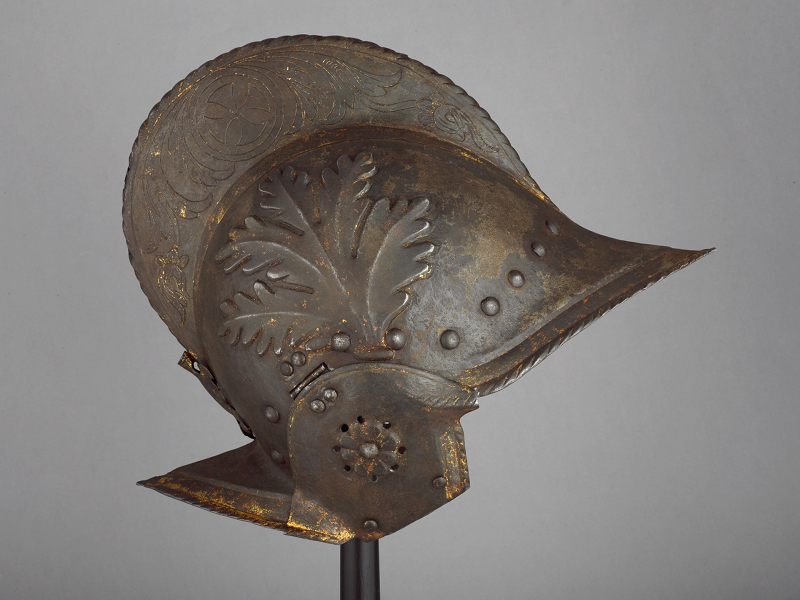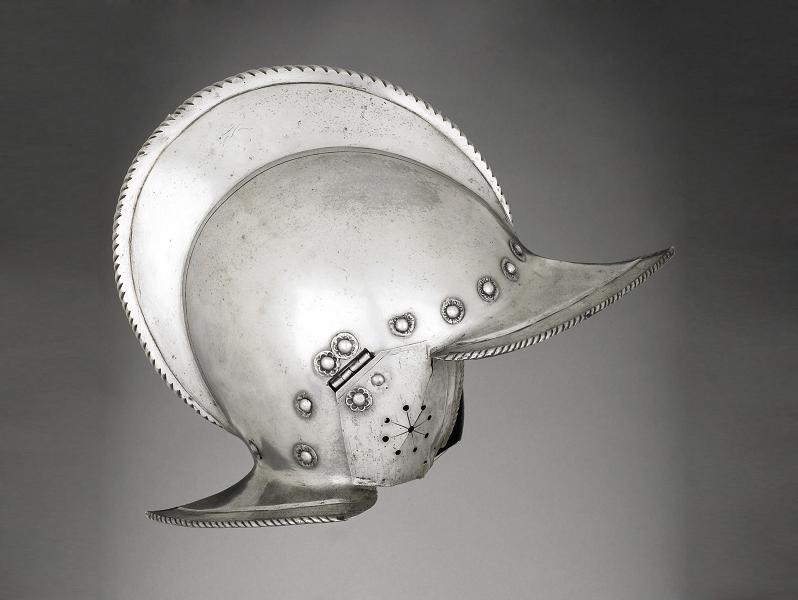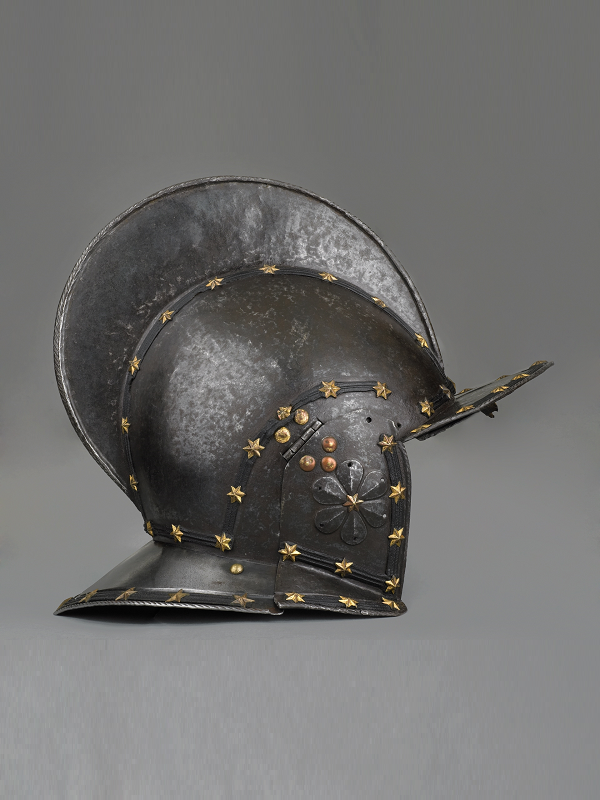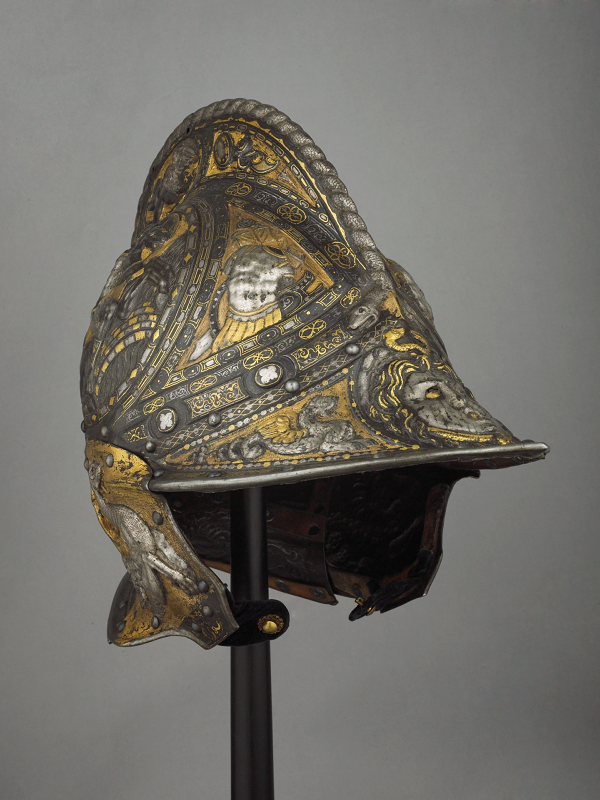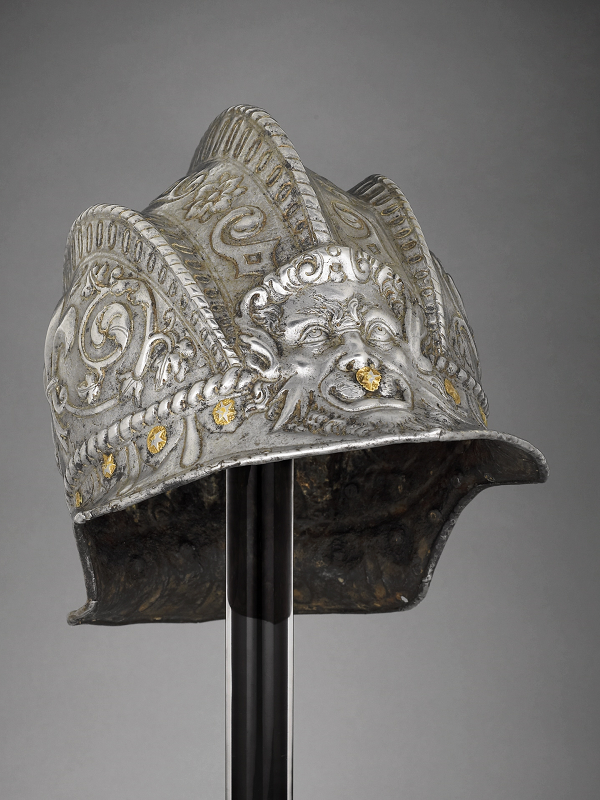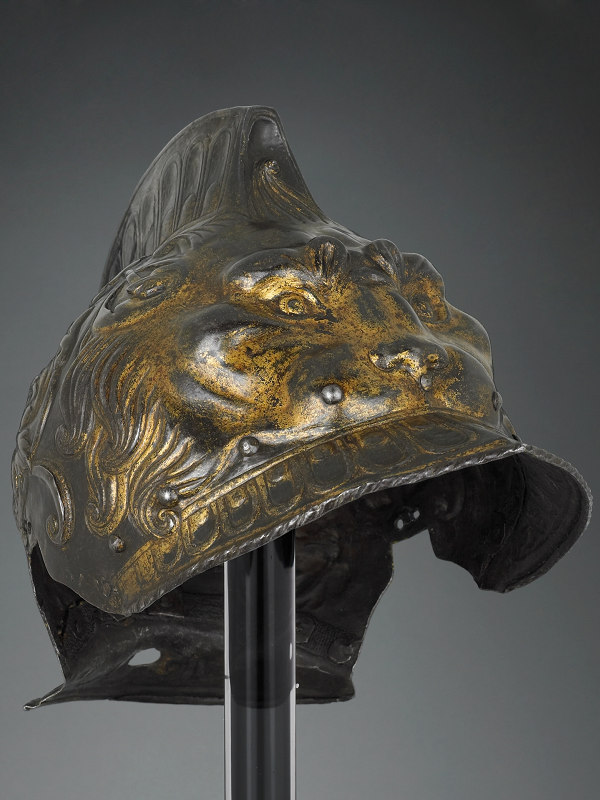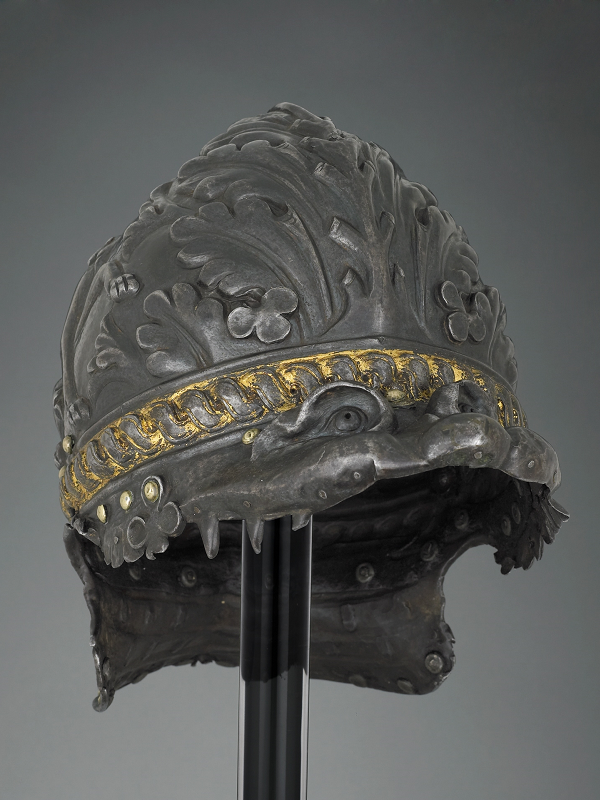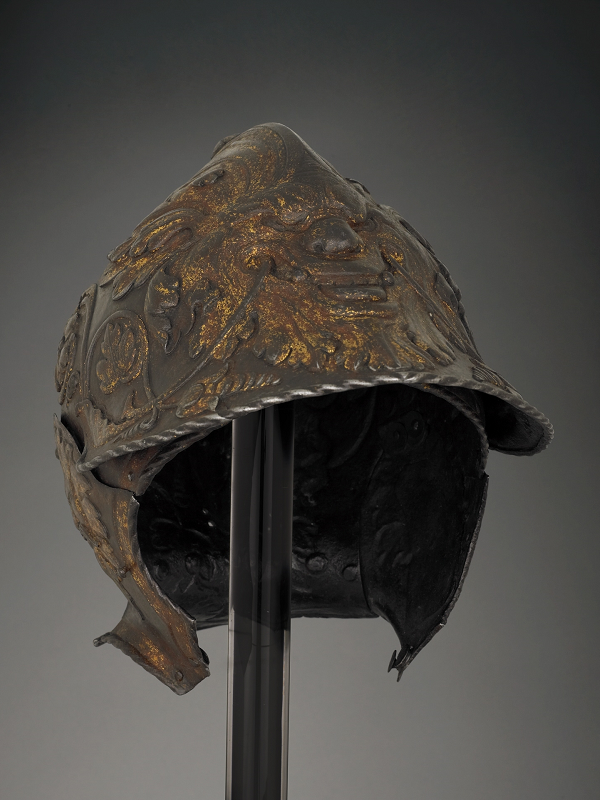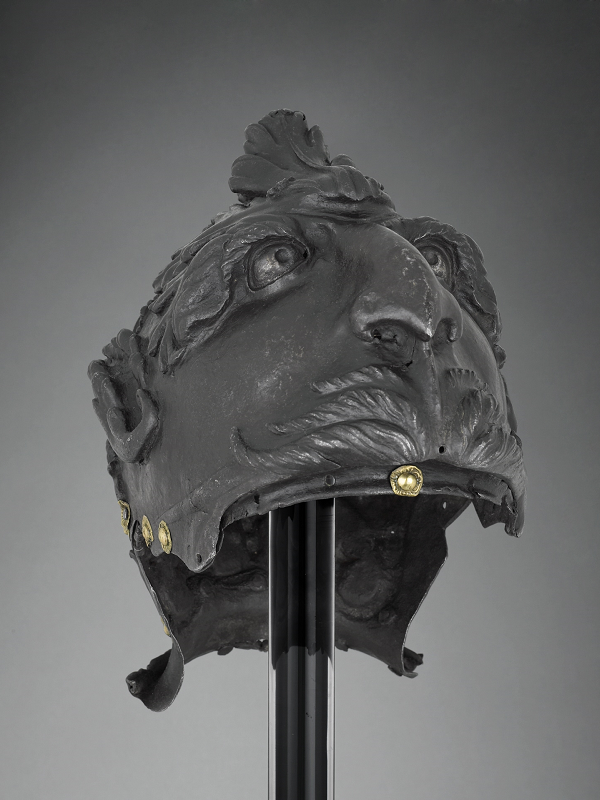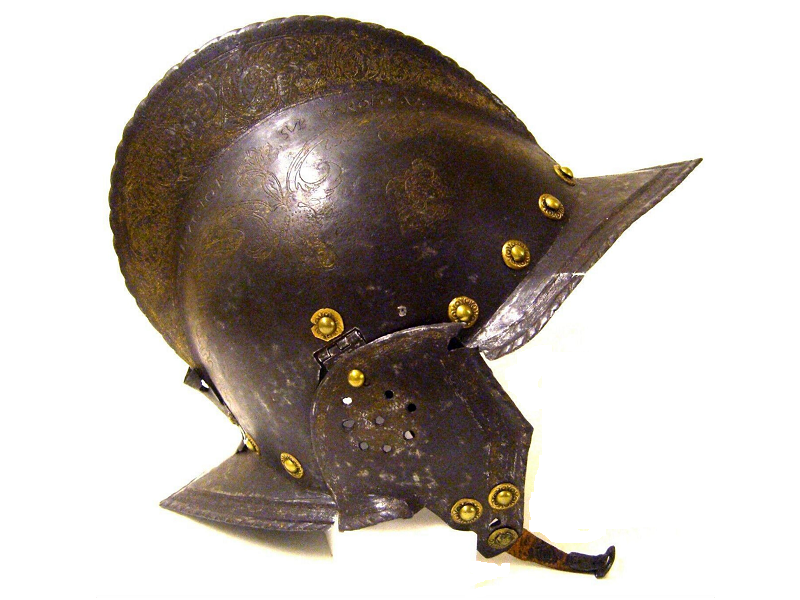


The Burgonet (fr: Bourguignotte, de: Bourguignot, it: Borgognotta) was one of the most practical and elegant helmets of the Renaissance (16th - early 17th centuries). It symbolized the transition from heavy knightly cavalry to the professional armies of the modern era and was widely used both in Europe and in colonial campaigns.
Unlike fully enclosed tournament helmets or early medieval models, the burgonet offered an excellent balance of protection, visibility, and comfort, making it popular among cuirassiers, landsknechts, musketeers, and officers.
Origin and Name.
The name " Burgonet" comes from the French region of Burgundy (Bourgogne), although the helmet was actively developed in Italy, Germany, and Spain. The first forms appeared around 1520-1530 as a development of the sallet and cabassette. By the mid-16th century, the burgundy helmet had become standard in European armies.
The helmet reflected the spirit of the era: chivalry was giving way to disciplined infantry and heavy cavalry armed with pistols and cuirasses. The b burgonet was ideally suited to the new reality of firearms combat, where not only protection but also the ability to quickly navigate the battlefield were important.
Burgonet construction.
The classic burgonet consisted of:
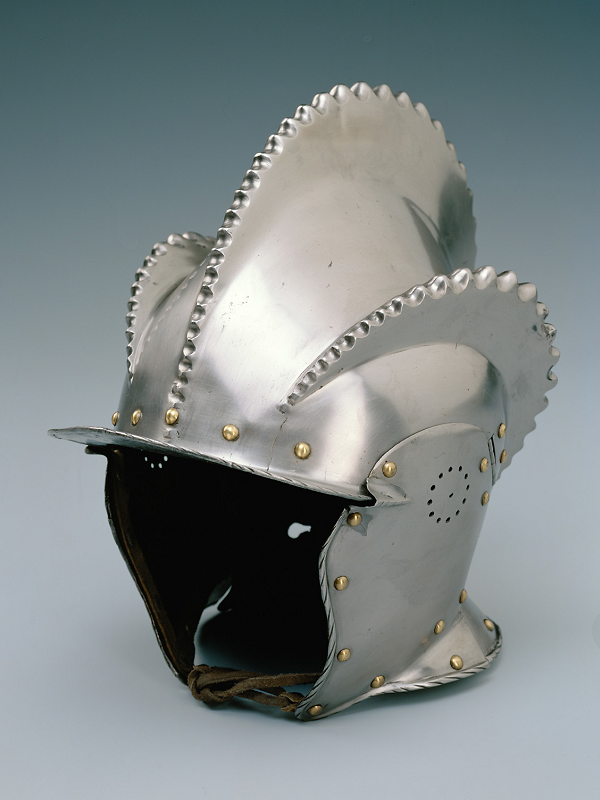
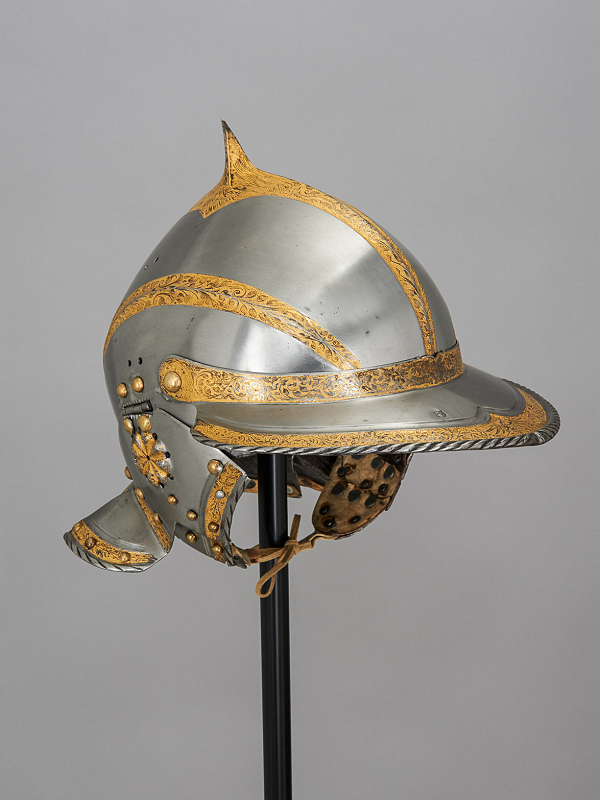
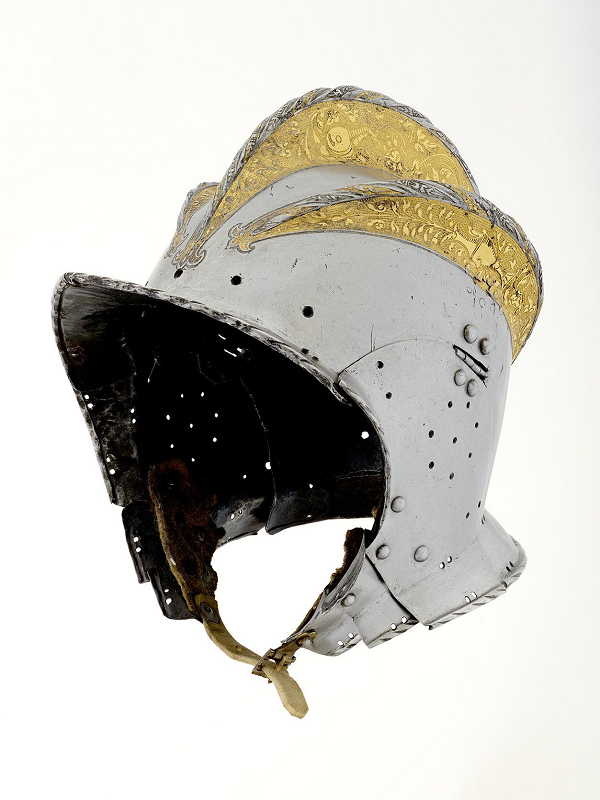
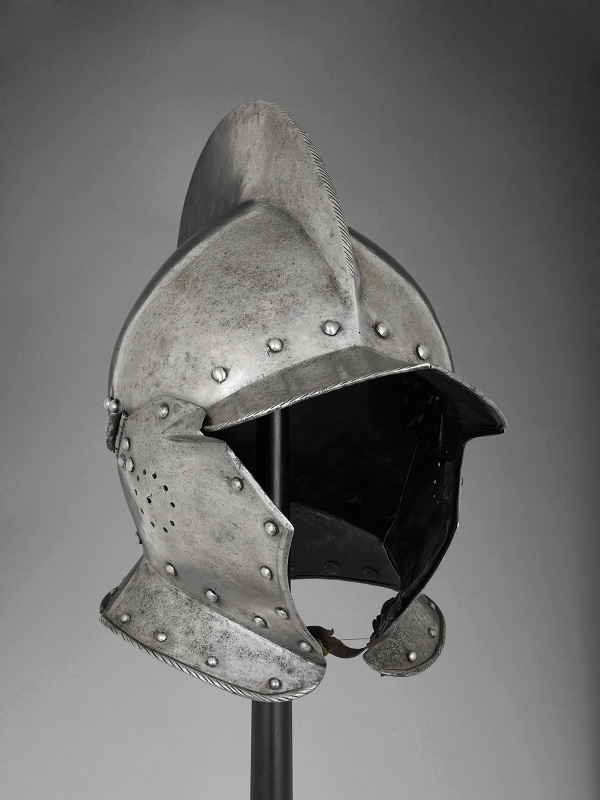
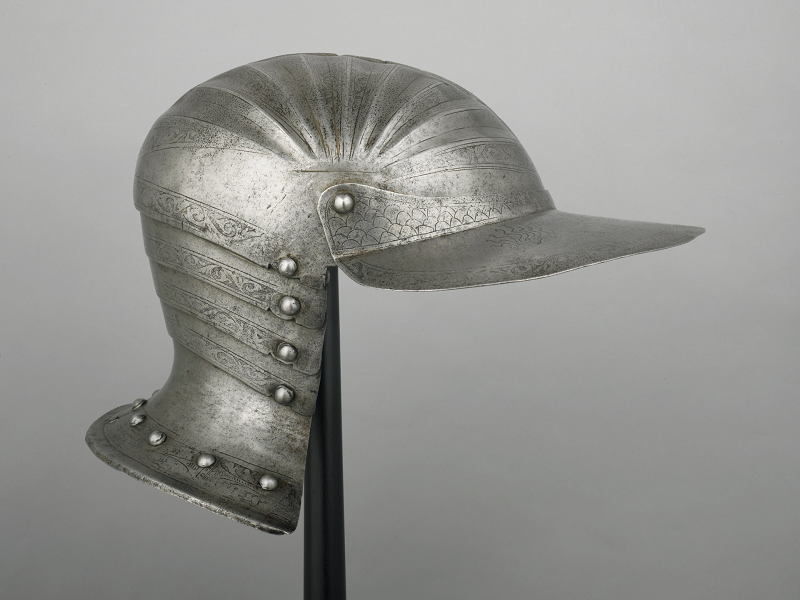
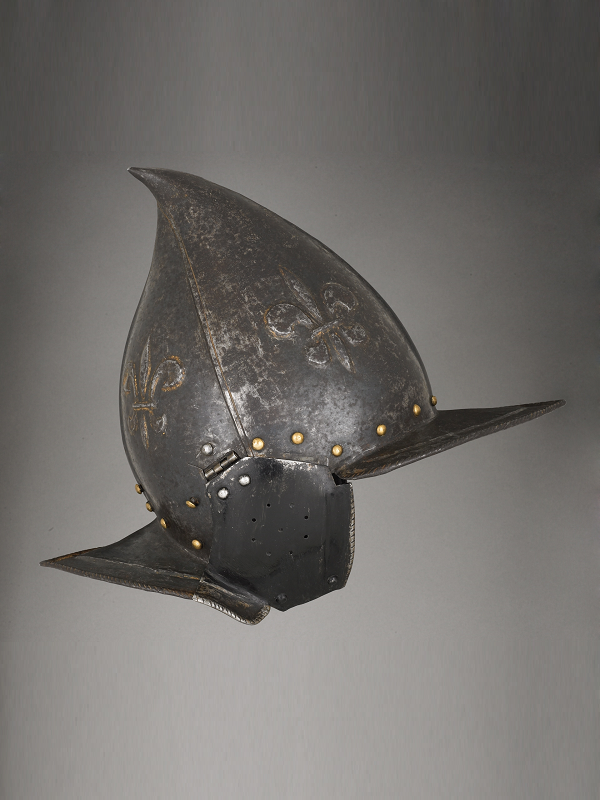
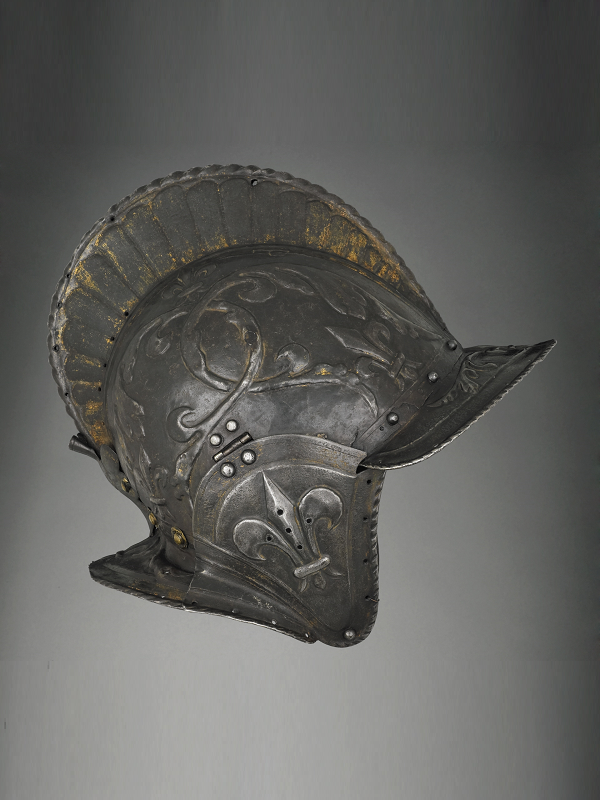
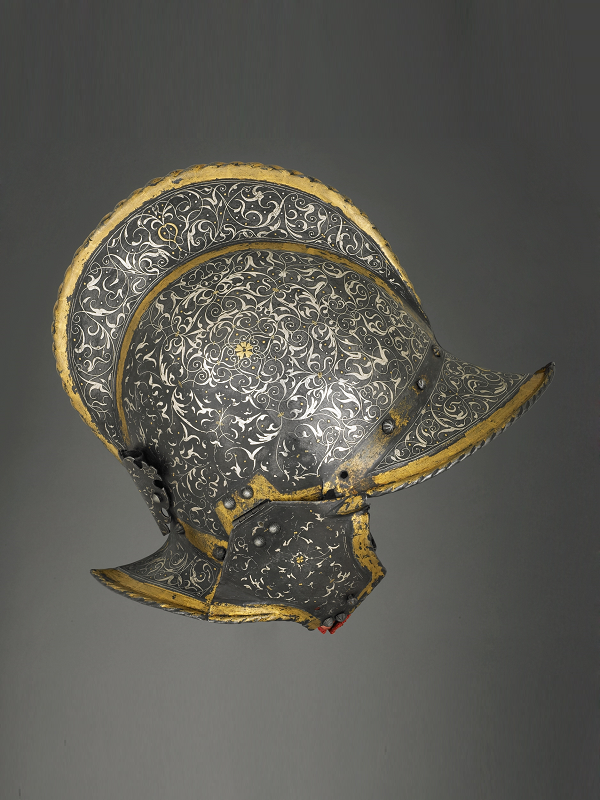
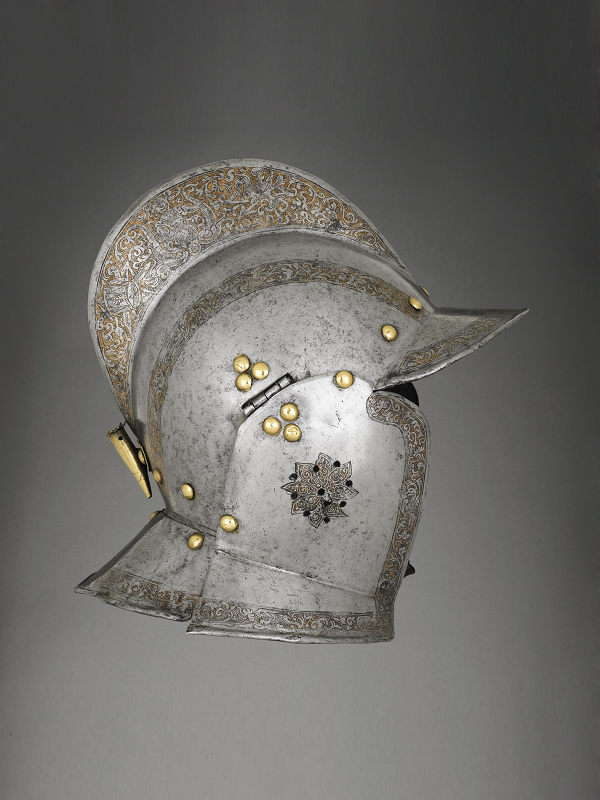
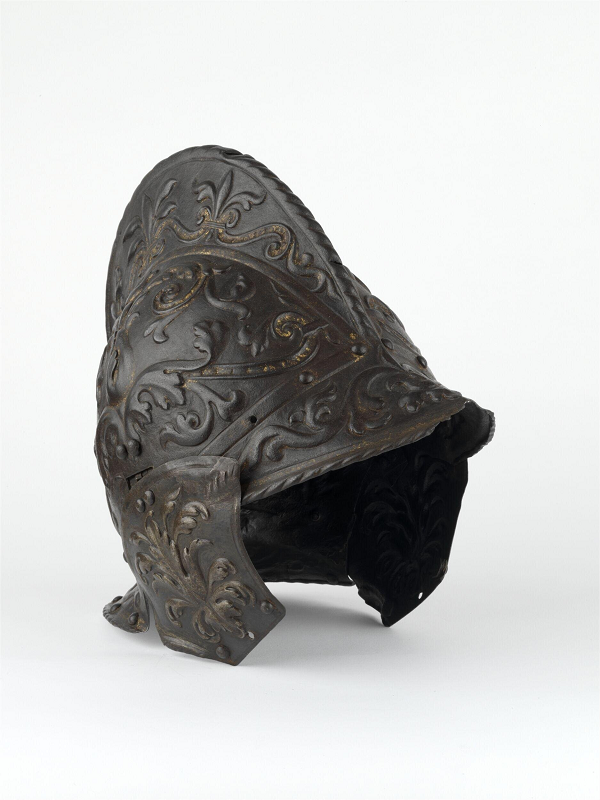
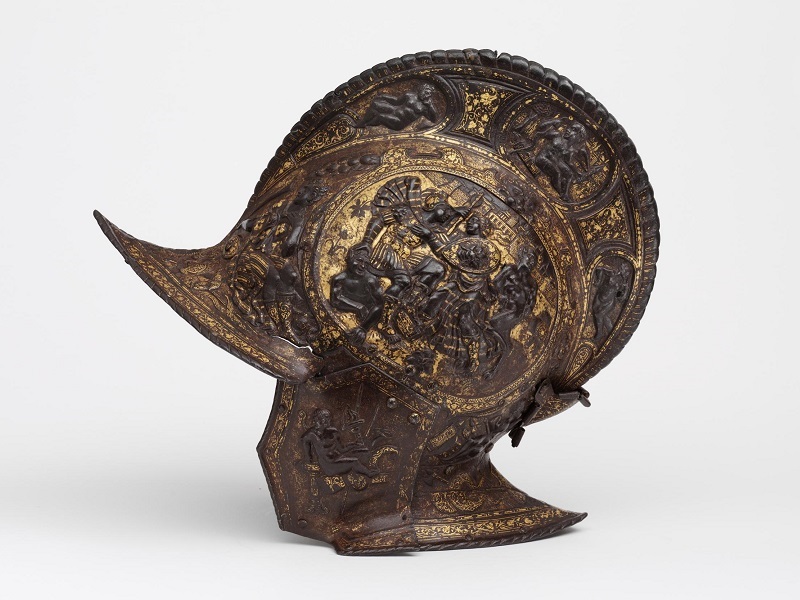
A domed or slightly pointed crown, often with a longitudinal comb for reinforcement and aesthetics.
A wide brim, curved up or down, protecting the neck and shoulders from slashing blows and the sun.
A movable visor, or "falling buff" is a removable or hinged faceplate with slits for the eyes and breathing passages. Simpler versions had no visor, leaving the face open.
Cheek guards—movable or fixed, often with decorative cutouts.
Gorget—neck protection, sometimes integrated.
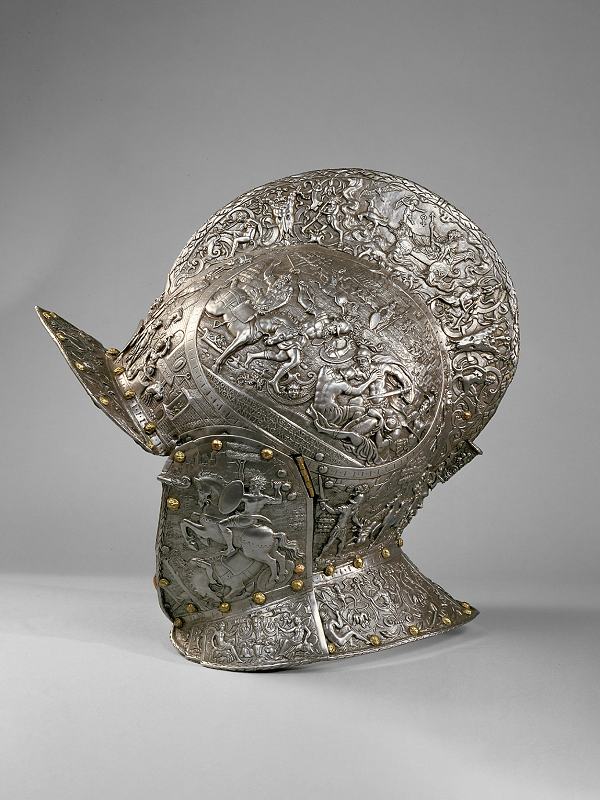
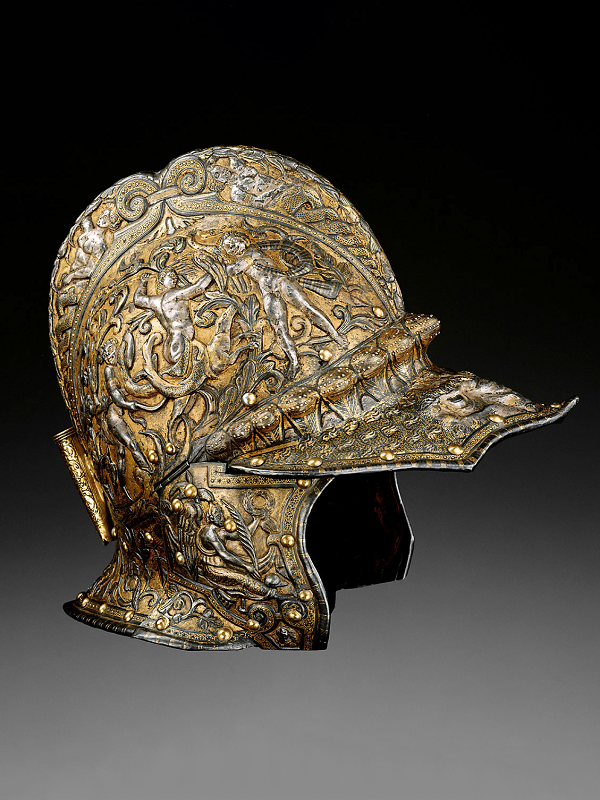
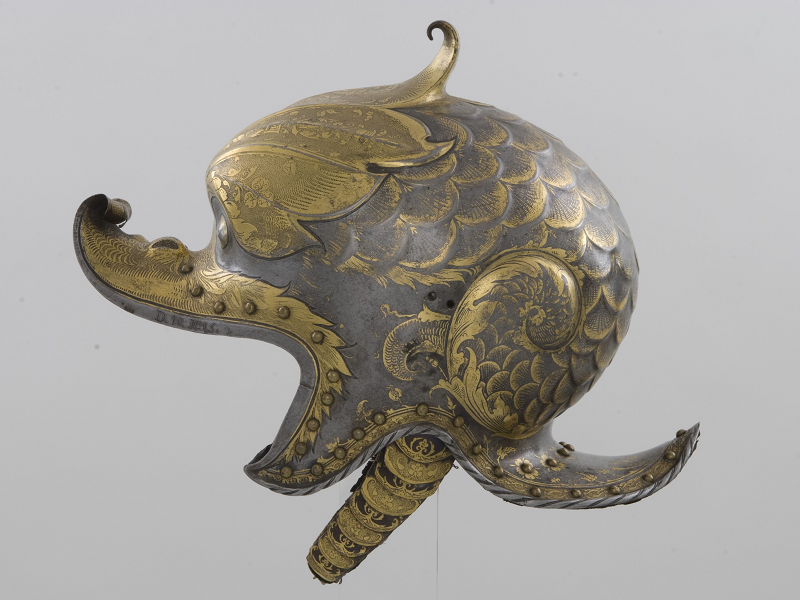
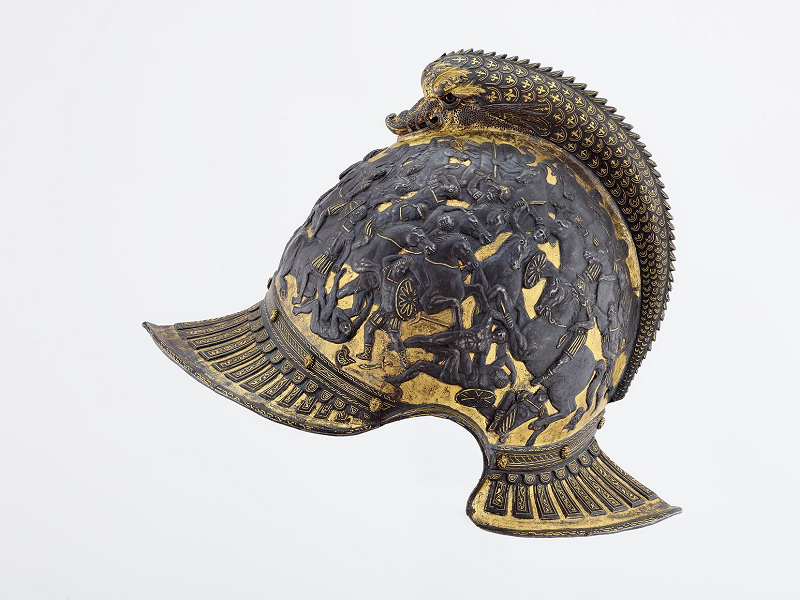
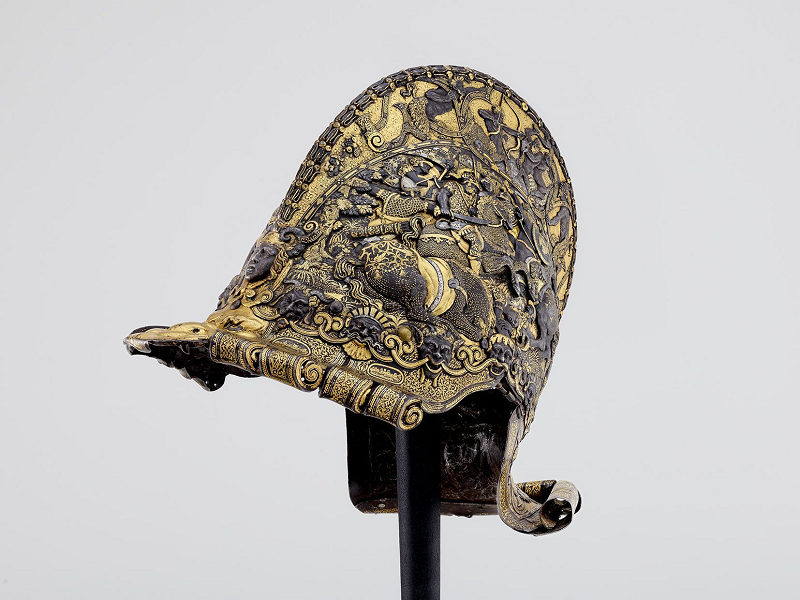
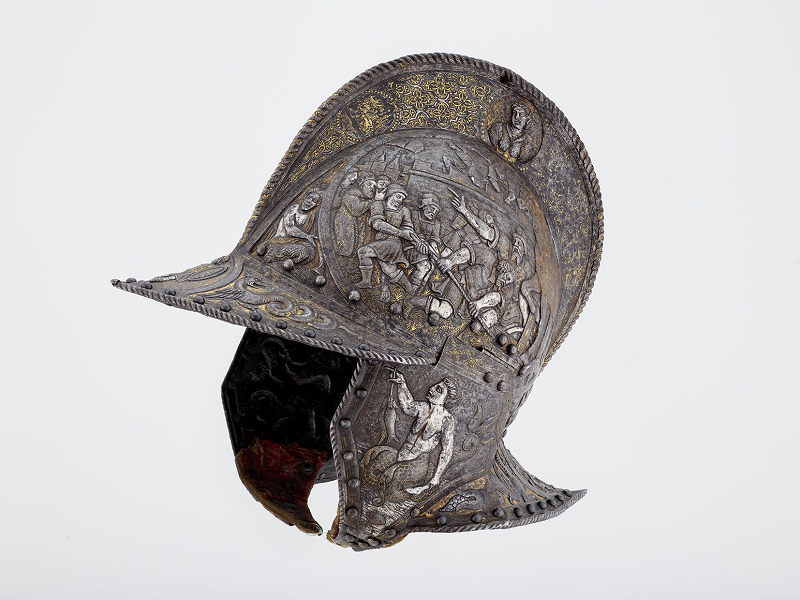
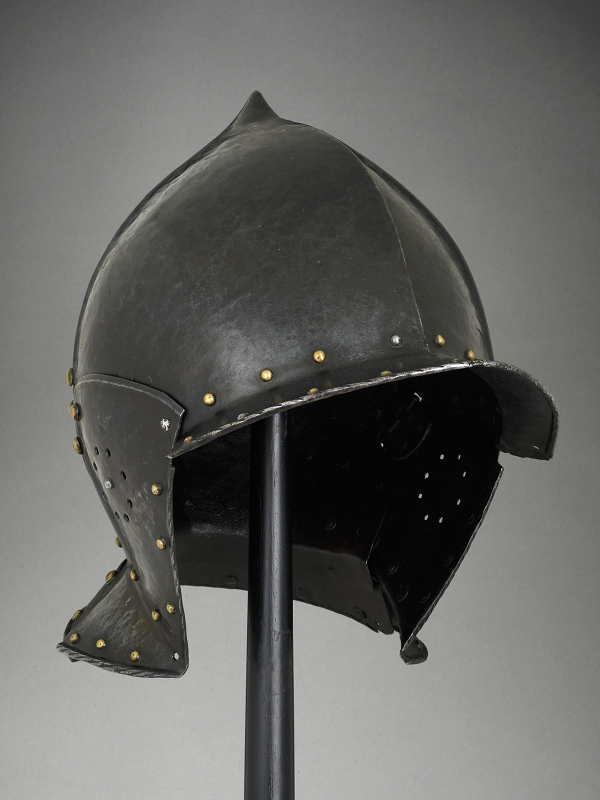
Metal thickness ranged from 1.5 to 4 mm. Weight—2–4 kg, making them significantly lighter than closed helmets. Many were richly decorated: with etching, gilding, embossing with mythological scenes, coats of arms, or classical motifs. There were "black" burguniots (with a blued surface) and luxurious ceremonial versions.
Varieties.
The open burgonet — most common among infantry and light cavalry. The face was left open for better visibility and ventilation.
The closed burgonet — with a movable visor or puff—was used by heavy cavalry (cuirassiers).
Zischägge — a German variant with a high comb, often with additional plates.
The Italian/French burgonet helmet is a more elegant design with rich decoration.
Use and advantages.
The burgonet helmet became the favorite helmet of armies in the 16th and 17th centuries. It was worn by:
Spanish tercios and conquistadors.
German and Swedish reiters.
French and English cuirassiers.
Officers of all ranks.
The wide brim protected from rain and overhead slashes, while the open or semi-open design provided excellent visibility and ventilation—critical during long marches and intense combat. The helmet complemented the cuirass well and allowed for quick donning and doffing.
In combat, it effectively protected against sabers, pikes, and even pistol bullets from a distance. However, it was vulnerable to a point-blank musket shot, like any armor of the time.
Decline and Legacy.
By the mid-17th century, the burgonet began to give way to simpler, lighter helmets (cabassets, infantry helmets), as well as hats with metal inserts. With the spread of linear tactics and mass-produced firearms, heavy armor gradually disappeared.
However, elements of the burgonet influenced military headgear of subsequent eras, including some colonial and ceremonial helmets.
Today, the burgonet is one of the most beloved helmets among reenactors and collectors. Authentic examples are held in the Metropolitan Museum of Art, the Victoria and Albert Museum, the Vienna Armoury Museum, and many other collections. Richly decorated versions are considered true works of Renaissance armormaking art.
The burgonet is a striking symbol of an era when warfare was becoming increasingly technological and the warrior became a professional soldier. It's not a heavy knight's "pot" or a fully enclosed tournament helmet, but a sensible compromise: protected enough to survive combat, yet comfortable enough to command and fight for hours. It embodied the spirit of the Renaissance—practicality, aesthetics, and the engineering genius that allowed a man in armor to remain a man on the battlefield.