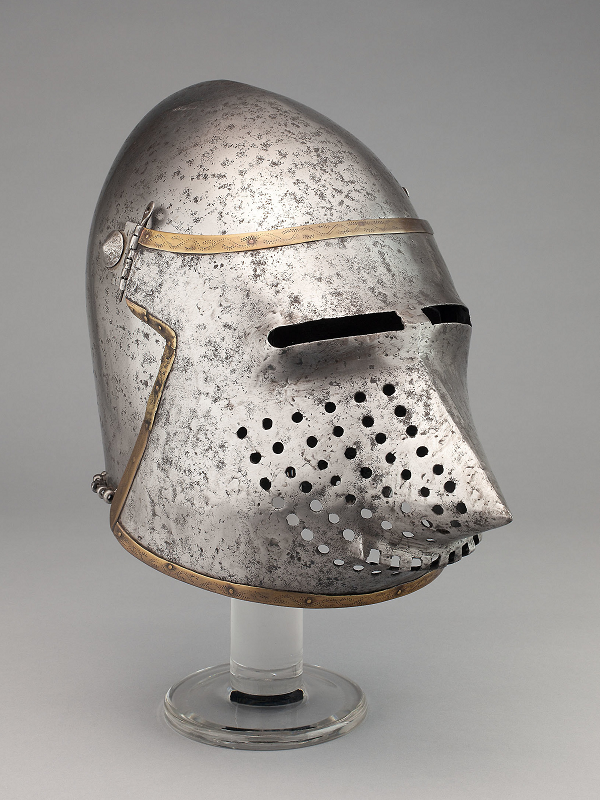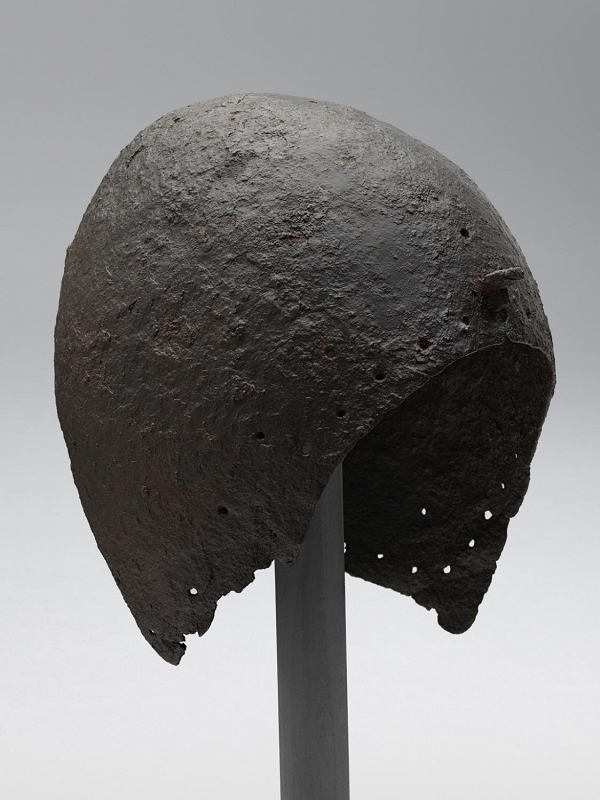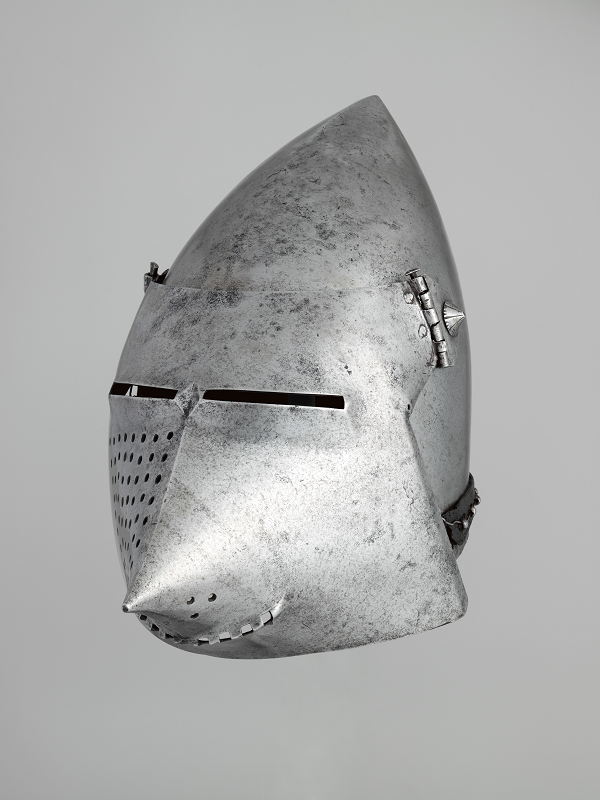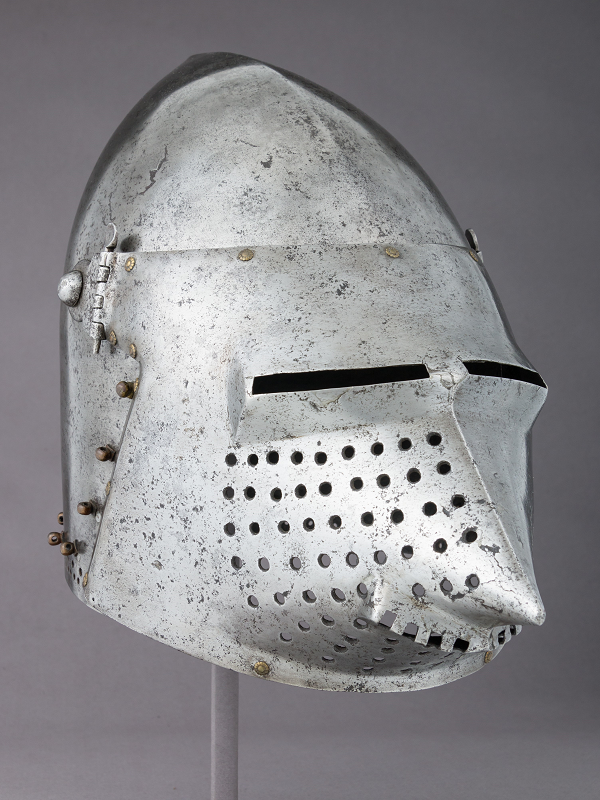

The Bascinet (from Old French bacinet, meaning "small basin") is one of the most important and long-lived knightly helmets of the late Middle Ages. It dominated European battlefields from the late 13th to the mid-15th centuries and became a true "workhorse" for knights during the transition from chainmail to full plate armor.
The bascinet combined excellent head protection with good maneuverability and ventilation, making it a versatile weapon for both mounted and foot soldiers.
Origin and Evolution.
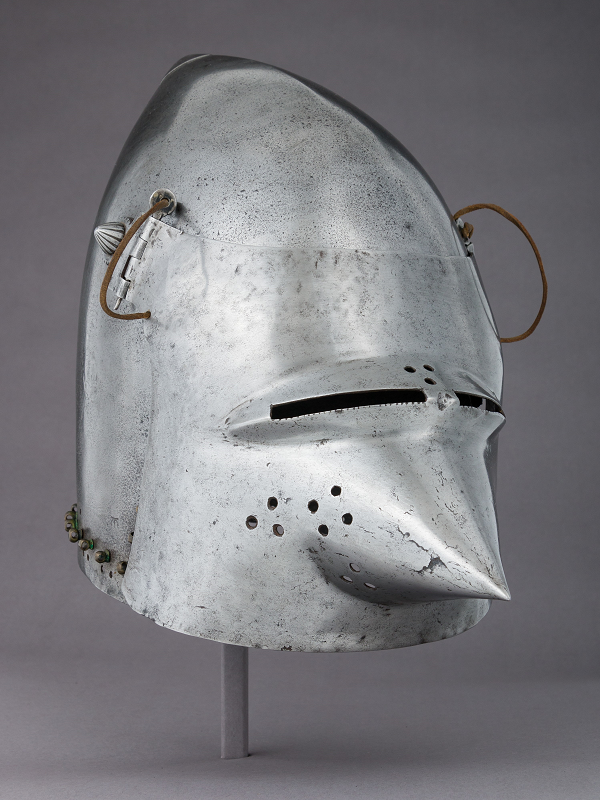
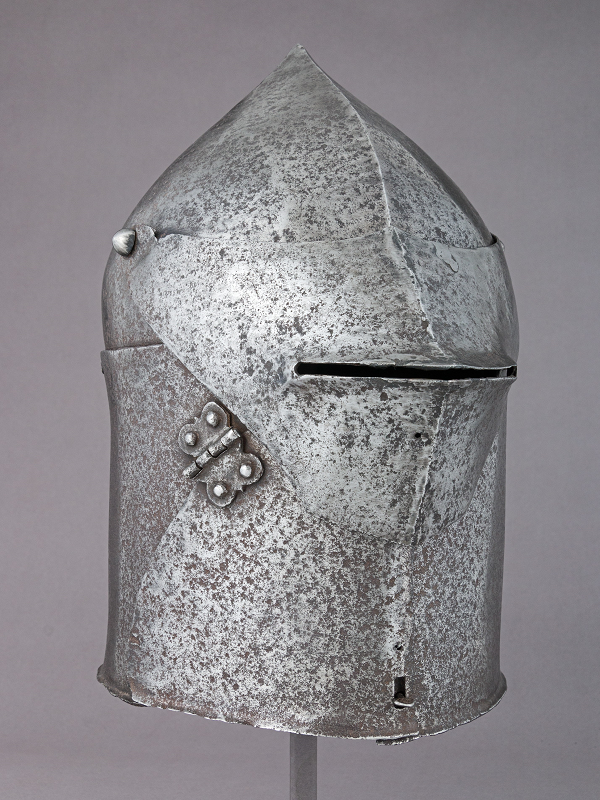
The bascinet emerged in the late 13th century as a development of earlier open helmets (cervellers or simple iron caps). Initially, it was a small, rounded or slightly conical helmet worn over a chainmail hood (coif). Between 1320 and 1340, the helmet changed significantly: the crown became higher and sharper, and most importantly, a movable visor appeared. The most famous visor styles were:
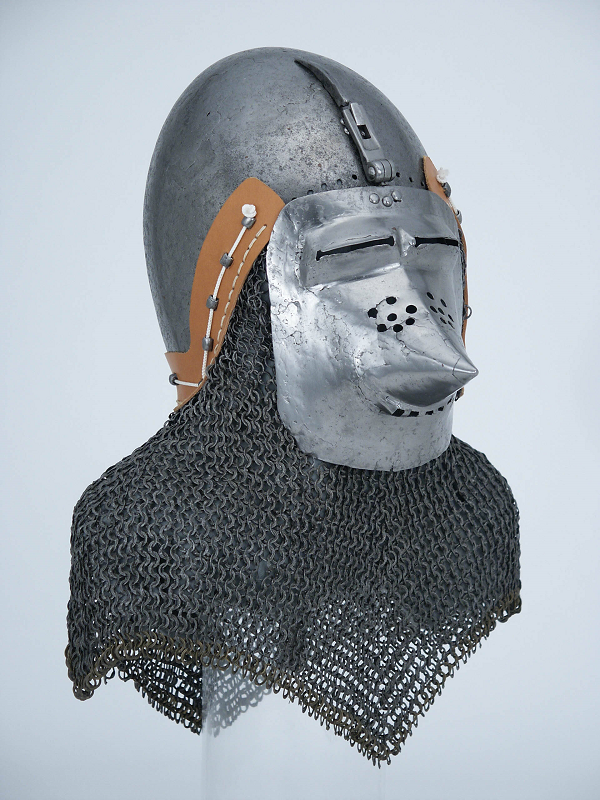
The pig-faced bascinet – a long, pointed visor with breathing holes.
The klappvisier – a German version with a visor that hinged upward.
Rounded and flatter variants of the later period.
By the mid-14th century, the bascinet was often worn with a bevor—a separate plate protecting the chin and throat—or with a chainmail aventail. By the early 15th century, some bascinets evolved into the "great bascinet," where the crown and gorget merged into a single structure. The helmet was used in all major conflicts of the era: the Hundred Years' War, the battles of Crécy, Poitiers, Agincourt, the Italian Wars, and the Eastern Wars.
Bascinet Construction.
The bascinet was forged from one or more pieces of steel 2–4 mm thick. Main elements:
Crown – high, often pointed or slightly conical, with holes for attaching a liner and straps.
Visor – movable, hinged at the sides. When closed, it protected the entire face; when raised, it provided excellent visibility.
Ventilation – numerous small holes in the visor and crown.
Attachment – the helmet was usually secured with straps to the breastplate or worn with a chainmail aventail.
A typical bascinet weighed 2–4 kg. The surface was polished, sometimes decorated with engravings or covered with fabric. Reinforced versions were created for tournaments.
Combat Use.
The bascinet was ideal for 14th-century knightly tactics. A knight could raise the visor to give orders, take a drink, or better navigate, and lower it before attacking for maximum protection.
In close combat, the visor protected against arrows from English archers (especially at the Battle of Agincourt), while a chainmail aventail or bevor protected the neck. Infantrymen and mounted warriors prized the bascinet for its balance: it was lighter than a great helm and more comfortable in prolonged battle.
By the late 14th and early 15th centuries, the bascinet was often combined with full plate armor. It was in bascinets that French knights fought in the Hundred Years' War and Italian condottieri.
Why did the bascinet become legendary?
Versatility – suitable for both cavalry and infantry.
The balance of protection and comfort – the best compromise of its era.
Evolutionary flexibility – it easily adapted to new types of armor.
Aesthetics – especially the "pig's snout"—gave the warrior a menacing, almost demonic appearance.
By the mid-15th century, the bascinet began to give way to the sallet and armet, which offered better protection for the neck and face. However, its elements influenced many subsequent helmets.
Today, the bascinet is one of the most popular helmets among historical reenactors. Authentic examples are housed in leading museums around the world: the Metropolitan Museum of Art, the Royal Armouries in London, the Musée de l'Armée in Paris, and many others.
The bascinet is more than just a piece of steel on the head. It is a symbol of an entire era of chivalry, when a warrior could still see the enemy's eyes, raise his visor before an attack, and feel the wind of battle while remaining adequately protected. This helmet survived the greatest battles of the Middle Ages and became the embodiment of the practical genius of armorers of the 14th and 15th centuries. In it, the knight was both a protected machine and a living man on the battlefield.