Bartolomeo Campi, (1573г.), Venezia, Italy.
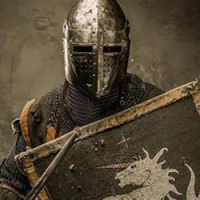
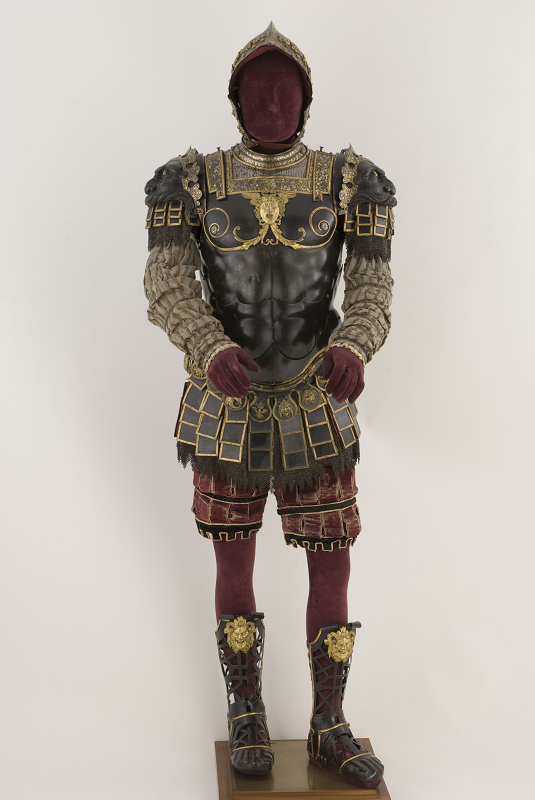
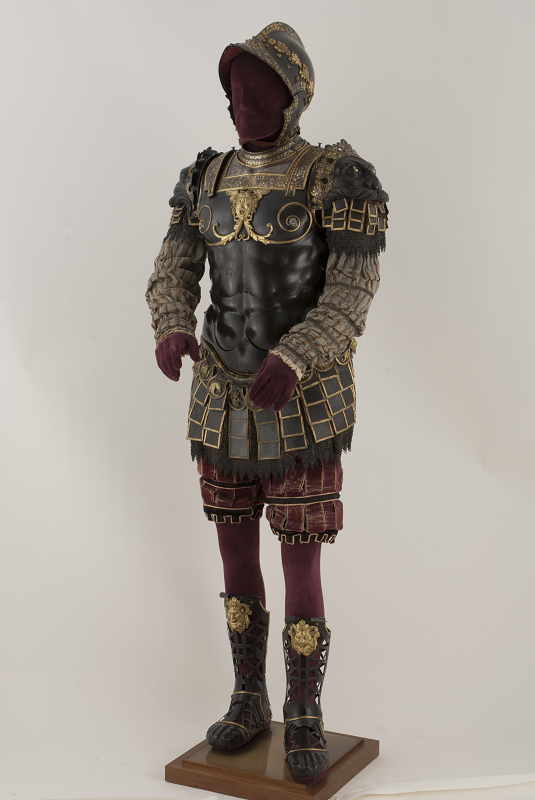
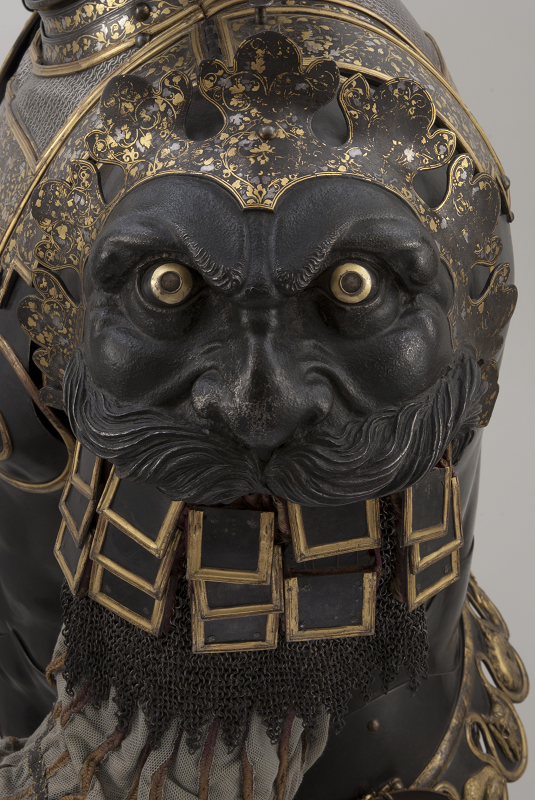
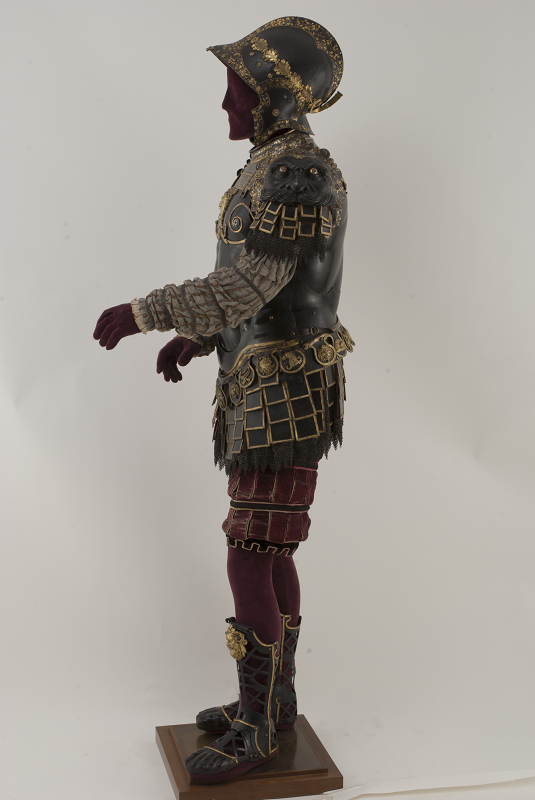
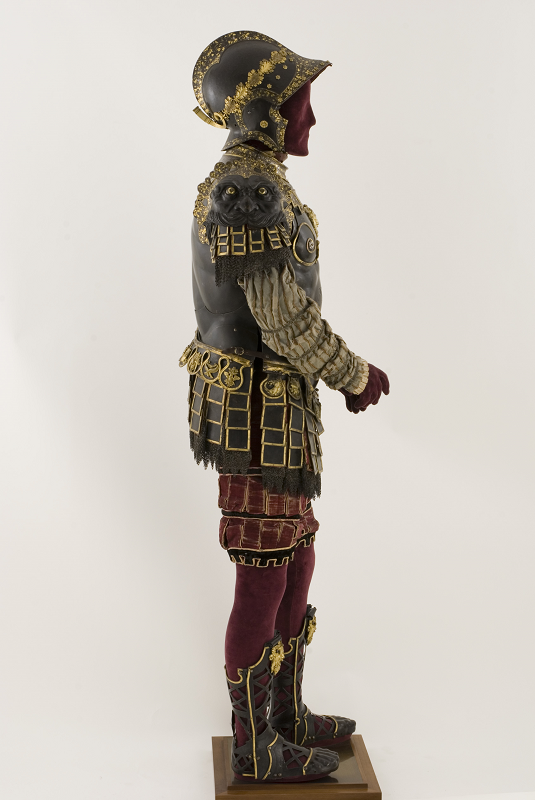
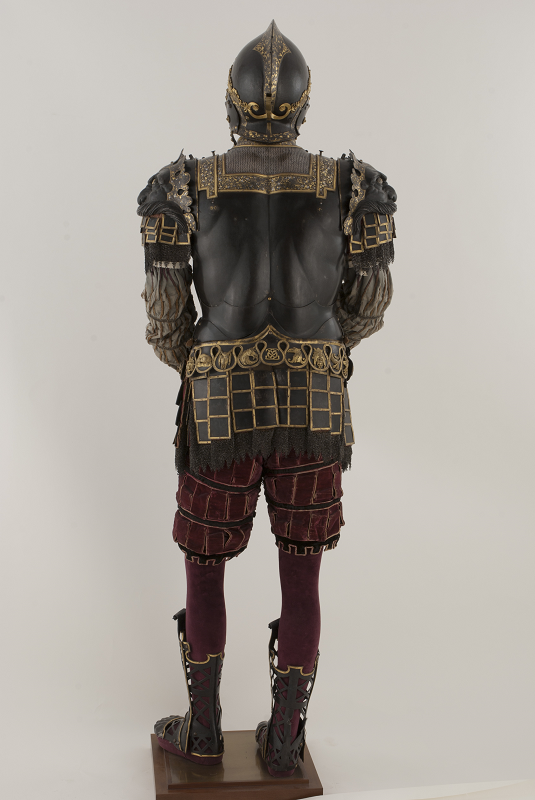
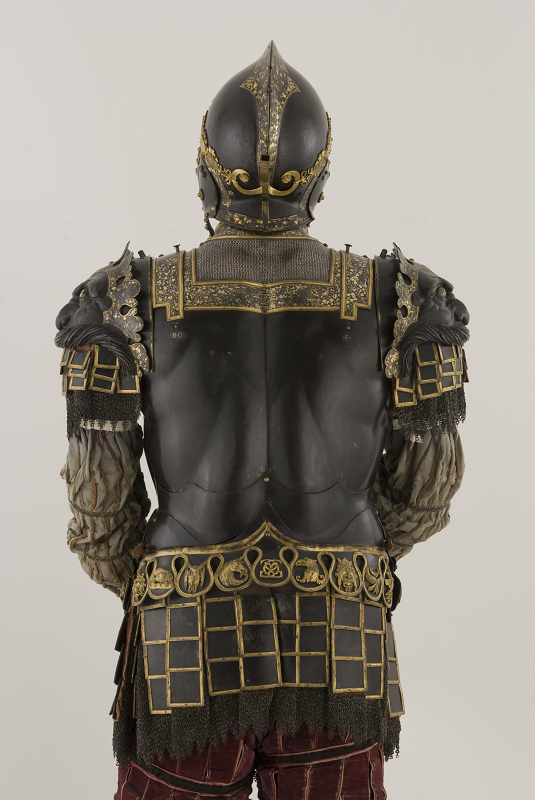
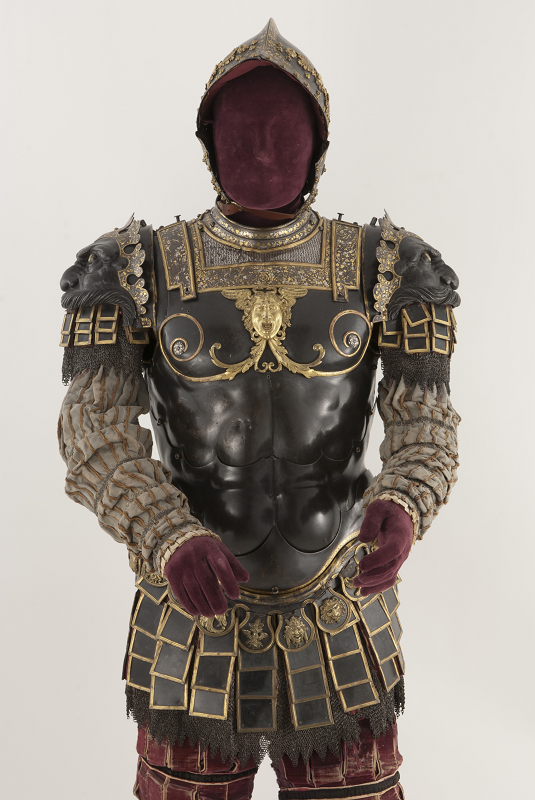
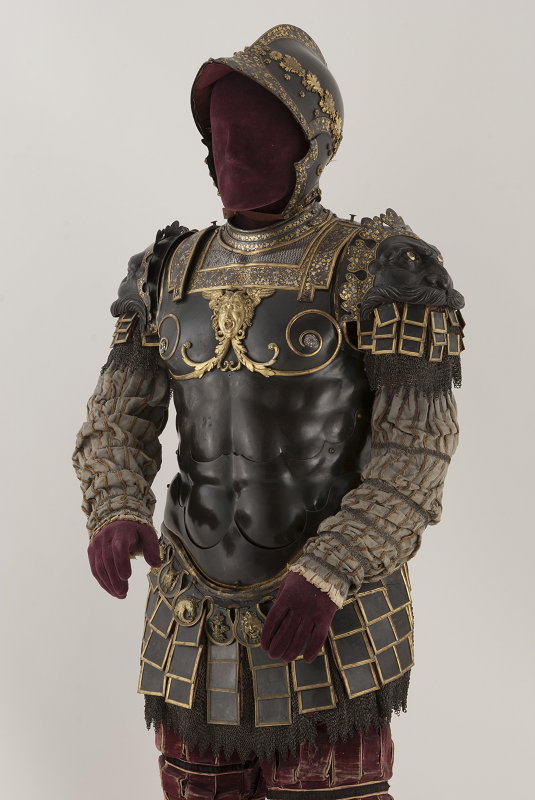
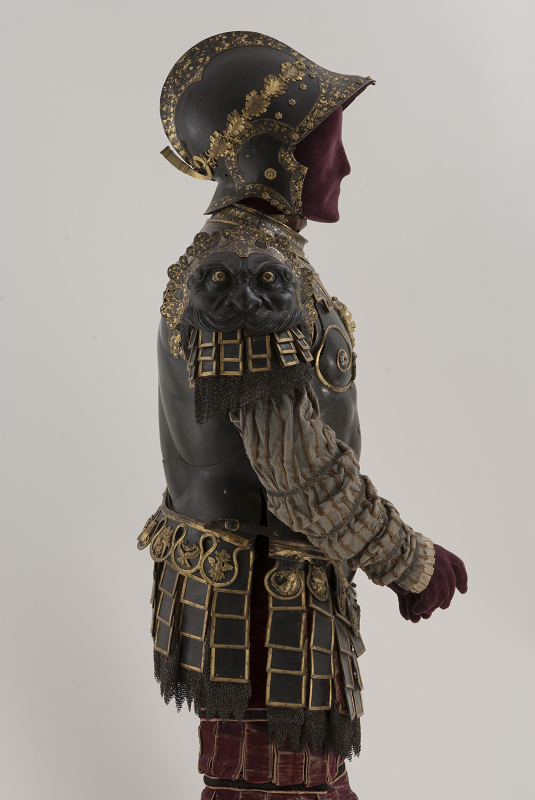
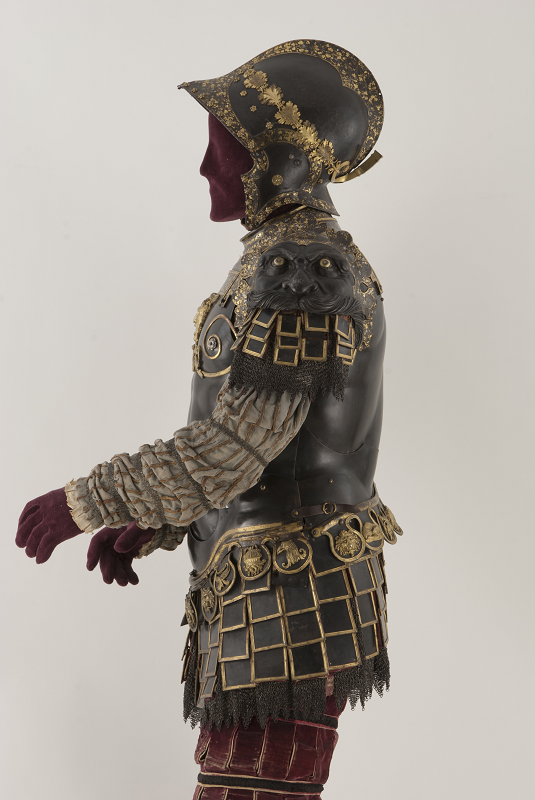
Bartolomeo was born in Pesaro, but his exact date is unknown. The only existing work by this great engraver and weapons maker is currently housed in the Royal Armory Museum in Madrid. This magnificent suit of armor in the pseudo-Romanesque style was made for Guidobaldo II della Rovere, Duke of Urbino, as indicated by the initials on the back skirt and the victorious diadem of oak leaves (rovere in Italian) on the helmet, which also hint at its owner. The armor was found in the Royal Armory among the weapons of Philip II, likely a gift to the king in gratitude for Guidobaldo's appointment as a Knight of the Order of the Golden Fleece in 1561. Bartolomeo completed the armor in 1546 in the shortest possible time, within two months, obeying the wishes of his duke, although he had planned that it would take him a whole year. On the back of the cuirass, the master signed his initials • B C • / • F • (Bartholomeus Campi Fecit), and on one of the parts of the skirt, decorated with two palms tied with a cord, he inserted the Greek inscription IOΛBIOS MNǑSΛBIOS (Happy and Prosperous), in accordance with the classical tastes of the court of Urbino. The cuirass follows the relief of the human body, and on the front it is decorated with a Medusa head with golden stripes emerging from it, turning into a silver flower at the other ends. The shoulder guards are made of blackened steel in the form of masks with golden eyes. In addition to making weapons, Campi was a skilled military engineer and served at various times in the Republic of Siena, in Venice, and with the King of France. In 1562, Bartolomeo was with the Duke of Guise at the siege of Calais. In 1568, he served under the Duke of Alba in Flanders, where he was granted a patent for the position of chief military engineer of fortifications with a salary of 500 escudos. Campi was killed by an arquebus shot during the siege of Haarlem on March 7, 1573, to the great grief of the Duke and the entire army.
Famous customers of the master:
Guidobaldo II Duke of Urbino.
Henri II Valois.
Emperor Charles V.
King of Spain Felipe II.
Armor of the great master you can see:
Real Armería de Madrid, Madrid, Spain.