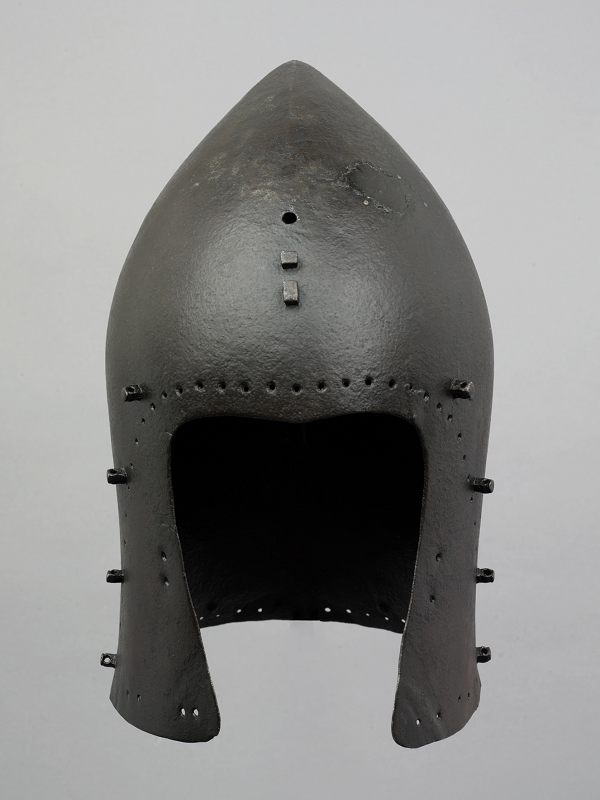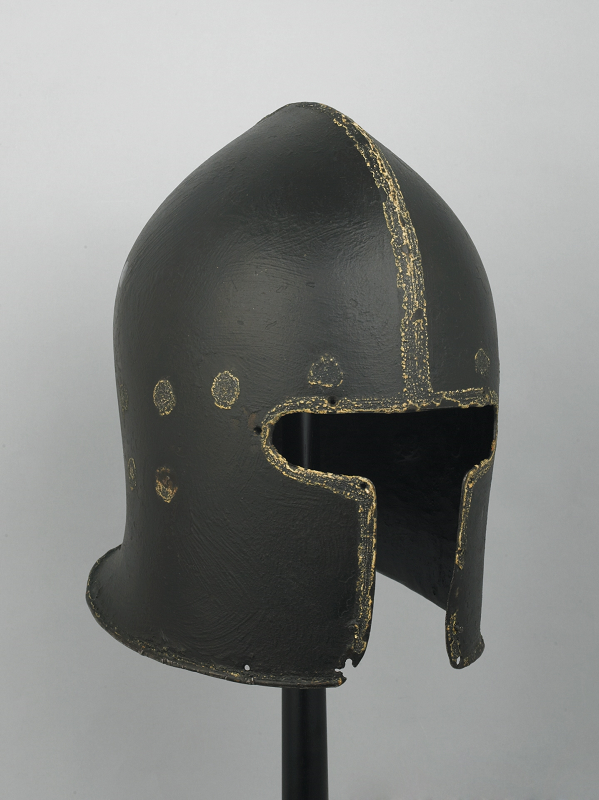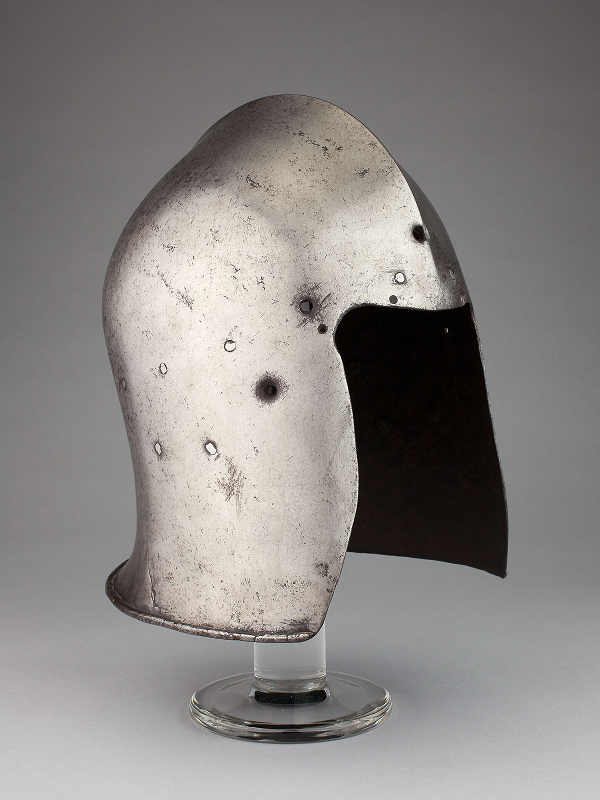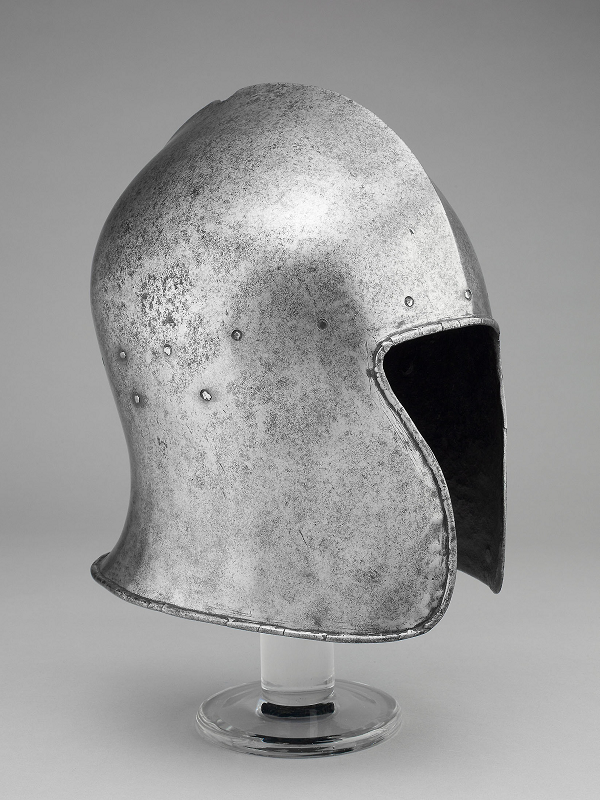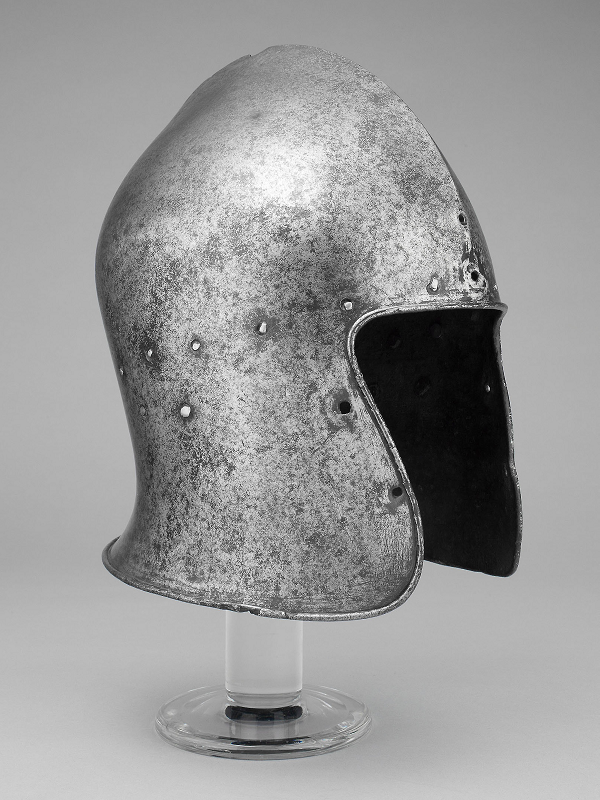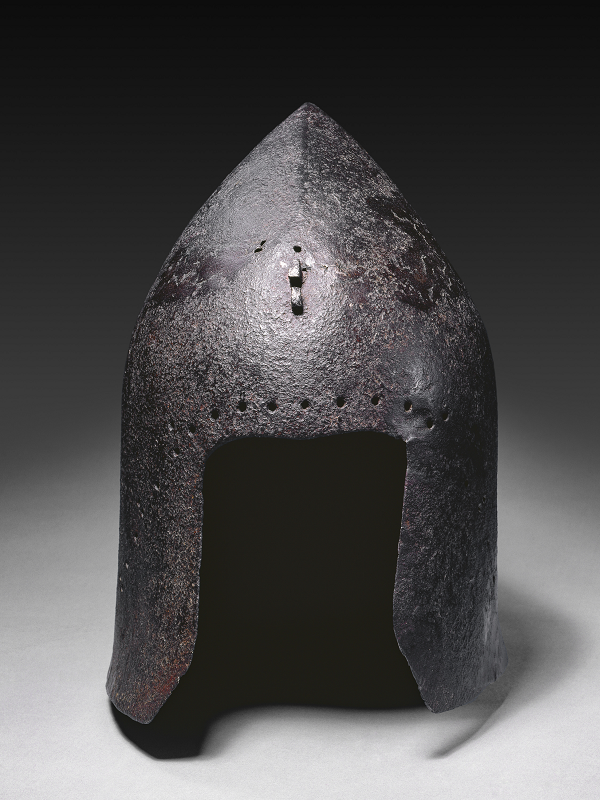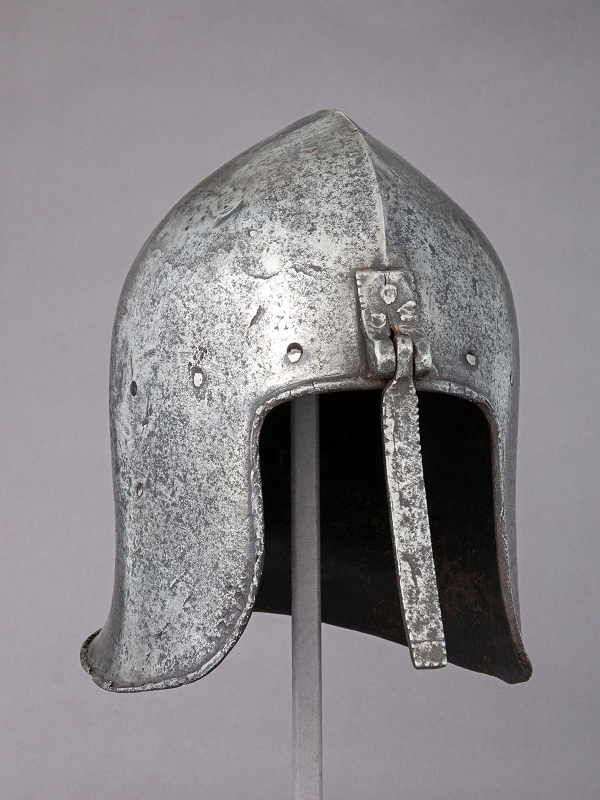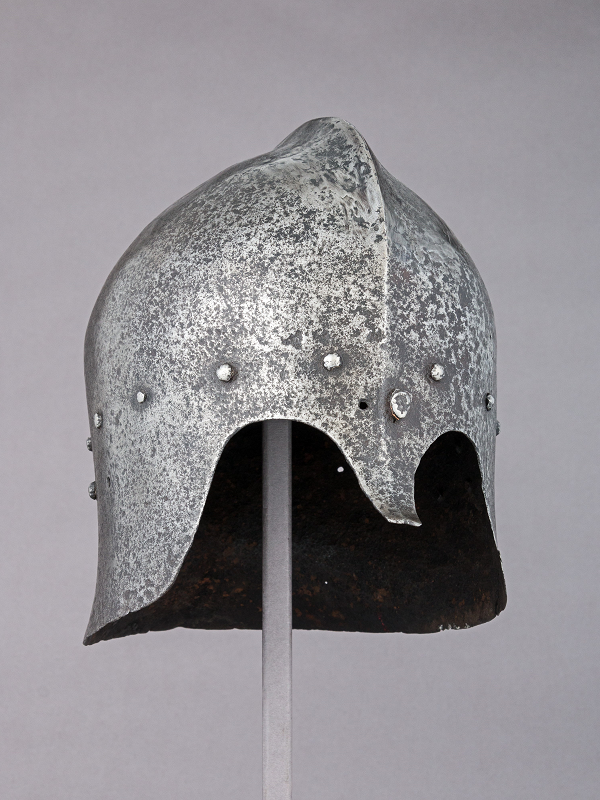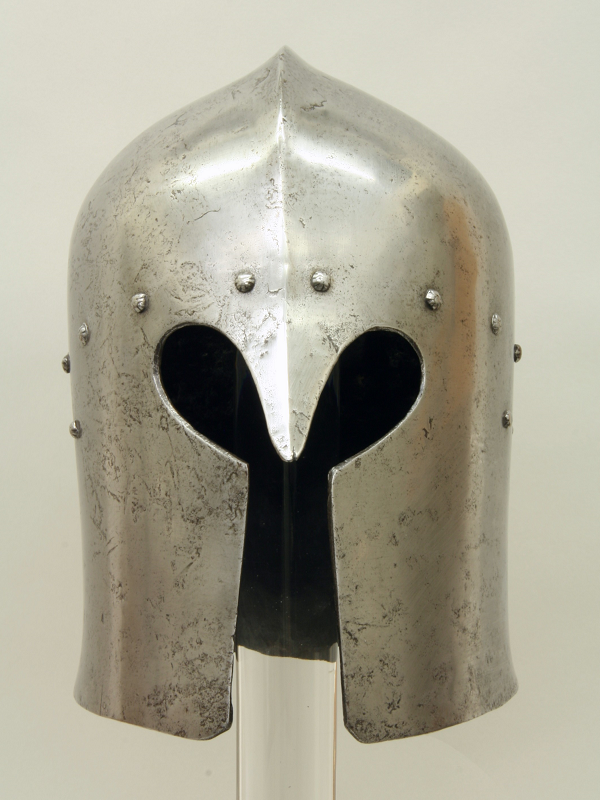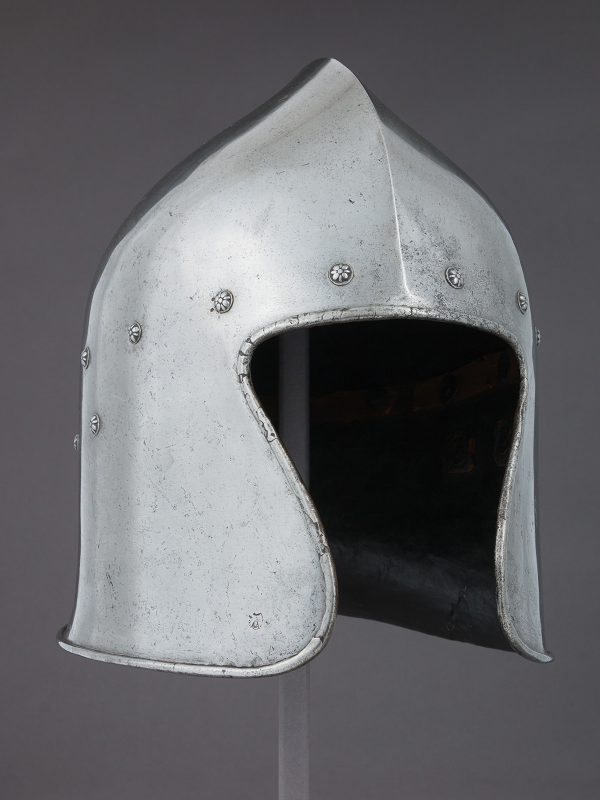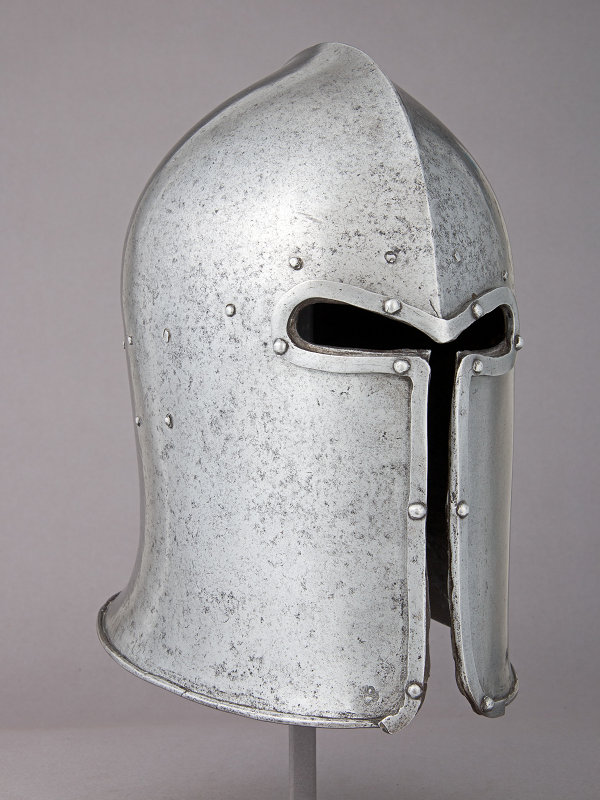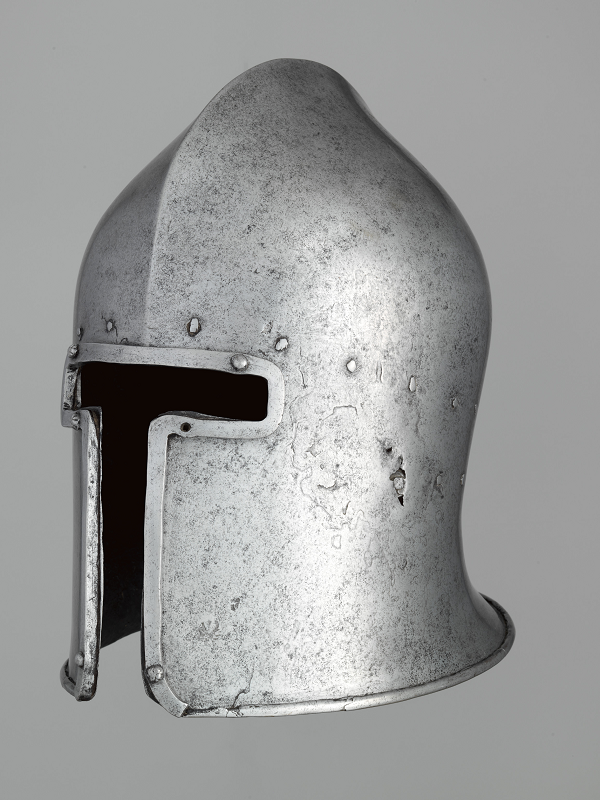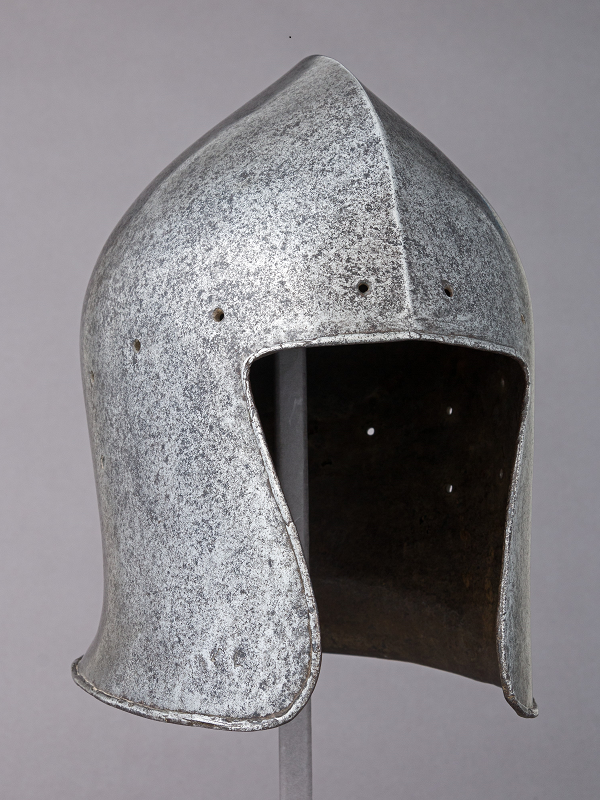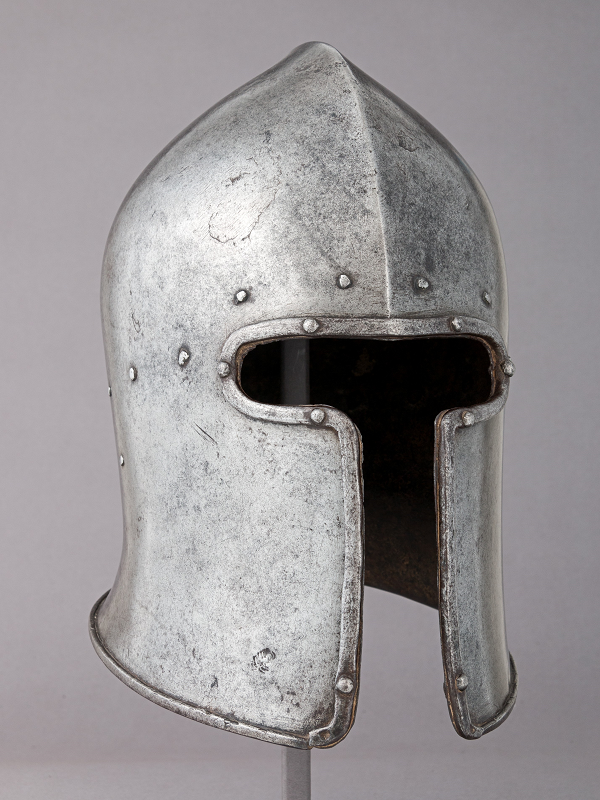
The Barbute (from barba, meaning "beard") is one of the most recognizable and elegant Italian knightly helmets of the 15th century. It combines excellent head protection with an open face, providing the warrior with excellent visibility and ventilation while maintaining a menacing, almost antique appearance.
The barbute became a true symbol of the Italian school of armory during the Condottieri era and was especially popular in the city-states of Northern Italy: Milan, Venice, Florence, and Mantua.
Origin and Historical Context.
The barbute appeared in the early 15th century as a further development of the bascinet, an earlier open-faced helmet with a chainmail aventail. Italian artisans decided to abandon the heavy aventail and create an all-metal helmet that would reliably cover the skull, temples, ears, and back of the head, leaving the face relatively open. The barbute's popularity peaked between 1420 and 1470. It was during this time that Italian condottieri and heavy cavalry needed a helmet comfortable for maneuvering in Italy's hot climate. Unlike the German sallet with its long backplate or the fully enclosed armet, the barbute was lightweight, relatively inexpensive, and very practical.
The word "barbute" literally means "bearded"—due to the distinctive shape of the lower part of the helmet, which resembled a beard or framed the warrior's face, leaving only the eyes, nose, and mouth exposed.
Barbute Construction.
The classic barbute was forged from a single piece of steel or assembled from several plates. Key Features:
Deep Crown — The helmet sat deep on the head, covering the ears and upper neck. A characteristic T- or Y-shaped facial opening — a vertical slit for the eyes and nose, widening downwards for the mouth and chin.
Reinforced edges along the contour of the face — often with a thickening or a turned-up lip to deflect blows.
A short backplate and side plates protect the temples and jaw.
Lack of a movable visor — unlike a sallet or closed helmet.
The metal thickness was typically 2–3.5 mm. The barbute weighed between 2 and 3.5 kg, making it one of the lightest full-length knightly helmets of the period. Many examples were polished to a mirror shine and decorated with engravings or etchings of the owner's coat of arms.
There were two main variations:
Classic Italian — with a pronounced T-shaped opening and smooth contours.
Venetian/Milanese – sometimes with a narrower eye slit or additional ventilation holes.
Use and advantages.
The barbute was ideal for 15th-century Italian tactics: rapid cavalry charges, maneuvers, and battles in hot climates. The open face allowed the warrior to breathe freely, give orders, and maintain an excellent field of view – critical in the chaos of battle.
The helmet was often worn with a bevor (a separate plate protecting the lower face and throat) or a mail collar. This allowed the level of protection to be adjusted: on campaign or in hot weather, without the bevor, or in close combat, with full protection.
The barbute was widely used by both heavy cavalry condottieri and wealthy infantry and urban militias. It was especially popular among mercenaries because it combined good protection with a relatively low cost compared to fully enclosed helmets. The disadvantages were obvious: the open face left the eyes and lower jaw vulnerable to a direct blow. Therefore, many warriors additionally wore a liner or used the barbute only in combination with a bevor.
Why did the barbute become an icon of Italian chivalry?
A balance of protection and comfort — the best solution for the Mediterranean.
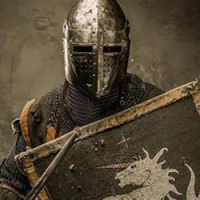
Aesthetics — the helmet gave the warrior a stern, almost antique look, reminiscent of Roman legionaries.
Practicality — it was easy to put on and take off and was well ventilated.
Status — richly decorated barbutes were a prestigious element of a condottiere's armor.
By the end of the 15th century, the barbute gradually gave way to more closed helmets—the armet and closed helmets, as well as the sallets. However, it remained in use for a long time, especially among light cavalry and infantry.
Today, the barbute is one of the most beloved helmets among historical reenactors. Its original examples are housed in leading museums around the world: the Metropolitan Museum of Art in New York, the Royal Armory Museum in Turin, the Arms Museum in Venice, and many other collections.
The barbute is more than just a helmet. It is the embodiment of the Italian genius of the late Middle Ages: practical, elegant, and deadly. In an era when armor was becoming increasingly heavy and complex, the barbute reminded that sometimes the best choice is a reasonable compromise between protection and freedom. A helmet that allowed the Italian condottiere to simultaneously remain a formidable warrior and a living man on the battlefield.