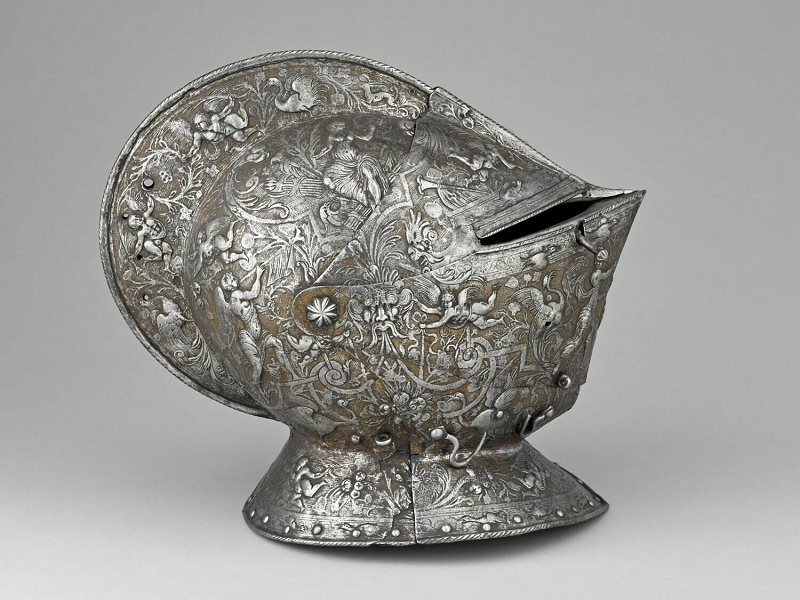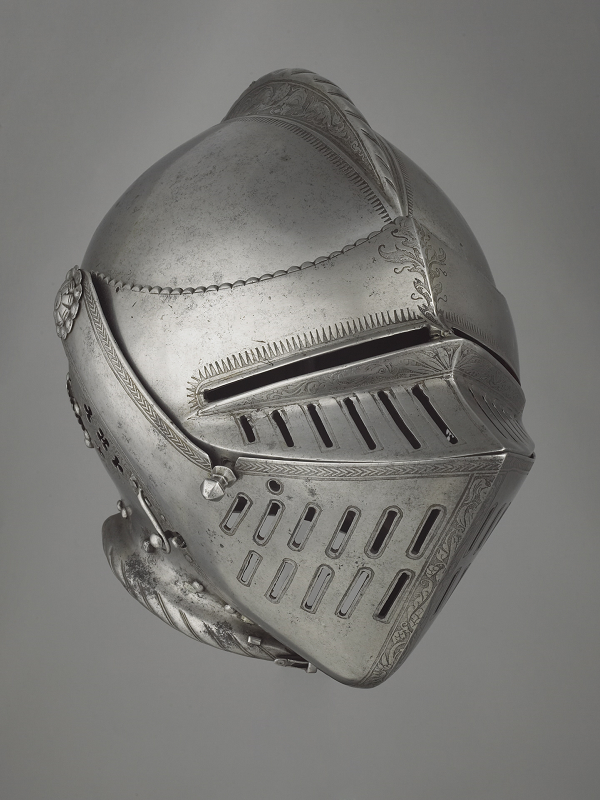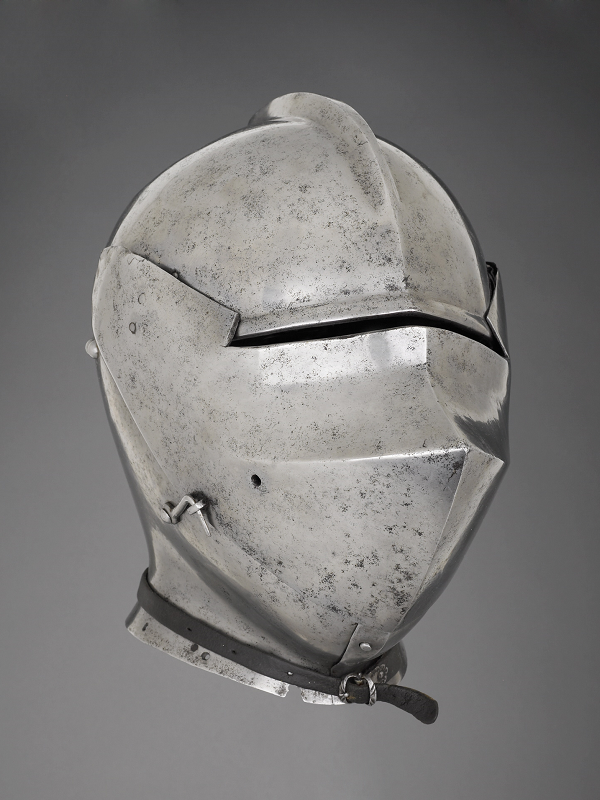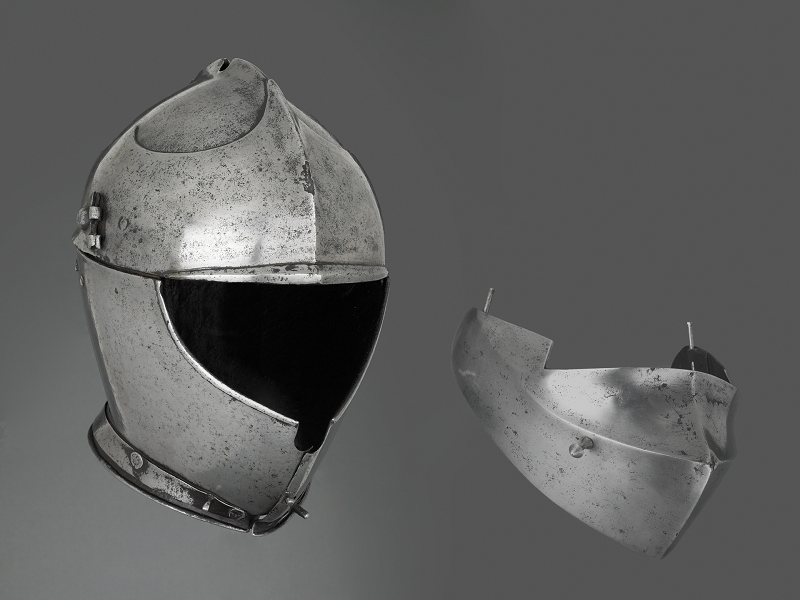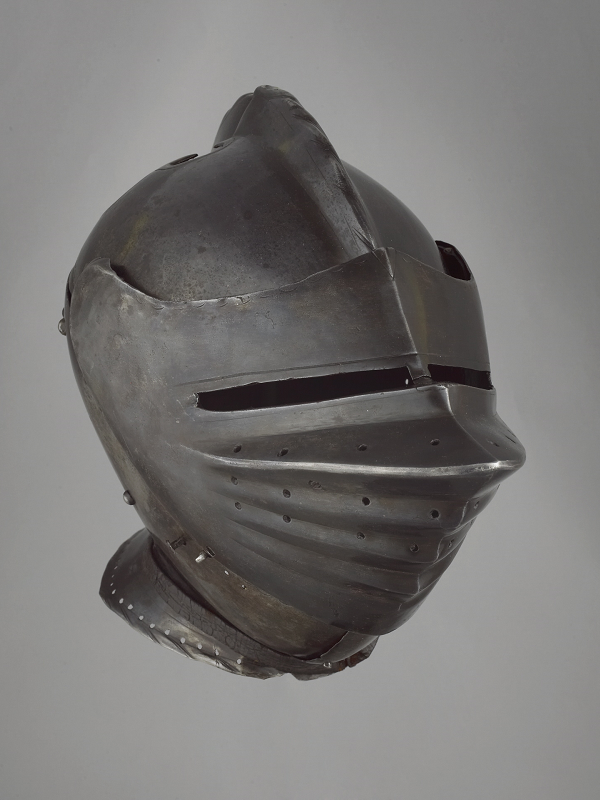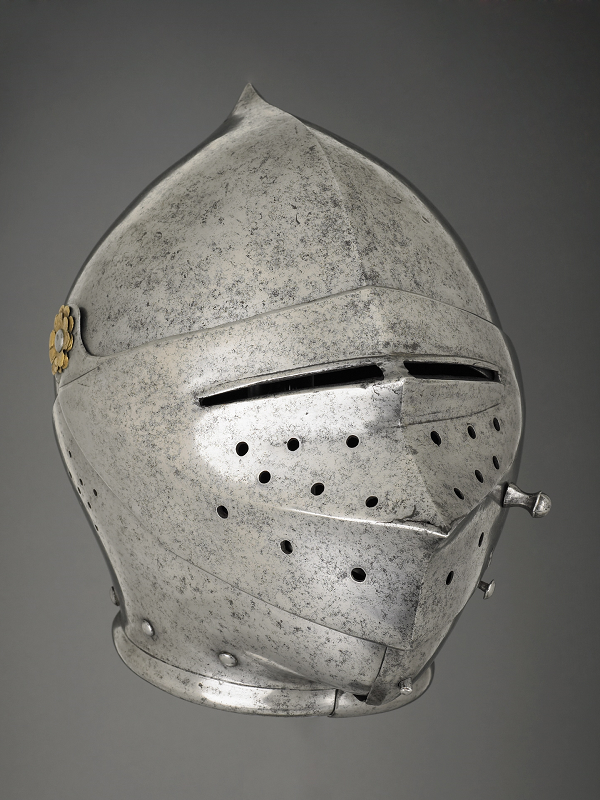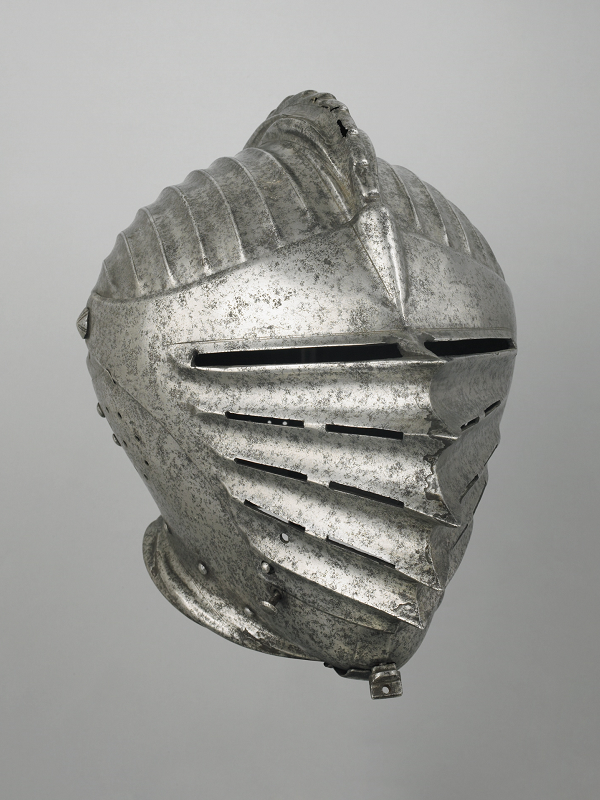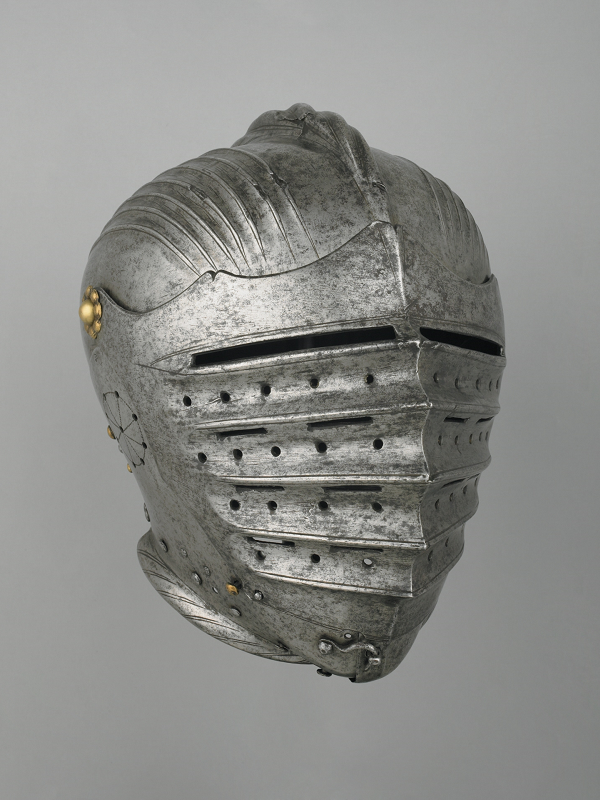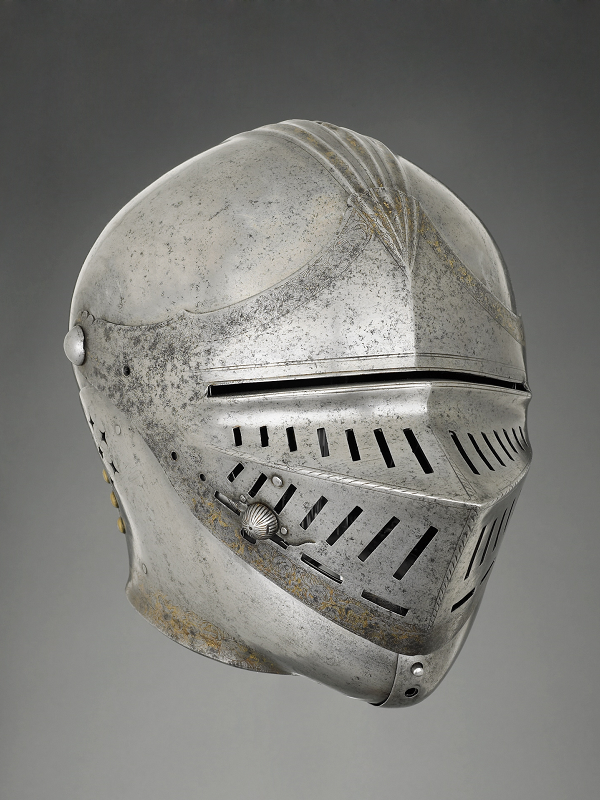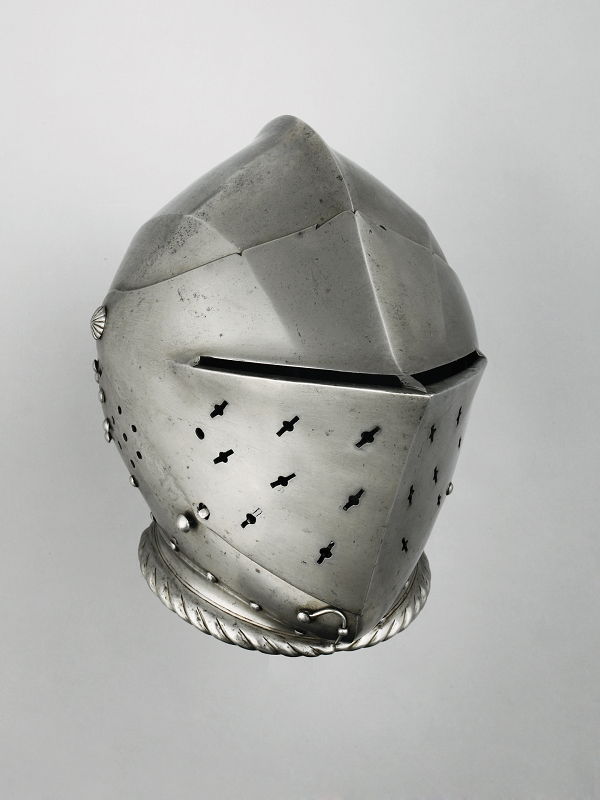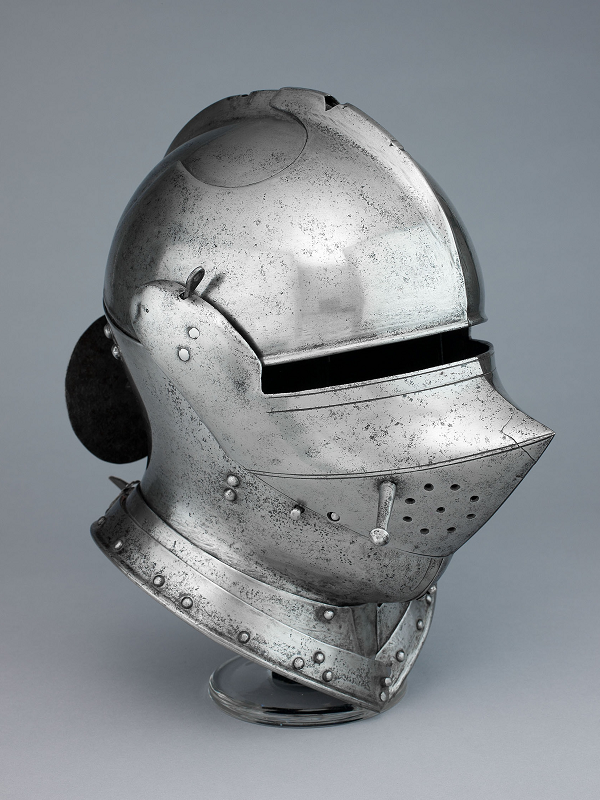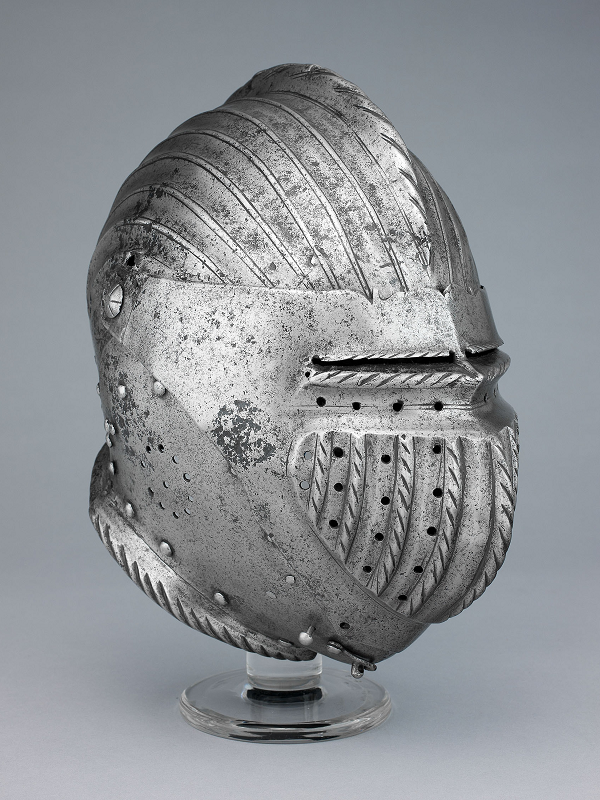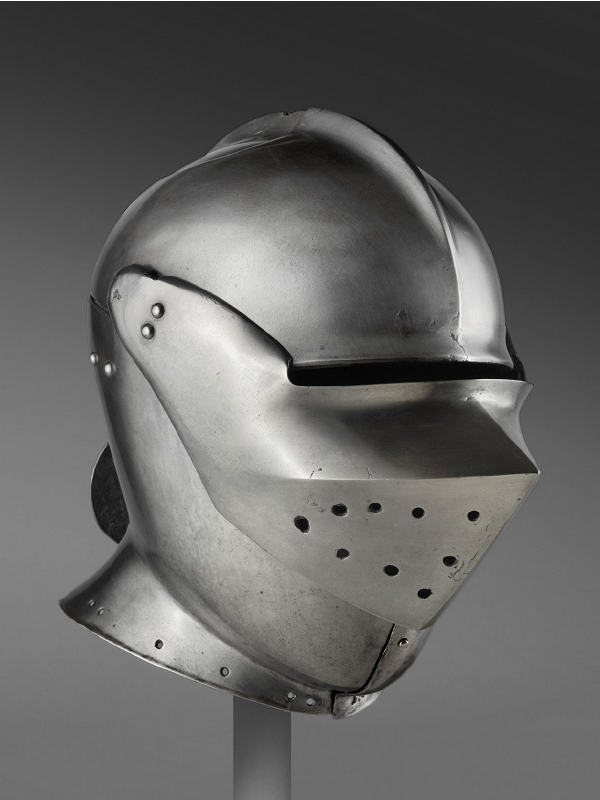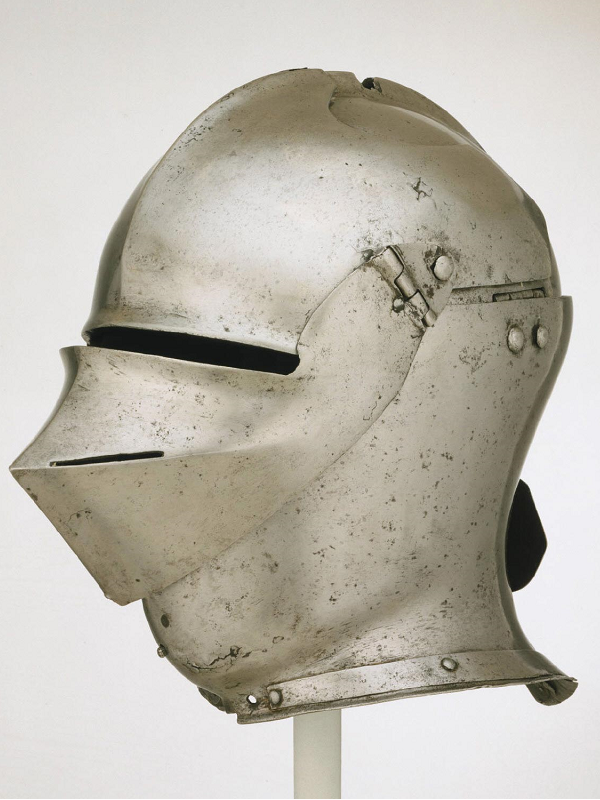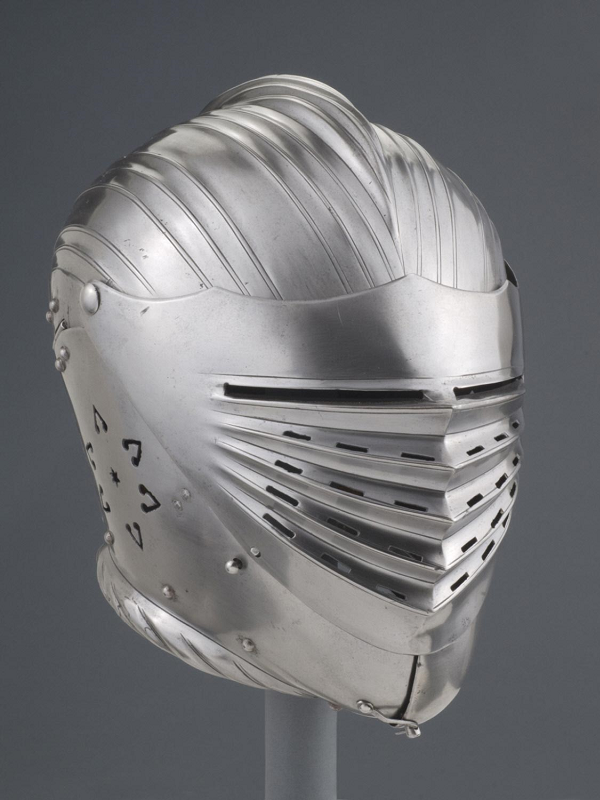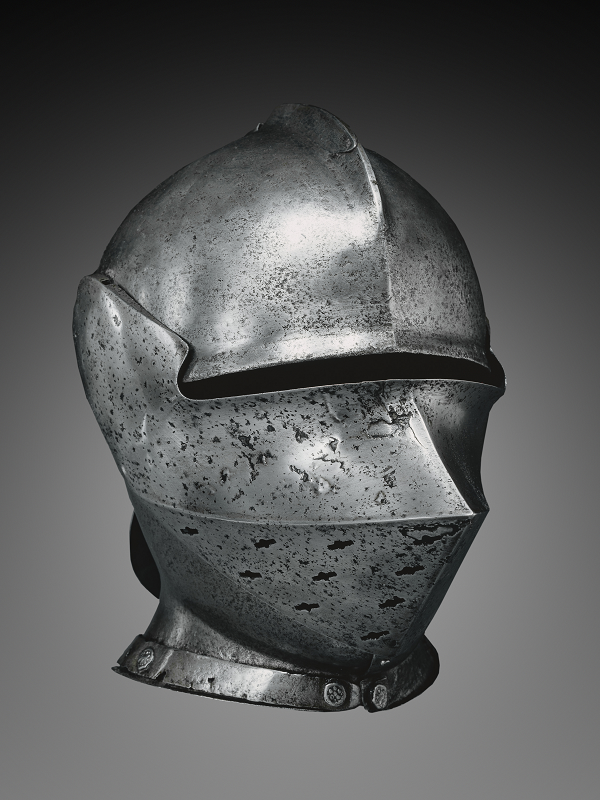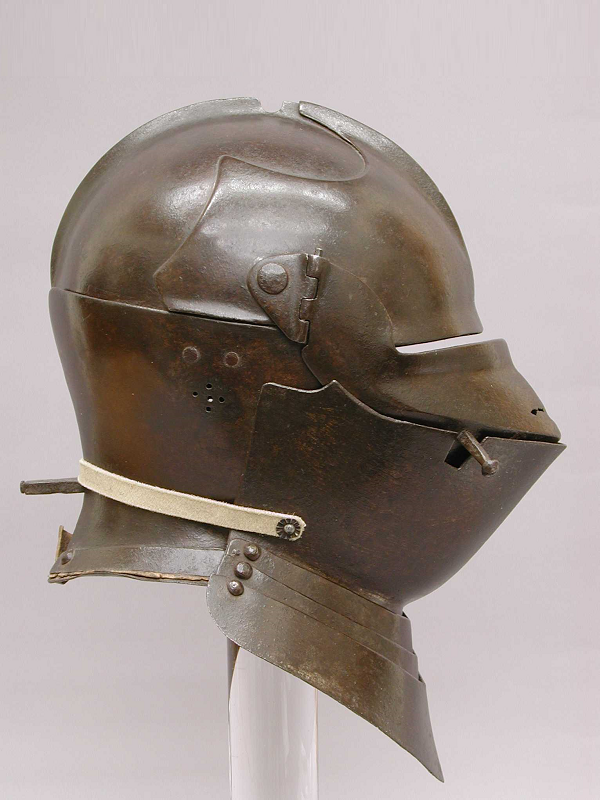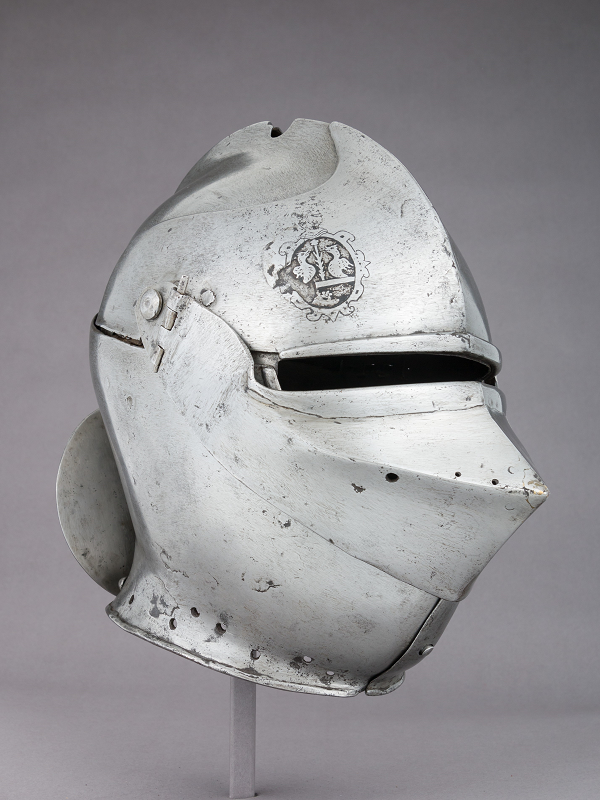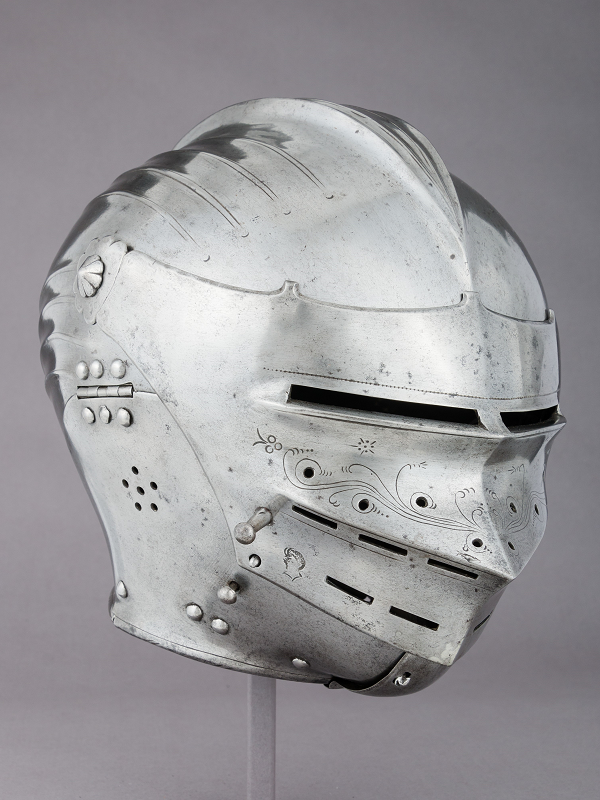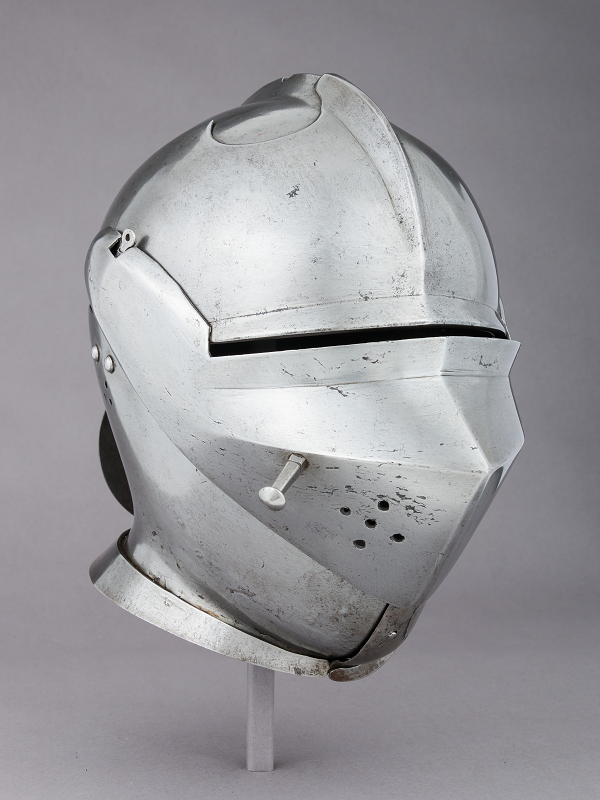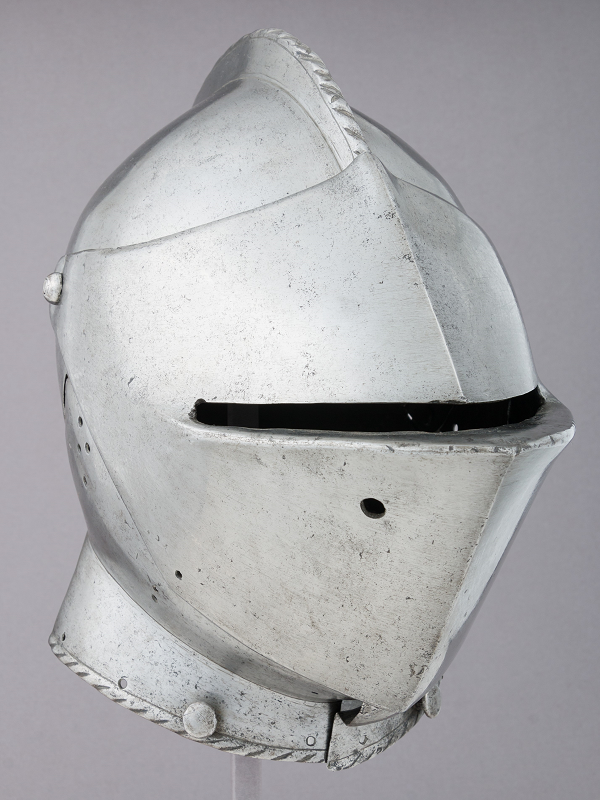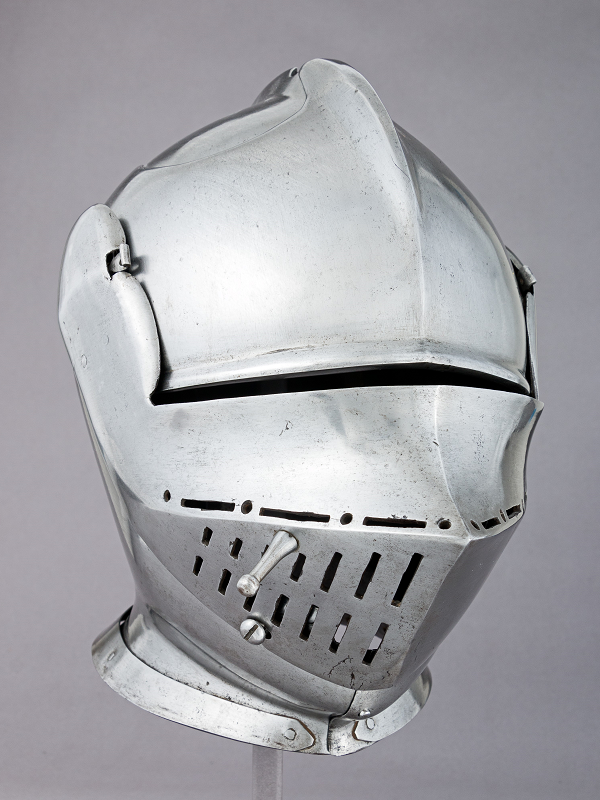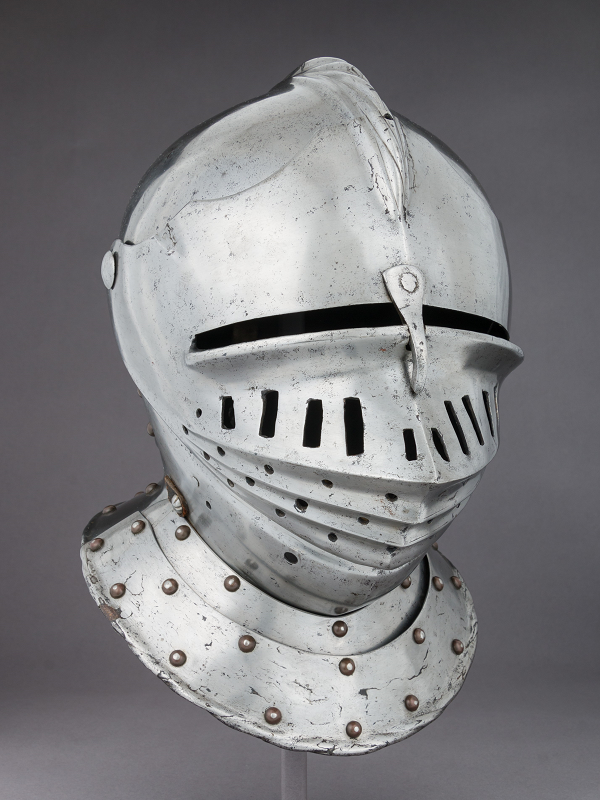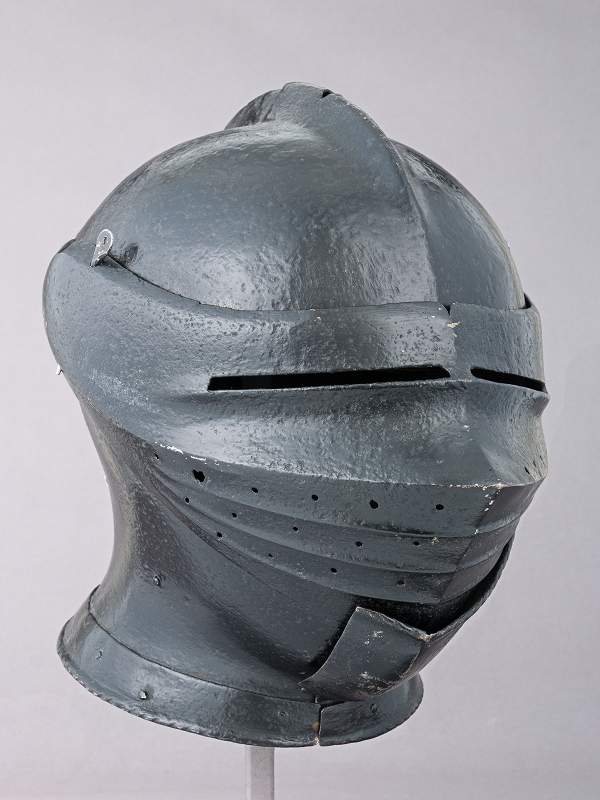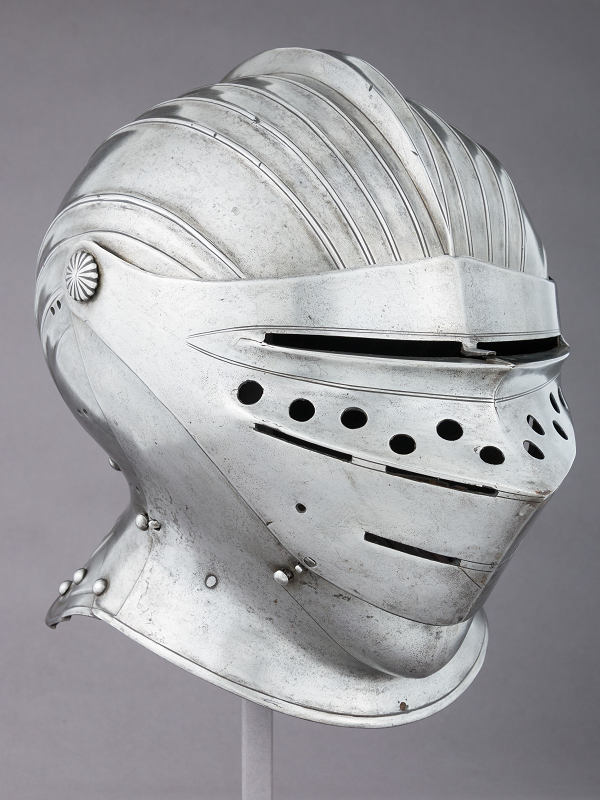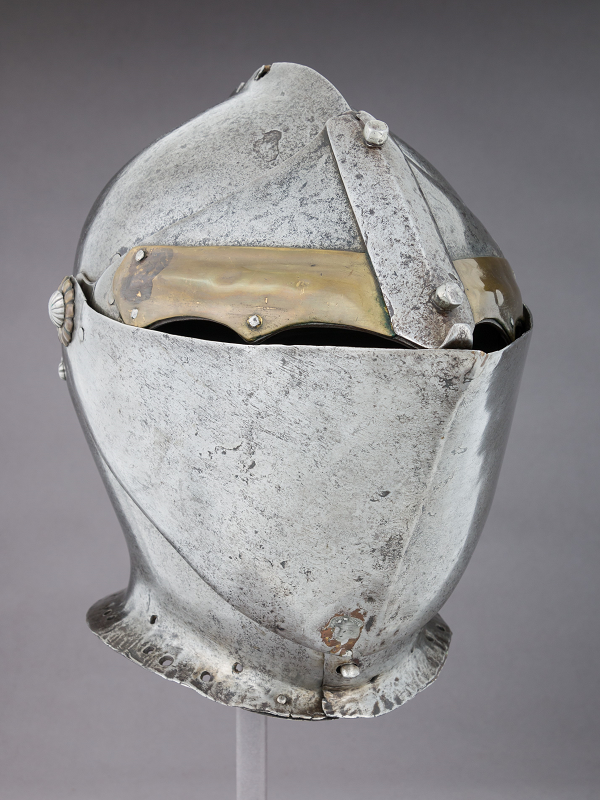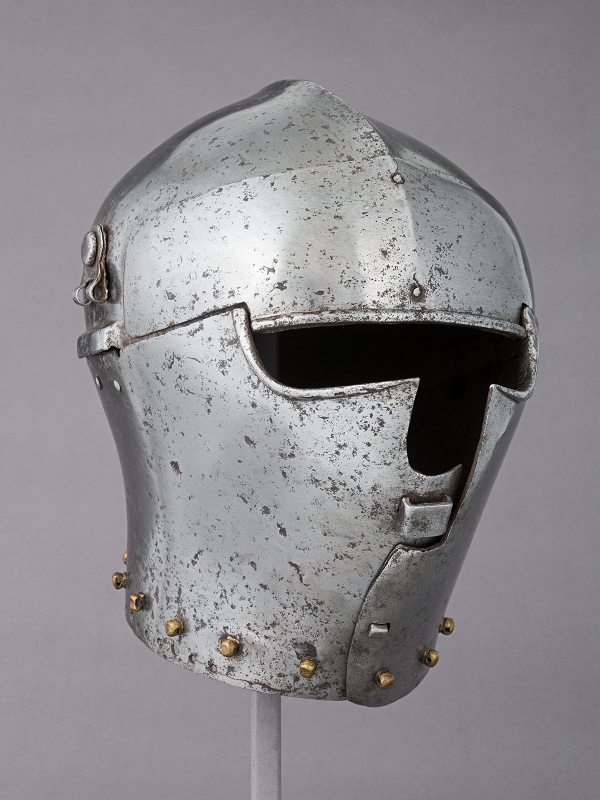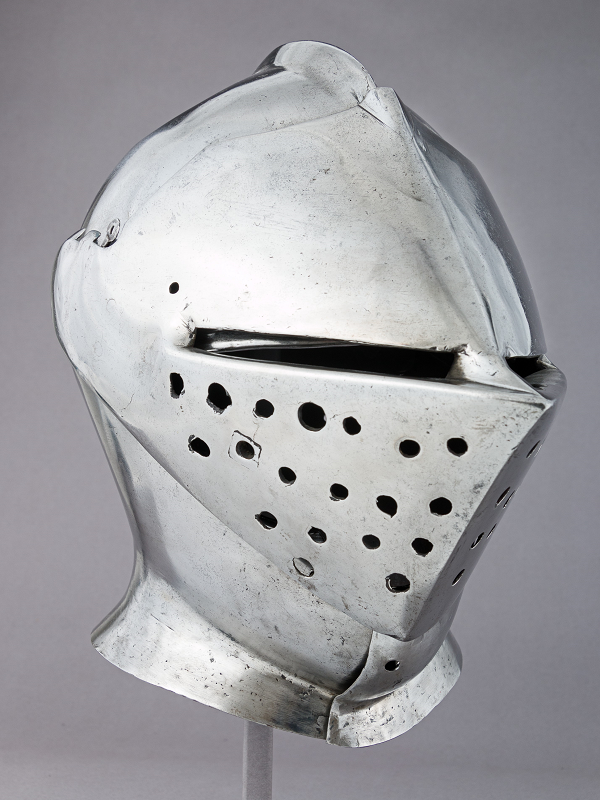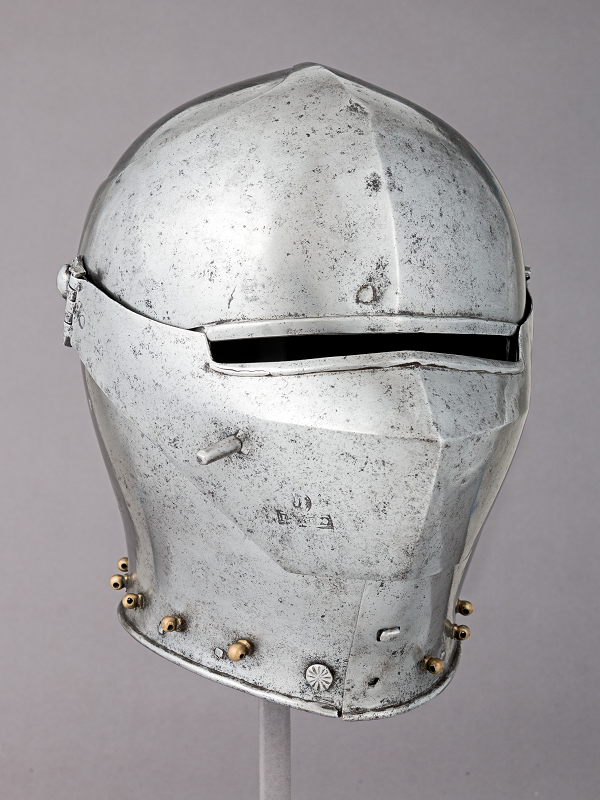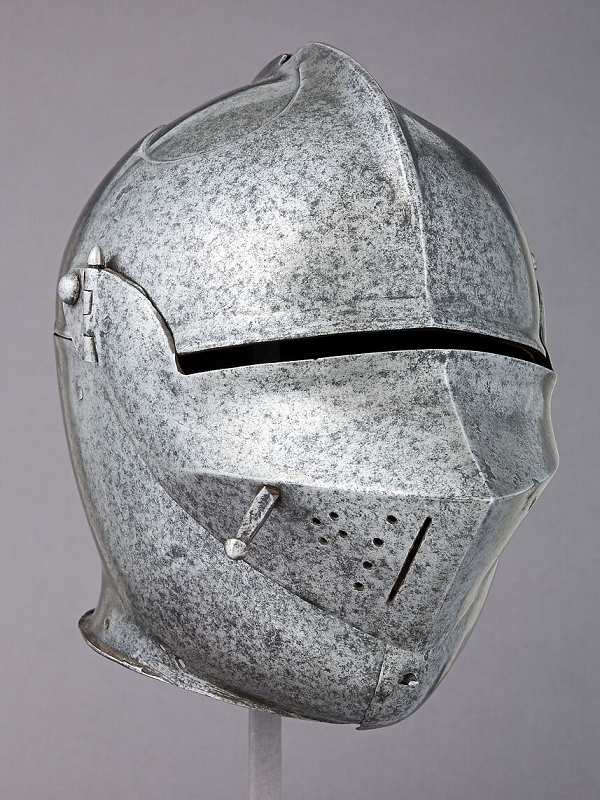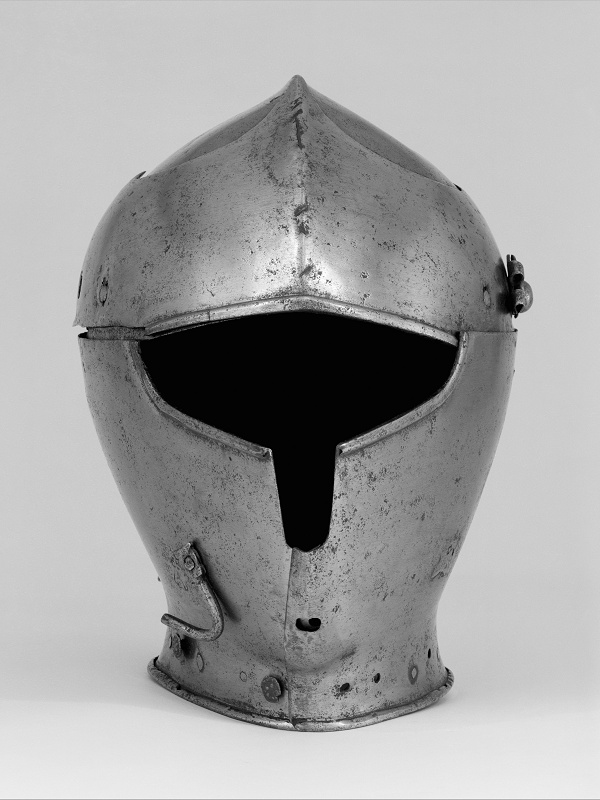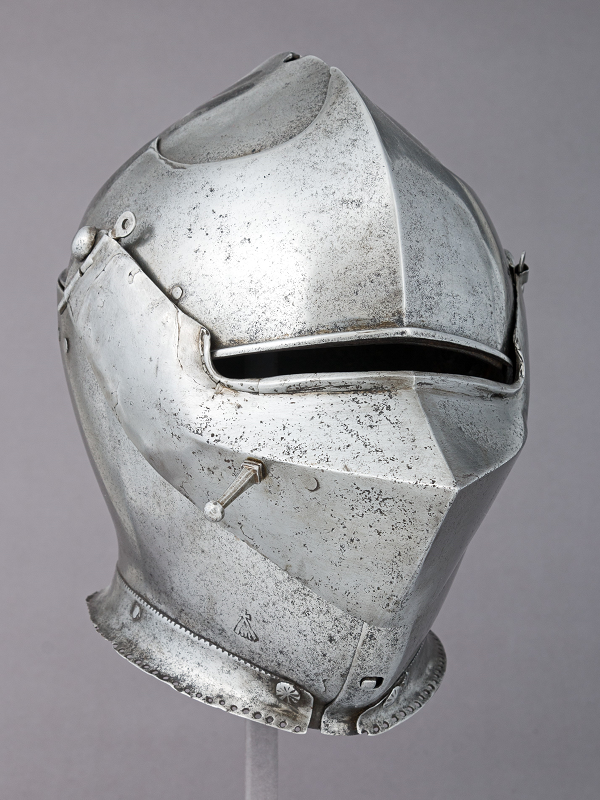



The Armet helmet (fr: Armet, de: Armet, it: Armet) is one of the most elegant and technologically advanced examples of medieval armor. It appeared in the early 15th century, likely in Italy (the first known examples are associated with Milanese workshops around 1420), and quickly spread throughout Western Europe: from France and England to Spain and the Netherlands. The Armet became a symbol of the transition from the heavy "pot-shaped" helmets of the early Middle Ages to the more sophisticated, anatomical armor of the heyday of chivalry.
Why was the Armet such a breakthrough?
Before it, knights often wore a great bascinet or great helm—massive, fully enclosed structures worn over a chainmail hood. These provided reliable protection for the head, but were heavy, poorly ventilated, and severely limited vision and mobility. The armet changed its approach: it completely covered the head, but remained relatively lightweight and comfortable.
The classic armet consists of four main parts:
The skull—a domed base, often with a small crest or extension at the back.
Two large cheekpieces, attached to the crown with hinges. They swing open like jaws and are securely fastened at the front of the chin with a hook, pin, or lock.
The visor, which is attached with double hinges on the sides of the crown and can be lifted upward.
This design allowed the knight to easily put on and take off the helmet without assistance, which was critical in battle or at a tournament. For additional neck protection, an aventail (mail aventail) or a special "wrapper" element, which was secured at the back, was often used.
Types and Evolution.
The armet was not static. Over time, regional variations emerged:
Italian armet were often more rounded, elegant, and featured flowing lines. They emphasized the wearer's status and paired perfectly with Milanese armor.
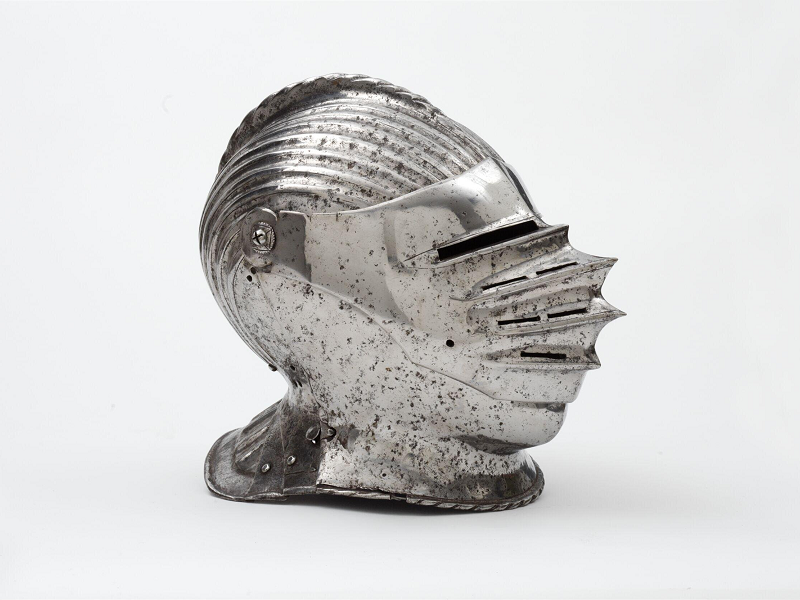
German (Maximilian) armet, in the early 16th century, acquired characteristic "ribbed" surfaces that imitated fabric or reinforced rigidity. Sometimes visors were made in the form of grotesque masks (so-called "monkey" or "human" faces)—this was fashionable in Germany and Austria around 1510–1540.
Later, the armet evolved into the close helmet. The main difference: in the close helmet, the visor and chin piece (bevor) open upward on shared hinges, rather than sideways through cheek pieces. Many modern researchers strictly distinguish between these two types based on the opening mechanism. The armet fit perfectly into full plate armor: it sat snugly on the head, without resting its entire weight on the shoulders, and allowed the knight to move his head freely. Ventilation was provided by openings in the visor and sides, although when fully closed, the interior was still hot and stuffy—the price of complete protection.
In battle and at tournaments.
The armet was used both in actual battles and in knightly tournaments. It provided excellent protection against blows from swords, spears, and maces, especially when the visor was lowered. However, in close combat, knights often raised the visor for better vision and breathing—this made the helmet vulnerable but increased its effectiveness.
By the late 15th and early 16th centuries, the armé reached its peak of perfection. Masters like the Milanese armourers and Nuremberg specialists created true works of art: polished to a mirror shine, engraved, gilded, and even silver-plated.
The Legacy of the Armet.
By the mid-16th century, the armet was gradually replaced by lighter burgonet helmets and the new generation of closed helmets—the era of heavy cavalry was changing, and gunpowder was gaining ground. But it was the armé that became the pinnacle of the "human" approach to head protection: the helmet didn't simply cover the knight, but lived alongside him, conforming to the contours of his skull and allowing him to move.
Today, original armet are housed in leading museums around the world—the Metropolitan Museum of Art in New York, the Royal Armouries in London, and collections in Vienna and Turin. They impress not only with their strength but also with their engineering beauty. Modern reenactors and fans of historical fencing prize the armet for its balance of protection, comfort, and authenticity.
An armet helmet is more than just a piece of steel. It is the embodiment of an era when war was still an art, and the master armorer was a true sculptor, creating not only protection but also a symbol of knightly valor. It combined practicality, aesthetics and ingenious mechanics, which still inspires admiration among anyone interested in the history of armour.