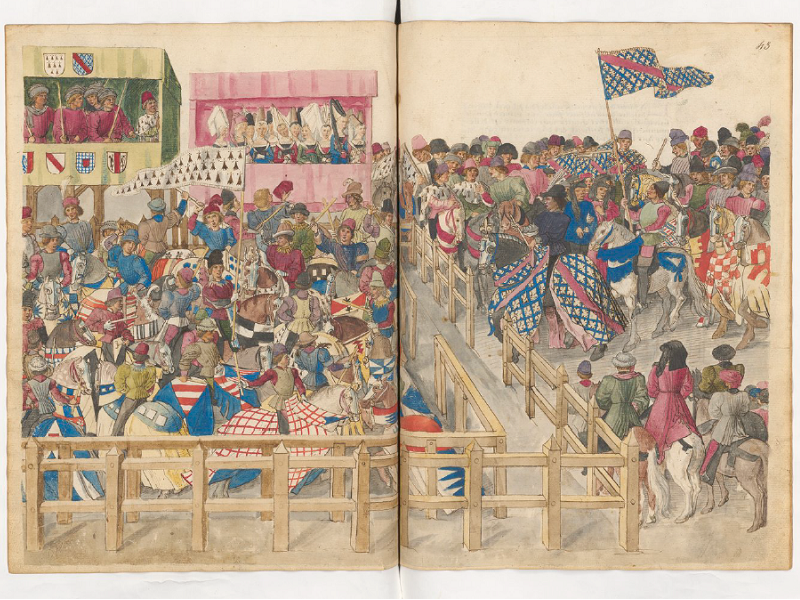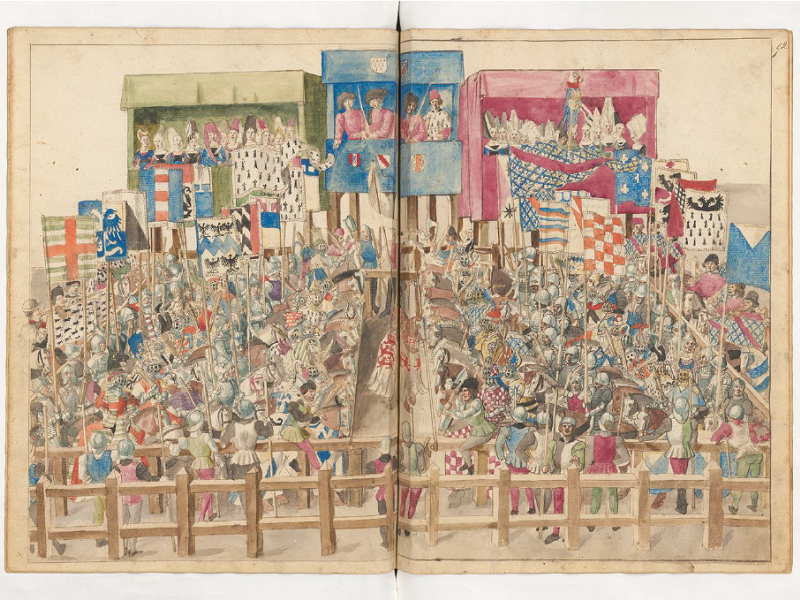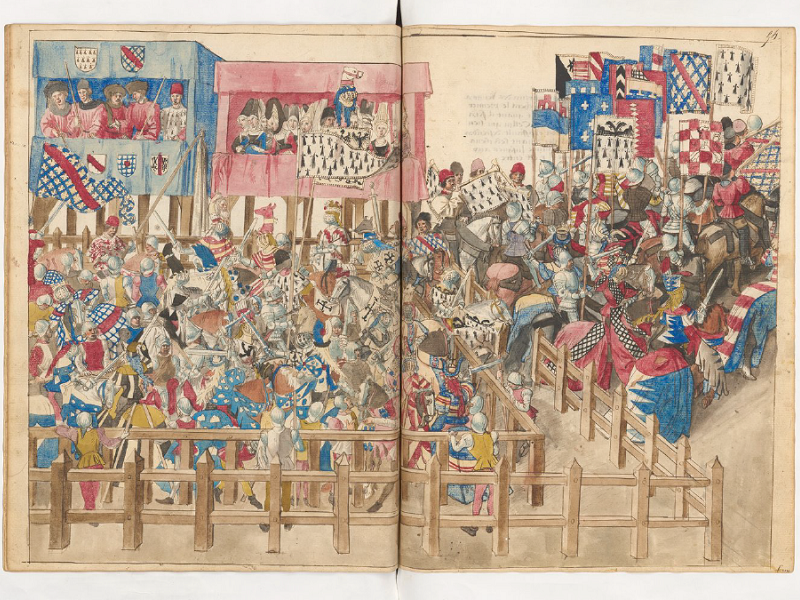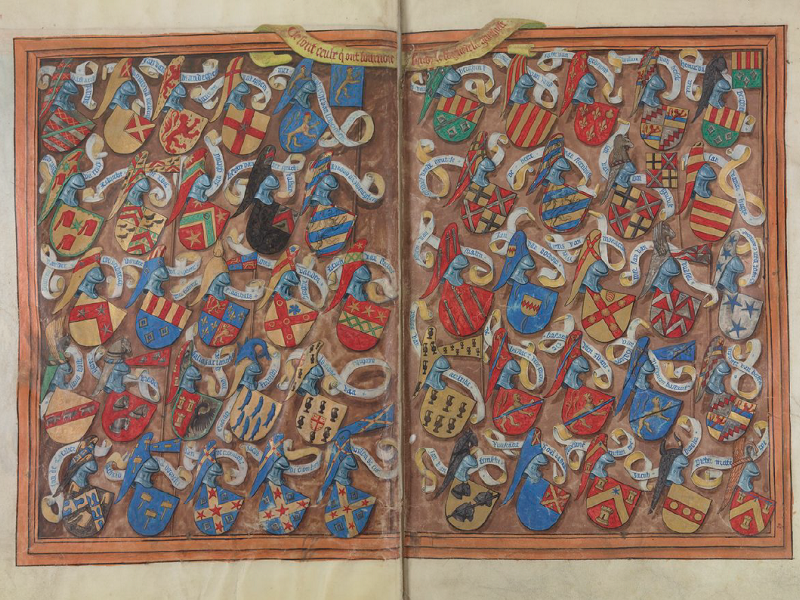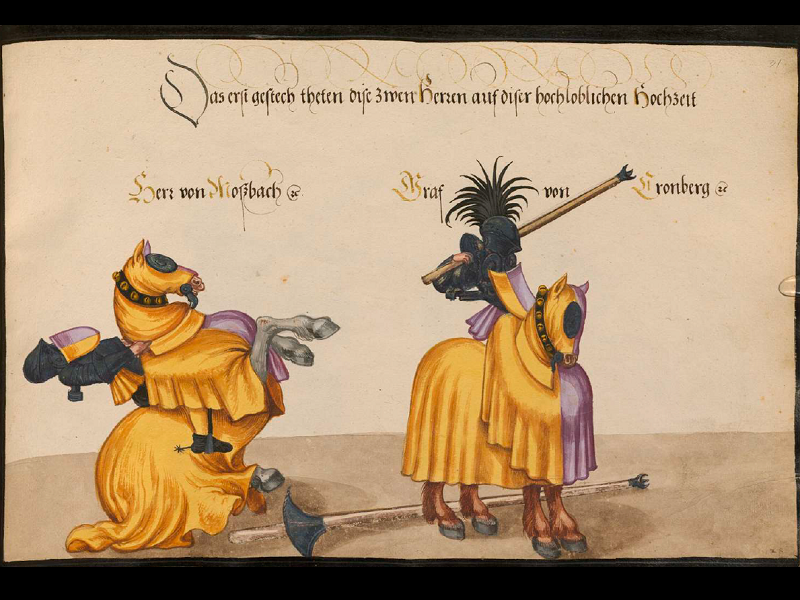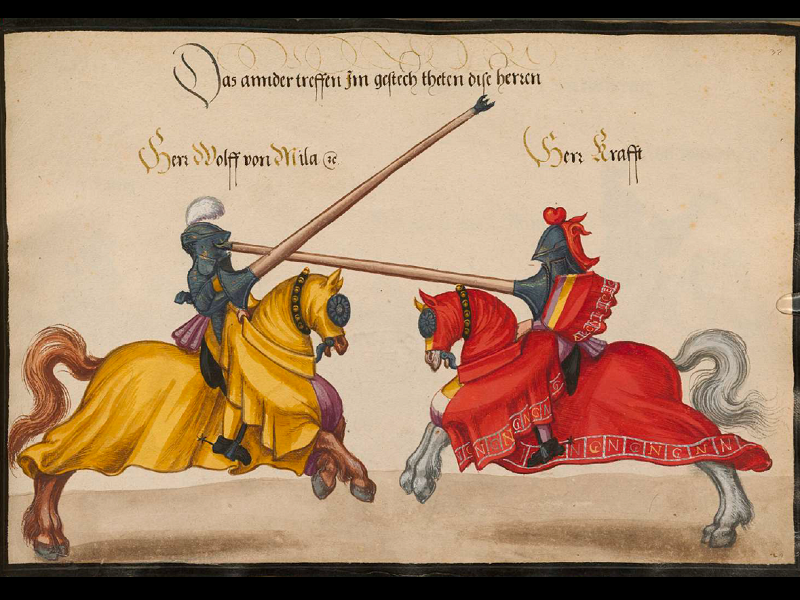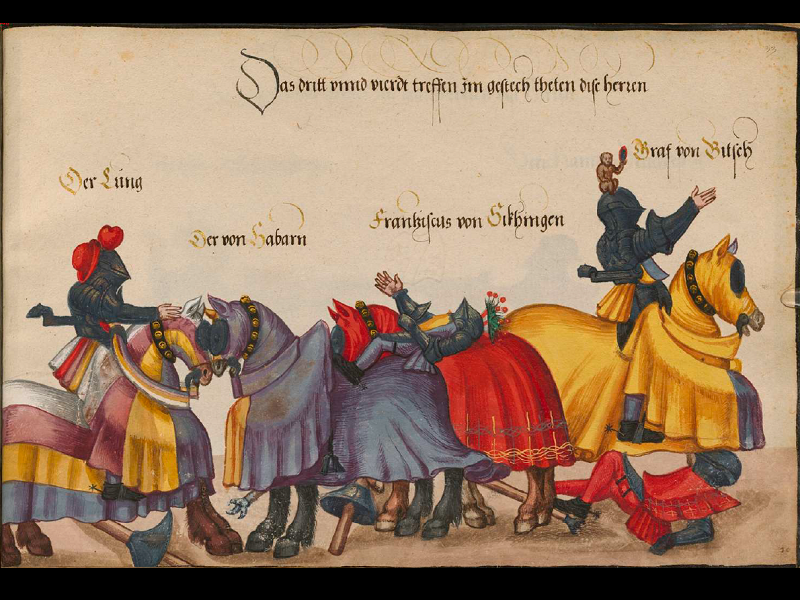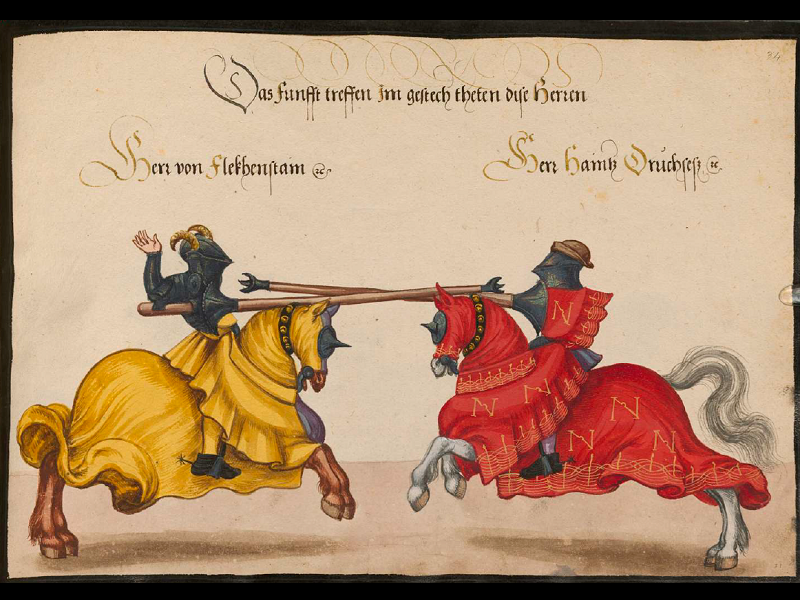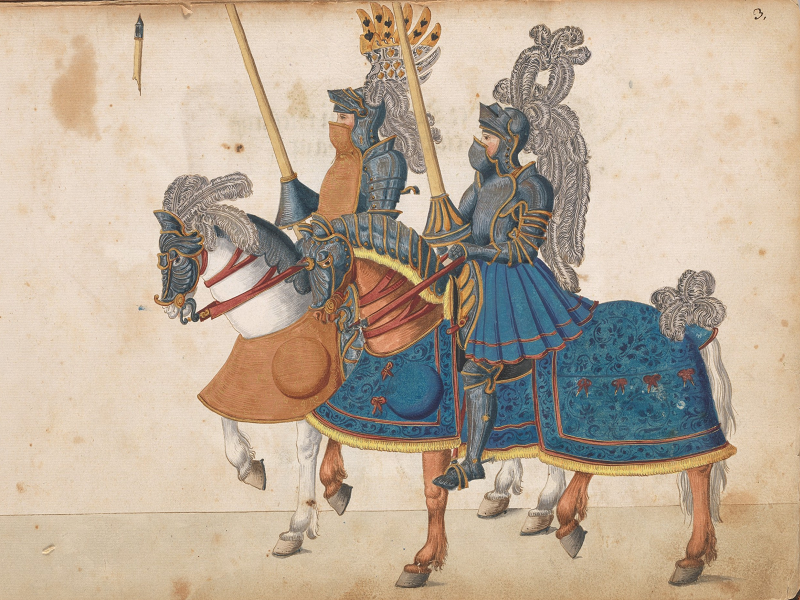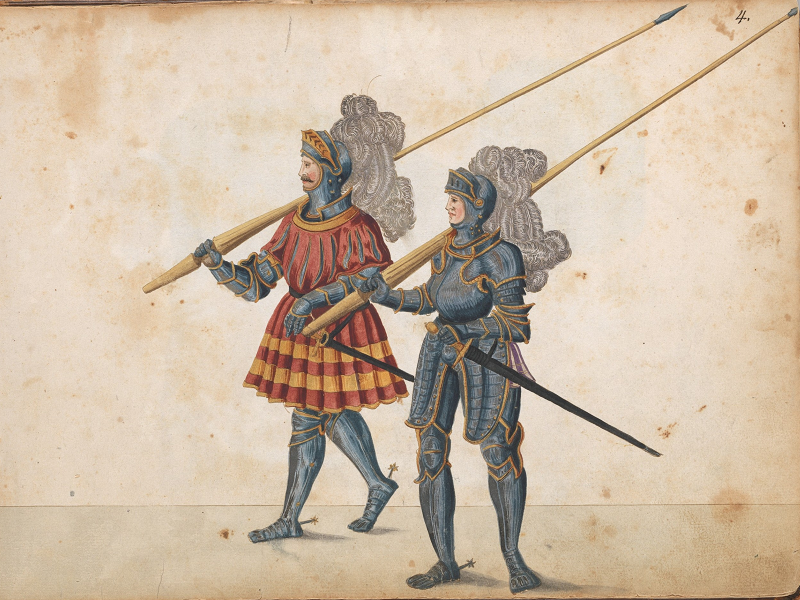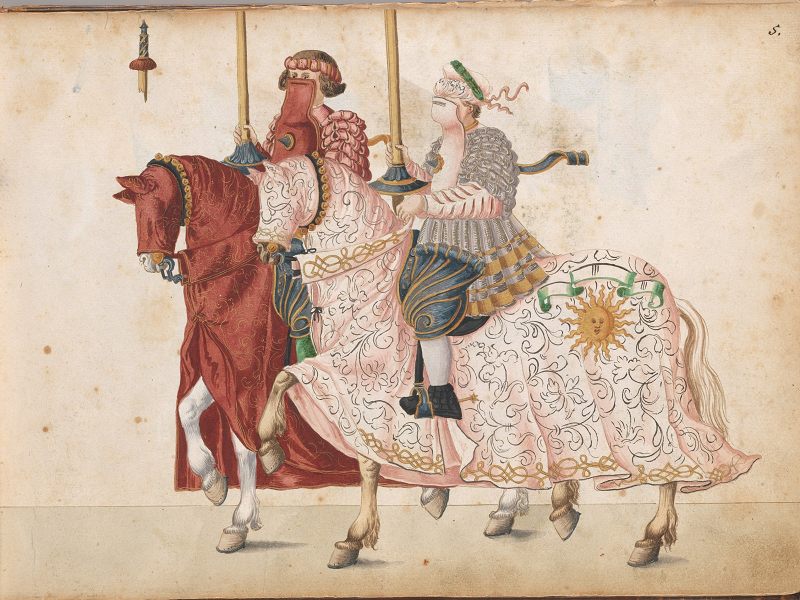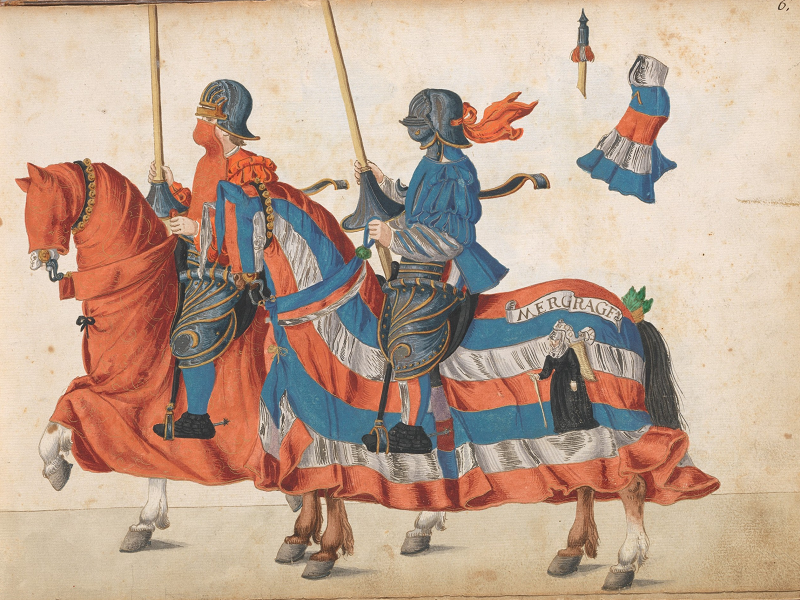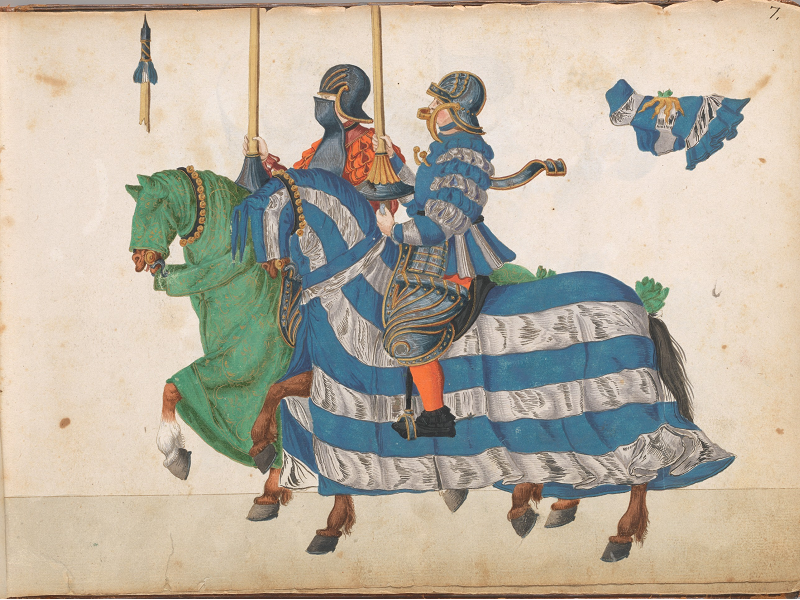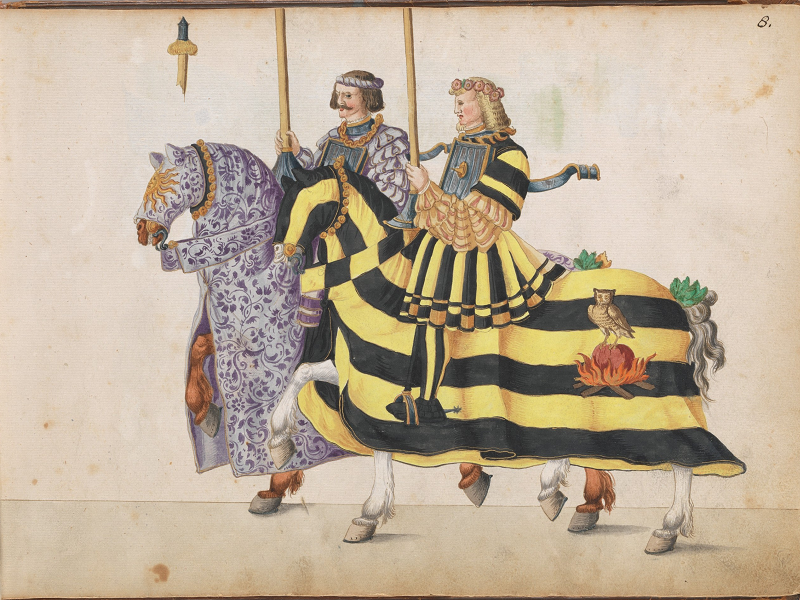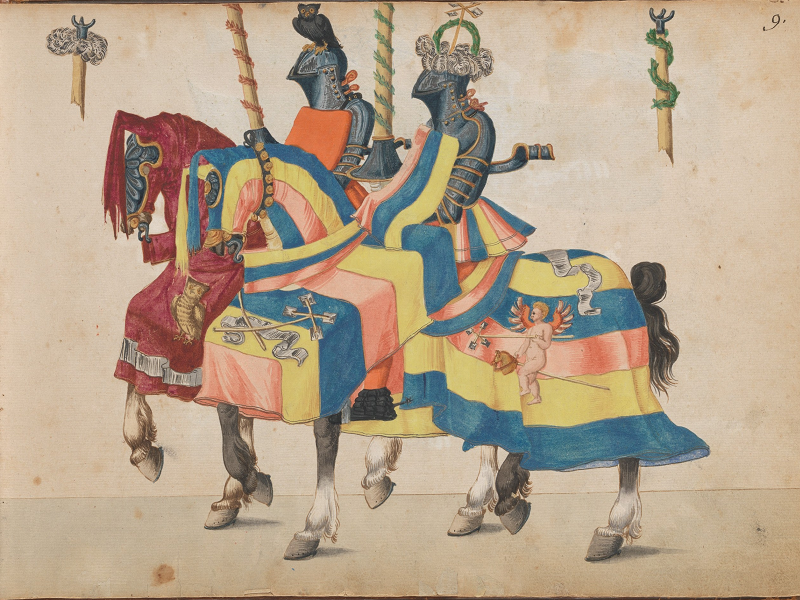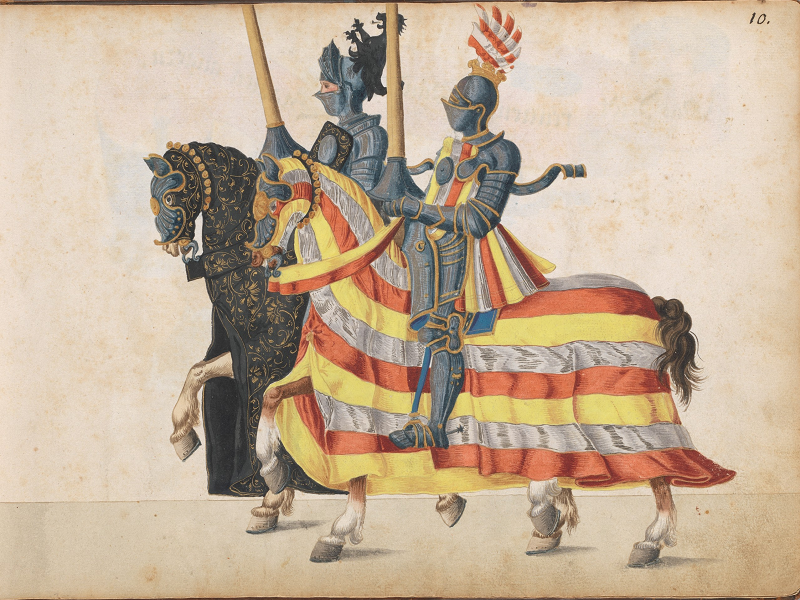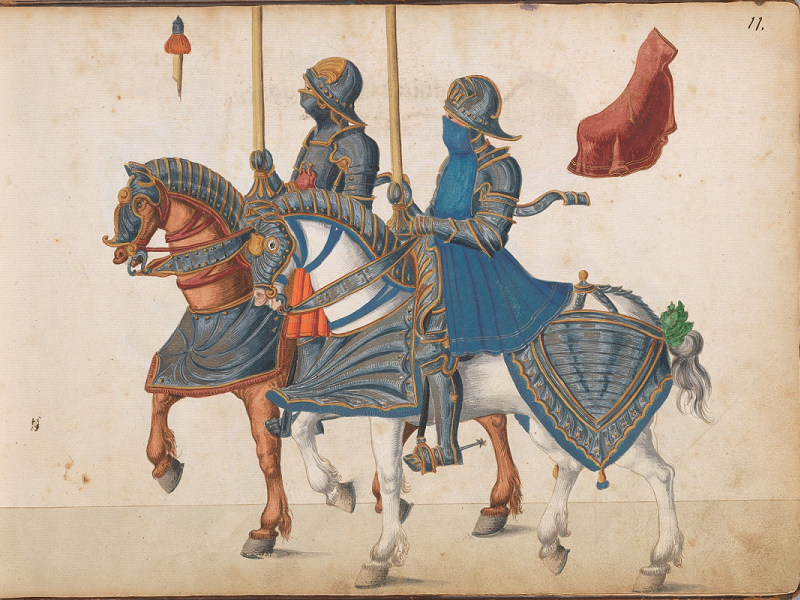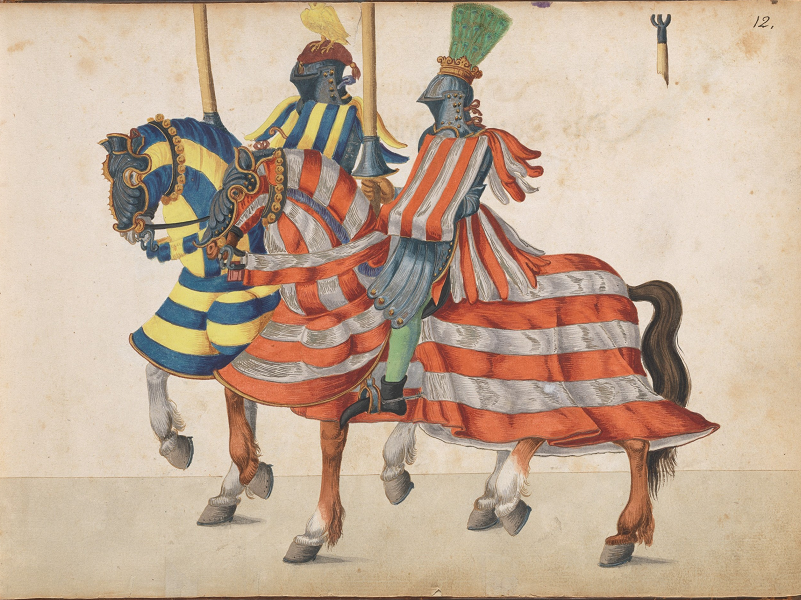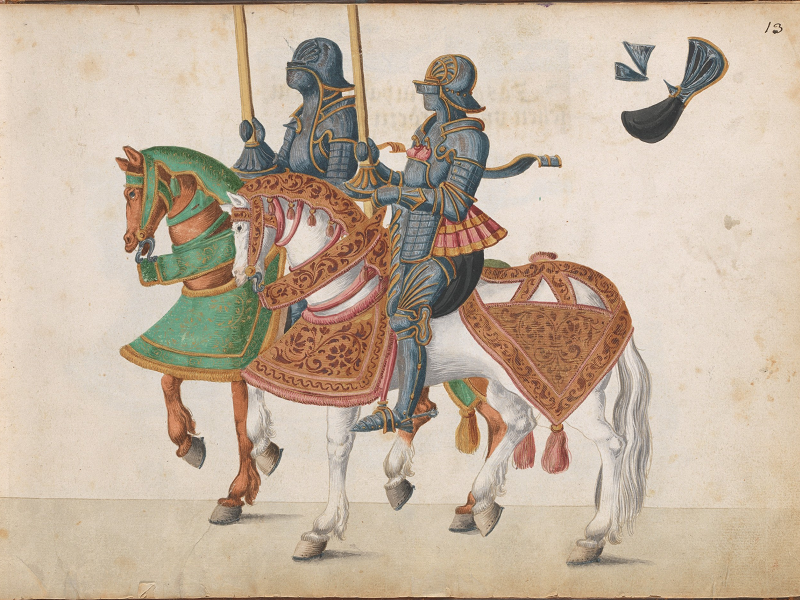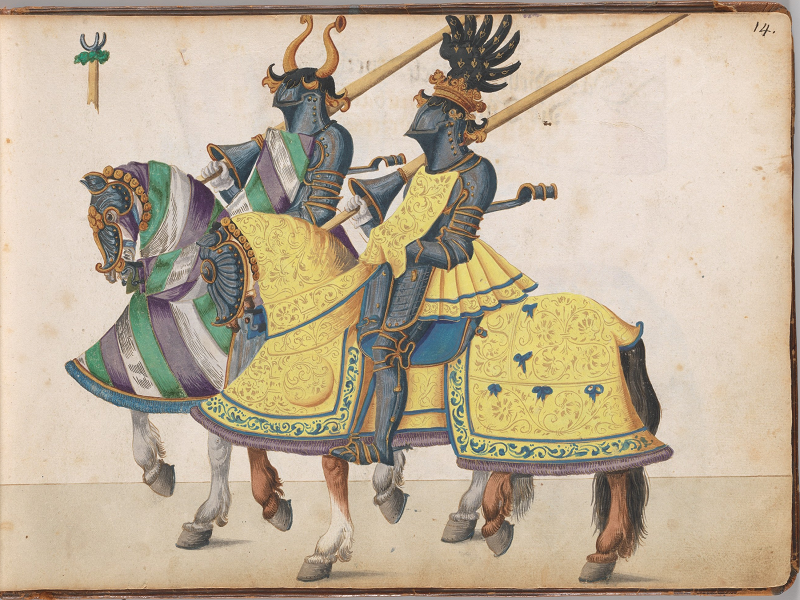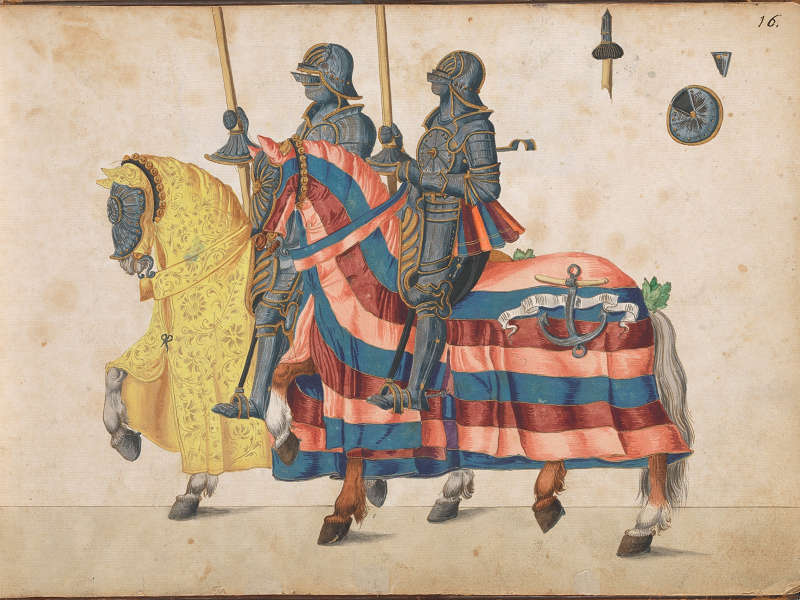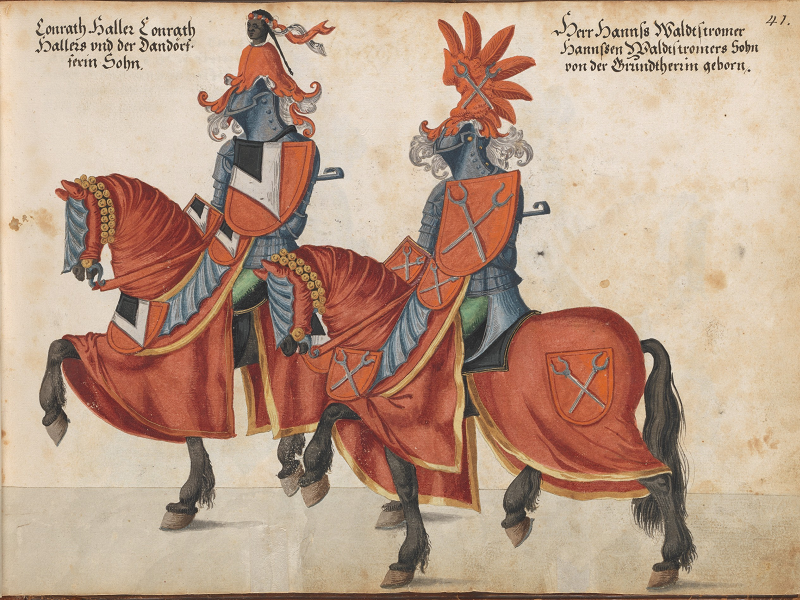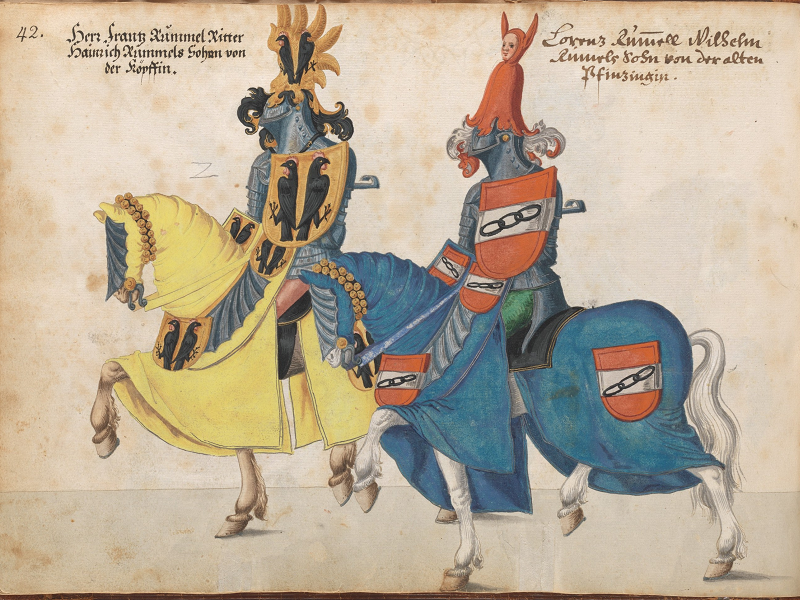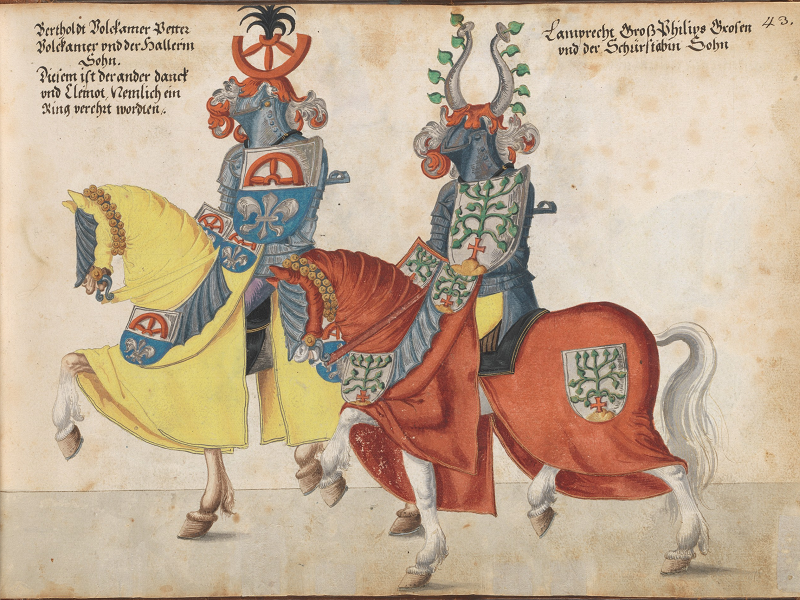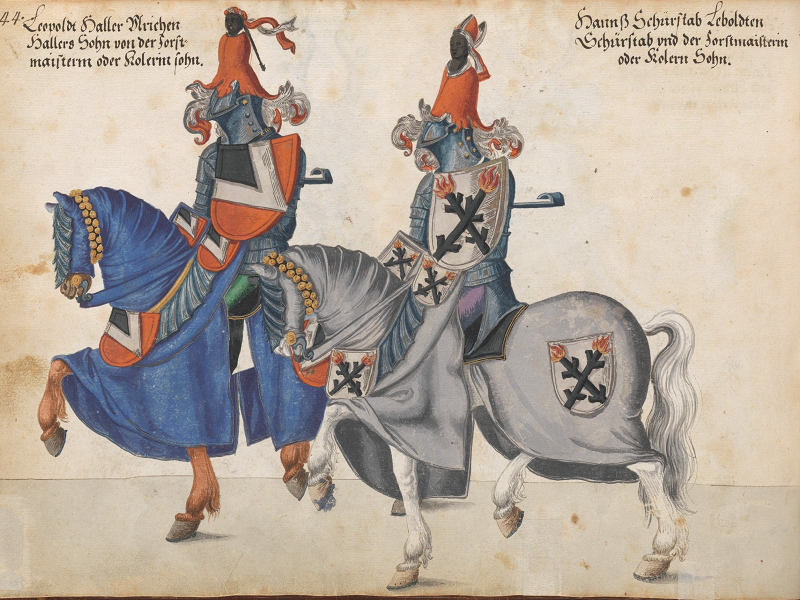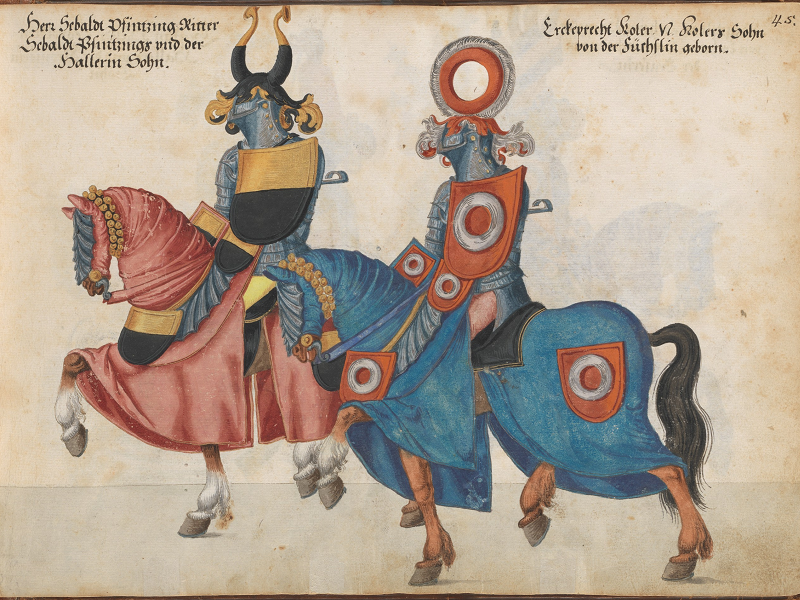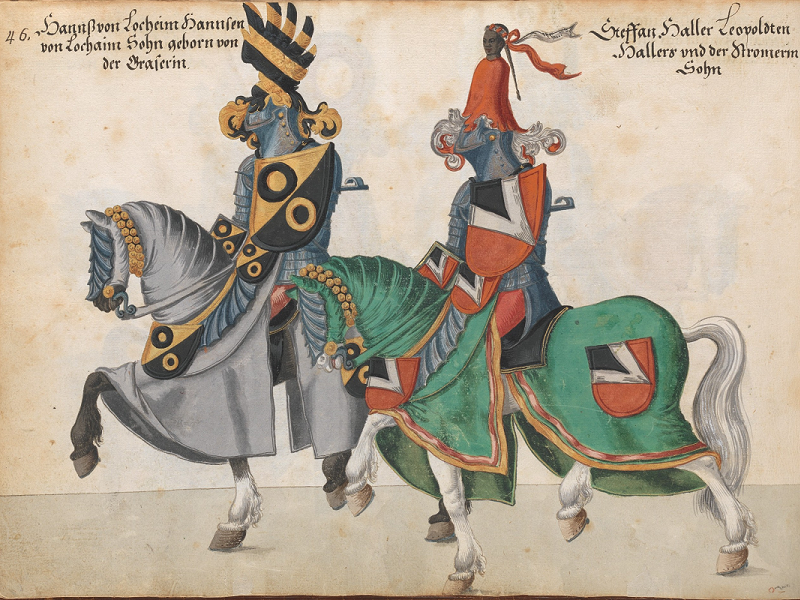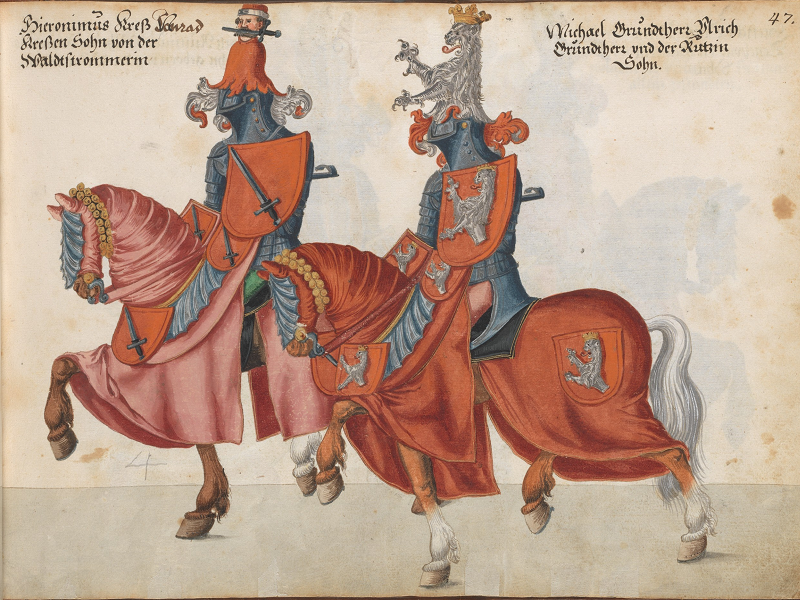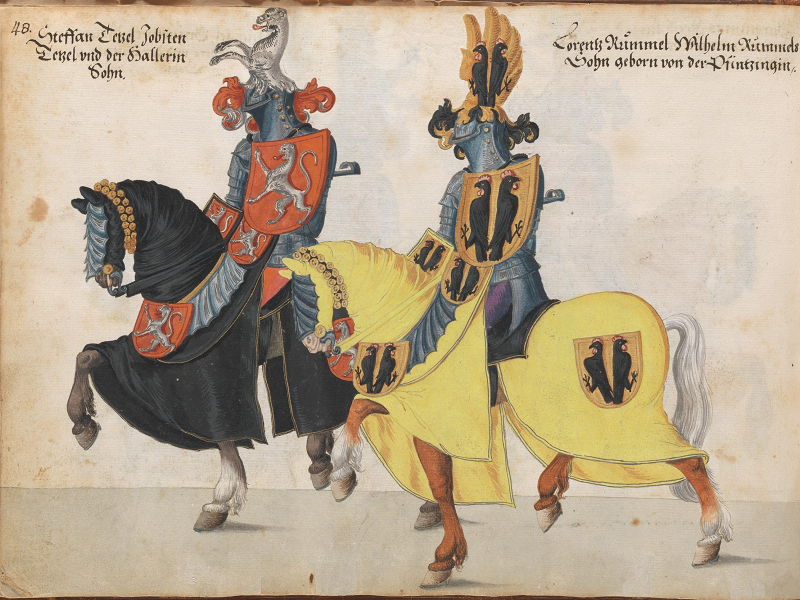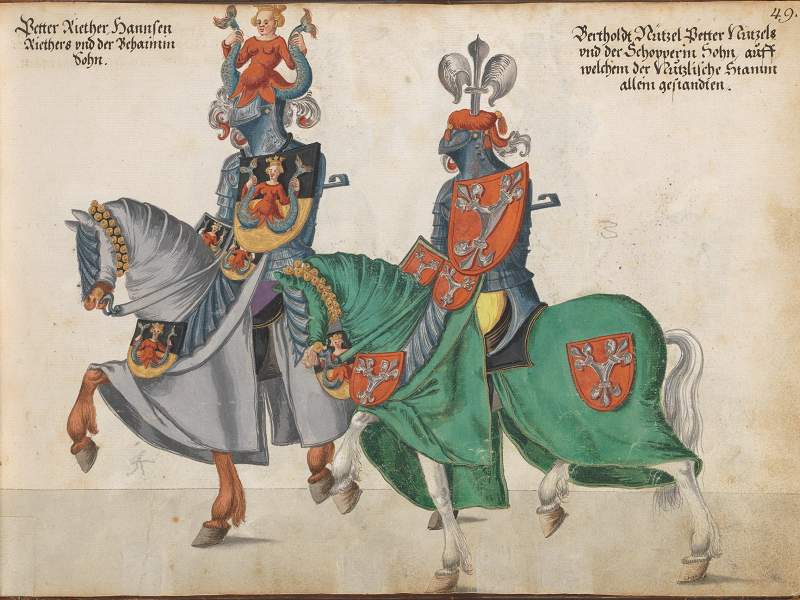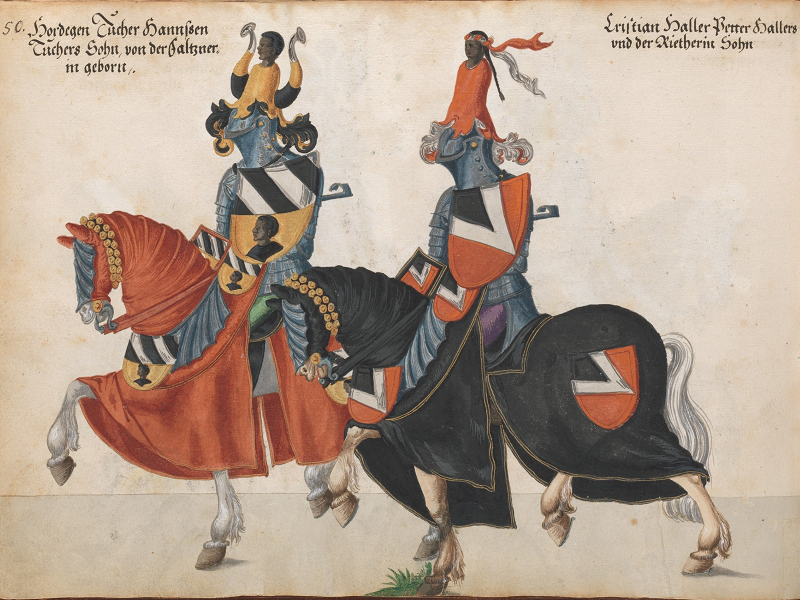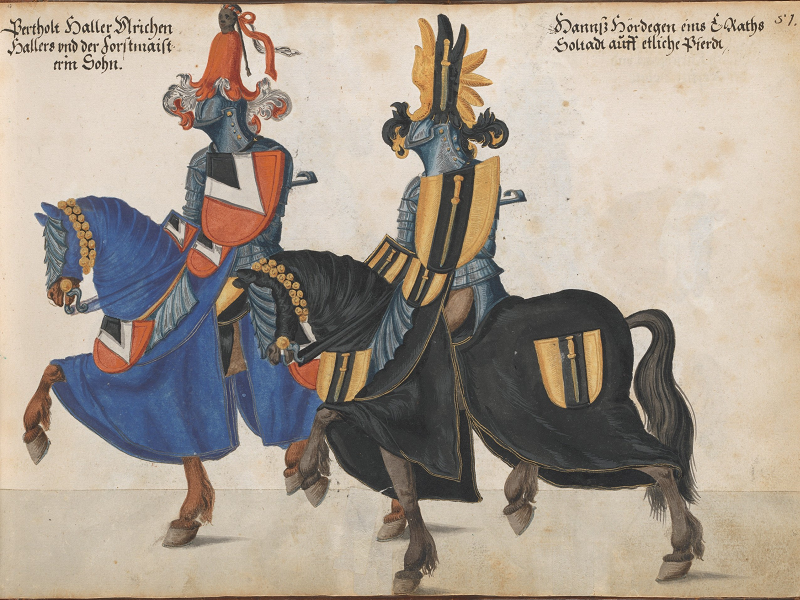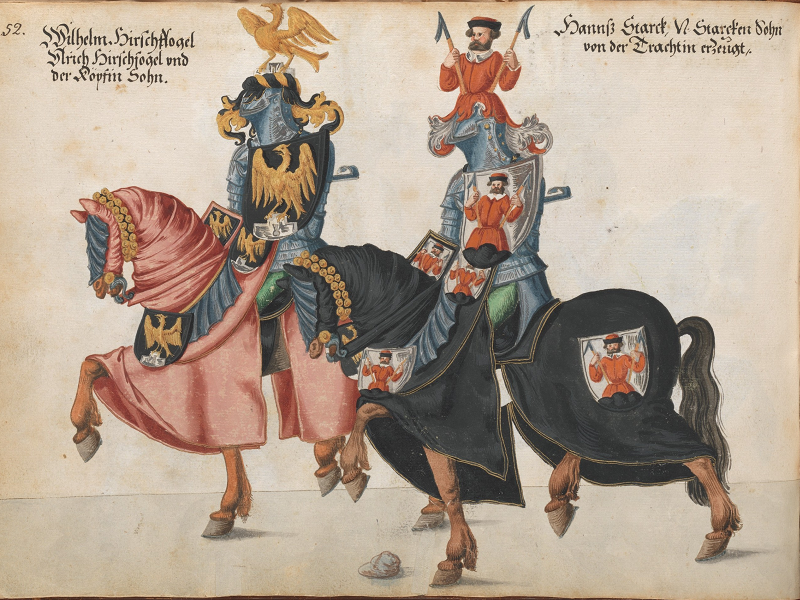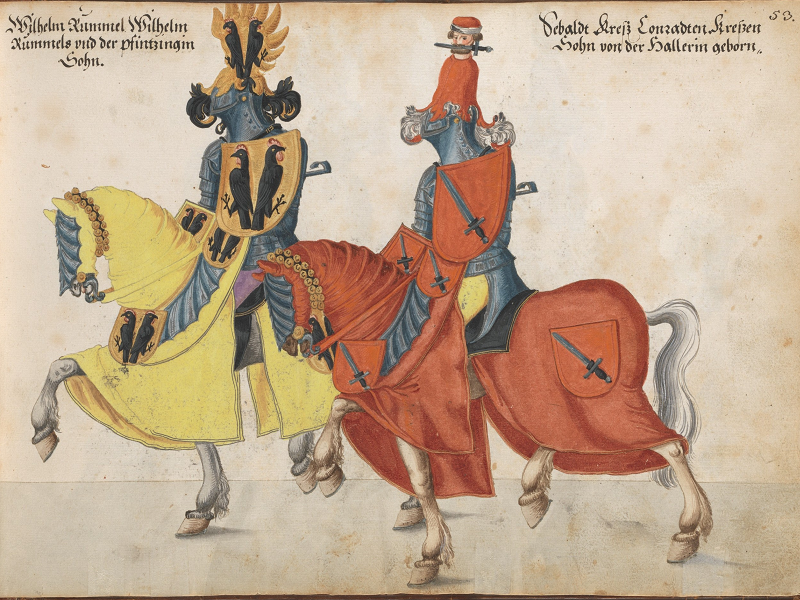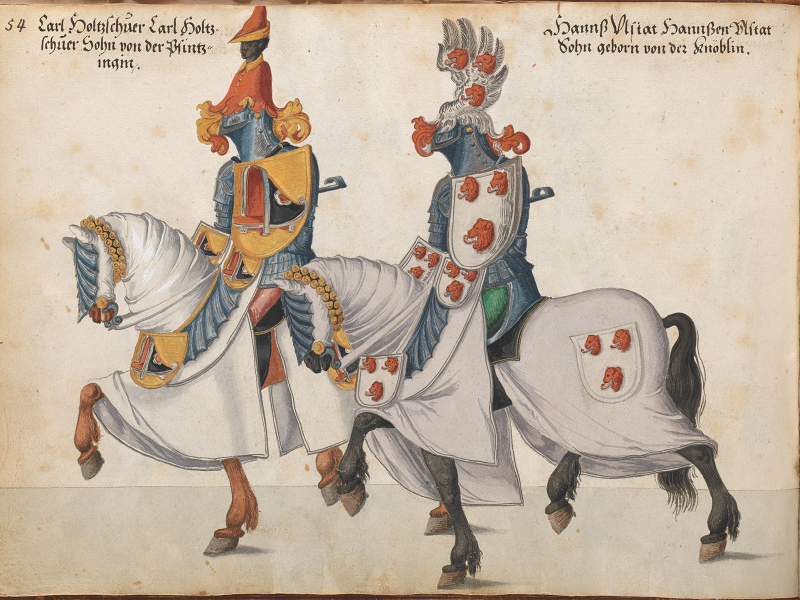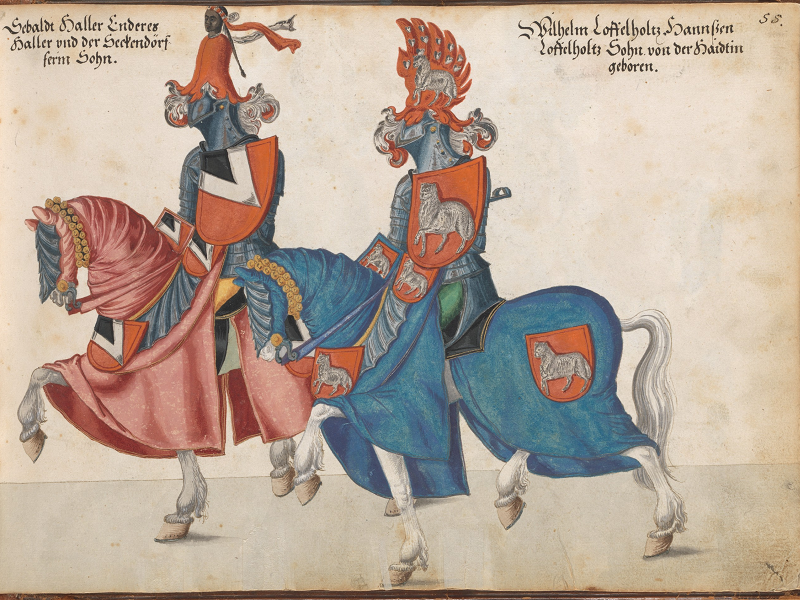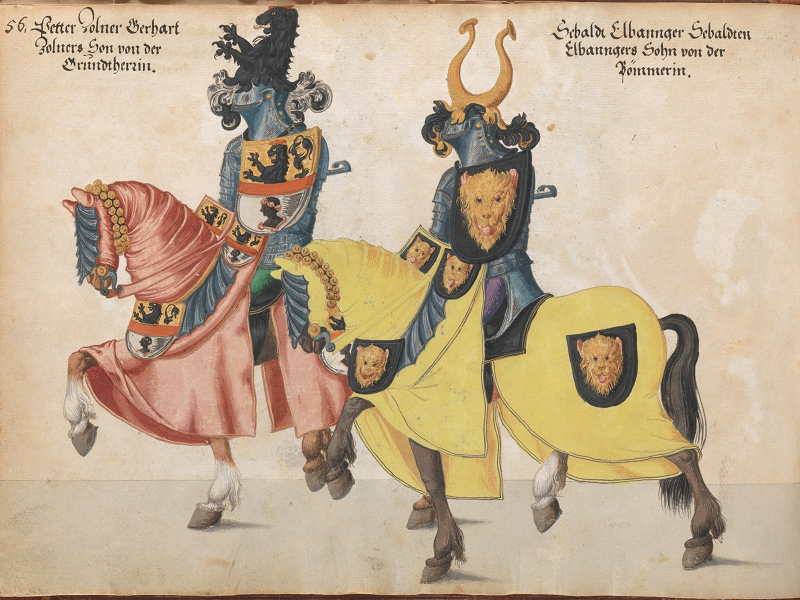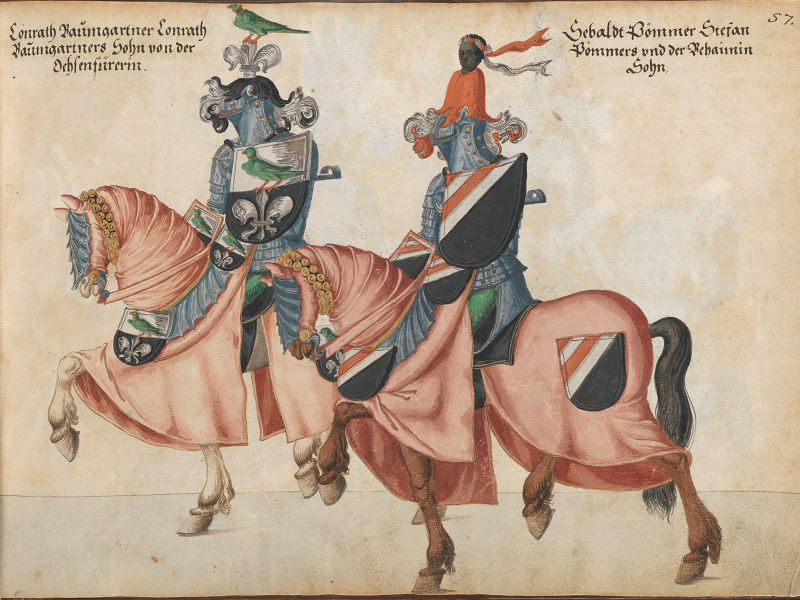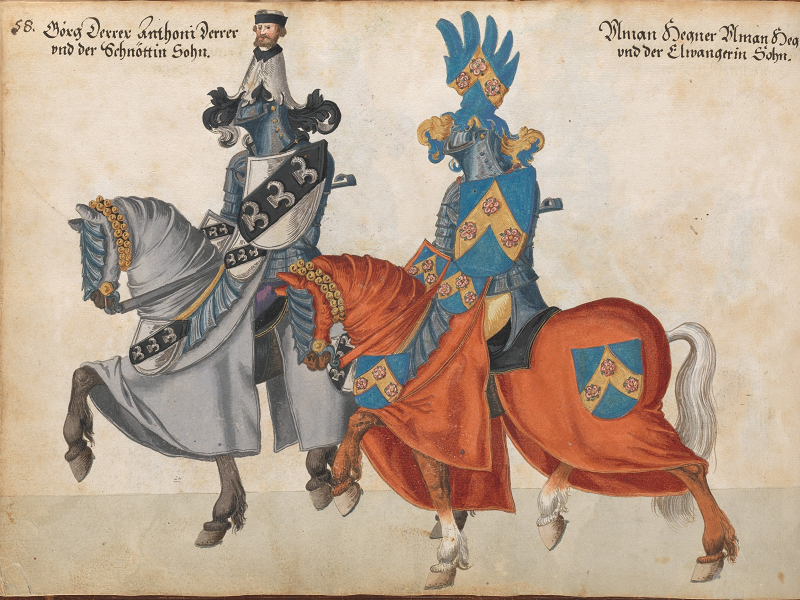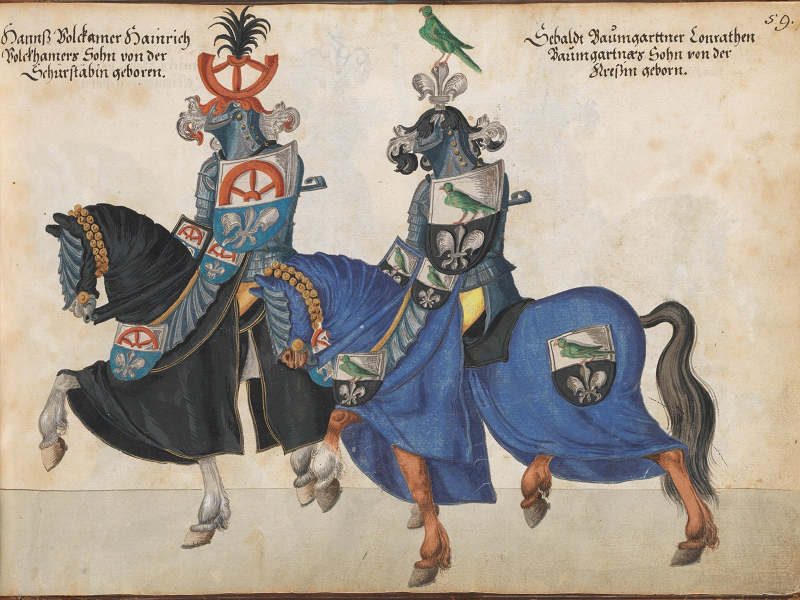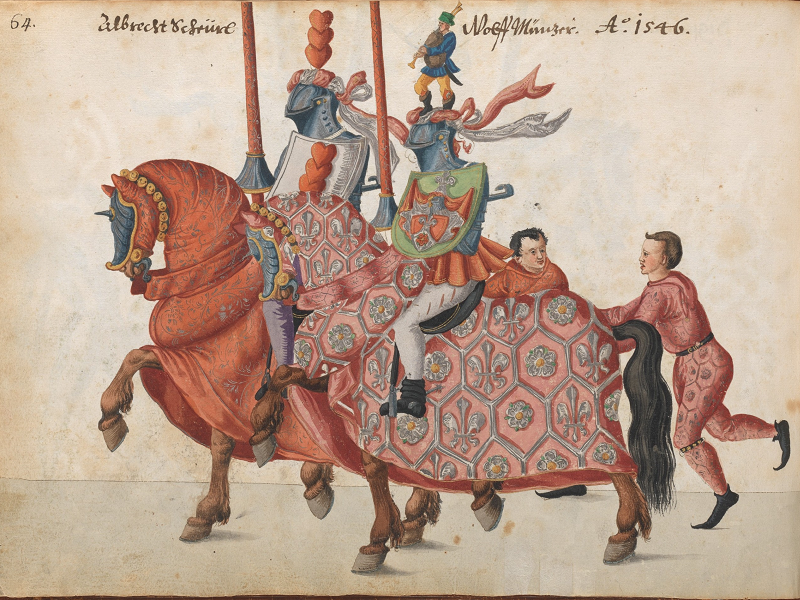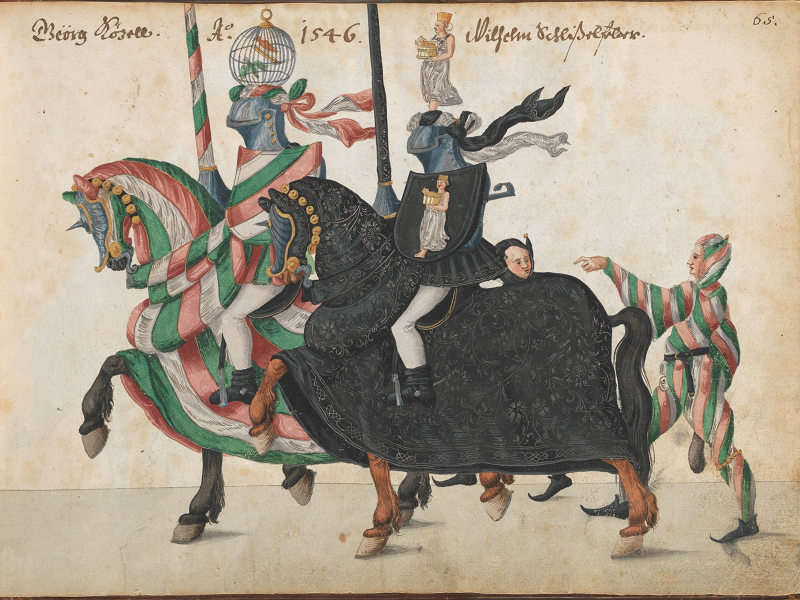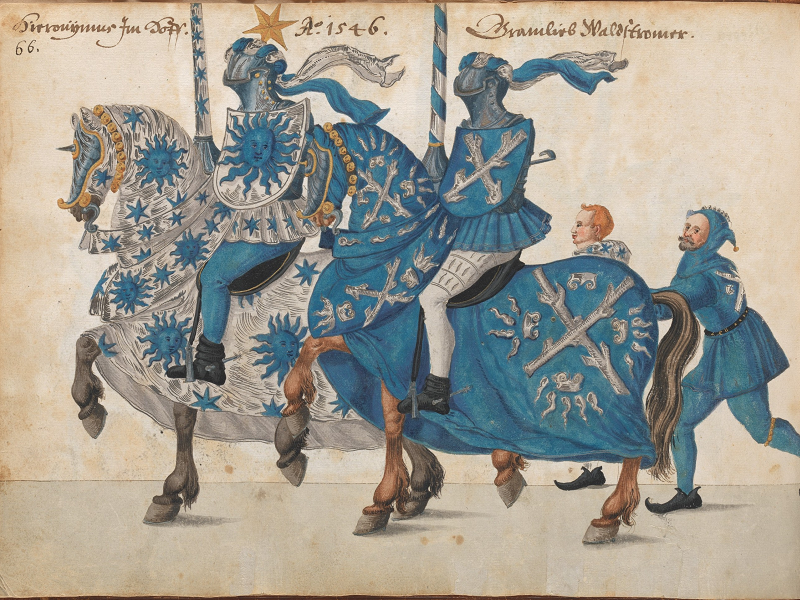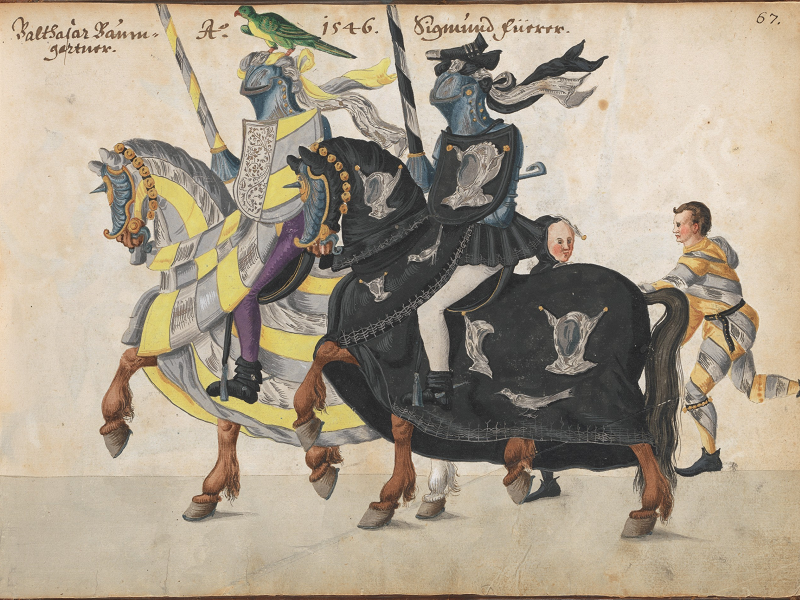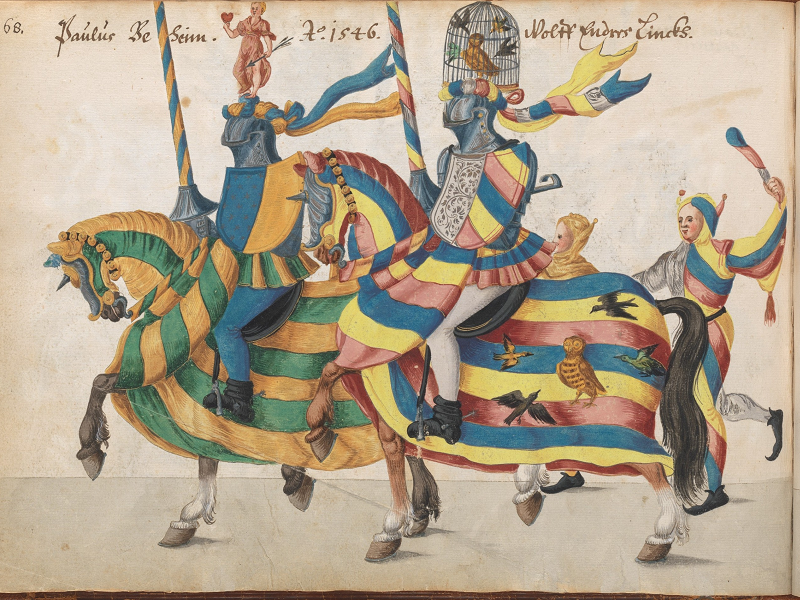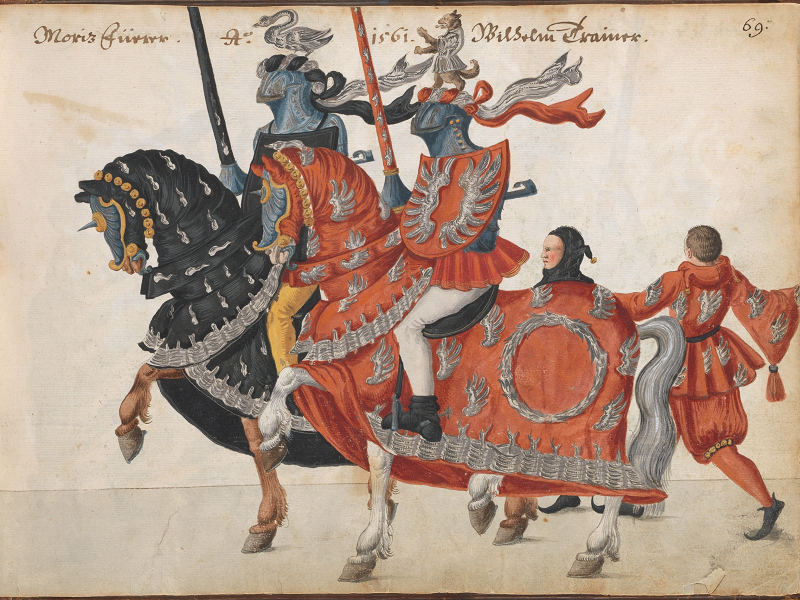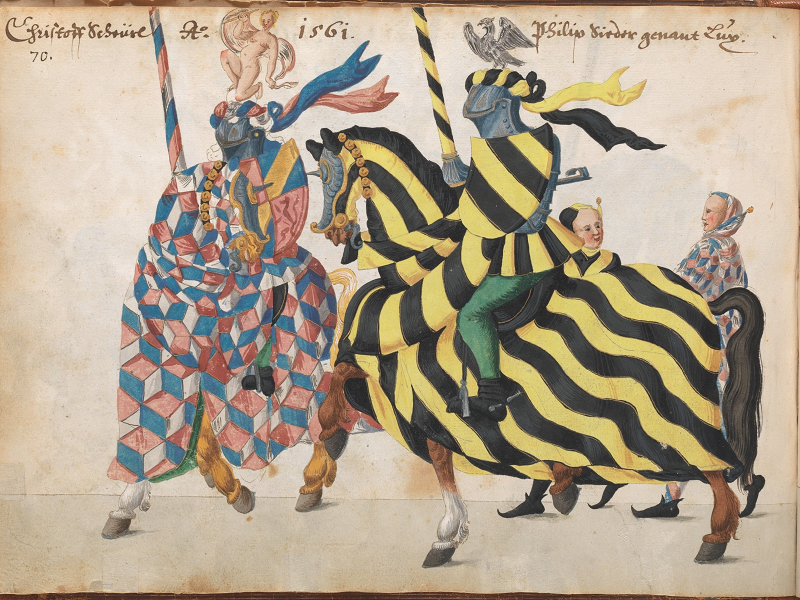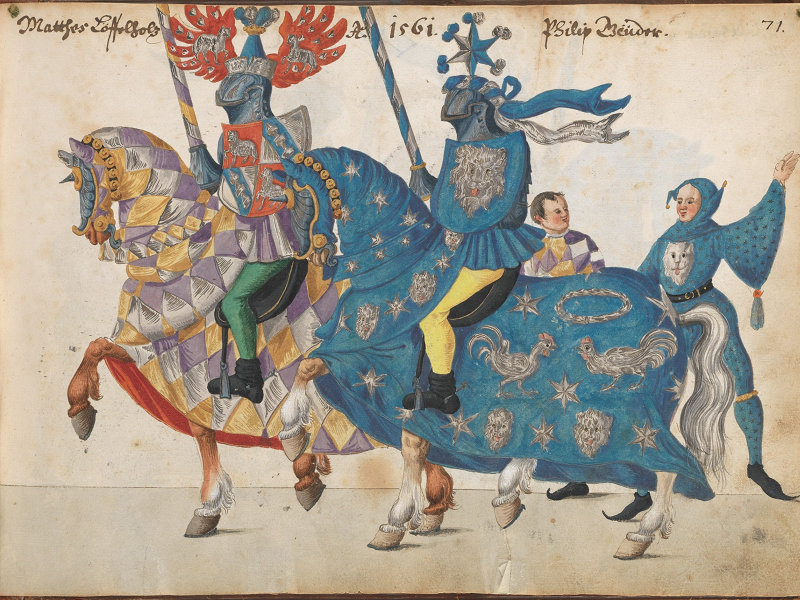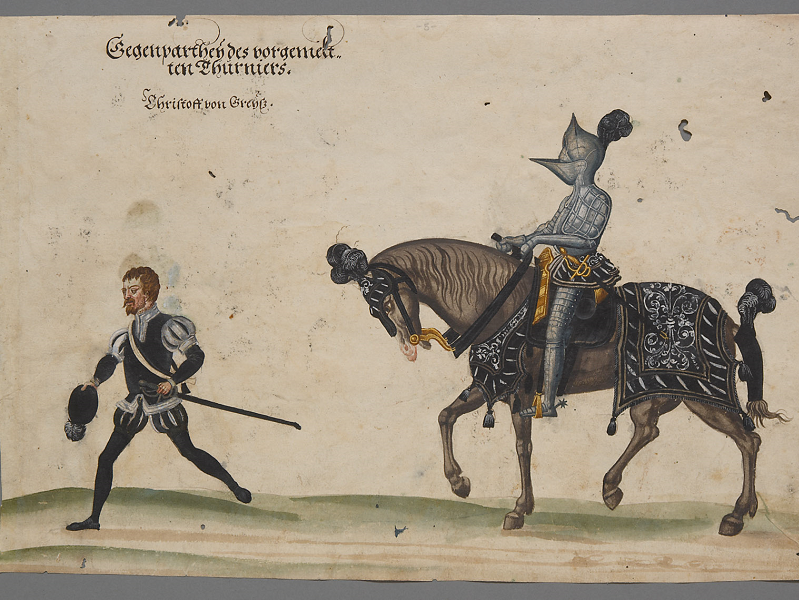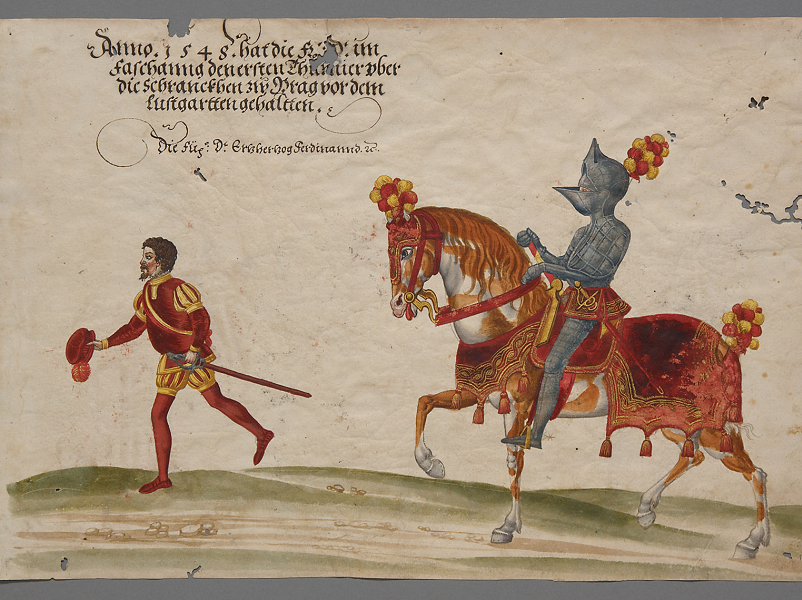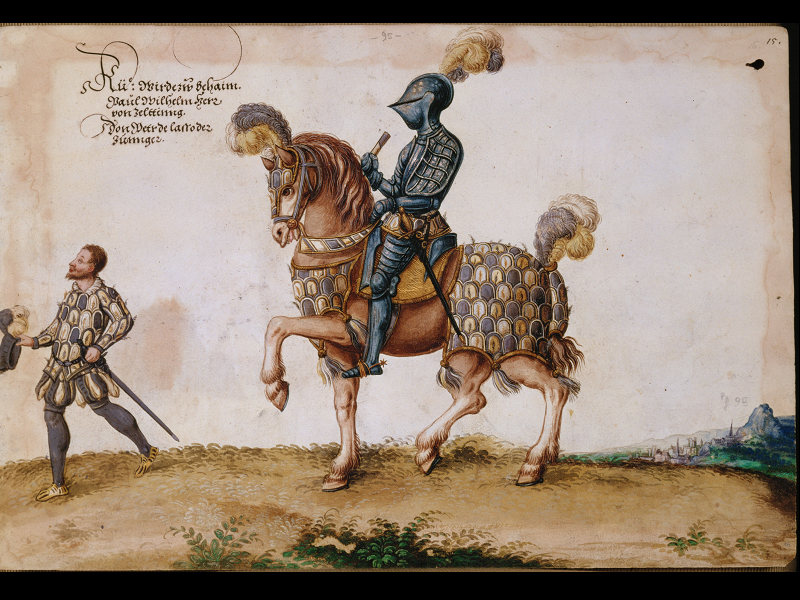

Knightly tournaments (from the Old French torneiement, tornoi) are one of the most striking and symbolic phenomena of medieval European culture. Originating as a form of military training for heavy cavalry, they quickly transformed into a complex socio-cultural phenomenon, combining elements of sport, theater, politics, and demonstrations of knightly virtues. Tournaments allowed knights to hone their martial skills in peacetime, win fame, wealth, and the favor of ladies, and strengthen social ties within the aristocracy.
From the mass "mélees" of the 11th and 12th centuries, reminiscent of real battles, tournaments evolved to more regulated and spectacular lance duels (jousting) in the 14th and 16th centuries. Despite repeated bans by the Church and secular authorities, they remained popular until the Renaissance. This article examines the origins of tournaments, their rules, evolution, and the most notable facts, based on medieval chronicles and modern research.
The Origins of Tournaments (11th-12th Centuries).
The first mentions of tournaments date back to the late 11th century. Traditionally, their origins are associated with northern France (the region between the Loire and the Scheldt). One of the early "inventors" is considered to be Geoffroi de Preuilly, who died in a tournament around 1066; he is credited with the first rules. Earlier analogies are found in the practices of the Frankish cavalry of the 9th-10th centuries, where heavy cavalry maneuvers were practiced using stirrups, which allowed for a powerful ramming blow with a spear "under the armpit" (called a "couched lance").
Early tournaments differed radically from later concepts. The main form was the melee (or tourney)—a mass clash of two teams of knights (often regional or national) over a vast area (sometimes tens of square kilometers, including fields, forests, and villages). Knights used real weapons: lances, swords, and maces. The goal was not to kill, but to capture the opponent for ransom. This made tournaments a profitable business: experienced competitors, such as William Marshal (c. 1147–1219), made a fortune from ransoms and prizes.
The first reliable written source is the chronicle of the Abbey of Saint-Martin in Tours (c. 1066), which mentions the death of a knight during a tournament. By the mid-12th century, tournaments had spread to England (under Stephen of Blois), Germany (where they were called buhurt), Italy, and other regions. Chroniclers like Giraldus Cambrensis called them "Gallic battles" (conflictus Gallicus).
The Church harshly condemned tournaments: in 1130, Pope Innocent II banned them at the Council of Clermont, declaring them "an invention of the devil" and depriving the dead of Christian burial. The reasons given included distraction from the Crusades, the risk of murder, and unrest. Kings also imposed bans: Henry II of England banned tournaments in England due to the threat to public order, although his sons actively participated in continental competitions.
Rules and Evolution of Tournaments (13th-15th Centuries).
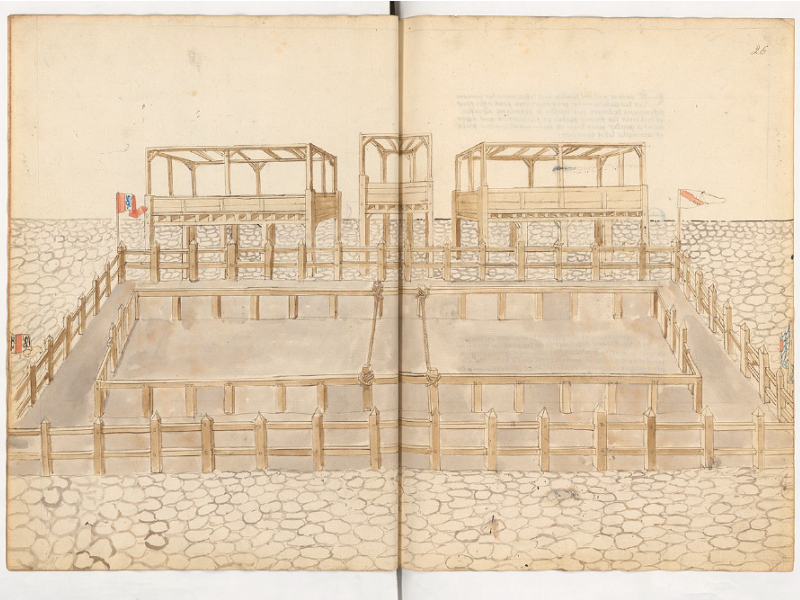
Over time, tournaments became more regulated. By the 13th century, the joust emerged—an individual duel between two horsemen with lances in a confined space (lists—a lists with a barrier). The main objectives were:
To unhorse the opponent;
Breaking a spear on an opponent's shield or armor (breaking the spear completely was especially valuable);
Hitting specific areas of the shield to score points.
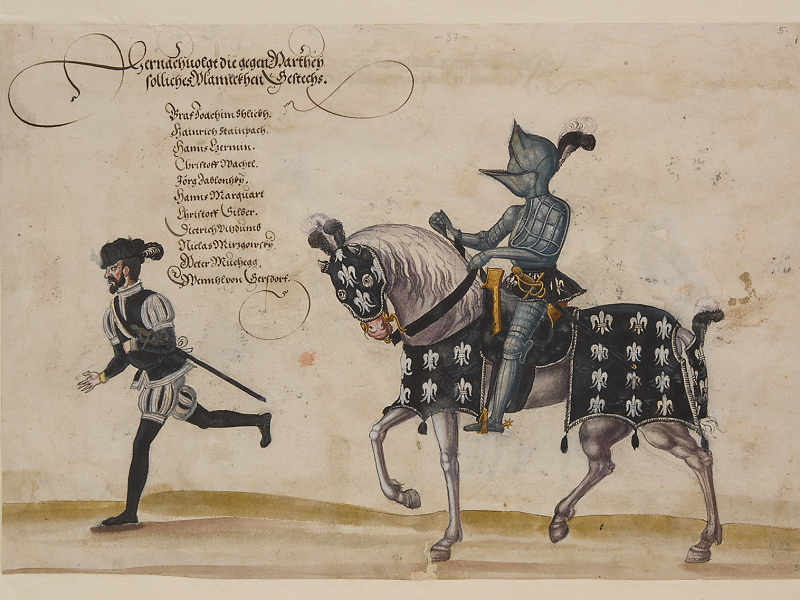
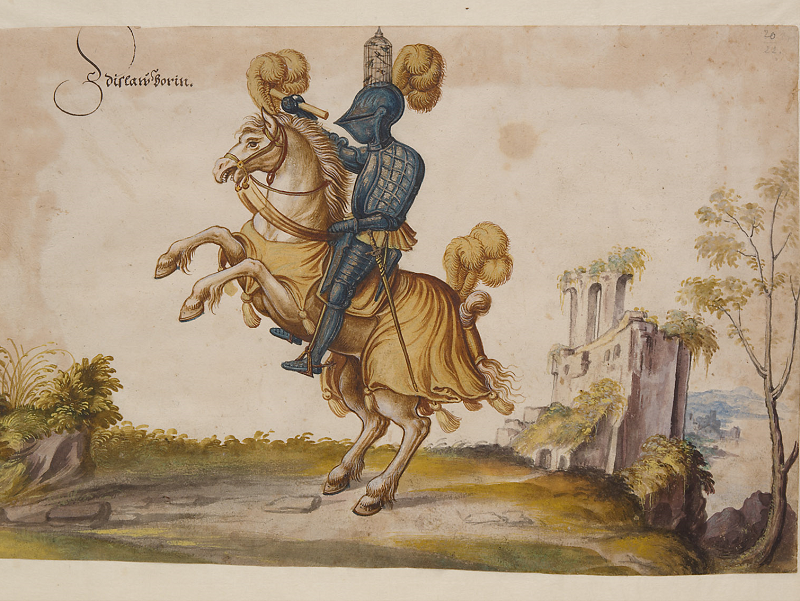
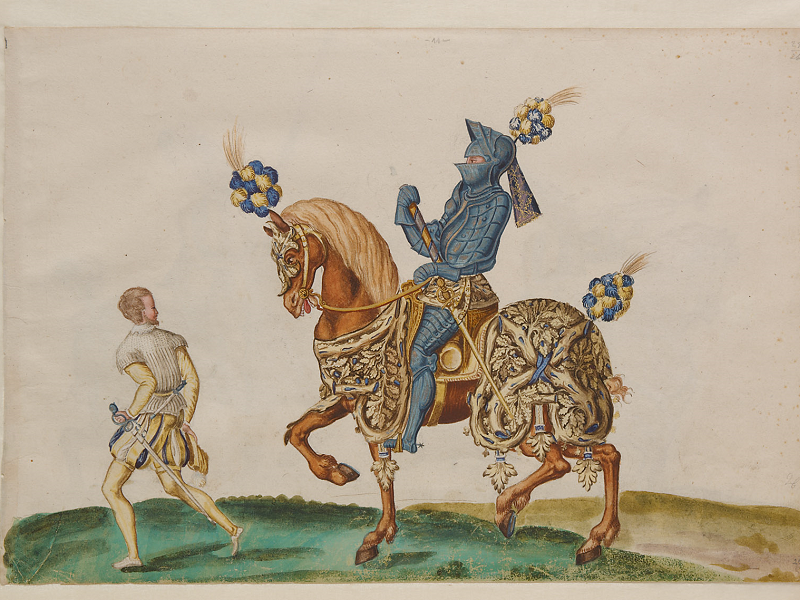
In the late Middle Ages, tournament spears with blunt or crowned points were introduced to reduce lethality. Specialized armor appeare.
Basic rules (varied by region and era, but shared common themes):
Participation was restricted to nobility (in the early period, sometimes more so; later, proof of noble descent spanning several generations and the presence of a coat of arms was required).
Teams were divided into "challengers" and "responders."
Judges (tournament marshals) enforced the rules: it was forbidden to strike the legs, the right hand (not covered by a shield), or the back or a downed player.
Weapon sequence: first spears, then swords, sometimes axes, or foot combat at the barriers.
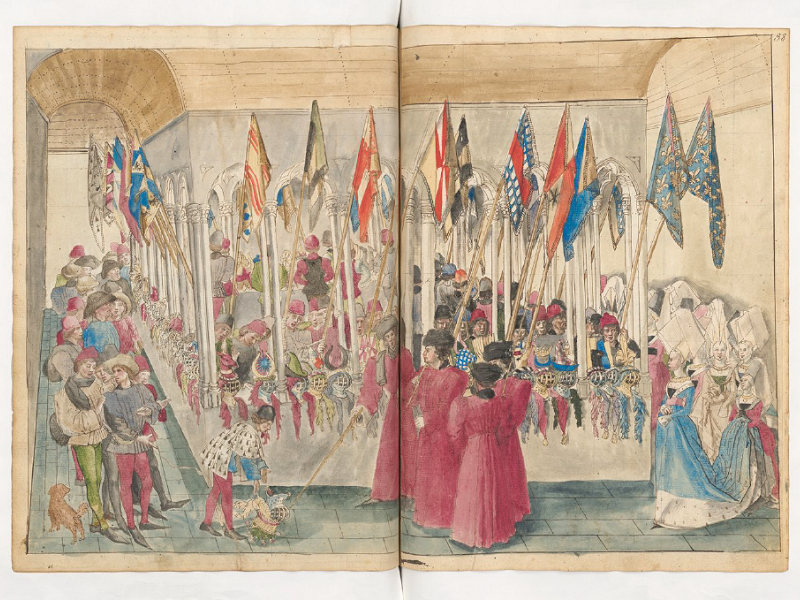
Prizes: armor, weapons, money, jewelry, as well as the glory and favor of ladies (ladies presented scarves or sleeves to the "favorites" as tokens of their attention).
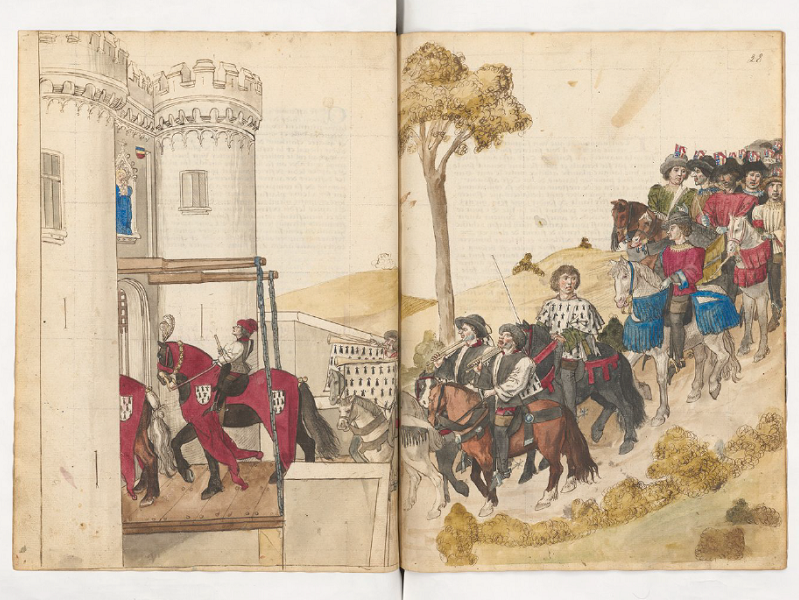
In the 15th century, pas d'armes ("passage of arms") flourished—theatrical tournaments in Burgundy and other regions. Knights "defended" a bridge, gate, or "tree" for days or weeks according to a pre-announced scenario (with elements of courtly literature: a damsel in distress, a magical artifact). Participants chose weapons by touching colored shields.
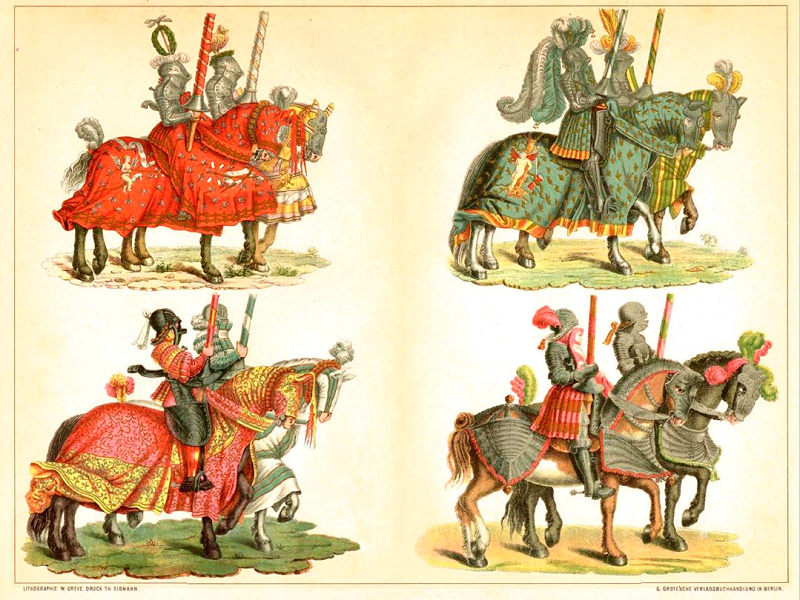
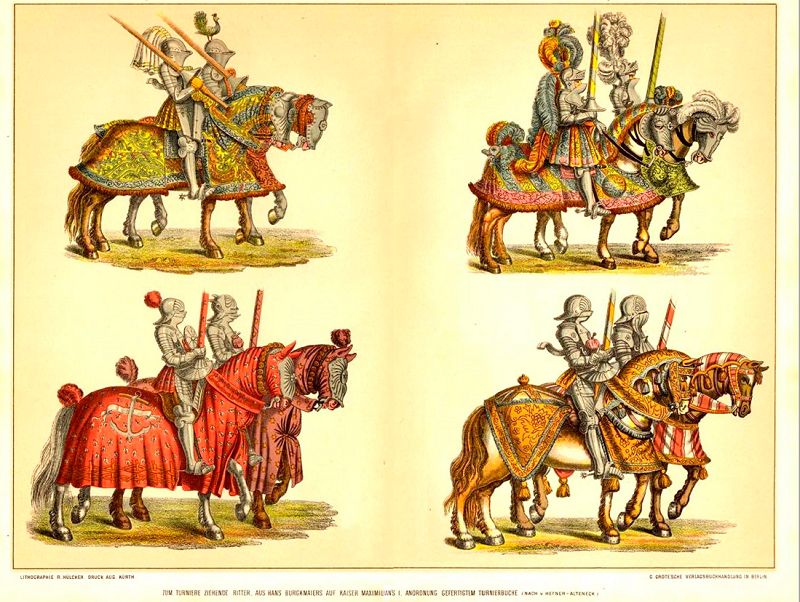
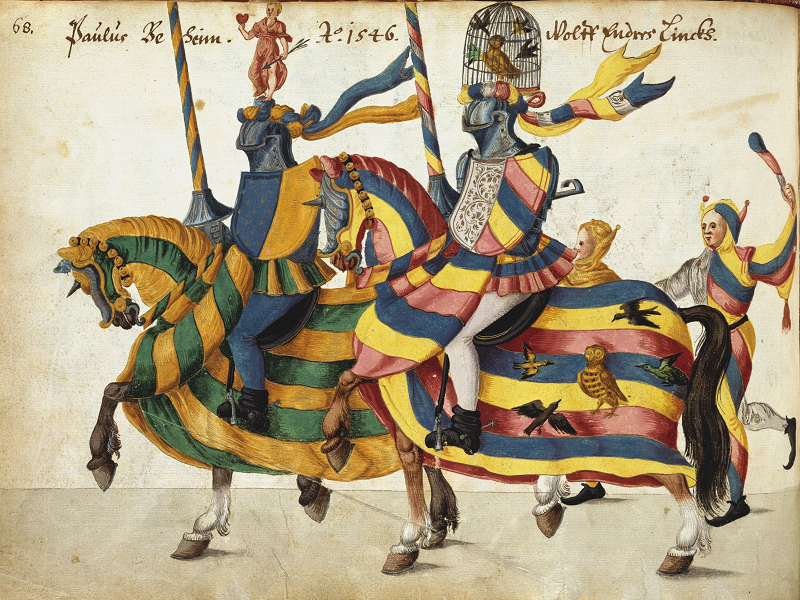
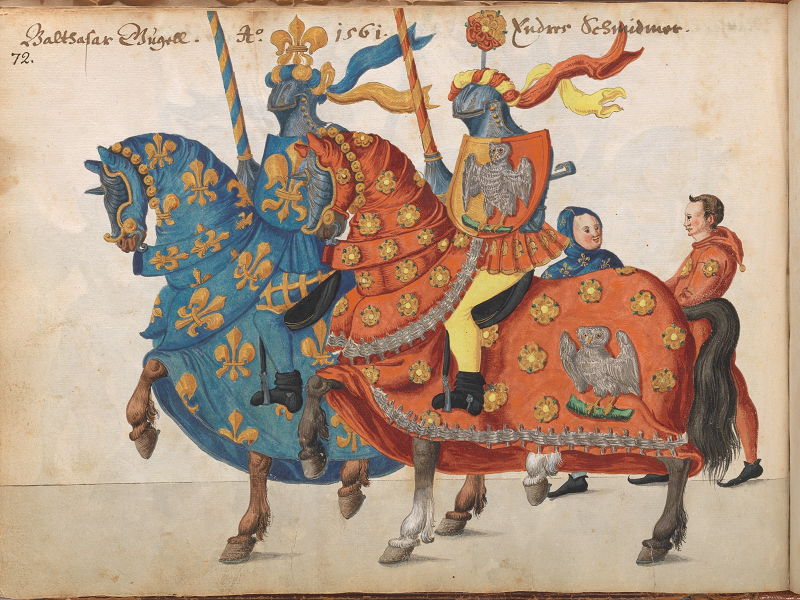
By the 16th century, tournaments had become primarily courtly spectacles with elements of masquerade, costumes, and allegories. A classic example is the Field of the Cloth of Gold (1520) near Calais, where Henry VIII of England and Francis I of France staged a grand festival featuring jousting, wrestling, feasting, and music to strengthen their alliance. The kings personally participated, although the rules sometimes prohibited them from fighting each other.d: heavier, with reinforcements for jousting (for example, an armet with a visor, a reinforced breastplate). Horses were also protected by blankets.
Types of Competition in Medieval Knightly Tournaments.
Medieval knightly tournaments (hastiludes—"spear games") included a variety of competitions that evolved over the course of the 11th–16th centuries. In the early period, mass and chaotic combats reminiscent of real battles predominated. Later, the emphasis shifted to individual duels, spectacle, and courtly elements. Tournaments combined military training, demonstrations of valor, opportunities for profit (ransoms, prizes), and social interaction.
1. Melee (melee, buhurt, tourney, bohurt).
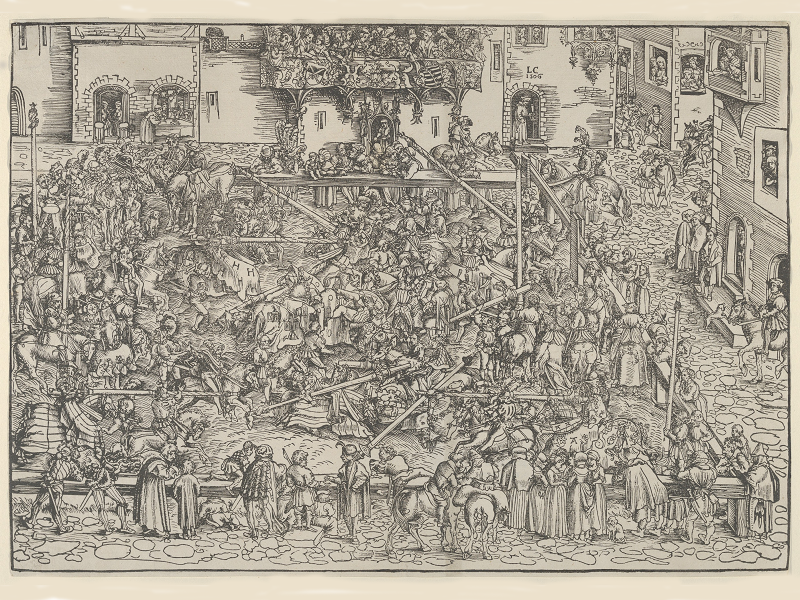
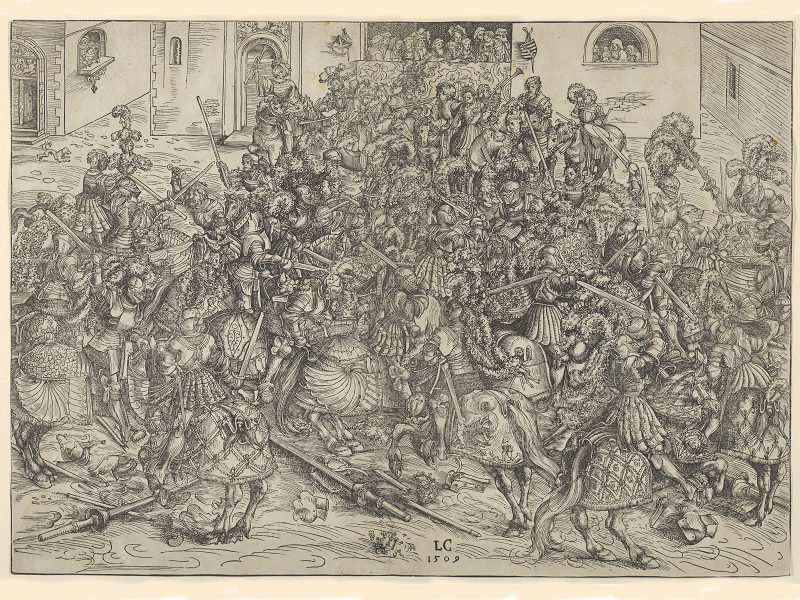
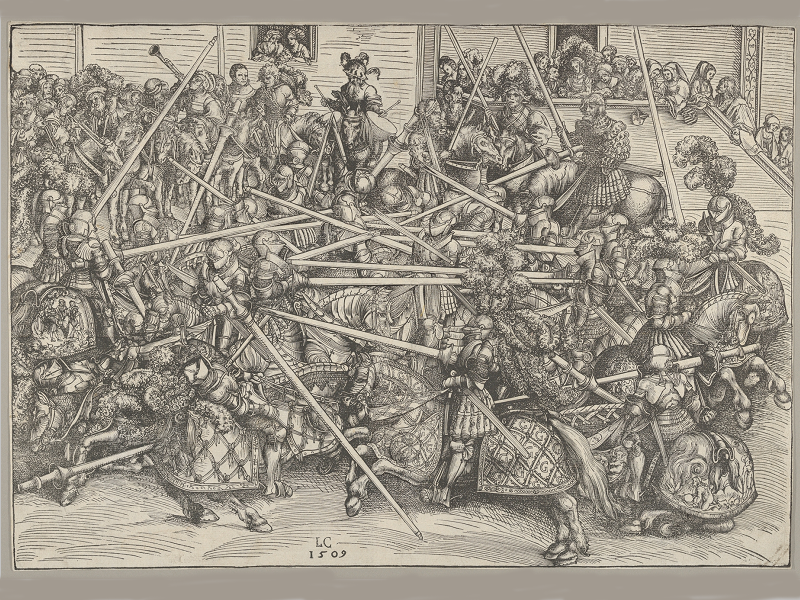
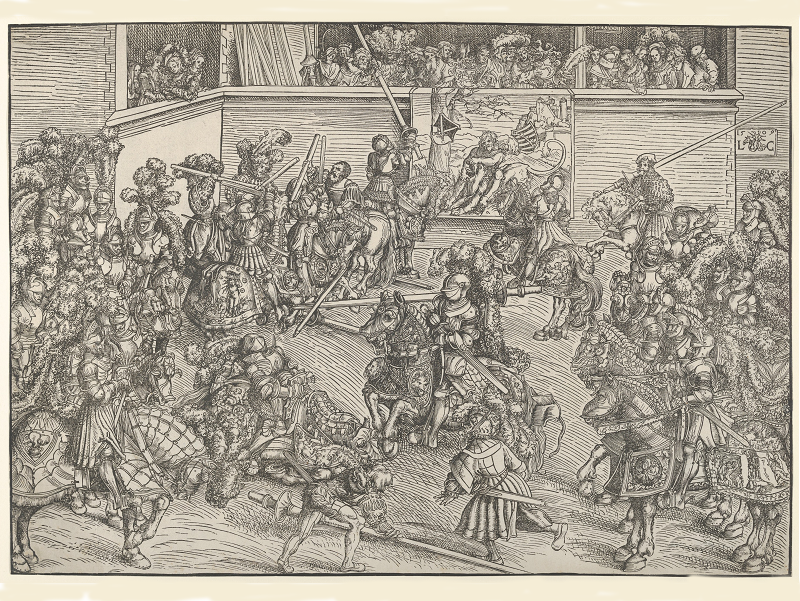
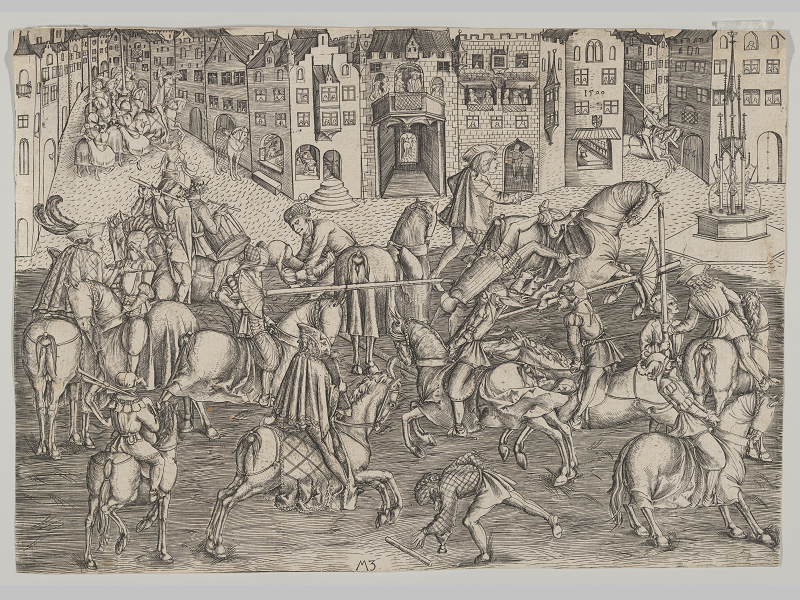
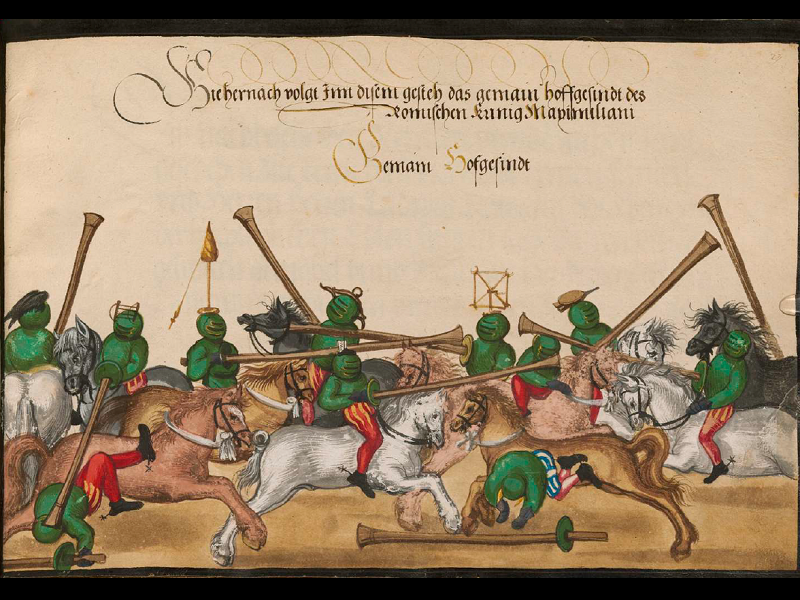
This is the oldest and originally the main type of tournament (11th–14th centuries). Two teams of knights (regional or national, ranging from 10–30 to hundreds of participants) fought in a large open area (sometimes including fields, forests, and villages). Weapons: initially, combat weapons, later, blunted weapons (blunt swords, maces, spears).
Objective: to unhorse an opponent, capture them (for ransom in weapons, armor, or money), seize a banner, or simply defeat a team.
Format: a mass "melee"—knights attacked in groups or one-on-one; several were allowed to attack an individual.
Characteristics: a very dangerous sport, with a high risk of injury and death. In the later period, melees were held with wooden maces (in Germany, a mace tournament).
Melees trained heavy cavalry in teamwork and were a true "war in miniature." By the 14th century, this format gradually gave way to more structured duels.
2. Jost (joust, tiost, spear duel).
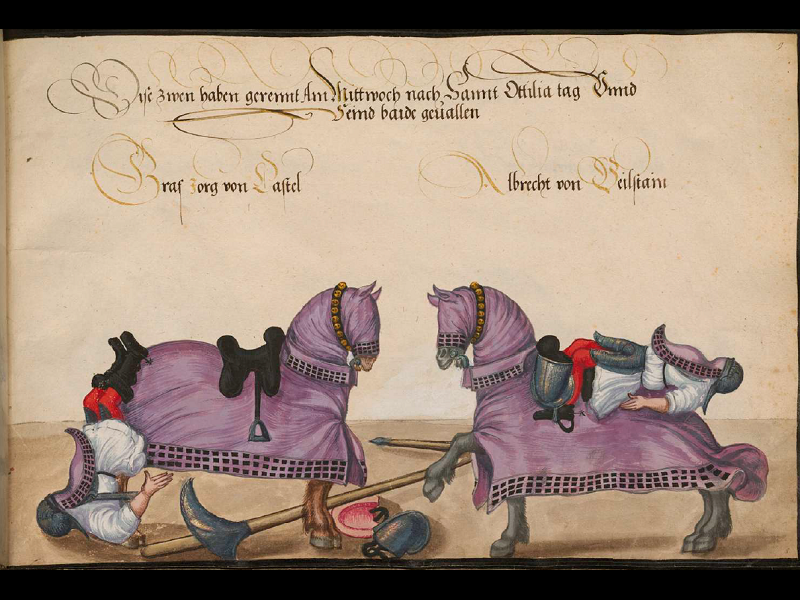
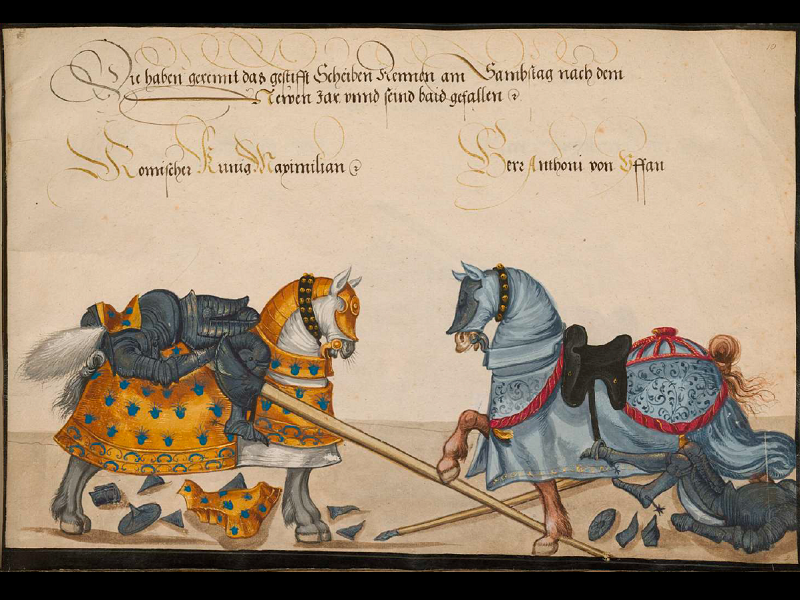
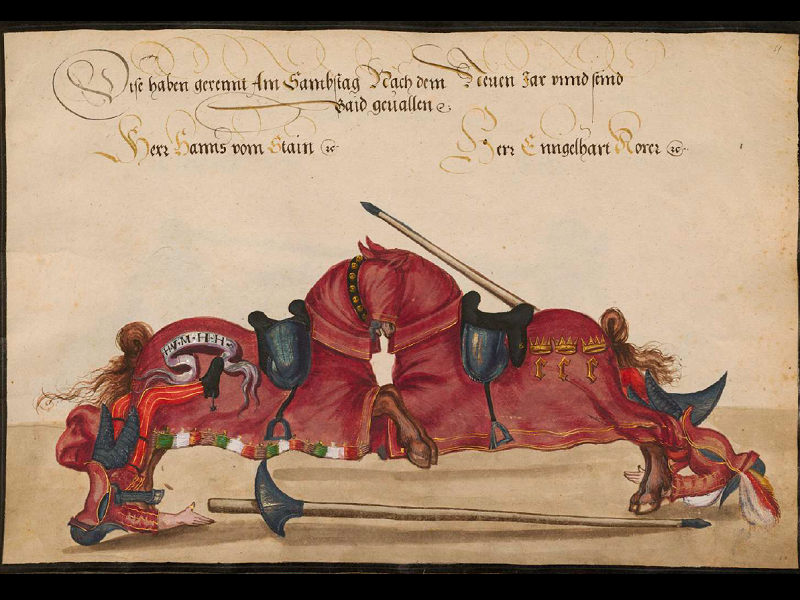
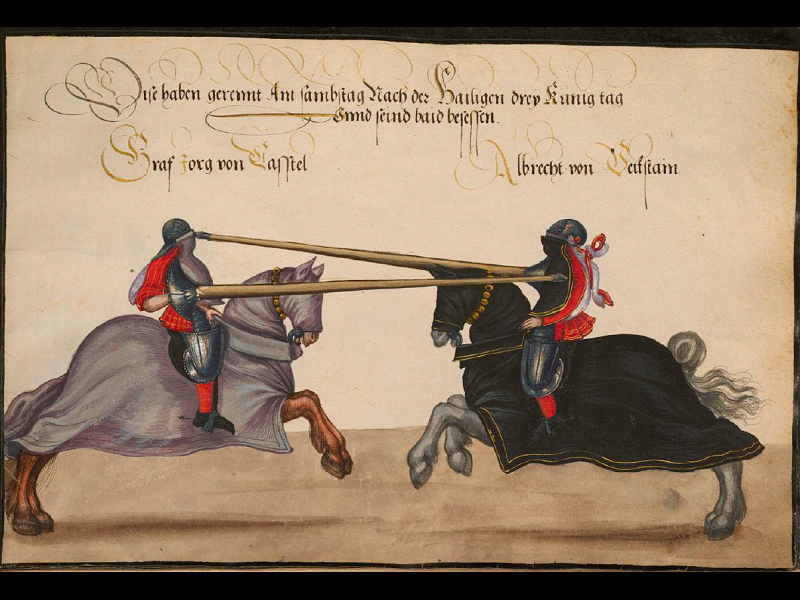
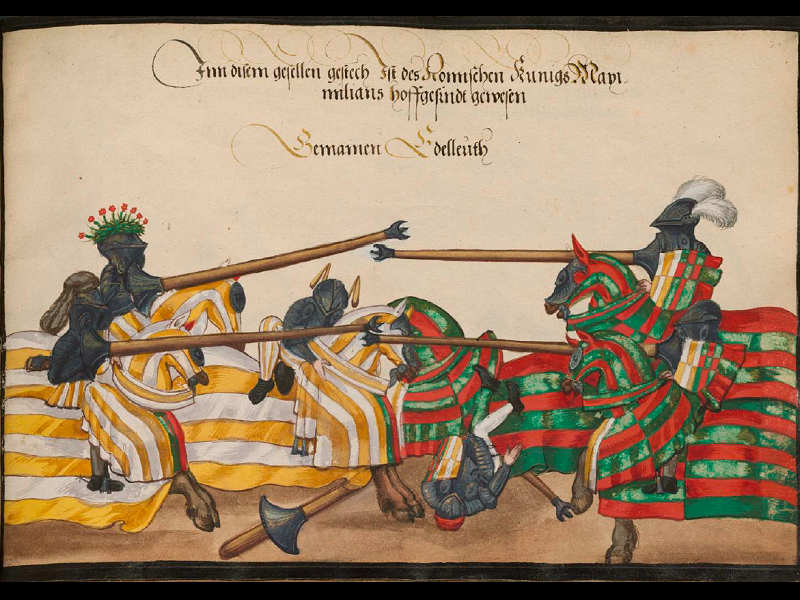
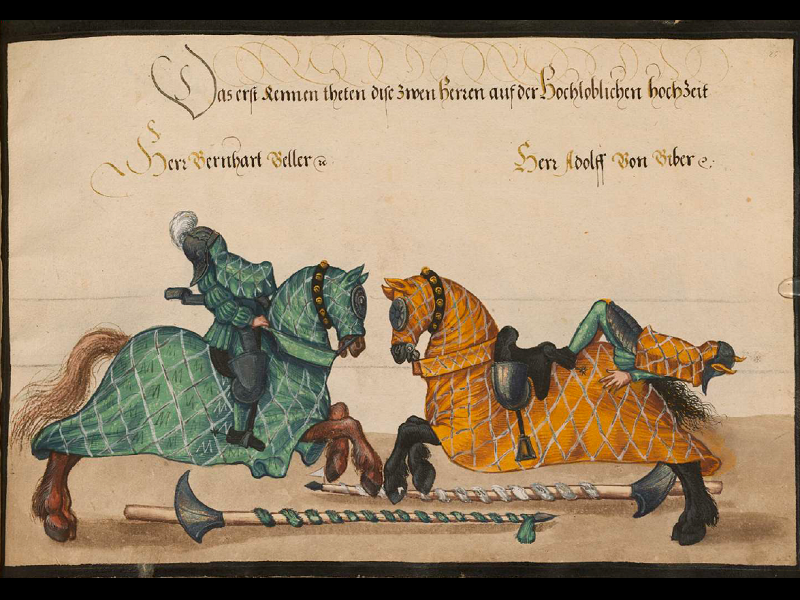
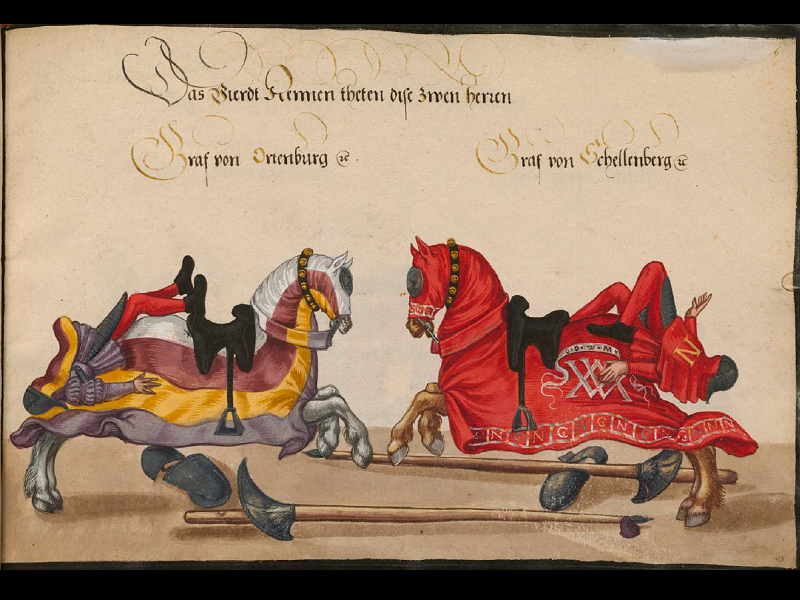
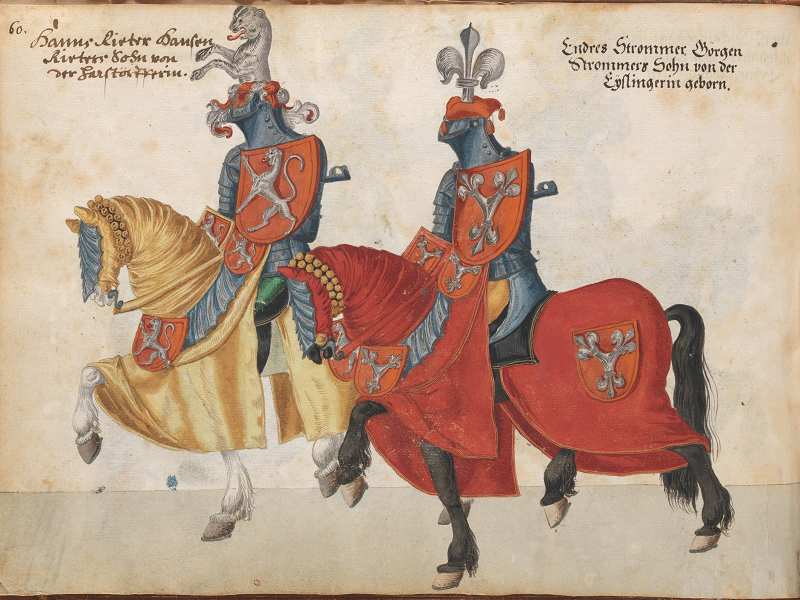
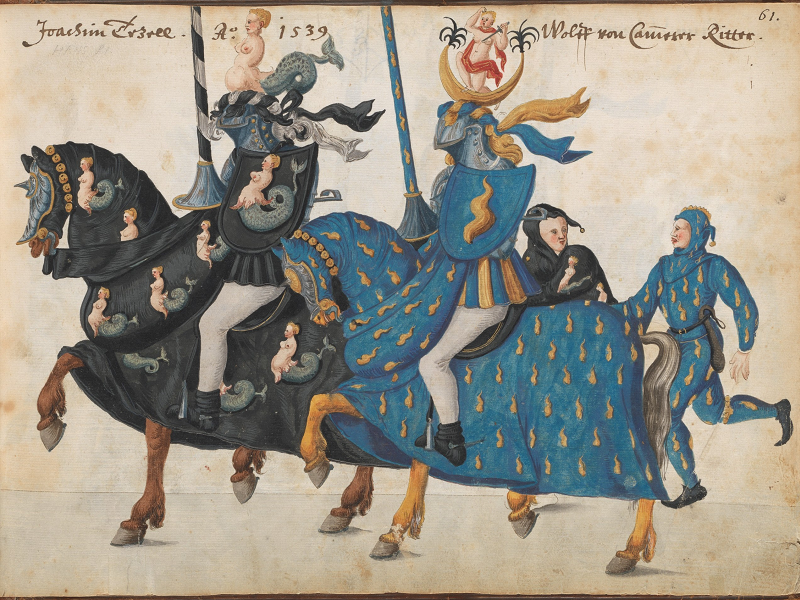
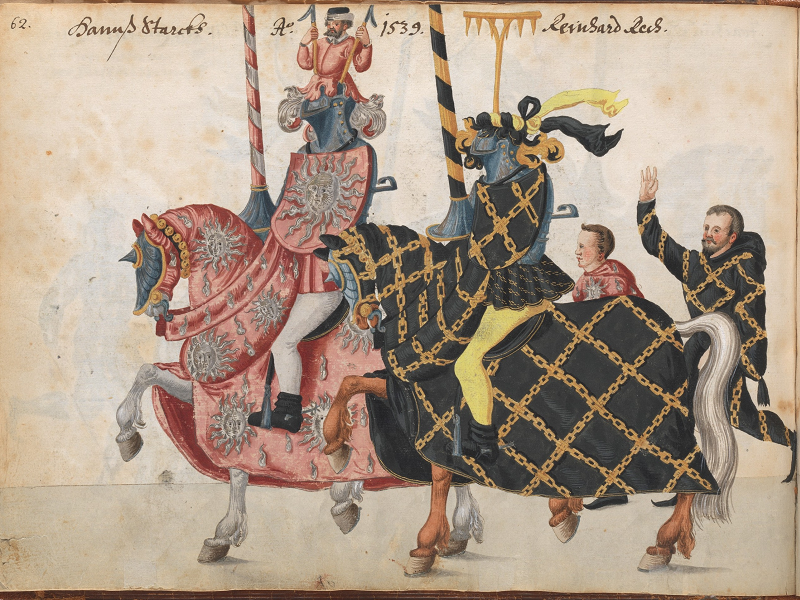
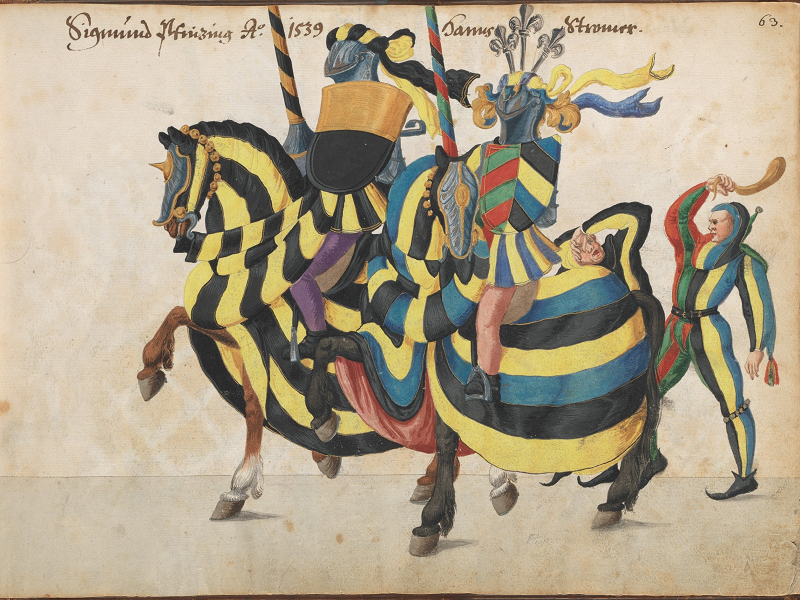
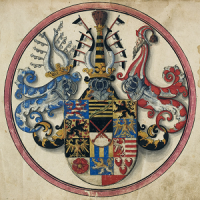
Turnierbuch Kurfürst Johann Friedrichs des Großmütigen, Kurfürst von Sachsen, 1539-1543, Lucas Cranach d. Ä., Werkstatt, (Ms.02 - Kunstsammlungen der Veste Coburg):
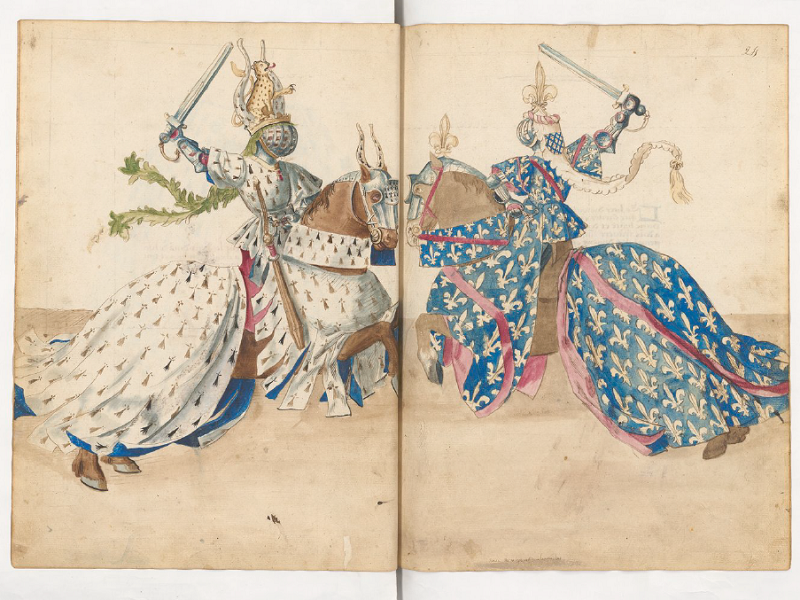
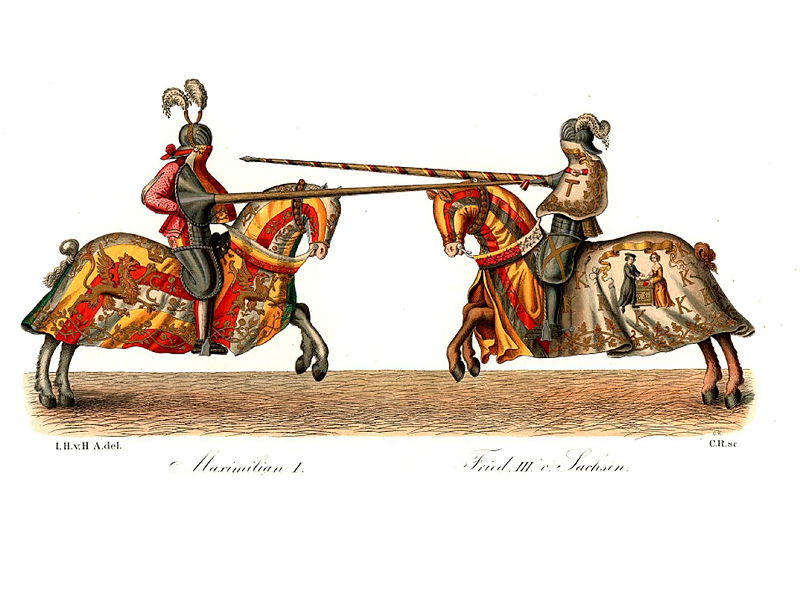
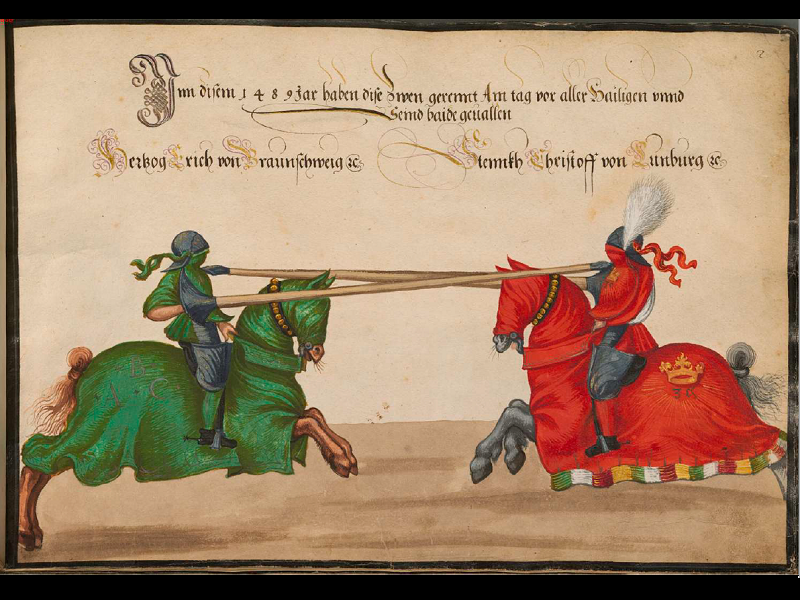
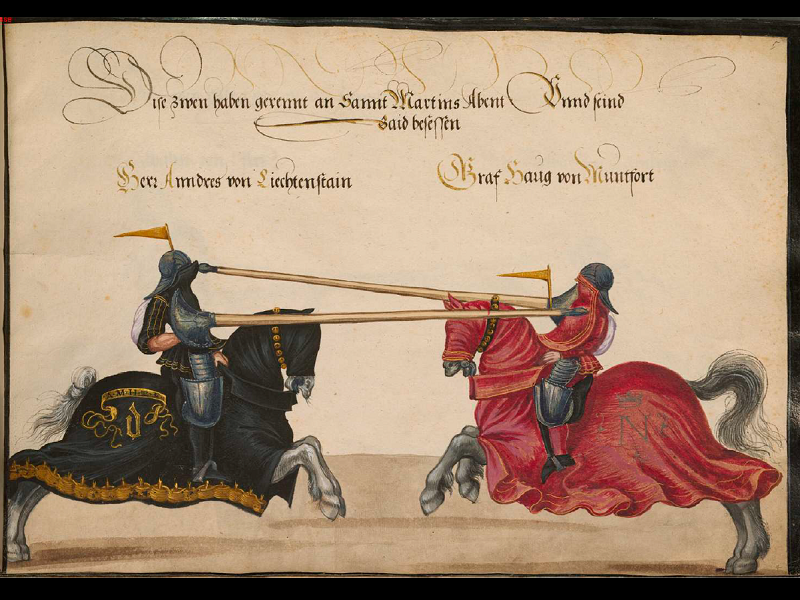
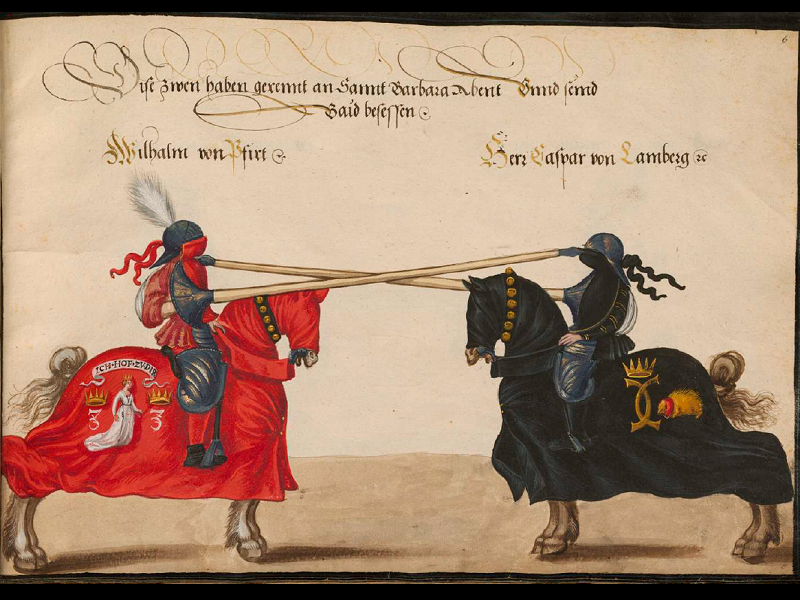
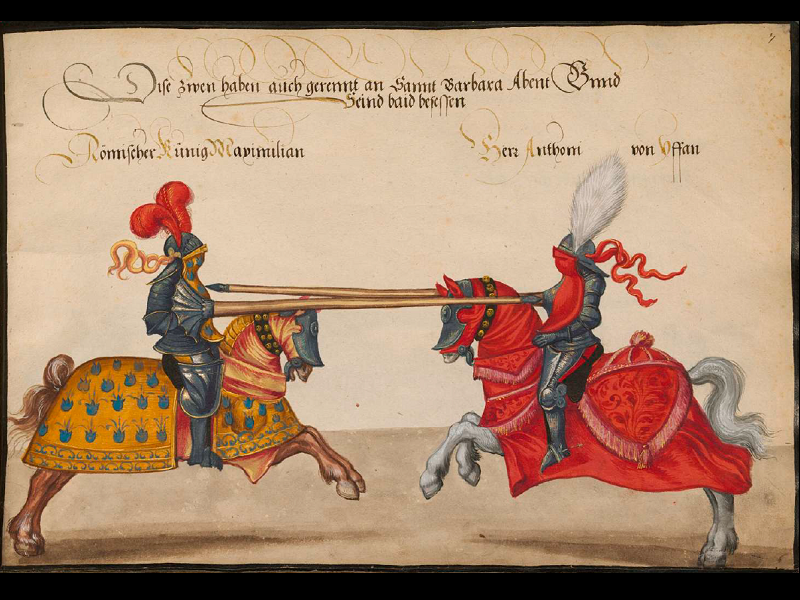
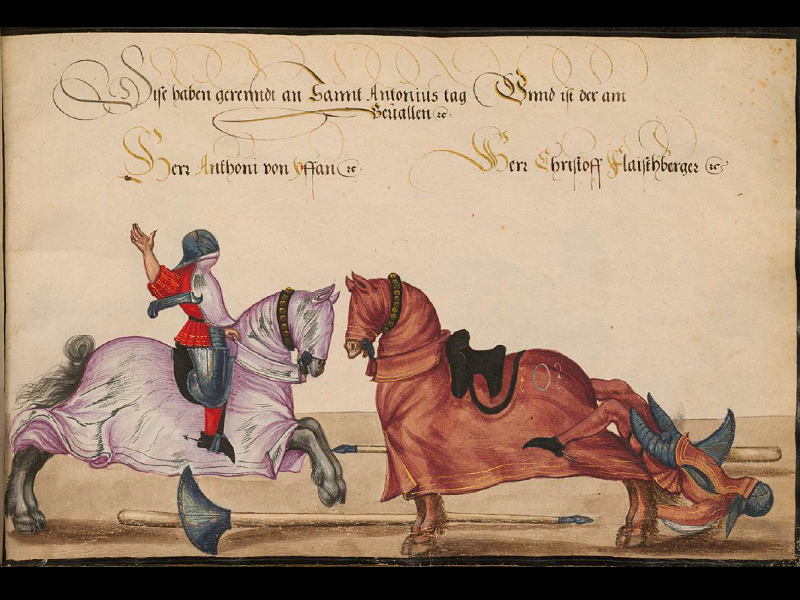
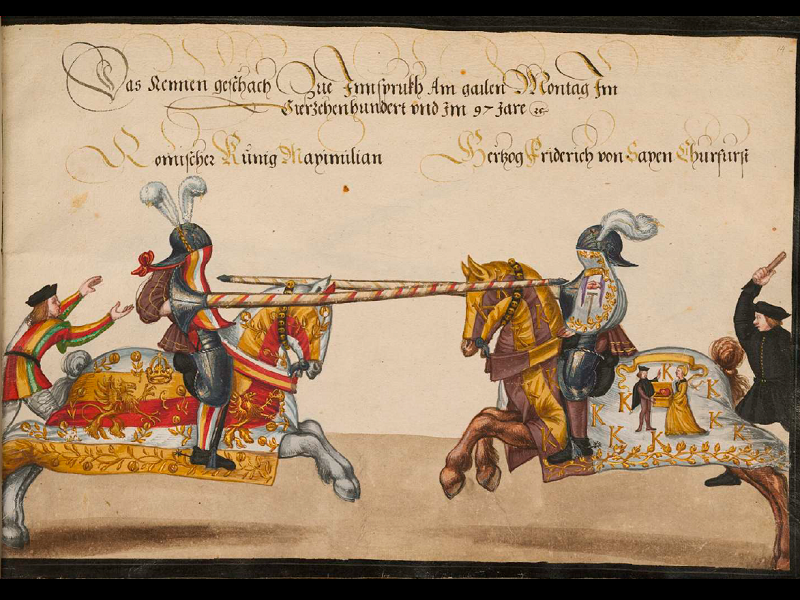
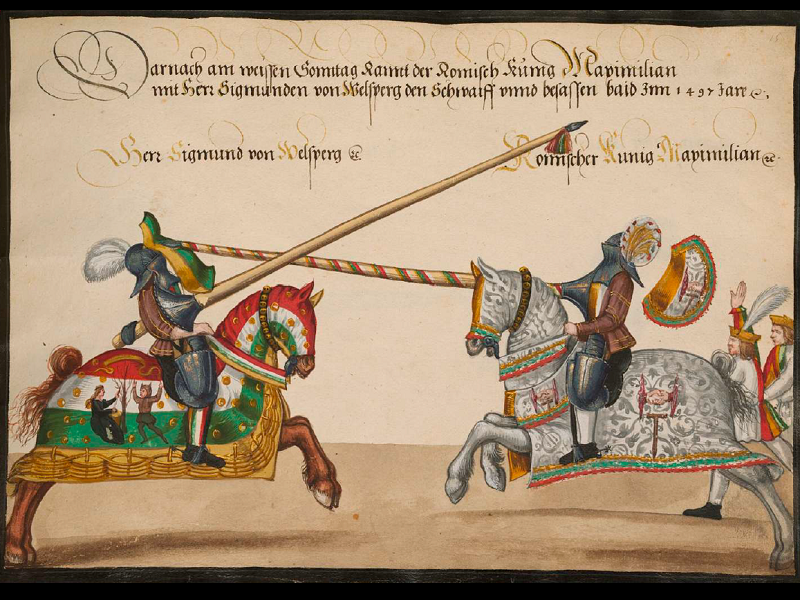
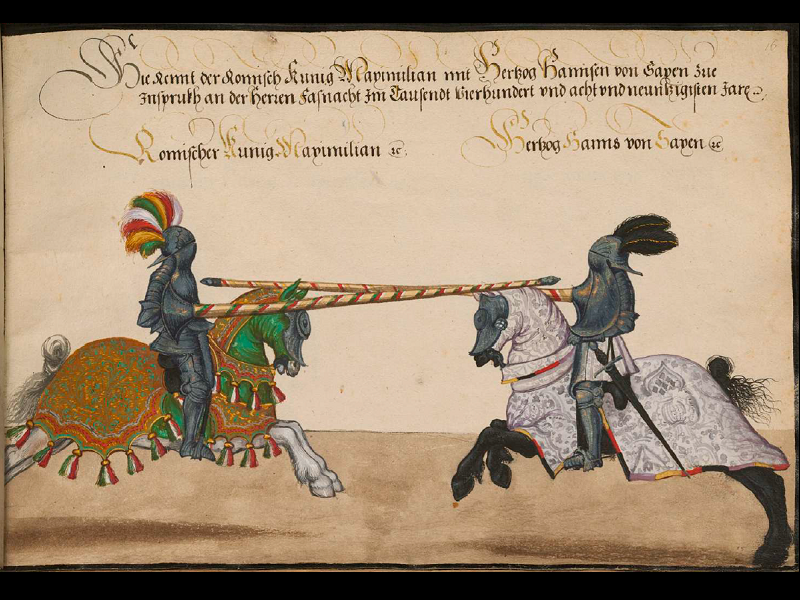
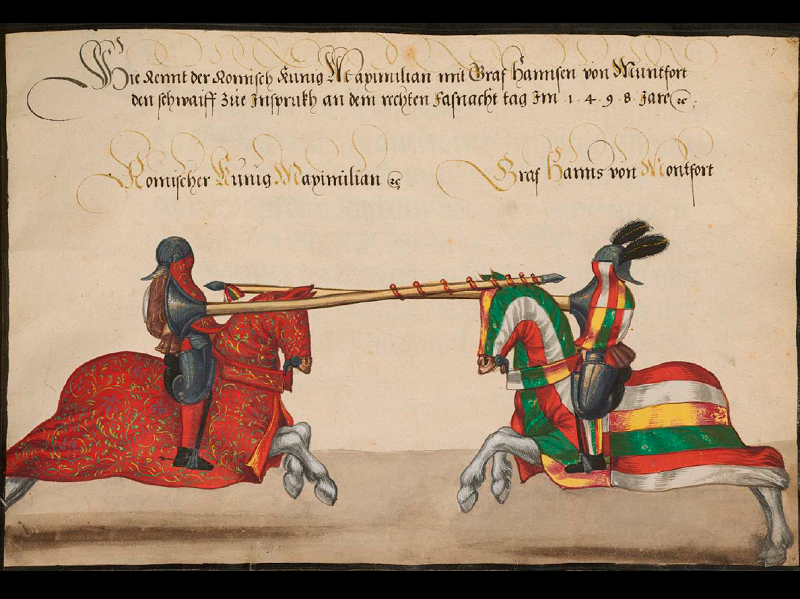
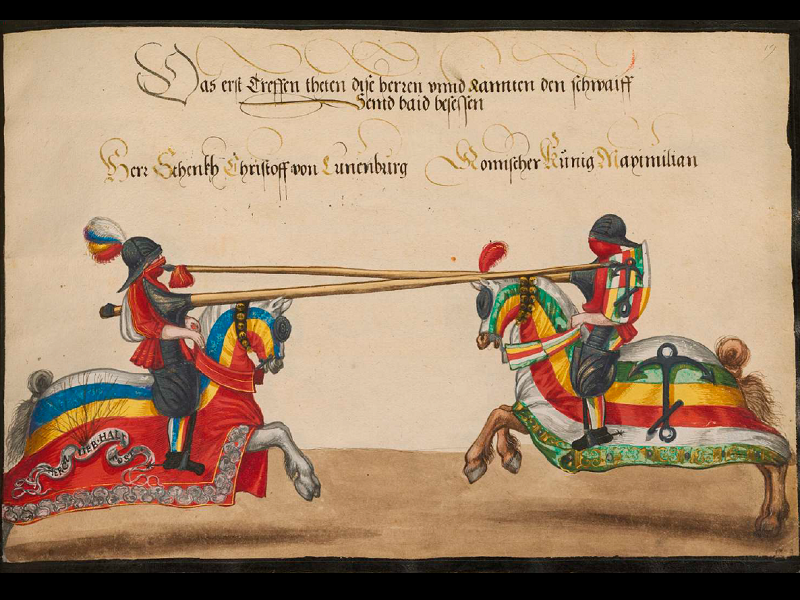
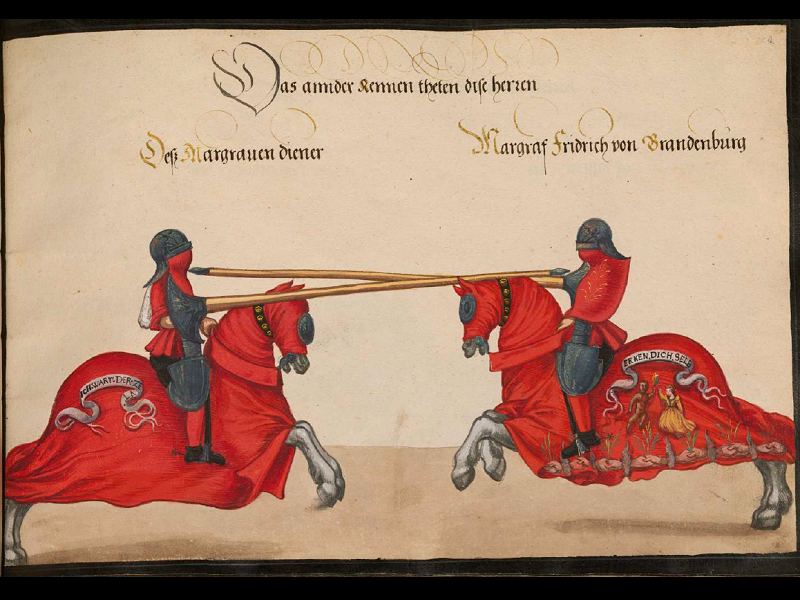
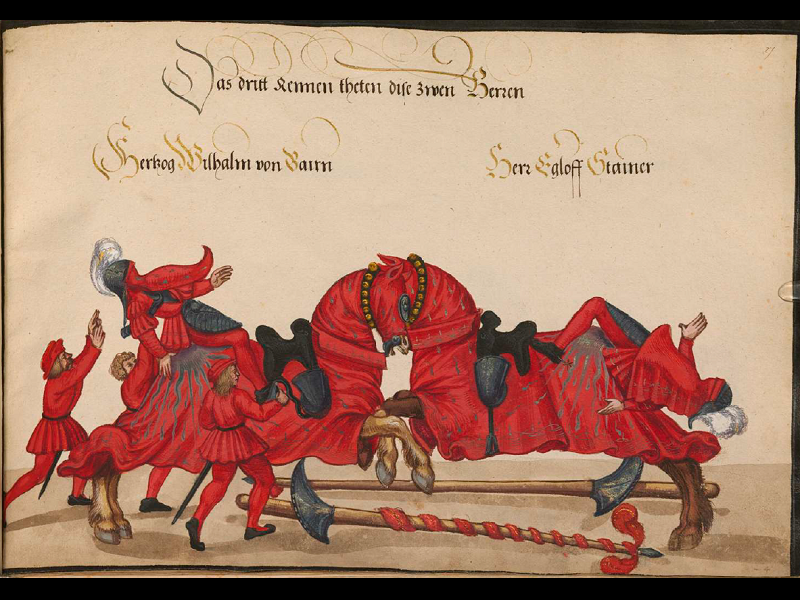
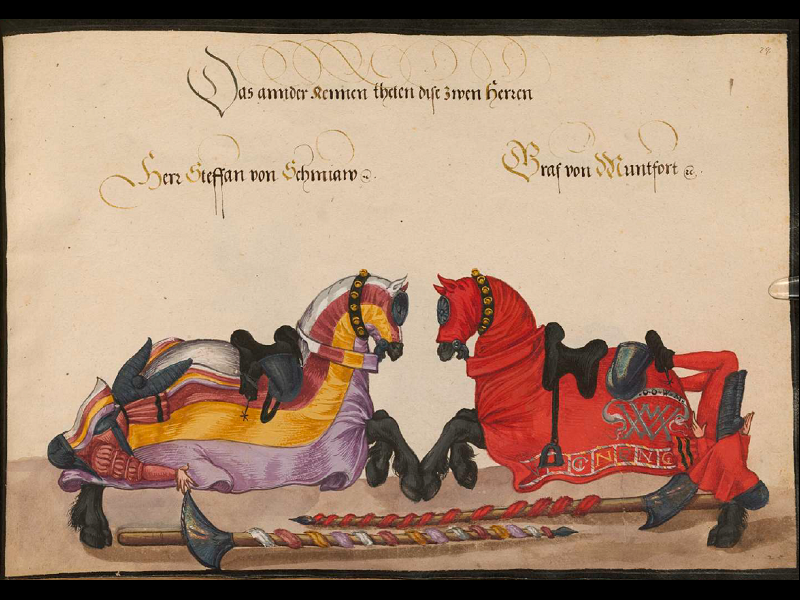
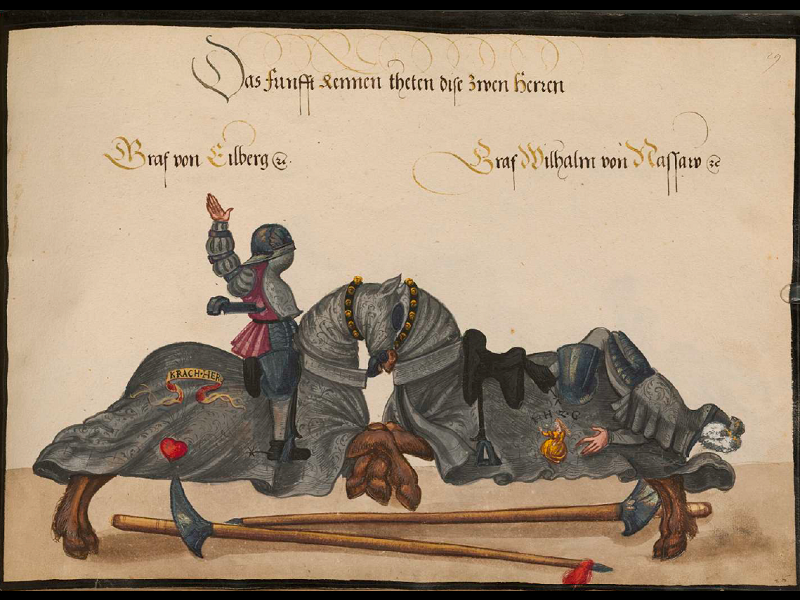
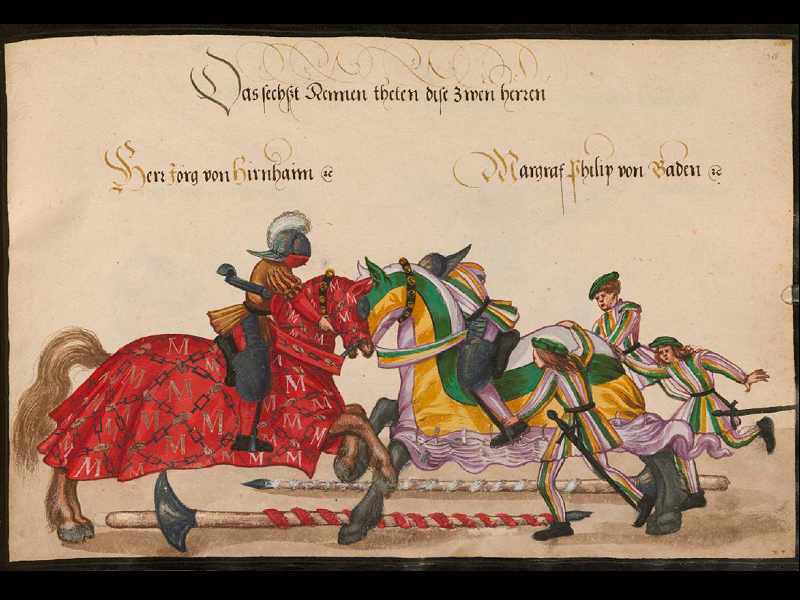
An individual duel between two riders on spears is the most famous and spectacular sport, especially popular since the 13th century.
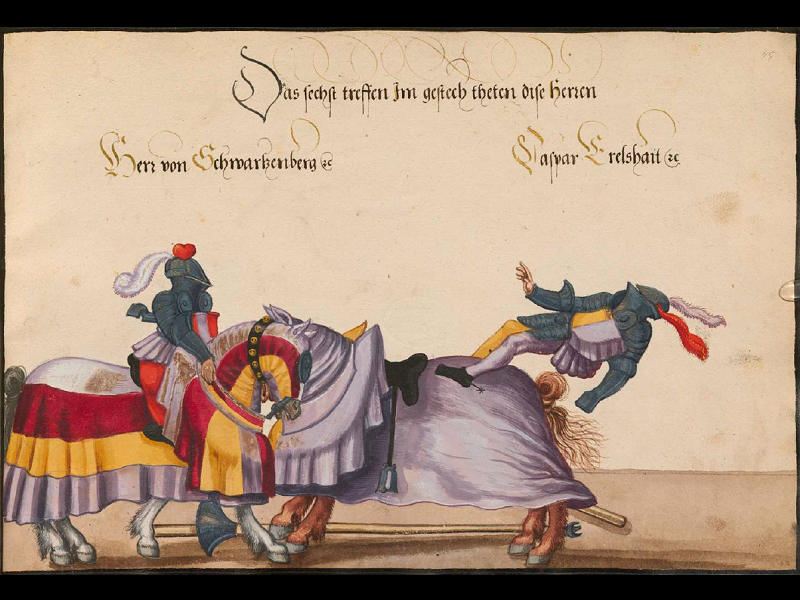
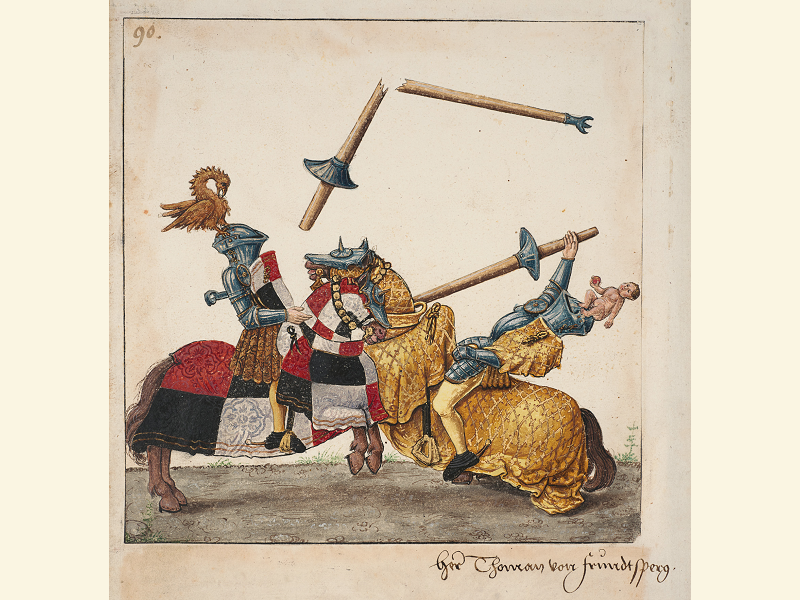
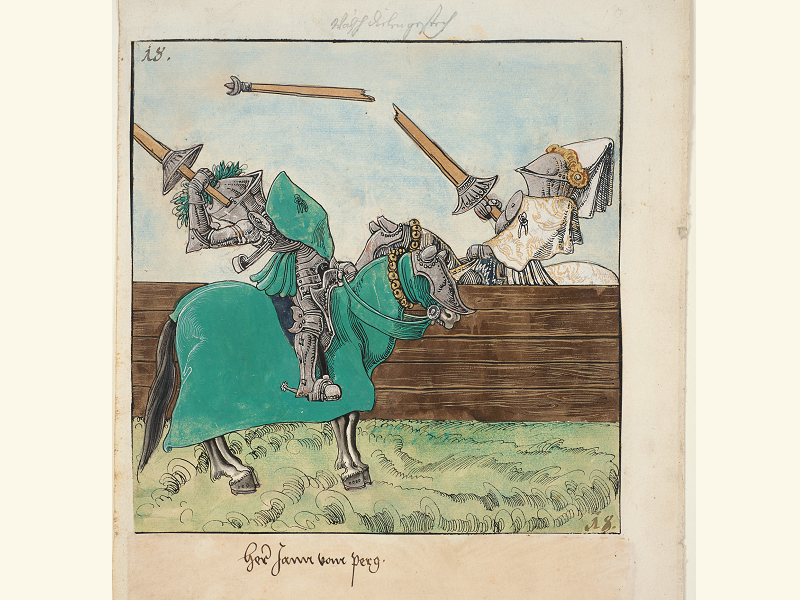
Format: Knights raced toward each other across the lists, attempting to unseat their opponents or break their lances on their shields or armor.
Variations:
Joust of war — with sharp lances, no barrier (more dangerous).
Joust of peace — with blunt or crowned points (coronels), often with a barrier (tilt) between the riders to prevent collisions.
Scoring: unseating (highest score), completely breaking the lance, or a direct hit on a shield or helmet.
Typically, 3-5 courses were held. If there was no winner, combat would proceed to foot combat.
Jousting became dominant in the late Middle Ages and became a courtly spectacle.
3. Foot combat (foot combat, combat à pied).
Competitions on the ground, often following mounted jousting or as a separate discipline (especially in the 15th century).
Format: one-on-one or in small groups behind a barrier (at the barriers - a low fence preventing close contact).
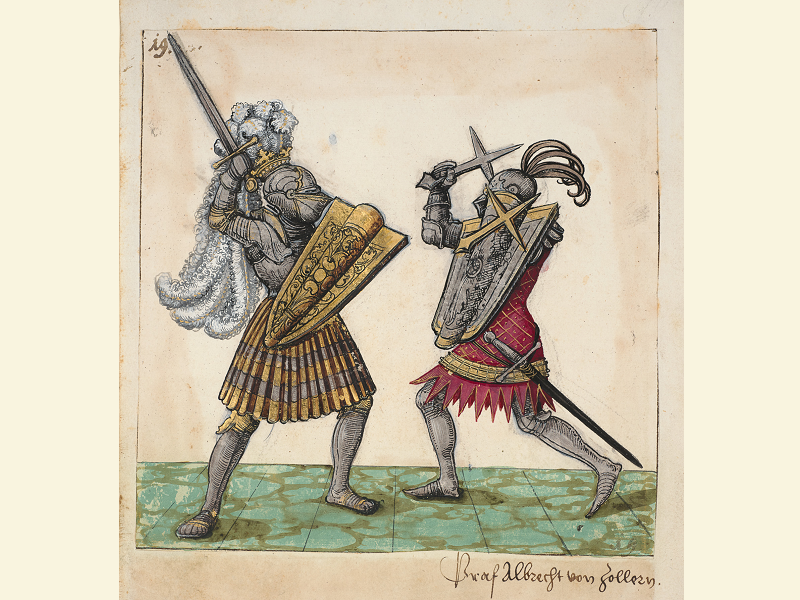
Weapons: blunted swords, axes, daggers, sometimes spears. The fight lasted until a certain number of blows were struck (for example, 5 blows with each weapon).
Objective: to dislodge the weapon, deliver a "decisive" blow, or force the opponent to surrender.
Foot combat emphasized fencing skill and was less dangerous than mounted combat.
4. Pas d'armes ("passage of weapons", 15th century).
A theatrical and courtly form of tournament, especially popular in Burgundy and at the court of René of Anjou. Format: A knight or group "defended" a bridge, gate, "tree," or passage for several days or weeks. All volunteers were called upon according to a pre-announced scenario.
Elements: literary plot (from Arthurian romances), lavish decorations, allegories, and the participation of women as inspiration.
Competitions: A combination of jousting, foot combat, and other disciplines. Participants selected weapons by touching colored shields.
This was the peak of tournament romanticism—more of a spectacle than a pure combat.
5. Other types and subsidiary competitions.
Jute (for newly initiated knights) - preliminary duels for young knights.
Quintain - an exercise with a target (a rotating figure or shield). A knight on horseback struck the target with a lance; an incorrect strike caused the target to spin and possibly strike the rider. Ring Hunt - to snatch a ring with a spear at full gallop.
Round Table (in England) - a stylized tournament based on the legends of King Arthur.
Free Tourney - less regulated bouts.
Sometimes they included contests of strength, marksmanship (without bow or crossbow), or even aquatic versions of spear exercises.
Tournaments often lasted several days: they began with preliminary josts or jutes, continued with a mele or series of duels, and concluded with a feast, the presentation of prizes, and the honoring of ladies.
Evolution and Significance.
In the 11th and 12th centuries, melees dominated as mass training. By the 13th and 14th centuries, the role of individual jousting grew. In the 15th and 16th centuries, tournaments became court spectacles with a strong theatrical element (pas d'armes). Rules were tightened to reduce fatalities: barriers, blunt weapons, and herald judges were introduced.
These types of competitions not only prepared for war but also reinforced the chivalric code of honor, allowed young knights to earn money and advance, and demonstrated the status of the aristocracy. Despite the dangers, tournaments remained a central element of chivalric culture until the Renaissance.
Interesting Facts.
Economics: Tournaments were a business. William Marshal, in his youth, captured hundreds of knights and became one of the richest men in England. In later times, prizes reached enormous sums.
Mortality: Despite the rules, tournaments remained dangerous. Many knights died or suffered serious injuries (fractures, wounds from spear fragments). Geoffroi I de Charny, author of a treatise on chivalry, died in battle, but tournaments claimed the lives of dozens of famous warriors.
Women and courtship: Ladies played a key role—as spectators, judges, and inspirers. Tournaments reinforced the cult of courtly love.
Bans and revivals: Richard the Lionheart legalized tournaments in England in 1194, charging a fee to the treasury and subjecting them to strict oversight. Saint Louis IX of France attempted to ban them.
Technical innovations: The introduction of a barrier (tilt) between riders prevented collisions between horses. Special "peace" lances broke spectacularly but caused less damage.
Social significance: Tournaments helped young knights without lands earn money and advance in the ranks. They also became a source of political intrigue and even rebellion.
Accidents at Medieval Knightly Tournaments.
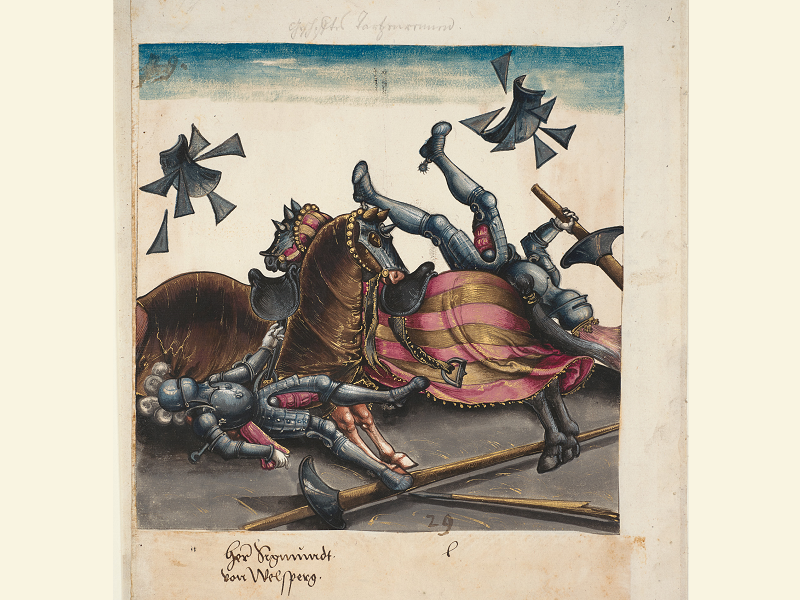
Jurisprudence, despite its spectacular and ritualized nature, remained an extremely dangerous activity. Even with the use of blunted weapons, special armor, and rules aimed at reducing fatalities, accidents occurred regularly. Causes included technical failures (spear breakage), rider errors, horse problems, overheating in heavy armor, collisions, and unforeseen injuries. In the early period (11th–13th centuries), when mass melees predominated, the risk was particularly high: tournaments resembled real battles with real weapons. Later, with the spread of individual jousts, the danger diminished but did not disappear.
The Church and some kings (such as Henry II of England) banned tournaments precisely because of the high casualty rate and the distraction of knights from the Crusades. Nevertheless, fatalities continued until the 16th century.
Typical injury types and accident mechanisms:
Spear injuries: Wooden spear fragments (especially when using crowned or blunted points) could penetrate gaps in the helmet (visor), striking the face, eyes, or neck. Strikes to unprotected areas resulted in fractures, internal injuries, or impingement.
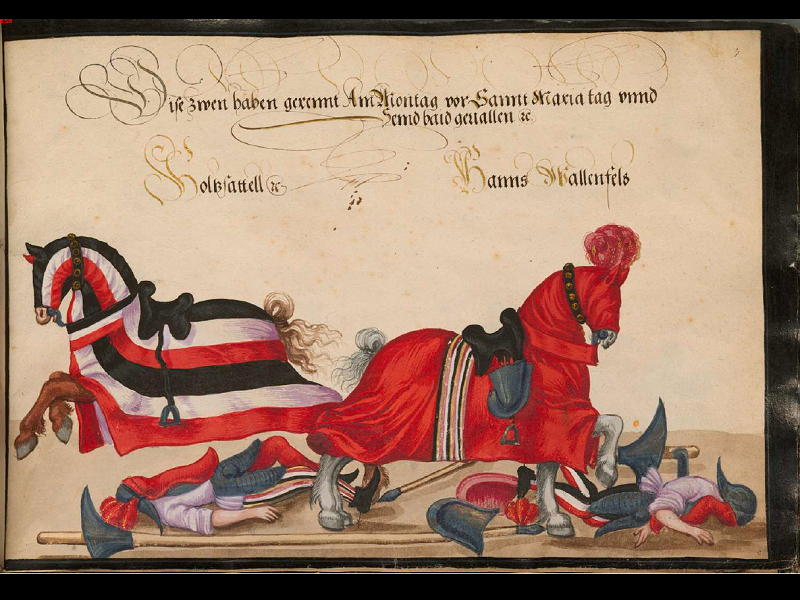
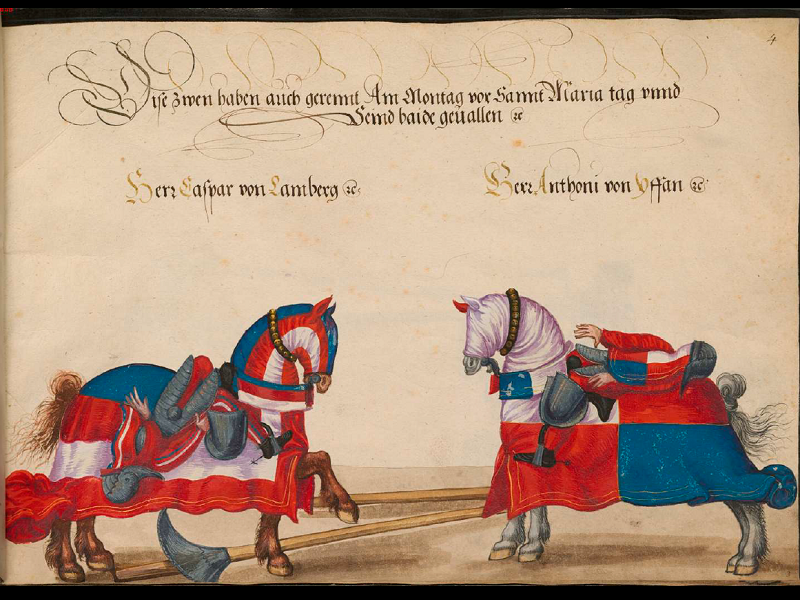
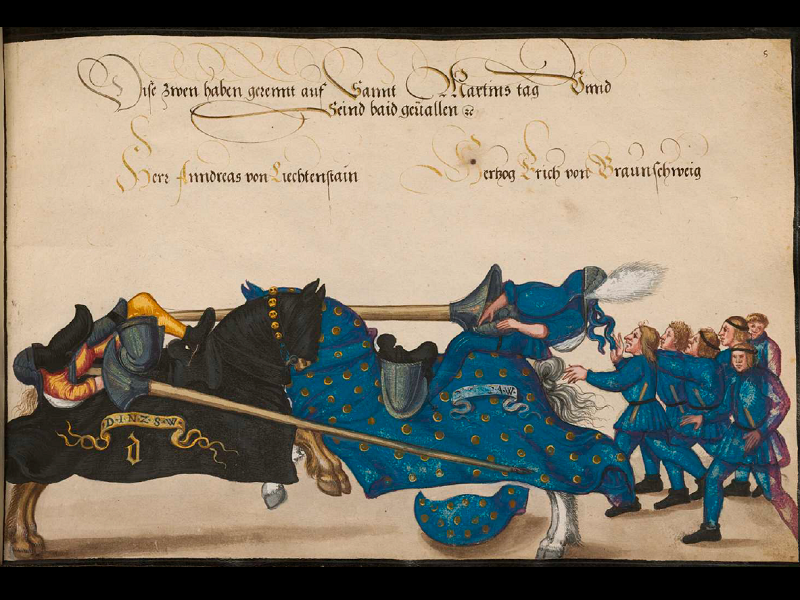
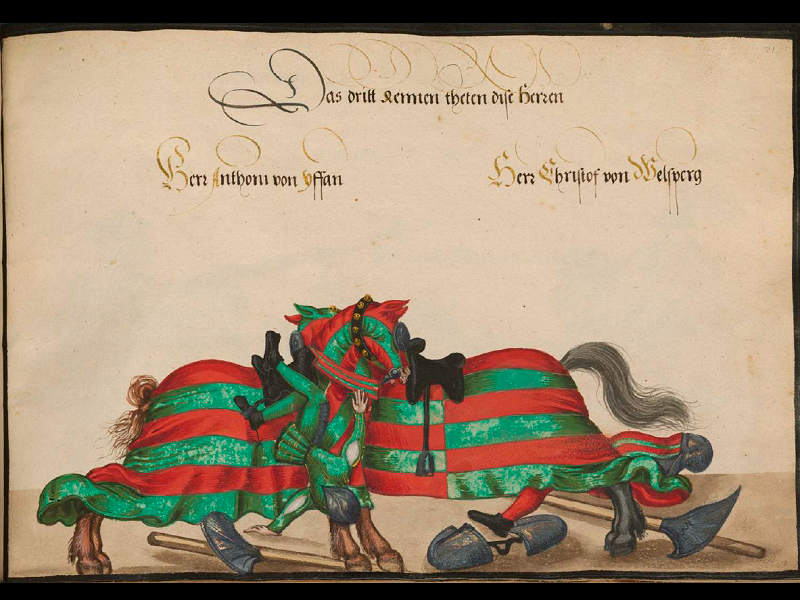
Falls from horses and trampling: A knight thrown from the saddle risked being crushed by his own or another horse. A foot caught in a stirrup resulted in dragging.
Overheating and heatstroke: Knights wearing heavy armor in hot weather could lose consciousness or die from exhaustion.
Injuries from swords, maces, and foot combat: Even with blunted weapons, broken bones, concussions, and internal bleeding are possible. Equipment problems: An uncovered visor, faulty armor, or horses out of control.
Mortality was considered a tragedy and a stain on the winner's honor if a blow was deemed unfair. Nevertheless, dozens of people died in major tournaments.
Large-scale tournament tragedies:
The Neuss Tournament (Neuss, Germany, May 1241) was one of the bloodiest. According to various estimates, between 60 and 80 knights died in one day. Causes: mass melee in the heat, a combination of combat injuries, heatstroke, and trampling. This event is often cited as the record for the number of casualties in a single tournament.
The 1240 Neuss Tournament (or a similar one) also reportedly claimed more than 60 lives.
In the 12th and 13th centuries, such incidents were relatively common due to lax regulations and the use of military weapons. Famous cases of death and serious injury:
Geoffroi de Preuilly (c. 1066) – one of the early "inventors" of tournaments, according to legend. He died at a tournament in Angers, which ironically highlights the danger of the new pastime.
Geoffrey, Count of Brittany (son of Henry II of England, 1186) – died at a tournament near Paris. According to one version, he was trampled by horses during a melee; according to another, he died from injuries from a fall. His death was a blow to the Plantagenet dynasty.
John Hastings, Earl of Pembroke (1389) – a 16-year-old youth died at a Christmas tournament under Richard II from a severe groin injury. A spear or fragment penetrated his armor.
Henry II of France (June 30, 1559) is the most famous and tragic case, effectively ending the popularity of tournaments in France. During the celebration of the Peace of Cateau-Cambrésis, the king fought Gabriel de Lorges, Count of Montgomerie (captain of the Scots Guards). Montgomerie's lance broke; a long wooden splinter penetrated Henry's right eye through the visor of his helmet and entered his brain. The king agonizingly died for 10 days (he died on July 10, 1559), despite the efforts of surgeon Ambroise Paré. Before his death, he insisted on continuing the duel, although Montgomerie tried to refuse. This incident became a symbol of danger, even for kings.
Other examples:
In 1241–1242, several noble knights died, including cases of impalement with a sword while falling or being dragged by a horse.
Henry VIII of England suffered serious injuries (1536 – a fall from a horse and being crushed by his armor; 1524 – a blow to the head while his visor was open), which, according to some theories, affected his character and health.
Leopold V, Duke of Austria (1194) – died from injuries after a horse fell during a tournament.
Social and Cultural Consequences
Accidents led not only to personal tragedies but also to political consequences: the death of heirs to the throne weakened dynasties, and large-scale massacres provoked public condemnation. Tournaments gradually became safer: tilt barriers, specialized armor, strict rules, and referees were introduced. By the 16th century, they had become a court spectacle, but even then, risks remained.
In historiography (the chronicles of Matthew of Paris, the "History of William Marshal"), deaths are described as tragic, not normal. William Marshal, the greatest tournament fighter of the 12th century, fought hundreds of matches and lived to a ripe old age, demonstrating that with luck and skill, survival was possible.
Tournament accidents reveal the contradictory nature of knightly culture: the ideal of honor and valor coexisted with the real danger of death. Although most duels ended non-fatally, rare but spectacular tragedies (especially the deaths of kings and princes) highlighted the risks. These incidents contributed to the evolution of tournaments from rough war games to more regulated sports and, ultimately, to their decline during the Renaissance.
Today, tournament reenactors continue to face similar risks, a reminder of how fragile the line between glory and death was in the medieval knightly world.
Medieval knightly tournaments evolved from rough war games, close to real combat, to refined court spectacles that reflected the ideals of chivalry, courtesy, and aristocratic culture. Their origins lie in the practical necessity of training heavy cavalry and flourished in the social and cultural context of the 12th–15th centuries. Despite dangers, prohibitions, and criticism, tournaments contributed to the formation of a European identity for chivalry and influenced literature (the novels of Chrétien de Troyes, The History of William Marshal), art, and even modern notions of sport and show.
Today, tournaments are revived in historical reenactments and fencing practices, recalling how medieval society transformed war into a ritual of honor and beauty.
Bibliography (primary sources):
History of William Marshal (12th–13th centuries).
Chronicles: Geoffrey de Paris, Matthew of Paris, Giraldus Cambrensis.
Modern research: Malcolm Barber, Richard Barber, Tournaments: Jousts, Chivalry, and Pageants in the Middle Ages; Works on the history of chivalry by Dominique Barthélemy and others.
Wikipedia and encyclopedia articles based on primary sources (Wikipedia: Tournament (medieval)).
Chronicles of the 12th–16th centuries, "The History of William Marshal," works by modern historians (Richard Barber, Malcolm Barber, and others), and Guinness World Records data on the tournament in Neuss. Modern research emphasizes that the fatality rate was lower than might be assumed from the most prominent cases, but still significant for the elite.