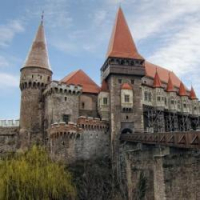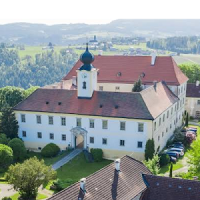
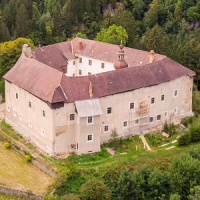
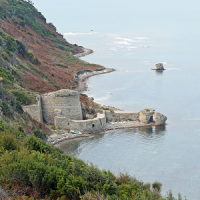

Medieval castles were not only fortified residences of feudal lords but also complex defensive engineering complexes that evolved from the 11th to the 15th centuries. They combined the functions of defense, housing, administrative center, and symbol of power. Early castles (mottes and baileys) were made of wood and earth and were quickly built, while later castles were made of stone and featured multi-layered defenses. Almost every element of the castle served a defensive purpose, creating multiple lines of defense.
The main elements of a medieval castle.
Motte and bailey.
An early type of castle (11th–12th centuries, especially Norman). A motte is an artificial earthen mound (sometimes up to 10–20 meters high), topped by a wooden (later stone) tower. A bailey is an adjacent enclosed area containing outbuildings, stables, and garrison quarters, surrounded by a moat and rampart. The two elements were connected by a drawbridge. This was a quick and inexpensive way to control territory.
Keep (or donjon).
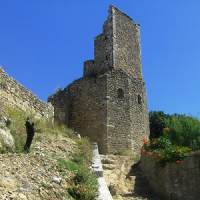
The central and most fortified structure of a castle—the last line of defense. Early castles had a wooden keep on the motte; later, a massive stone keep (rectangular or round). Inside, they housed the lord's living quarters, a great hall, a chapel, storerooms, and sometimes a prison. The keep had thick walls, few windows, and often a separate entrance on the second floor. In concentric castles, the keep might not exist as a separate structure.
Curtain walls.
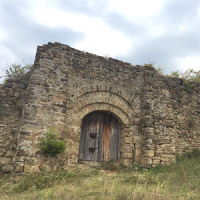
High, thick stone walls (up to 3 m thick and 12 m high) surrounding the entire castle or individual courtyards. They connected the towers and protected the interior. Above was a fighting gallery (allure or wall-walk) for the defenders. The walls were often filled with rubble for strength.
Towers and turrets.
Round or square towers at the corners and along the walls provided flanking fire. They allowed attackers to be fired upon from the sides. Round towers were preferable to square ones, as they were better able to withstand battering rams and mines.
Moat and earthworks.
A deep moat (dry or filled with water) around the castle. It made it difficult for siege engines to approach and mines to be mined. Sometimes the moat was supplemented by an outer rampart.
Gates, drawbridge, and barbican.
The most vulnerable part of the castle. The drawbridge spanned the moat. The gates were protected by a portcullis, "murder holes" for dropping stones or boiling water, and a barbican—an outer fortification in front of the gate that created a "death corridor" for attackers. The gatehouse was heavily fortified.
Machicolations and arrow slits.
Arrow slits on walls or towers through which stones, boiling water, or arrows were dropped. Arrow slits are narrow slits in the walls for archers, often with internal extensions for easier shooting.
Inner courtyard (bailey or ward) and outbuildings.
Including the great hall for feasts and courts, kitchen, stables, well (the most vulnerable element), chapel, and armories and food storage. In later castles, there could be several courtyards (outer and inner).
Additional elements:
Forebuilding – a defensive extension at the entrance to the keep.
Spiral staircases – always spiraled clockwise (an advantage for right-handed defenders with a sword).
Garderobes – toilets in the form of openings in the wall, often over the moat.
Castle Life and Everyday Life.
Life and everyday life in a medieval knight's castle were very different from the romanticized images depicted in films and books. It was not only a military installation but also a full-fledged economic center, home to the lord (or master knight), his family, vassal knights, servants, and garrison. Depending on the size of the castle (from a small keep to massive complexes like Malbork or Krak des Chevaliers), it could house anywhere from a few dozen to 2,000 people.
Hierarchy and Daily Routine.
The day began at dawn (around 5:30 a.m. in summer) and ended at sunset. Without electricity, everything was controlled by the sun.
Lord and Lady: They managed the lands, resolved disputes, and received guests. The lady often managed the household in her husband's absence, cared for the children, and sometimes even managed the castle's defenses. Morning prayer followed by duties in the Great Hall.
Knights: In times of peace, they trained (fencing, horseback riding, archery, preparing siege engines). They guarded the walls and participated in hunting. In Crusader castles (like Krak des Chevaliers), the Knights Hospitaller ate together according to a strict hierarchy, but the food was roughly the same.
Servants: The largest group. They worked from early morning: lighting the fire, preparing food, cleaning, washing, and caring for animals. The pay was poor, there were almost no days off, but they were fed regularly and given liveries (clothes in the owner's colors). Many slept wherever they could—on the kitchen floor or in the hallways.
The main rooms of the castle.
The Great Hall is the heart of the castle. This is where meals were eaten, feasts were held, musicians were played, and business was conducted. The floors were covered with reeds or straw, which was rarely changed—dirt, scraps, and animal excrement accumulated underneath.
The kitchen is a noisy, hot place with huge fireplaces, meat spits, and cauldrons. Cooks prepared two main meals a day. The fat was reused or used to make candles.
Bedrooms: In the early Middle Ages, everyone (nobles and servants) often slept in the same room, separated by curtains. Later, separate rooms for the lord and family appeared. Beds were wooden with straw or feather mattresses.
A chapel was mandatory. Prayers began and ended the day.
Warehouses and cellars: They stored grain, wine, and salted meat in case of a siege.
Food and drink.
Diet depended on status. Two main meals: around 10-12 pm and in the evening.
Nobility: lots of meat (venison, wild boar, poultry, fish), white bread, cheese, fruit, spices (for the wealthy). At feasts, gluttony reigned, sometimes to the point of nausea.
Servants and soldiers: coarse bread made from barley/oats/peas, porridge, vegetables, and scraps from the master's table.
Drank: beer (even for children), wine, ale. Water was often unsafe.
In castles like Malbork (Teutonic Order) or Krak des Chevaliers, provisions were sufficient to withstand a long siege.
Hygiene and sanitation (the "darker" side).
Castles were cold, damp, and often smelly.
Toilets (cloakrooms or gons) were a hole in a wooden or stone bench. Waste fell into a ditch, a pit, or simply down the wall. Sometimes the "wardrobe" was used to air clothes (the smell repelled lice).
Washing: Hands were washed in basins before meals. Full baths were rare; rubdowns or occasional saunas were more common. Teeth were brushed with a rag soaked in salt or ash.
Floors and air: Straw on the floor collected dirt. The windows were small (for warmth and defense), making it dark and stuffy. In winter, it was very cold; heating was provided only by fireplaces in the main halls.
Despite this, people believed that illness was caused by "bad air," not bacteria.
Entertainment and leisure.
In peacetime, boredom was a problem:
Hunting, falconry, tournaments.
In the hall: musicians, jugglers, minstrel tales, chess, cards, embroidery for the ladies. Feasts and banquets were the main event, with dancing and abundant food.
In winter, the days were shorter, and life was more subdued within the castle.
Life during a siege.
The castle became a survival fortress. Everyone hid behind the walls, hoarded food, and repaired the fortifications. Water came from wells or cisterns, and food was stored. In such conditions (as at Krak des Chevaliers), the garrison could hold out for months.
Realities that debunk myths.
There was no constant comfort: cold, smoke from fireplaces, lice, rats.
A castle wasn't just for knights: it was a large farm complex with a forge, stables, and gardens.
The life of servants was hard, but stable (their food and shelter were better than those of many peasants).
In the late Middle Ages (14th–15th centuries), castles became more comfortable: more windows, tapestries on the walls, separate rooms.
Interesting facts about castles.
The clockwise spiral staircases are no accident: the right-handed defender at the top had more room to swing his sword, while the attacker at the bottom was restricted.
Construction was expensive – the construction and maintenance of a castle could consume up to 40% of the annual income of a king or a major lord. Many castles changed hands due to the enormous expense.
The interior walls were not bare – they were often covered with plaster, painted with frescoes, or draped with tapestries. Floors were covered with straw or grass to mask odors.
Toilets and hygiene – "wardrobes" discharged waste directly into the moat. Clothes were sometimes stored there to repel moths with their odor. Castles were cold, damp, and often dark – large windows only appeared in the later period.
The well was a weak point – it could be poisoned or blocked. Without water, a castle quickly surrendered. Many castles were taken by starvation—a prolonged siege was more effective than an assault. A garrison could hold out for months, but supplies ran out.
Motte and bailey buildings were built very quickly, sometimes in just a few weeks, by local residents. Wood was later replaced by stone due to its vulnerability to fire and rot.
Castles weren't always permanent residences—a lord, his family, and retinue often moved between several castles, taking furniture, tapestries, and even tableware. The permanent garrison was small.
The largest examples are Malbork (Poland, Teutonic Knights), the largest brick castle in the world; Prague Castle, the largest ancient castle complex; Wales has many castles thanks to the conquests of Edward I.
Secret passages—many castles had underground passages or hidden exits for evacuation or sorties.
Here are some of the most famous, oldest, and most beautiful knight's castles of the Middle Ages. I've focused on authentic medieval fortresses (11th-15th centuries) associated with knights, crusaders, the Teutonic Order, and European lords. Many of them are genuine defensive structures, not later romantic reconstructions:
1. Krak des Chevaliers (Syria).
One of the most complete and best-preserved crusader castles in the world. Built in the 12th-13th centuries by the Knights Hospitaller (Order of St. John), it is a classic concentric castle with double walls, towers, and a complex defense system. T.E. Lawrence (Lawrence of Arabia) called it "the most magnificent castle in the world." Situated on a hill with stunning views.
2. Malbork Castle (Poland).
The world's largest brick castle (13th-14th centuries), built by the Teutonic Order as the residence of the Grand Master. It is a true knightly complex with vast grounds, Gothic architecture, halls, and fortifications. A UNESCO World Heritage Site, it is a symbol of the Teutonic Knights' might.
3. Eltz Castle (Burg Eltz, Germany).
One of the most beautiful and best-preserved knights' castles in Germany (construction began in the 12th century, mainly from the 13th-15th centuries). It belonged to the same family for over 800 years. Situated in a picturesque forest in the Moselle Valley, it features towers, half-timbered houses, and a romantic view. It is a classic example of a "knight's nest."
4. Conwy Castle (Wales, UK).
Built in 1283-1287. Built by King Edward I (with the assistance of architect James of St. George) as part of the "iron ring" of fortresses to conquer Wales. An excellent example of concentric defense with eight powerful towers. Situated on the riverbank with picturesque views of the Snowdonia Mountains. UNESCO.
5. Bodiam Castle (England).
Built in 1385 as a late medieval knight's fortress with a perfect square plan and a wide moat. It has a classic "fairytale" appearance with reflection in the water. Although more decorative than purely military, it embodies the image of an ideal medieval knight's castle.
6. Hohensalzburg Fortress (Austria).
One of the largest medieval fortresses in Europe (early 11th century, main buildings from the 11th to 16th centuries). Built by the Archbishops of Salzburg as a powerful residence and defensive fort. Situated on a hill with panoramic views of the city and the Alps, it is well preserved and boasts sumptuous interiors.
7. Bled Castle (Slovenia).
One of the oldest castles in Slovenia (mentioned since the 11th century, with the main buildings dating from the 12th to 16th centuries). Situated on a sheer cliff above picturesque Lake Bled, this knight's fortress overlooks the Alpine mountains and an island with a church—one of the most romantic and photographed in Europe.
8. Windsor Castle (England).
The oldest and largest inhabited castle in the world (construction began in 1070 by William the Conqueror). Although much has been rebuilt, its medieval core has been preserved. It was the residence of English kings and a knightly center (the Order of the Garter). A vast complex with mighty towers.
Other worthy mentions:
Chillon Castle (Switzerland) – on a lake, celebrated by Byron.
Almourol Castle (Portugal) – on an island, associated with the Knights Templar.
Crusader fortresses like Margat or Atlit (Israel).
These castles combine military might, chivalric history, and aesthetics. Many are open to visitors as museums or tourist attractions (UNESCO often protects them).
The basic elements of a medieval castle were subordinated to a primary purpose—defense with minimal resources. From the simple motte and bailey of the 11th century to the concentric fortresses of the 13th and 14th centuries, castles reflected the development of military science, siege technology, and feudal society. Today, they survive as architectural monuments, museums, and tourist attractions, continuing to reveal the secrets of medieval engineering.
Many "romantic" images (dark, bare walls, huge windows, permanent residences) are far from reality. Castles were functional, often uncomfortable structures, where every stone was used for survival.
Main sources:
Norman period chronicles, archaeological data, museum descriptions (Royal Armouries, Metropolitan Museum), and modern fortification research (work on Edward I's castles in Wales, etc.).