- Articles
- Weapons
- Armor
- Armor for horses
- Emperor Armor
- Chivalry
- Chivalry
- Knights castle
- Knights tournament
- The Crusades
- Knightly Orders
- Knightly saddle
- Knightly motto
- Great Knights
- Price of armor
- Children's armor
- Castles and fortresses
- Museums of armor and weapons
- Coats of arms and heraldry
- Routes and excursions
- Guides


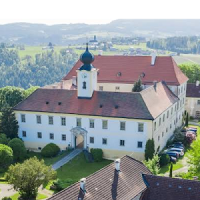
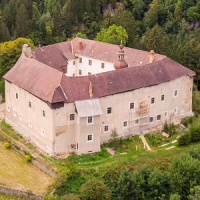
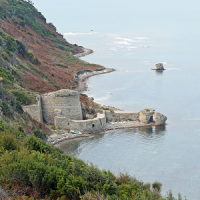
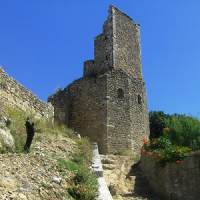
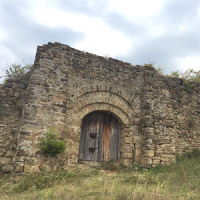
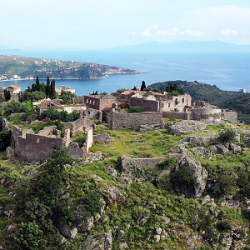
Himara Castle - Kalaja e Himarës
Kalaja e Himarës
Around the clock. Weekend: No
SH8, Himarë, Qarku i Vlorës, Republika e Shqipërisë
40.118004, 19.731649 View map
Himara Castle - Kalaja e Himarës, Himara, Vlore County, Republic of Albania.
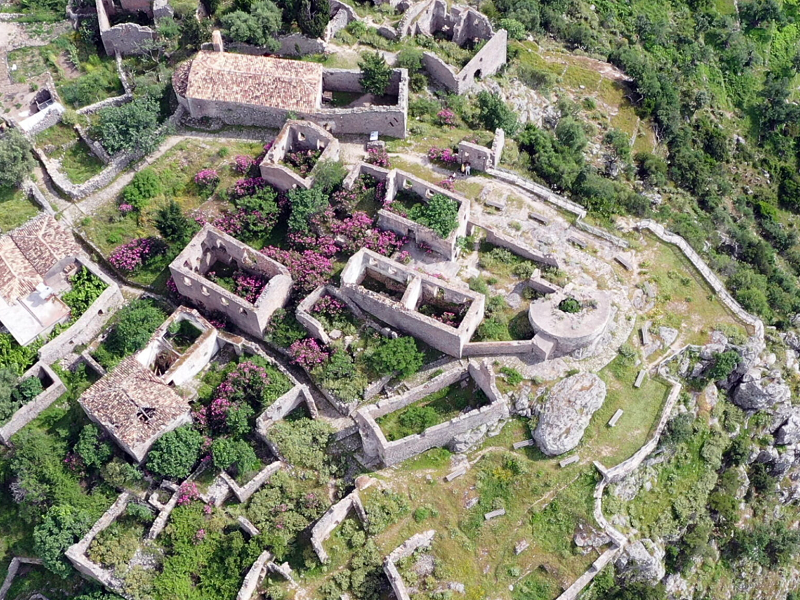
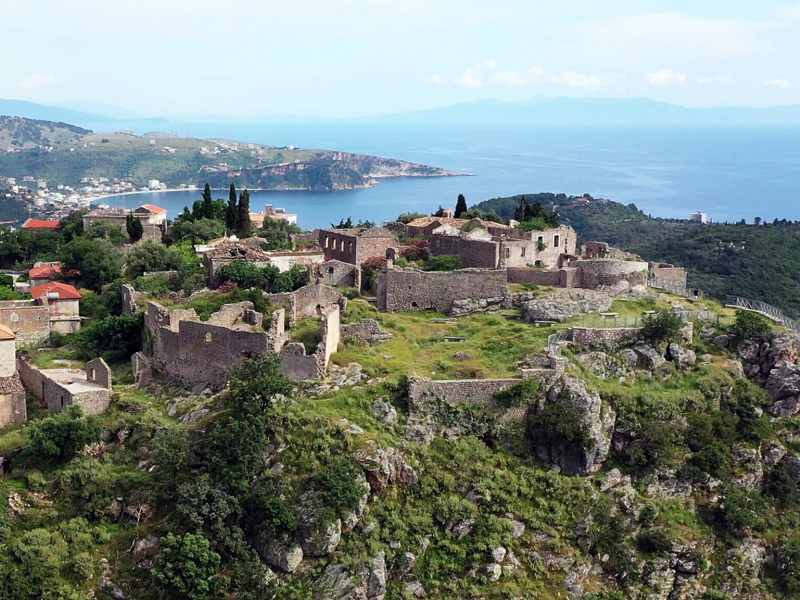
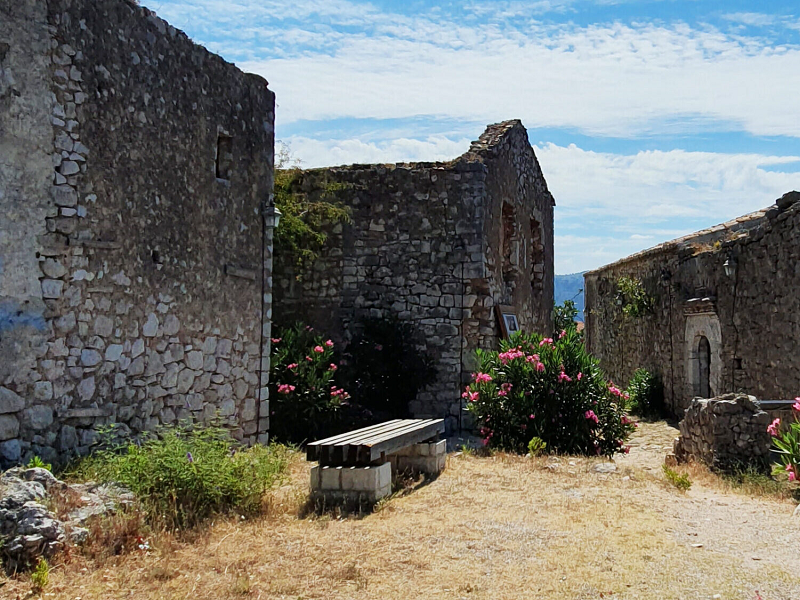
The old city of Himara, and the Castle (Barbakas) itself are an important monument that needs protection so that it does not suffer irreparable damage. This is a monument of 3,500 years of human presence in the Himara region. In medieval, Byzantine times, there was a small but powerful castle-city in this place of Barbaka. The castle has two entrance gates, in the north and south, which were closed at the end of the day.
The Himara Castle is bordered by two canyons, that of Vishe (a natural monument) in the northwest and in the southeast by the canyon or stream of Kole Midhari. The castle is known by the name Barbaka (a medieval name for castles of this type) and is built on a rocky hill. In the north are the Akrokeraune mountains (Vetëtimes), in the east, continuing the Vetëtime mountain range, the village of Pilur and the dense oak forest are visible, in the southeast, the coastal Spileja, which is today the administrative center of the Municipality of Himara, and in the south, the beach of Livadhi and the Ionian Sea, from which the northern part of the island of Kurfuzi and the Diapontike islands, Erikusa, Othoni, Mathraqi are visible. In the west, there is the hill of Scutari, which is separated from the castle of Himara by the magnificent canyon of Visha.
The castle of Himara has existed, at least since the middle of the 4th century BC, and controlled the road along the coast from Oriku to Buthroto. It is mentioned by the name Chimera (the toponymy of Himara is associated by some researchers with Chimera, a mythological creature with the body of a lion, the head of a goat, and the tail of a lion and a snake) and is included in the Epirot tribe of the Chaones. Himara is mentioned in several ancient writings. The name Chimera as a toponym is mentioned by Homer at least since the 13th century BC. An inscription of the 3rd-2nd century BC found in Argos in the Peloponnese mentions the Himariot Thorax, who received in his house the envoy of that city, who invited representatives of other cities to participate in the festival of the temple of Hera. In the 1st century BC Himara is mentioned by the Greek geographer Strabo, who left us a detailed description of the Adriatic and Ionian coast. “In the Acroceraune mountains,” he writes, “is the castle of Himara and the source of the royal water.” Emperor Justinian will renovate the castle of Himara mentioned by Pliny from Roman times: “Ιη Ερiri oracastellum in Acroceraunis Chimera.”
In the list of fortified places of Epirus given by the English scholar N. Hammond, the castle of Himara is marked as a castle with surrounding walls between 500-1000 m long. In the 8th century AD, the castle of Himara becomes the center of the Bishopric of Himara, which proves that it was an important center on the Ionian Coast. For this reason, the entire region that included the Ionian Coast, Kurvelesh, the Vlora River and Tepelenë was baptized with the name Himara. In the castle of Himara, traces from all the time periods mentioned above are preserved to this day. The architectural ensemble of the Castle of Himara has been declared a cultural monument. In some parts of it, surrounding walls from the Hellenistic period have been preserved. The large blocks of polygonal stones are similar to the surrounding walls of Finiq, Butrint and other cities of Chaonia from the same period. The Episcopal Church is considered one of the most important monuments and is located within the Hellenistic walls. According to one version, it is built on the foundations of a temple dedicated to Apollo. It consists of the main temple and another uncovered half where two bishops are buried. The main entrance of the church is decorated with two double-headed eagles with Imperial crowns. Archangel Michael, or Michael, is one of the oldest churches within the walls located north of the castle. The church was built in the period 1205-1215 in honor of the first Prince and founder of the Despotate of Epirus Michael Komnenos. The Church of Kassopitres (Saint Mary) in the eastern part of the castle and outside the walls is from the 18th century. The icon of the Virgin, which is considered miraculous, was brought by the Himariotes from Kassopi in Corfu where a church of the same name functions. In the place of Koleka and at the entrance to the castle, the Church of All Saints (Ai Pantes) was built. It functioned for the first time in 1775 and was built with the blessing of Father Cosmais of Aetolia (a missionary of the Patriarchate of Constantinople to prevent the spread of Islam). In 1970, it was declared a cultural monument and protected by the state. After the 90s, under the care of Archbishop Anastas, it was completely restored and serves as the Metropolitan Church of the Himara area. Next to the church of Ai Pantes is the Himara bell tower built in 1878.
In the architectural complex of the Himara Castle, other important objects are. At the top of the castle overlooking the beach of Livadhi, is the residence of Anastas Papa. Kristo Dhima's House: The house had three floors but the later residents, unable to maintain it, demolished one floor. Spiro Milios House: A residence with spectacular views and rich decoration. Lilo Lazar's House: The house has been declared a cultural monument as a characteristic Himarjite house. Jorgi Goro's house (Theano Goro) has been declared a cultural monument as a characteristic Himarjite house. Saint Dhimit Square: The square overlooking Spilene, where the small church of Saint Dhimit was located, which no longer exists. Saint Theodhori: Under Saint Dhimit is the church of Saint Theodhori. The church has been abandoned for many years and there is no Himarjite today to remember that it ever functioned. Saint Cosmas: The church built on the site where Saint Cosmas of Aetolia lectured in Camby was demolished by the dictatorial regime. The new church was built after 1990 a few meters away from the old one.
Source: https://himara.gov.al/monumente/kalaja-e-himares/
20 jan 2026
0
0