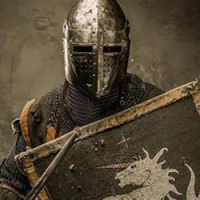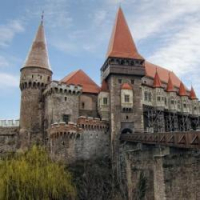
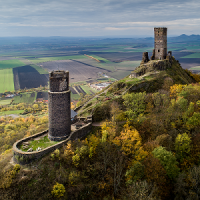
The Teutonic Order (full historical name – the Order of the Brothers of the German House of St. Mary in Jerusalem, German: Deutscher Orden or Orden der Brüder vom Deutschen Haus St. Mariens in Jerusalem) is one of the three major knightly orders of the Middle Ages (along with the Knights Templar and Hospitallers). It originated as a charitable brotherhood, developed into a powerful military force, established its own state in the Baltic region, and continues to exist today as a Catholic religious organization.
Foundation and Early History (1190–1230s).
The Order originated during the Third Crusade (1189–1192). In 1190, during the siege of Acre, German merchants from Lübeck and Bremen founded a field hospital for wounded and sick compatriots. This was a response to the needs of German-speaking pilgrims and crusaders, who found it difficult to communicate with locals (French, Italian, etc.).
In 1191, Pope Clement III established the brotherhood as the "German Brotherhood of St. Mary in Jerusalem."
In 1198 (under Pope Innocent III), it was transformed into a military monastic order modeled on the Knights Templar: the knights took vows of poverty, chastity, and obedience and wore white cloaks with a black cross.
The first Grand Master (Hochmeister) was Heinrich Walpot von Bassenheim.
The order spent its early years in the Holy Land, participating in the defense of Christian possessions. Under the leadership of Hermann von Salza (Grand Master from 1209 to 1239), the order received strong support from the Holy Roman Emperor Frederick II and the Pope. Von Salza established the Order as an independent player, not directly subordinate to the Templars or Hospitallers. The Order acquired lands in Germany, Italy, Greece, and other regions of Europe.
Shifting into Eastern Europe and the conquest of Prussia (1220s–1280s).
By the 1220s, the crusaders' position in Palestine had weakened. The Order began to seek new areas of activity. In 1226, the Polish prince Konrad of Masovia invited the Teutons to defend his borders from the raids of the pagan Prussians (a Baltic tribe).
In 1230, the Order received the Chełmno Land from Konrad as a base.
From 1231, the systematic Northern Crusade against the Prussians began. The knights built castles (Marienburg, Torun, and others), attracted German colonists, and carried out Christianization "by fire and sword." The conquest of Prussia took about 50 years, interrupted by rebellions (1242–1249, 1260–1274). By the end of the 13th century, the Prussians were largely subjugated or assimilated, and their lands were colonized by Germans.
In 1237, the Order absorbed the remnants of the Order of the Brothers of the Sword (the Livonian Order), expanding its influence into Livonia (modern-day Latvia and Estonia). Thus emerged the Teutonic Order (Ordensstaat)—a theocratic entity under the supreme authority of the pope and emperor, but with a high degree of autonomy. Its capital was Marienburg (now Malbork, Poland) from 1309.
Rise and Conflicts with Neighbors (14th–15th Centuries).
In the 14th century, the Order reached the peak of its power:
It controlled Prussia, Pomerania (including Gdansk/Danzig), part of Livonia, and Estonia (purchased from Denmark in 1346).
It conducted active trade through the Hanseatic League and built powerful castles with advanced fortifications and infrastructure.
It organized "reis" (military expeditions) against pagan Lithuania, attracting knights from all over Europe.
The main adversaries were Poland and Lithuania. This culminated in the Great War of 1409–1411:
On July 15, 1410, the Battle of Grunwald (or Tannenberg) took place, where the combined forces of Poland and Lithuania, under the command of Władysław II Jagiello and Vytautas, routed the Teutonic army. Grand Master Ulrich von Jungingen was killed. Despite the defeat, the Order retained most of its lands under the First Peace of Toruń (1411).
Further wars (the Hunger War of 1414, the Priests' War of 1467–1479) weakened the Order. During the Thirteen Years' War (1454–1466), Polish cities and nobles rebelled against the Order. By the Second Peace of Toruń (1466), the Order lost western Prussia (including Marienburg) and recognized the suzerainty of the Polish king over its remaining lands. The capital moved to Königsberg.
Decline and Secularization (16th–19th centuries).
In 1525, Grand Master Albrecht of Brandenburg (of the Hohenzollern dynasty) converted to Lutheranism and secularized the Order's Prussian possessions, turning them into the secular Duchy of Prussia (the first Protestant sovereign in Europe). This marked the beginning of Prussia as the core of Germany.
The Order survived in other lands (Germany, Austria). In 1809, Napoleon dissolved it in the Confederation of the Rhine, confiscating its assets. In 1834, the Order was revived in the Austrian Empire as a Catholic noble confederation.
Order Structure in the Middle Ages.
The Grand Master (Hochmeister) is the lifelong head, elected by the Chapter. Hierarchy: knights (full members, of noble birth), priests, half-brothers (servientes—sergeants, artisans).
The statute combined the rules of the Templars (military unit) and the Hospitallers (nursing).
Symbolism: a white cloak with a black cross.
The Order left a rich legacy: majestic castles (Malbork is a UNESCO World Heritage Site), a system of colonization, influence on the formation of Prussian and German identities, and complex relations with Poland, Lithuania, and Russia (including famous clashes in the 13th century, such as the Battle on the Ice in 1242 with the Novgorodians led by Alexander Nevsky).
The history of the Teutonic Order is the story of the transition from the Crusades in the East to colonization and state-building in Northern Europe, from religious enthusiasm to political and military power, and then to decline and transformation. It is full of both heroic and tragic pages, and continues to generate debate in the historiography of various countries.
The Code of the Teutonic Order.
The Code of the Teutonic Order (German: Ordensbuch—"Order Book," or Statuten des Deutschen Ordens) is the fundamental set of rules that regulated the lives of the brothers of the Teutonic Order. It was a complex of documents that included the Statute (Regula), Laws (Gesetze), and Customs (Gewohnheiten).
The Order did not have a single "code" in the modern legal sense, but followed an evolving collection of norms that defined monastic discipline, military organization, hospital activities, and daily life.
Origin and Structure.
The Order began as a hospital brotherhood in 1190 during the siege of Acre and initially followed the rules of the Hospitallers (St. John). In 1198, when the brotherhood was transformed into a military monastic order, it was given a military component modeled on the Knights Templar. Pope Innocent III approved its autonomy with its own statutes in 1199.
The final codification took place in the mid-13th century (the oldest surviving manuscript is from 1264, in Middle High German). The papal legate, William of Modena, is often credited with authoring the monastic portion of the statutes. In 1442, a revision was conducted, and "model" copies were created for the main residences (Marienburg, Horneck, and Riga) to standardize the text.
The structure of the "Book of the Order":
Rules (Regula) - about 39 chapters: the foundations of monastic life.
Laws (Gesetze) - about 70: disciplinary norms, punishments.
Customs (Gewohnheiten) - about 64: daily practices, military regulations.
Additional: calendar of feasts, vigils (night vigils), kneeling prayers, the ritual of receiving new brothers, prayers.
The original was most likely in Latin, but most surviving copies are in German (various dialects), as well as French, Dutch, and Low German.
Fundamental principles (three monastic vows).
Each brother took the following vows upon admission:
Chastity (total abstinence) - a strict ban on contact with women (except for necessary care of the sick). Violation is one of the most serious crimes.
Obedience—complete submission to the Grand Master, Chapter, and superiors (comturs, marshals, etc.).
Poverty (non-covetousness)—renunciation of personal property. All property was held in common. Owning personal chests, jewelry, expensive clothing, or weapons was prohibited.
Knight brothers had to be of noble birth. Upon admission, they renounced their family coat of arms and wore only a black cross on a white cloak.
Key sections of the charter (excerpts and norms).
Religious life:
Mandatory attendance at services (matins, hours, vespers, compline).
Fasting, silence at certain hours.
Prayers for living and dead brothers.
Funerals: the dead were buried the day after matins.
Hospital activities (original function):
Care for the sick and poor pilgrims.
Specific hospital regulations: food, treatment, and accommodation.
Military discipline (especially important in Prussia and Livonia).
Weapons and armor must not be decorated with gold or silver (luxury prohibited).
Rules of conduct on campaign and in battle: discipline, care of horses and weapons.
Prohibition of unauthorized seizure of loot.
Everyday life:
Clothing: white cloak with a black cross, simple and functional.
Diet: modest, with fast days.
Sleep: in communal dormitories (bedrooms), often on straw.
Hunting prohibited (except for necessary subsistence in certain cases).
Women were allowed to perform household chores only under strict supervision.
Punishments (gradation):
Mild (reprimand, additional fasts).
Moderate.
Severe (loss of the cloak with the cross, sleeping with servants, bread and water several days a week).
Very severe (expulsion from the order).
Violation of vows (especially chastity or disobedience) could lead to the loss of the mantle and expulsion.
Governance:
Supreme authority rests with the Grand Master, but is limited by the General Chapter (assembly of brothers).
The Master's authority increased as the order expanded.
Evolution and Later Changes.
The Statutes were considered "eternal," so new norms were added as appendices rather than to the main text. In 1442, a revision was conducted to eliminate discrepancies in copies.
After the secularization of Prussia in 1525 and its subsequent decline, the order retained its religious character. In the 19th and 20th centuries, the statutes were revised repeatedly: from 1834 to 1929, the emphasis shifted to charity and care for the sick, while the military component disappeared. The modern order (residing in Vienna) follows updated rules approved by the popes (including 1929 and later), where the primary role is played by priests, and the activities are hospital and pastoral.
Castles of the Teutonic Order.
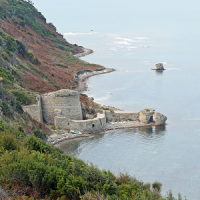
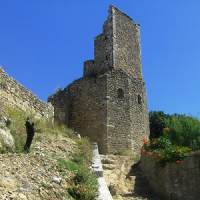
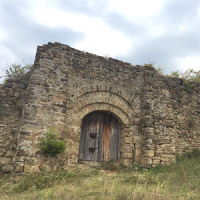
The Teutonic Order built one of the most impressive networks of medieval fortresses in Europe—approximately 120 castles in Prussia alone (including the Chełmno Land and Pomerania) by the early 15th century. These fortifications served not only as military outposts but also as administrative centers (komturstvos), monasteries, residences, and symbols of power.
The Order's castles (Ordensburgen) were distinguished by their characteristic Brick Gothic style (Backsteingotik): red brick, massive walls, towers, courtyards, chapels, and outbuildings. Many had a convent house (a residential building for the knights), a fortification (forecastle), and a moat system. In Prussia, castles were often built of brick (due to a shortage of stone), while in Livonia, they were more often built of stone.
The main castle is Marienburg (Malbork). The most famous and largest brick castle in the world by area (approximately 20 hectares). Founded in the 1270s, it became the residence of the Grand Master (Hochmeister) and the capital of the Order's state from 1309.
The castle consists of three parts: the High Castle (the convent building with the church), the Middle Castle, and the Lower Castle, separated by moats and walls. It withstood the siege after the Battle of Grunwald in 1410, but was sold to the Polish king in 1457. Today, it is a UNESCO site, a museum, and one of Poland's main tourist attractions.
Other key castles in Prussia (modern-day Poland and the Kaliningrad Oblast).
Marienwerder Castle (Kwidzyn) is a powerful castle-comturm with characteristic brick architecture, connected to the cathedral. Well preserved, it includes a high keep and arcades.
Königsberg Castle (Kaliningrad) has been the residence of the Grand Master since 1457. The castle was a symbol of the city; it was severely damaged in World War II, and its ruins were blown up in the 1960s. Only fragments and historical depictions remain.
Gniew Castle (Mewe) is one of the best-preserved castles on the Vistula, a typical example of a Knights' fortress with mighty towers.
In the Kaliningrad region, ruins remain: Ragnit (Neman) – impressive red-brick ruins on the banks of the Neman; Balga, Brandenburg, Lochstedt, and others. Many have been destroyed or rebuilt.
Ragnit Castle (Burg Ragnit).
Other famous ones: Torun (Thorn), the first major stronghold; Elbląg (Elbing); Christburg, and others.
Castles in Livonia (Latvia, Estonia).
After the annexation of the Brothers of the Sword in 1237, the Teutons (Livonian Order) built and fortified castles in the Baltic region. Stone masonry was prevalent here.
Cēsis Castle (Wenden) is one of the largest and most atmospheric castles in Livonia. The residence of the Livonian Masters, it is a massive ruin with round towers and walls. Today, it is a popular tourist attraction with a museum.
Others: Sigulda (Zegevold), Koknese (Kokenshusen), Bauska, Alūksne (Marienburg), and Riga Castle (partially preserved).
Architectural and historical features.
Castles were built rapidly during the conquest of Prussia (1230–1280) and served as bases for "voyages" against Lithuania. They controlled rivers (the Vistula, Neman, and Pregel), trade routes, and colonized lands. Knights (a convent of 12–20 brothers), priests, and servants were housed within them; there were arsenals, granaries, stables, and even hospitals.
Many castles boasted advanced fortifications for their time: multiple lines of defense, towers with loopholes, and drawbridges. After secularization in 1525 and the wars of the 15th–17th centuries, some castles passed to Poland or Prussia; many fell into disrepair or were rebuilt.
Today, the best-preserved castles are in Poland (Malbork, Kwidzyn, Gniew, Bydgoszcz, etc.) and Latvia (Cēsis, Sigulda). The Kaliningrad region is dominated by picturesque ruins, which are gradually being restored or preserved.
The castles of the Teutonic Order are not only a military legacy but also outstanding examples of medieval architecture and the organization of a fortress state. They still impress with the scale and beauty of their brick Gothic architecture. If you're planning a trip, I recommend starting with Malbork—it's a true symbol of the Order.
Battles of the Teutonic Order.
The Teutonic Order fought hundreds of battles over nearly three centuries, from the Holy Land to the Baltic states. The most significant battles are determined by their scale, losses, strategic consequences, and impact on the Order's destiny. Below is a chronological overview of the key battles.
Early Period and Northern Crusades (13th Century)
Battle on Lake Peipus (Battle on the Ice), April 5, 1242.
The Livonian branch of the Order (after merging with the remnants of the Brothers of the Sword) clashed with the Novgorod army under the command of Prince Alexander Nevsky. The knights attempted to break through the ice of Lake Peipus, but were stopped and suffered heavy losses (according to Russian chronicles, many knights drowned).
Significance: This halted the Order's further expansion into Russian lands. It was not a complete defeat of the entire Order, but it became a symbol of the defeat of the Crusaders in the east.
Battle of Durbe, July 13, 1260.
The combined forces of the Teutonic (Prussian) and Livonian Orders suffered a crushing defeat at the hands of the Samogitians and Curonians. Many knights, including senior commanders, perished. Significance: Provoked major uprisings by the Prussians and Curonians, seriously weakening the Order in the Baltics for several years. One of the heaviest losses of the 13th century.
Period of prosperity and raids against Lithuania (14th century)
Battle of Rudau, 1370.
The Teutonic Knights, under the command of the Marshal of the Order, defeated the Lithuanian army of Duke Kęstutis. This was one of the last major victories in the "reis" (campaigns) against pagan Lithuania.
Significance: Demonstrated the Order's military might at its peak, but was unable to stop the growing strength of Lithuania.
Culmination and beginning of decline (15th century)
Battle of Grunwald (Tannenberg), July 15, 1410.
The most famous and large-scale battle in the history of the Order. The combined Polish-Lithuanian army under the command of the Polish King Władysław II Jagiello and the Grand Duke of Lithuania, Vytautas (including Smolensk regiments, Tatars, and Czechs) encountered the main army of the Teutonic Order, led by Grand Master Ulrich von Jungingen.
Progress: After several hours of fierce fighting, the Lithuanian cavalry maneuvered, while the Polish and Russian units withstood the onslaught. The Teutonic Order was surrounded and routed. The Grand Master, Grand Marshal, Grand Commander, and most of the Order's senior leadership perished (estimates range from 8,000 killed and 14,000 captured).
Significance: A decisive defeat from which the Order never recovered. Although the First Peace of Toruń (1411) resulted in relatively minor territorial losses, the Order lost its reputation for invincibility, suffered enormous financial losses, and faced internal conflicts. This marked the beginning of the long decline of the Teutonic Order and the rise of the Polish-Lithuanian Union.
Battle of Wilkomir (Wilkomir), September 1, 1435.
The Livonian branch of the Order (supported by the Teutons) was defeated by the combined forces of Poland, Lithuania, and the Russian principalities.
Significance: This decisively weakened the Livonian wing of the Order and cemented the dominance of the Polish-Lithuanian Union in the region.
Later Conflicts (15th–16th Centuries). The Thirteen Years' War (1454–1466).
Not a single battle, but a series of engagements and sieges (including the Siege of Marienburg). A rebellion by Prussian cities against the Order, supported by Poland, led to the Second Peace of Toruń in 1466. The Order lost West Prussia (including Marienburg) and acknowledged vassalage to the Polish king.
Meaning: The effective end of the independent state of the Teutonic Order in Prussia.
Overall.
The Order's victories were mostly in local raids against the Prussians and Lithuanians in the 13th and 14th centuries (castle construction, colonization).
Key defeats (Durbe, the Battle on the Ice, Grunwald) had strategic significance and accelerated its decline.
Grunwald in 1410 is undoubtedly the most significant battle: it not only destroyed the Order's elite but also changed the balance of power in Eastern Europe for centuries to come.
These battles illustrate the Order's transition from a successful conqueror and colonizer to a weakened organization, which eventually secularized (Prussia in 1525). In Polish and Lithuanian traditions, Grunwald is a symbol of national victory; in German, it is a tragedy; and in Russian, the Battle on the Ice remains one of the main symbols of resistance to the Teutonic Knights.
Current Status.
Today, the Teutonic Order is a Catholic clerical order headquartered in Vienna. It lost its military character in the 19th century and became a religious and charitable organization. Members (mostly nuns and priests) provide care for the sick and run hospitals and sanatoriums in Austria and Germany. There are ballei (branches) in Germany, Austria, and South Tyrol, as well as smaller communities in other countries. A Protestant branch exists in Utrecht (Netherlands). The Order emphasizes continuity with medieval tradition, but without the knightly military component.
Grand Master of the Teutonic Order:
Heinrich Walpot von Bassenheim (1198–1200)
Otto von Kerpen (1200–1208)
Heinrich von Tunna (1208–1209)
Hermann von Salza (1209–1239)
Konrad von Thüringen (1239–1240)
Gerhard von Malberg (1240–1244)
Heinrich von Hohenlohe (1244–1249)
Gunther von Wüllersleben (1249–1252)
Poppo von Osterna (1252–1256)
Anno von Sangershausen (1256–1273)
Hartmann von Heldrungen (1273–1283)
Burchard von Schwanden (1283–1290)
Konrad von Feuchtwangen (1291–1296)
Gottfried von Hohenlohe (1297–1303)
Siegfried von Feuchtwangen (1303–1311)
Karl von Trier (1311–1324)
Werner von Orseln (1324–1330)
Luther von Braunschweig (1331–1335)
Dietrich von Altenburg (1335–1341)
Ludolf König von Wattzau (1342–1345)
Heinrich Dusemer (1345–1351)
Winrich von Kniprode (1352–1382)
Konrad Zöllner von Rotenstein (1382–1390)
Konrad von Wallenrode (1391–1393)
Konrad von Jungingen (1393–1407)
Ulrich von Jungingen (1407–1410)
Heinrich von Plauen (1410–1413)
Michael Küchmeister von Sternberg (1414–1422)
Paul von Rusdorf (1422–1441)
Konrad von Erlichshausen (1441–1449)
Ludwig von Erlichshausen (1450–1467)
Heinrich Reuß von Plauen (1469–1470)
Heinrich Reffle von Richtenberg (1470–1477)
Martin Truchsess von Wetzhausen (1477–1483)
Johann von Tiefen (1489–1497)
Friedrich von Sachsen (1498–1510)
Albrecht von Brandenburg-Ansbach (1511–1525)
Literary sources:
The full text of the "Book of the Order" (1264) is available in scholarly publications (for example, Max Perlbach's 1890 edition). An English translation of the rules and statutes has been published (Indrikis Sterns). There are excerpts in Russian in historical works (V. Urban, V. Akunov, and others) and on websites with constitutions/sources.
The Rule of the Teutonic Order combined the severity of the Templars, the care for the sick of the Hospitallers, and German practicality. It transformed a small hospital brotherhood into a disciplined military and state machine that created the Ordensstaat (Order of the Holy Land) in the Baltics. At the same time, the rules emphasized monastic ideals: service to God, poverty, and obedience.