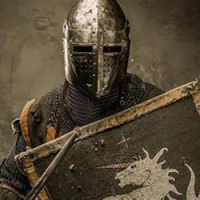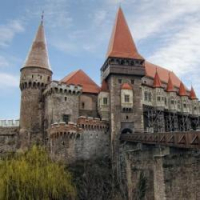
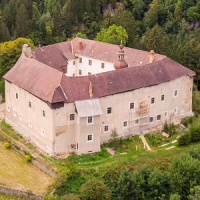
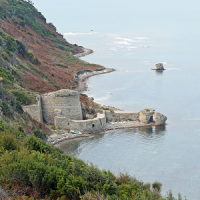
Military Hospitaller Order of Saint John of Jerusalem.
The founding of the religious community of the Hospitallers of St. John in the Holy Land dates back to the second half of the 11th century. Some merchants from the maritime republic of Amalfi obtained an authorization from the Caliph of Egypt to build in Jerusalem a church, convent and hospital named after St. John Baptist to assist pilgrims.
It was under the leadership of Blessed Fra’ Gerard, founder and first Master, that the religious community became a lay religious order. Thanks to the bull of 15 February 1113, Pope Paschal II recognised the Order of St. John, placing it under the protection of the Church and granting it the right to freely elect its superiors, without interference from other lay or religious authorities.
Blessed Fra’ Gerard’s successor as Master was Blessed Fra’ Raymond du Puy who between 1145 and 1153 wrote the first rule for the Order’s members. All the confreres were religious, bound by the three monastic vows of poverty, chastity and obedience, and dedicated to assisting the poor and the sick.
The Constitution of the Kingdom of Jerusalem obliged the Order to assume the military defence of the sick and pilgrims and to protect its medical centres and main roads. Defence of the faith was then added to the hospitaller mission and the Order adopted the eight-pointed cross, still today its symbol.
After the fall of St. John of Acre and the loss of the Holy Land in 1291, the Order of St. John moved its seat and hospital to Limassol on the island of Cyprus, where it had already been present since 1210 thanks to the concession of important properties, privileges and trading rights. Here, faithful to its mission, it continued to build new hospitals and the strategic position of the island encouraged it to create a naval fleet to protect pilgrims en route to the Holy Land.
Members continued to arrive from all over Europe and the Order acquired more possessions on the shores of the Mediterranean, including the important port of Famagusta, the city of Nicosia and numerous Commanderies.
The growing instability of Cyprus restricted the Hospitallers’ expansion, and they looked towards the island of Rhodes as more suitable for the Order of St. John to settle.
Under the leadership of Grand Master Fra’ Foulques de Villaret, in 1307 the knights of the Order of St. John landed on Rhodes. After completing the acquisition of the island in 1310 they transferred their seat there. At that time the defence of Christendom required a naval force and the Order navigated the eastern Mediterranean with its powerful fleet, fighting many famous battles.
The Order’s independence from other nations thanks to papal deeds, with the universally recognized right to maintain and deploy armed forces and to appoint ambassadors, constituted the grounds for its international sovereignty.
Since the beginning of the 14th century, the knights belonging to the European nobility who arrived in Rhodes were grouped according to their language. Initially there were seven Langues (Tongues): Provence, Auvergne, France, Italy, Aragon (Navarra), England (with Scotland and Ireland) and Germany, with the addition in 1462 of the eighth Langue of Castille and Portugal. Each Langue had its own Priory or Grand Priory, Bailiwick and Commandery.
The Order was governed by the Grand Master (Prince of Rhodes) and by the Council, it minted its own money and maintained diplomatic relations with other nations. The Order’s great offices were given to representatives of the various Langues. Religious members of various nationalities occupied the Order’s seat, the Convent.
In 1523, after six months of siege and fierce combat against the fleet and army of Sultan Soliman the Magnificent, the knights were forced to surrender and left Rhodes with military honours.
For some years the Order remained without a territory, until in 1530 Grand Master Fra’ Philippe de Villiers de l’Isle Adam took possession of the island of Malta, granted to the Order by Emperor Charles V with the approval of Pope Clement VII. It was established that the Order would remain neutral in any war between Christian nations.
In 1565, the knights led by Grand Master Fra’ Jean de la Vallette heroically defended the island from the Ottomans during the Great Siege of Malta. The victory curbed the expansionist aims of the Ottomans on the continent and was celebrated throughout Europe.
The following year the fortified city and port of Valletta was built, named after its founder the Grand Master. The knights transformed Malta with major urban construction projects, building palaces and churches, as well as formidable defence bastions and gardens. Architecture and artistic patronage flourished. A large new hospital was built on the island, considered one of the most organized in the world, and a school of anatomy was created, followed by a faculty of medicine. The Order also played an important role in the development of ophthalmology and pharmacology.
Besides these activities, for centuries the Order of Malta’s fleet was deployed in the most important manoeuvres in the Mediterranean Sea against the Ottoman fleet and the North African pirates.
Source: https://www.orderofmalta.int/history/
The Rule of the Knights Hospitaller.
The Rule of the Knights Hospitaller (Order of St. John of Jerusalem, also known as the Johannites) developed gradually. The Order began as a charitable organization at a hospital in Jerusalem and later evolved into a military-monastic order.
The main early rule: the Rule of Raymond du Puy (c. 1120–1153)
The first full-fledged rule of the Order was compiled by the second Grand Master, Raymond du Puy (reigned c. 1120–1160). This document, known as the Rule of the Order of St. John of Jerusalem (Regula Raymundi de Puy), replaced the earlier simple regulations of the founder, Blessed Gerard (Gerard de Martigues), which were based on the Rule of St. Augustine. The rules were approved by the Pope (traditionally associated with Pope Calixtus II or Eugene III). The text begins with the words:
"I, Raymond de Puy, servant of Christ's poor and Master of the Jerusalem Hospital..."
The main tenets of Raymond de Puy's Rule.
The Rule emphasizes three monastic vows (poverty, chastity, and obedience), which all brothers are obligated to observe:
Obedience is paramount. Brothers are not to follow their own will, but are obligated to obey the Master and their superiors. "Each one does not follow his own will at all, but is more careful to obey the one who commands."
Poverty—brothers are not allowed to own personal property. They are entitled only to simple clothing, bread, water, and necessities. "Let them demand nothing for themselves except bread, water, and clothing... since the Lord's poor, whose servants we are called, go naked and wretched."
Chastity—mandatory abstinence.
Clothing and appearance:
Brothers wear black cloaks with a white eight-pointed cross (later the cross became the symbol of the order). Clothing must be modest and simple, without excesses.
Division of members of the order (introduced or consolidated by Raymond de Puy):
Knights (brother-knights) - the military elite, must be of noble birth.
Chaplains (brother-priests) - provide spiritual care.
Serving brothers (squires, servants) - provide housekeeping, care for the sick, and support the knights.
Responsibilities:
The main task is hospitality and care for the sick and pilgrims. Brothers must serve the "poor of Christ" with great zeal. The hospital was required to maintain a permanent medical staff (doctors and surgeons).
Later, a military function was added - protecting pilgrims, defending the Holy Land, and participating in the Crusades. Strict discipline: hunting (except for lion hunting in the Holy Land), gambling, and wearing luxurious clothing or weapons without permission are prohibited.
Brothers are required to regularly attend religious services, observe fasts, and lead an ascetic lifestyle.
Government Structure:
At the head of the order is a Grand Master, elected by the brothers.
Chapters (assemblies of brothers) play an important role in decision-making.
Over time, the order was divided into "languages" (national branches: France, Provence, Auvergne, England, Germany, Italy, Aragon/Castile, etc.), each of which had its own "pillar" with specific responsibilities (Grand Hospitaller, Marshal, Treasurer, etc.).
Later Statutes and Amendments.
The Rule of Raymond de Puy was supplemented by statutes (statutes, customs, esgaards) adopted at general chapters:
Statutes of 1182, 1204–1206, 1293, the 1300s, and later.
After the loss of the Holy Land (1291), the Rule evolved in Rhodes (1310–1522) and Malta (1530–1798): the military component was strengthened, the rules for admission (proof of noble birth for knights) were clarified, and new offices and disciplinary norms were introduced.
The following are in effect in the modern Sovereign Order of Malta (existing today):
The Constitution of 1961 (as amended).
The Code of the Order of 1966.
These documents retain the spiritual foundations, but are fully adapted to the charitable and humanitarian mission (the military function has been lost).
Comparison with other orders.
Compared to the Knights Templar (Bernard of Clairvaux's Statute, 72 articles), the Hospitallers initially placed a stronger emphasis on hospital (medical) activities, rather than solely military ones.
Compared to the Order of Avis, theirs was earlier and more universal in nature (not tied to a single country).
The full text of the "Rules of Raymond de Puy" is available in Russian translations on historical source websites (for example, vostlit.info or ageiron.ru). It is relatively short—about 20–25 key points.
Major Battles of the Knights Hospitaller.
The major battles of the Knights Hospitaller (Order of St. John of Jerusalem, Knights of St. John, later the Knights of Rhodes and Malta) span three main periods of their military history:
Holy Land (12th–13th centuries) — participation in the Crusades and defense of the Crusader States.
Rhodes (1309–1522) — struggle against the Ottoman Turks.
Malta (1530–1798) — naval warfare and defense against the Ottoman Empire.
The Hospitallers differed from the Templars in their more pronounced defensive role and strong medical tradition, but they actively participated in battles as heavy cavalry and fortress garrisons.
1. Holy Land Period (major defeats and victories).
The Battle of Hattin (July 4, 1187) was a catastrophic defeat of the combined Crusader forces by Saladin. The Hospitallers suffered heavy losses. After the battle, Jerusalem fell, and the Order retreated to Acre and other fortresses.
The Battle of La Forbière (October 17–18, 1244) was one of the most severe blows to the Order. The combined Crusader army (including the Templars, Hospitallers, and Teutons) was completely routed by the Khwarezmian Turks and Egyptian Ayyubids. Of the approximately 350 Hospitallers, only 26 knights survived. Master Guillaume de Châteauneuf was captured. The battle is often called "the second Hattin." The Siege and Capture of Acre (1189–1191) was a successful siege during the Third Crusade (involving Richard the Lionheart). The Hospitallers played a vital role; after its capture, Acre became their main base.
The Battle of Arsuf (1191) was a victory for Richard the Lionheart, in which the Hospitallers participated in both the vanguard and the rear.
The Fall of Acre (1291) was the final defeat of the Crusaders in the Holy Land. The Hospitallers heroically defended their quarter and hospital. After the fall of the city, Master Jean de Villiers and the few surviving knights retreated to Cyprus. This marked the end of the Order's presence in Palestine.
The Hospitallers also participated in the sieges of Ascalon (1153), Damietta (1219), Mansura (1250), and many other campaigns.
2. The Rhodes Period (Knights of Rhodes).
The Conquest of Rhodes (1306–1310) – the Order captured the island from Byzantium after several years of campaigning. It became a new base.
The Siege of Rhodes (1480) – a successful defense against the army of Sultan Mehmed II (the conqueror of Constantinople). The Knights, under the command of Grand Master Pierre d'Aubusson, repelled the assault.
The Siege of Rhodes (1522) – a decisive defeat. Sultan Suleiman the Magnificent threw in a massive force (up to 100,000–200,000 men and 400 ships). After several months of fierce fighting, Grand Master Philippe de Villiers de l'Isle-Adam capitulated on honorable terms. The Order left the island in 1523.
3. The Malta Period (Knights of Malta) – the pinnacle of their military glory.
The Great Siege of Malta (May 18 – September 8, 1565) is the Order's most famous battle. Around 600–700 knights and approximately 8,000–9,000 defenders (including Maltese militia and Spanish reinforcements), under the command of Grand Master Jean Parisot de La Valette, withstood the 30,000–40,000-strong Ottoman army of Suleiman the Magnificent. Despite enormous losses (about half the knights perished), Malta was held. The victory halted Ottoman expansion in the western Mediterranean and became a symbol of heroism. The capital, Valletta, is named in La Valette's honor.
The Battle of Lepanto (1571) was a major naval victory for the Holy League (Spain, Venice, the Papal States, and others) over the Ottoman fleet. The Hospitaller fleet played an active role. In the following centuries, the Order waged constant "small warfare" at sea against North African pirates (Barbary corsairs), participating in sieges and raids (for example, the capture of Mahdia and expeditions to Algiers and Tunisia).
The Hospitallers fought bravely for nearly 700 years—from protecting pilgrims in Jerusalem to naval battles in the Mediterranean. Their military history ended with the loss of Malta in 1798 (to Napoleon), but the Order continues to exist today as the Sovereign Military Order of Malta, engaged in charitable work and humanitarian aid.
Castles of the Knights Hospitaller.
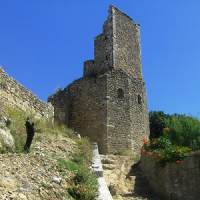
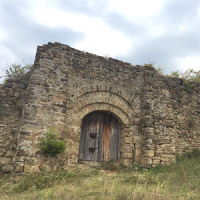
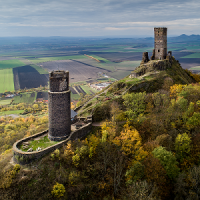
The castles of the Knights Hospitaller (Order of St. John of Jerusalem, Knights of St. John, and later the Knights of Rhodes and Malta) are among the most impressive examples of medieval military architecture. Unlike the Order of Avis or the Holy Sepulchre, the Hospitallers actively built and maintained a powerful network of fortresses. At their peak in the Holy Land, they owned approximately seven major fortresses and over 140 other settlements and fortifications.
The Order began as a charitable organization (a hospital in Jerusalem), but quickly became a military-monastic organization and transformed its castles into impregnable strongholds for the defense of the Crusader states.
1. Castles in the Holy Land (12th–13th centuries).
This was the period of greatest military activity. The Hospitallers controlled key strategic points.
Krak des Chevaliers Castle (Syria) is the most famous and best-preserved Hospitaller castle. Donated to the Order in 1142 by Raymond II, Count of Tripoli, it stands on a 650-meter-high hill. It could accommodate up to 2,000 men with provisions for five years. It features a concentric defense system (two lines of walls) and eight round towers. It is considered a masterpiece of medieval fortification. It was held until 1271, when it was captured by the Mamluks under Baybars (after a siege and a ruse involving a forged letter).
Margat Castle (Marqab, Syria) is the second main fortress. Purchased in 1186, it is located on a 360-meter-high basalt cliff near the coast. Considered virtually impregnable, it had 14 towers. It became the temporary seat of the Order's convent after the loss of other territories. It fell in 1285 to the Mamluks under the command of Sultan Qalawun.
Belvoir Castle (Israel) is a classic concentric castle on a hill south of the Sea of Galilee (built/rebuilt in 1168). It offers an excellent view of the Jordan Valley and is one of the best surviving examples of Hospitaller fortification in Israel.
Beth Gibelin Castle (Israel) was one of the first castles transferred to the Order (c. 1136–1140).
Other significant castles include Apollonia-Arsuf, Montfort (partially), fortifications in Acre (Acre), Beit She'an, and others. In Acre, the Order maintained a large hospital and fortifications until the fall of the city in 1291.
2. After the loss of the Holy Land (1291–1798).
Cyprus (1302–1310): Kolossi Castle near Limassol was the main residence in Cyprus. It was also known for the production of Commandaria wine.
Rhodes (1310–1522): The Order ruled the island as a sovereign state. It built the mighty Rhodes Fortress (Rhodes Old Town) with the Palace of the Grand Masters, the Avenue of the Knights, a hospital, and formidable walls. Castles and towers were also built on other Dodecanese islands: Kastellorizo, Kos, Krithia, Monolithos, and others. In 1494, the Castle of St. Peter in Bodrum (Turkey) was built from stones from the Mausoleum of Mausolus.
Malta (1530–1798): After being expelled from Rhodes, the Order transformed the island into an impregnable fortress.
Main fortifications:
Fort Sant'Angelo (in Birgu) – a reconstructed ancient fortress, the residence of the Grand Master.
Valletta – the new capital, built after the Great Siege of 1565, with a system of bastions and forts.
Numerous forts, towers, and coastal fortifications throughout the island.
The Hospitallers differed from the Templars in their more pronounced defensive strategy and better funding (thanks to their European possessions and hospitals). Their castles often had a dual purpose: military and medical.
Today, many of these sites are UNESCO World Heritage Sites (Krak des Chevaliers and Qal'at Salah ad-Din) or popular tourist destinations.
Grand Master of the Hospitallers Order:
Blessed Gerard Tum (1099-1118/20)
Raymond du Puy (1120-1160)
Auger de Balben (1160-1162)
Arnaud de Comps (1162-1163)
Gilbert of Assailly (1163-1169)
Gastone de Murols (1170-1172)
Jobert of Syria (1172-1177)
Roger de Moulins (1177-1187)
Armengol de Aspa (1187-1190)
Garnier de Nablus (1190-1192)
Geoffroy de Donjon (1193-1202)
Afonso de Portugal (1202-1206)
Geoffroy le Rat (1206-1207)
Guérin de Montaigu (1207-1228)
Bertrand de Thessy (1228-1231)
Guérin Lebrun (1231-1236)
Bertrand de Comps (1236-1240)
Pierre de Vieille-Brioude (1240-1242)
Guillaume de Chateauneuf (1242-1258)
Hugues de Revel (1258-1277)
Nicolas Lorgne (1277-1285)
Jean de Villiers (1285-1294)
Odon de Pins (1294-1296)
Guillaume de Villaret (1296-1305)