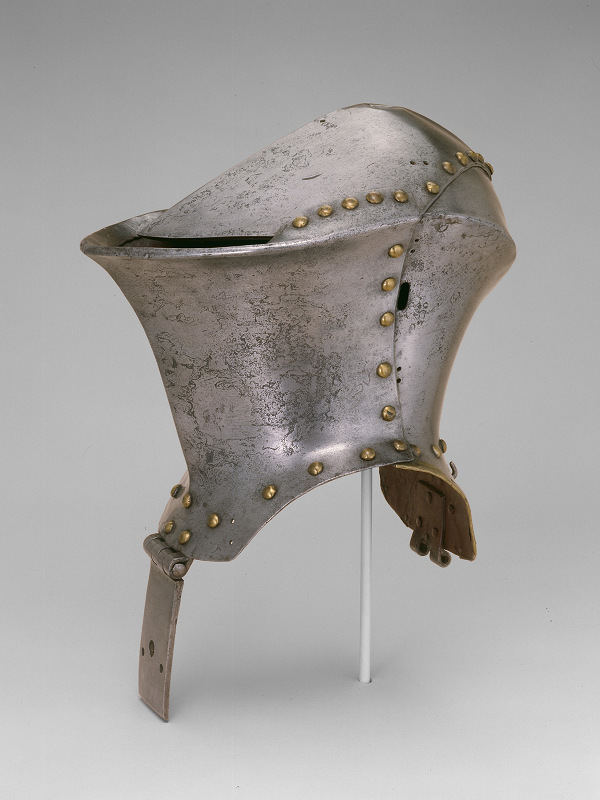


«Жабья голова», или штеххельм (анг. Frog-mouth helm, фр. Tête de crapaud, нем. Stechhelm) — один из самых специализированных и узнаваемых турнирных шлемов позднего Средневековья и раннего Возрождения. Он появился в конце XV века и использовался исключительно для копейных сшибок (гештеха или джостинга) вплоть до середины XVI века.
В отличие от боевых шлемов вроде бацинета, салада или закрытого шлема, «жабья голова» не предназначалась для войны. Это был узкоспециализированный инструмент для безопасного (насколько это возможно в Средневековье) спортивного поединка, где главной угрозой становился не меч или алебарда, а тяжёлое копьё и осколки древка при ударе.
Происхождение и развитие.
«Жабья голова» эволюционировала из более раннего большого шлема (great helm или topfhelm) — массивного «горшка», который полностью закрывал голову, но имел серьёзные недостатки в турнирах. К концу XV века, когда турниры стали более регламентированными и зрелищными (особенно при дворе императора Максимилиана I Габсбурга), оружейники создали шлем, максимально защищавший от прямого копейного удара в голову и лицо.
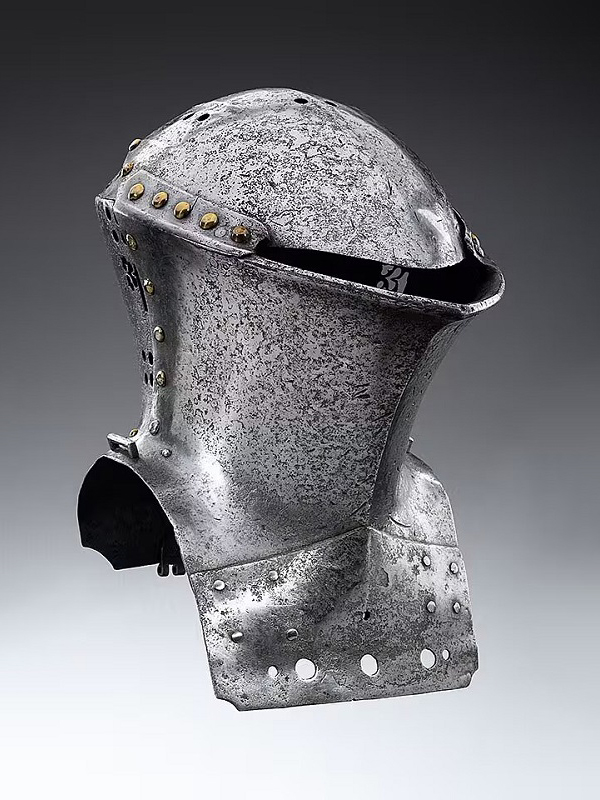
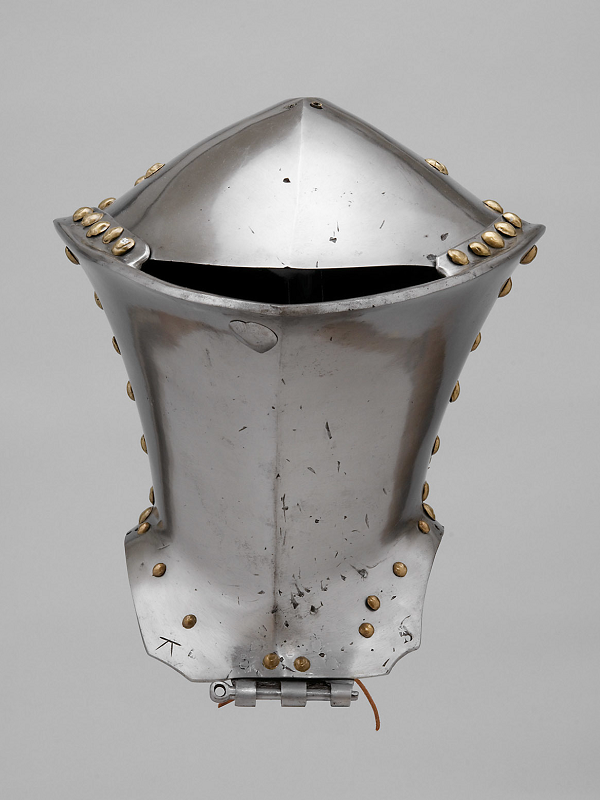
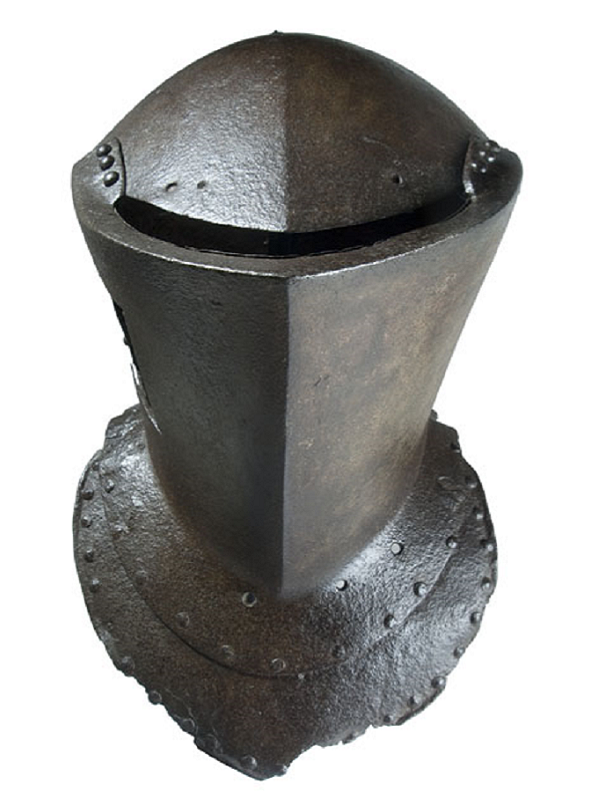
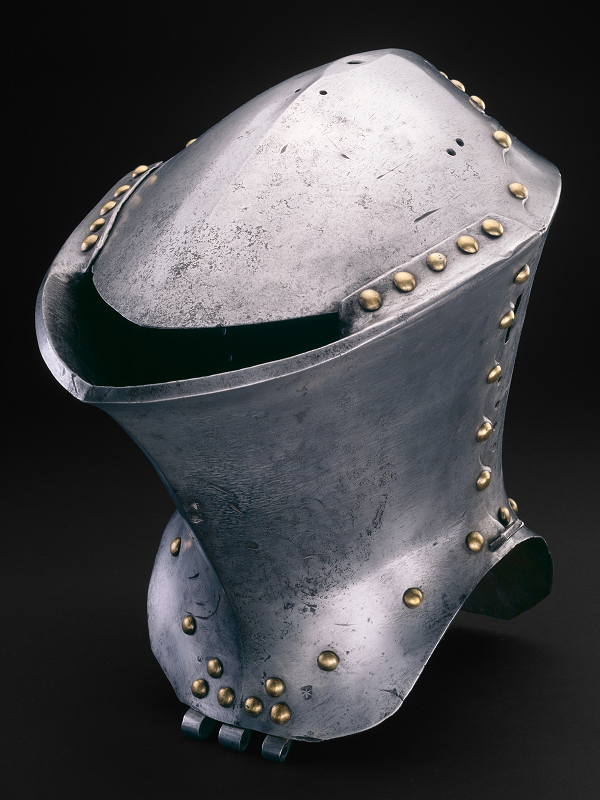
Название «жабья голова» (или «жабья морда», «лягушачья голова») появилось из-за характерного профиля: плоская или слегка закруглённая верхняя часть и сильно вытянутая вперёд нижняя лицевая секция, напоминающая морду земноводного. В немецкой традиции его чаще называли Stechhelm — «шлем для колющего удара».
Шлем достиг пика популярности в 1480–1550 годах. Он входил в комплект турнирного доспеха штехцойг (Stechzeug) — тяжёлого полудоспеха с усиленной кирасой, специальным седлом и защитой для левой руки.
На схеме средневековых шлемов «жабья голова» выделяется как поздняя турнирная специализация среди открытых и закрытых моделей.
Конструкция «жабьей головы».
Это один из самых тяжёлых и прочных шлемов своей эпохи. Основные особенности:
Плоская или слегка куполообразная верхняя часть — чтобы копьё соскальзывало вверх, а не вонзалось.
Сильно вытянутая вперёд лицевая секция (клин или «клюв») — создавала обтекаемую форму и направляла удар в сторону.
Узкая горизонтальная щель для глаз — расположена так, что рыцарь смотрел строго вперёд. Обзор был крайне ограничен.
Жёсткое крепление — шлем обычно привинчивался или фиксировался на петлях к кирасе (нагруднику). Это полностью исключало поворот головы и превращало всадника в единую «боевую машину».
Толстая сталь — в наиболее уязвимых местах толщина металла достигала 5–8 мм и более. Вес шлема мог превышать 6–8 кг (иногда до 10 кг вместе с креплениями).
Вентиляция и дыхание были минимальными: воздуха хватало буквально на несколько минут интенсивного поединка. Зато защита от осколков копья была почти абсолютной — именно поэтому шлем и прозвали «от всех превратностей судьбы».
Поздние варианты имели шарниры, позволяющие откидывать шлем назад после поединка, но в момент удара он был намертво зафиксирован.
Классический профиль «жабьей головы» с характерным вытянутым «клювом» и плоской макушкой.
Музейный экземпляр демонстрирует массивность и специализированную форму.
Применение на турнирах.
«Жабья голова» использовалась только в одном виде турнира — гештех (нем. Gestech), копейной сшибке всадников с целью выбить противника из седла или сломать копьё. Это был «мирный» турнир, где главной целью было зрелище и демонстрация мастерства, а не убийство.
Шлем крепился к кирасе, чтобы при мощном ударе вся энергия распределялась по корпусу, а не по шее рыцаря. Узкая глазная щель заставляла всадника держать голову строго прямо и полагаться на тренировку и опыт коня.
Несмотря на устрашающий вид, шлем делал поединок относительно безопасным: прямой удар в лицо или висок почти не мог пробить защиту. Именно поэтому многие знаменитые рыцари и императоры (включая Максимилиана I) предпочитали его для парадных турниров.
Недостатки были очевидны: почти нулевой обзор в стороны, плохая вентиляция, огромный вес и невозможность быстро снять шлем. В реальном бою такой шлем был бы бесполезен и даже опасен.
Почему «жабья голова» стала легендой?
Максимальная специализация — лучший шлем для конкретной задачи: выдержать удар копья в голову.
Эстетика — грозный, почти инопланетный силуэт, который идеально вписывался в ренессансную моду на экстравагантные турниры.
Символ статуса — участие в таких поединках и ношение такого шлема подчёркивало богатство и положение рыцаря.
К середине XVI века, с упадком классических рыцарских турниров и распространением огнестрельного оружия, «жабья голова» постепенно вышла из употребления. Однако её форма повлияла на некоторые поздние турнирные и парадные шлемы.
Сегодня оригинальные «жабьи головы» — редкие музейные экспонаты (Метрополитен, Венский оружейный музей, Музей Пола Гетти и др.). Они пользуются огромной популярностью среди реконструкторов и в исторических фильмах, где символизируют расцвет рыцарской культуры позднего Средневековья.
«Жабья голова» — яркий пример того, как Средневековье превращало войну в спорт, а спорт — в высокое искусство. Это не боевой шлем, а настоящий инженерный шедевр, созданный для того, чтобы рыцарь мог выдержать сокрушительный удар, остаться в седле и продолжить традицию благородного поединка. В нём рыцарь становился не просто воином, а живой легендой турнирного поля — тяжёлой, неподвижной, но практически неуязвимой «жабьей мордой», которая смотрела только вперёд, навстречу копью и славе.